5Qs with Día de los Muertos organizer Gloria McCallister
McCallister, 68, has helped organize Petaluma’s El Día de los Muertos event since 2000; this year, a photo of her husband of 45 years is among those placed on the public altar

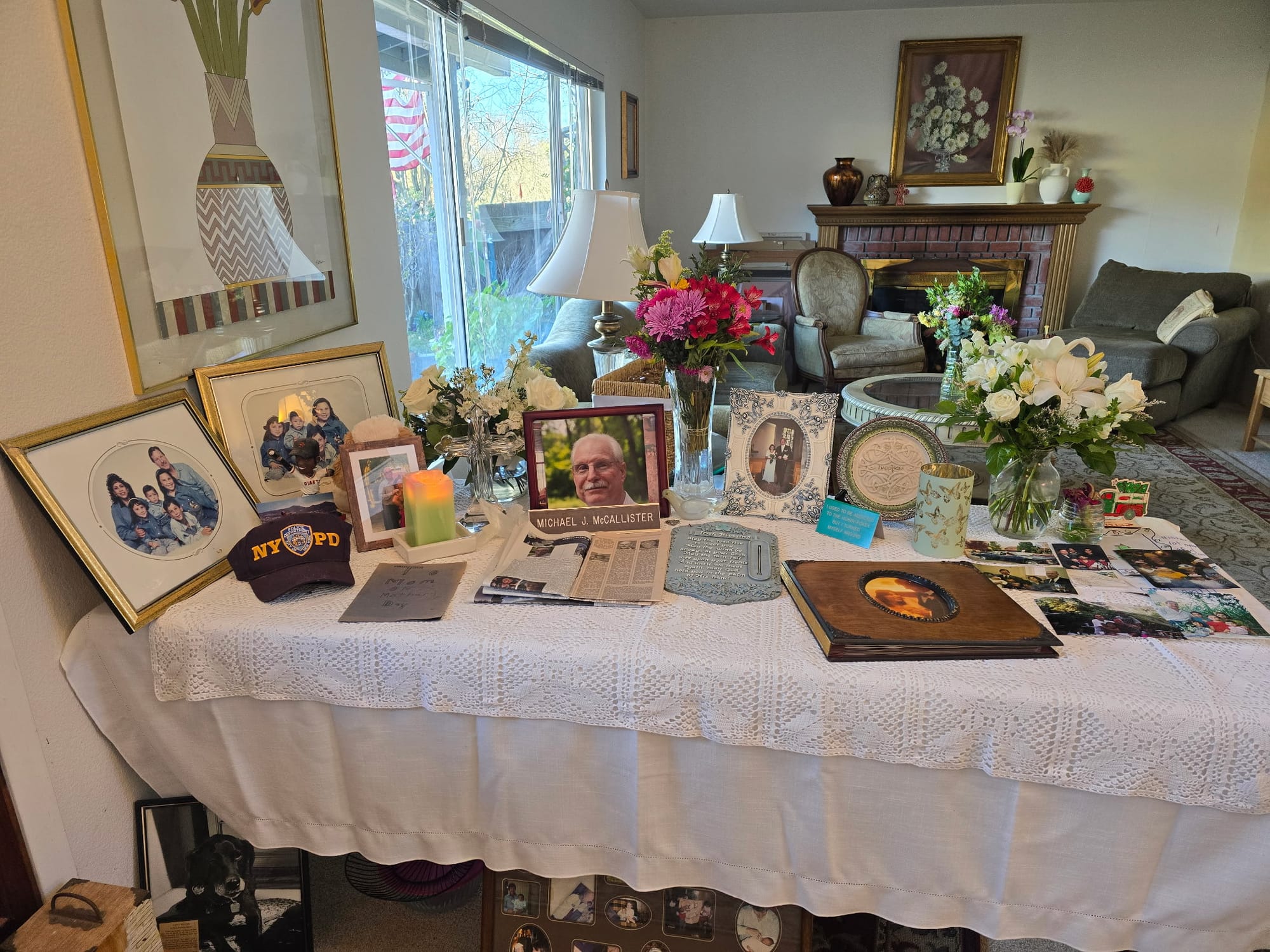
This year, your husband joins other lost loved ones on the ofrenda. How do you deal with the grief and carry the emotional weight of losing him yet be surrounded by the celebration of Día de Muertos?
It is a combination of different parts of reality. You have the moments of remembering them and being sad. It’s also appreciation and being grateful for them. Sometimes you’re gonna laugh and sometimes you’re gonna cry. Memories are not only good, not only bad, but a combination.
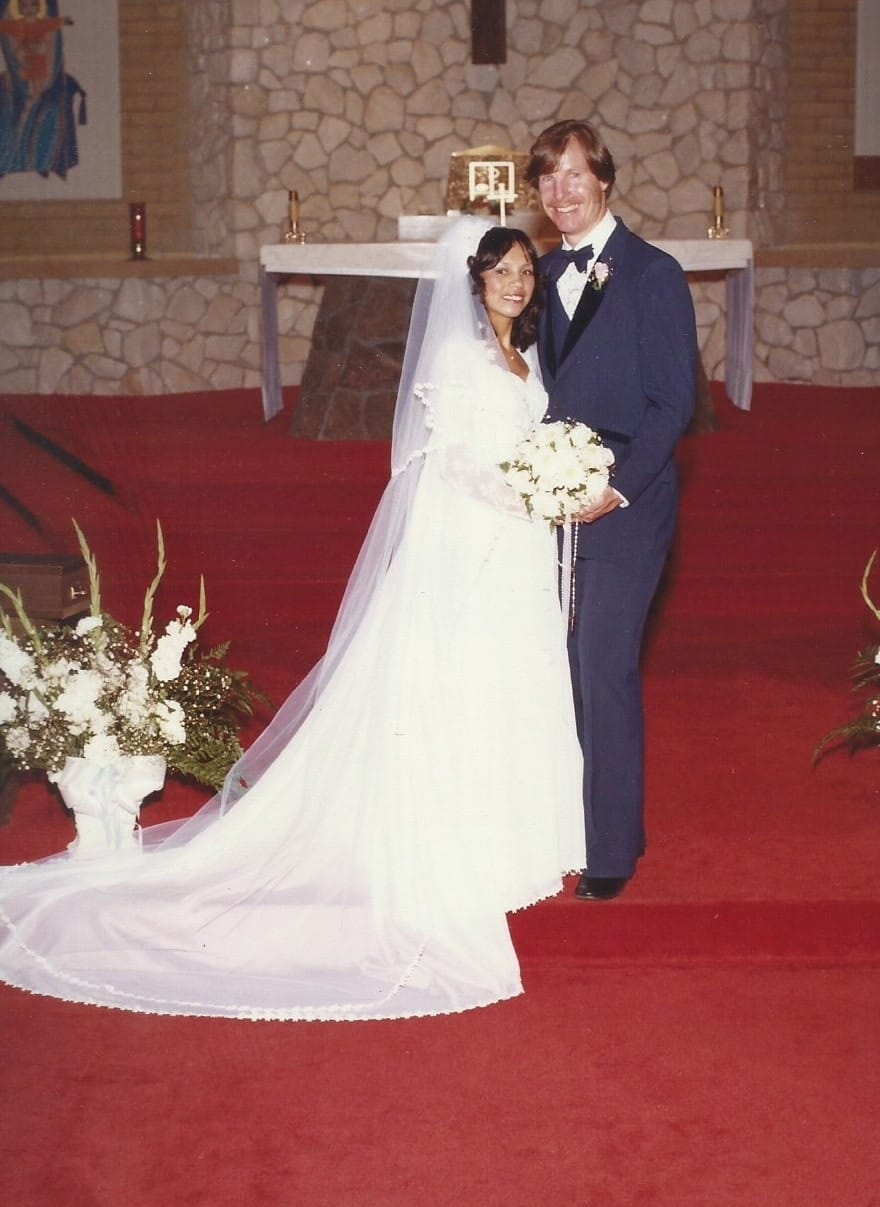
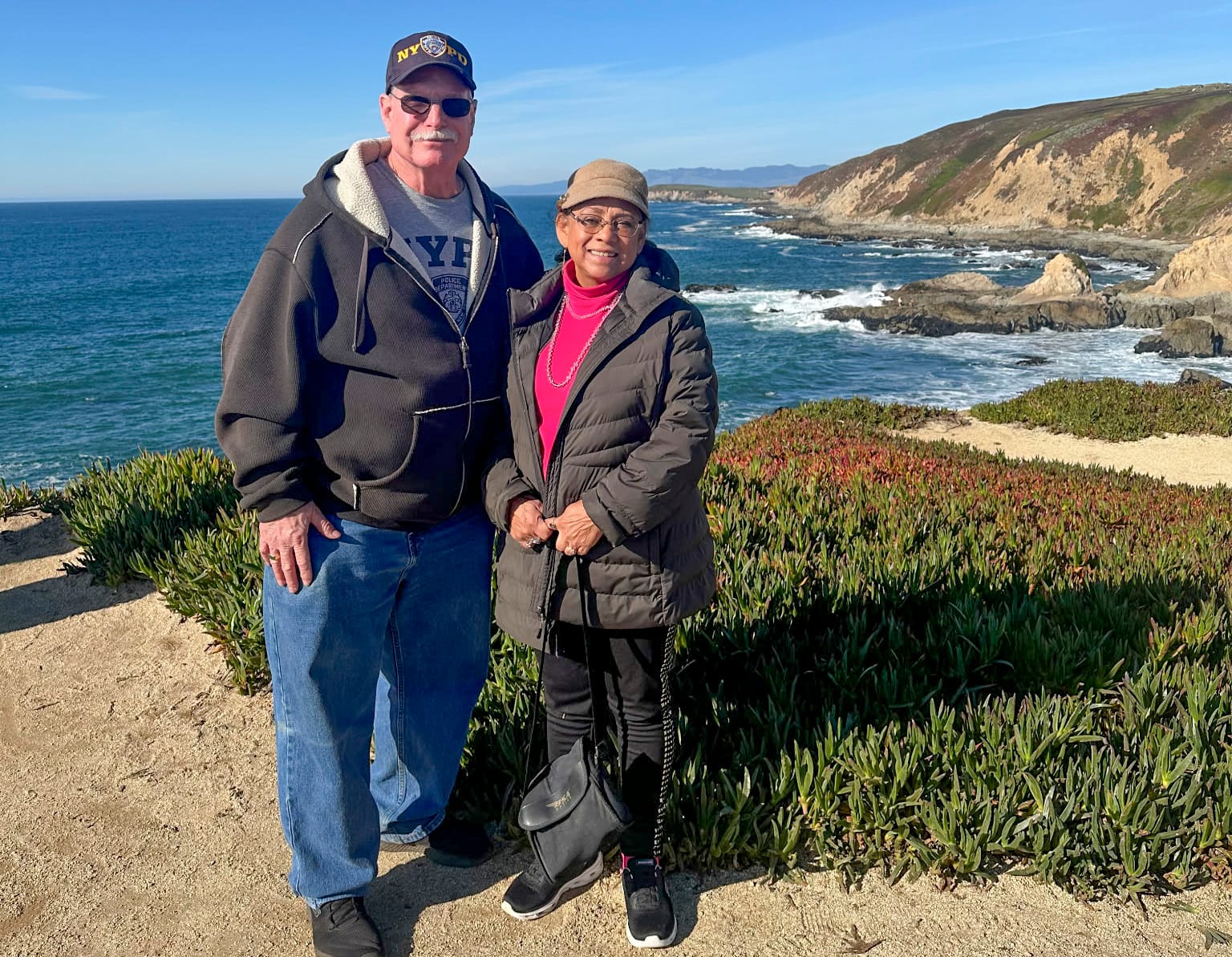
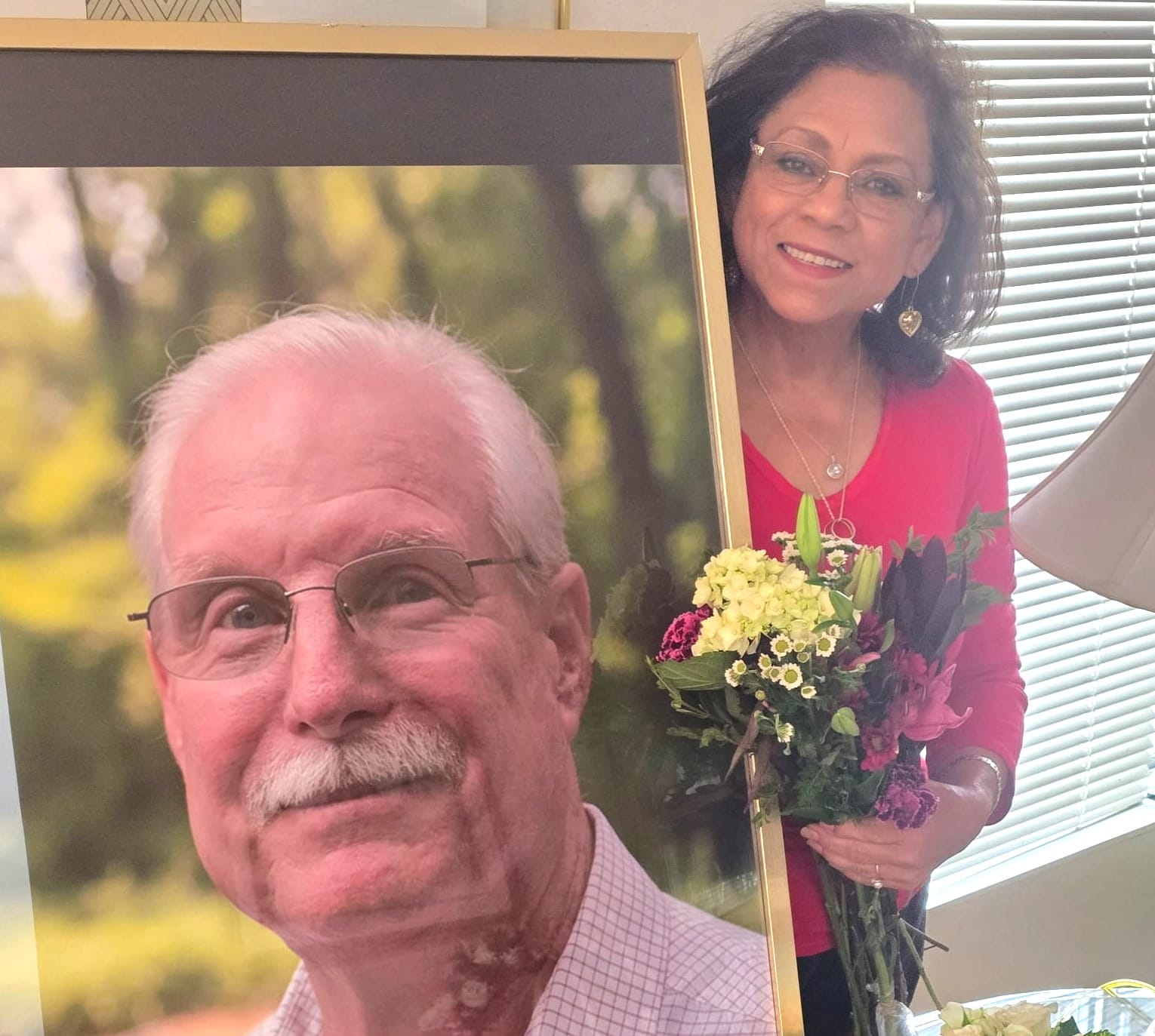
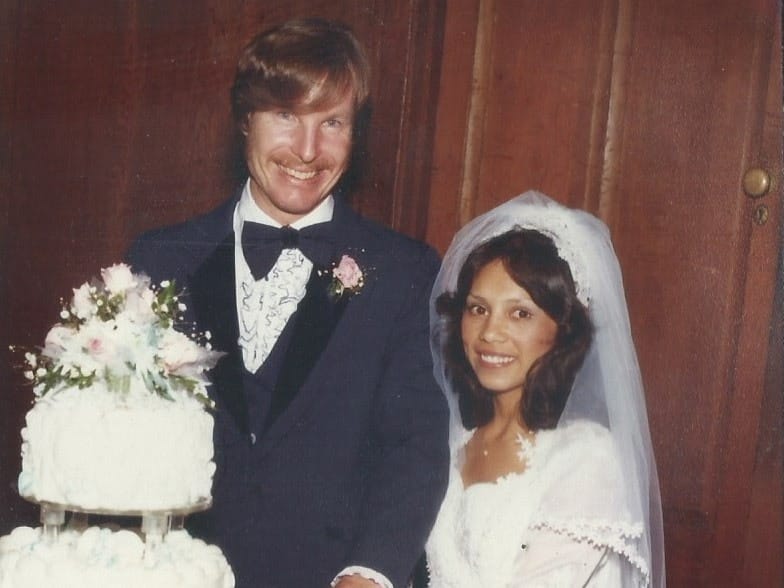
(Left photo) Gloria and Mike McCallister's wedding photo. They were married for 45 years. (Right photo) The last photo taken of the couple, enjoying a day at Bodega Bay, the weekend before Mike died. (Courtesy of Gloria McCallister)
It’s also about healing the pain. It’s like going to a therapist but this feels better because it’s with friends and it’s sharing and in public and it’s bigger. It’s a bigger bottle of medicine. You have to learn to go on and teach your kids that someday we’re gonna be gone and hope that you left something behind that they appreciate and learn from. Life and death come hand in hand.
Mike died January 23. The sheriff came to my house to tell me there was an accident. I didn’t want to believe it. I told him he was lying to me until he handed me Mike’s wallet. I literally collapsed, screaming and crying and shaking and not believing. Everything was just turning, turning, turning. They made a mistake. It wasn’t Mike.
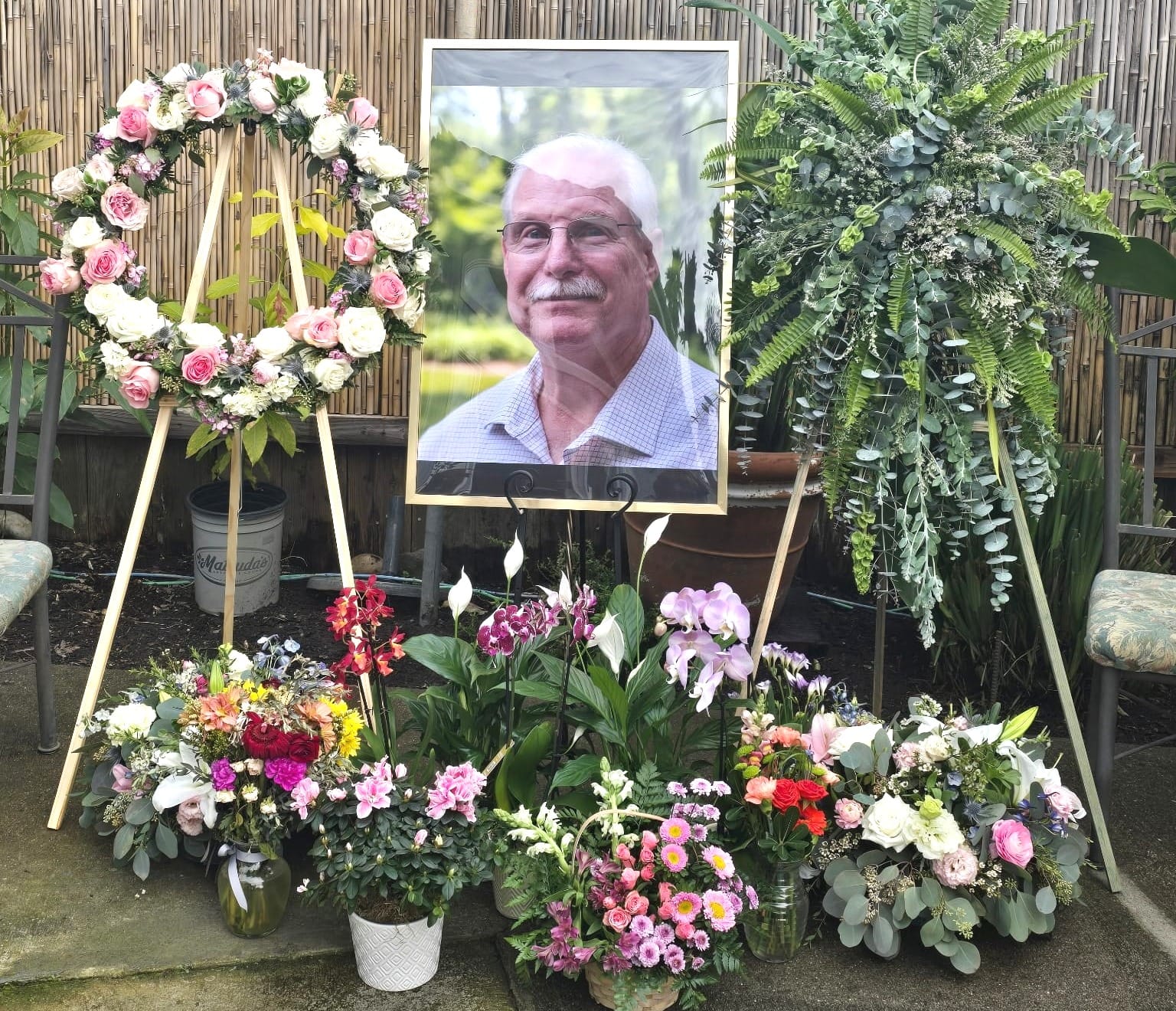
Everything was painful. I wasn’t getting up, eating. But then one time I was saying good night to him and there’s his picture on the mantle and I said, yes, that’s his altar. All of a sudden, it hit me. Mike was so much a part of the Día de Muertos.
I need my community because Día de Muertos is about helping community heal. And now I need them. They are going to be my medicine. They are going to be my healers. I have to continue the message of how to go on with life and appreciate life and say thank you to those that are not with us anymore. You have to walk the walk.
So, to this community, I thank you from the bottom of my heart for giving me the opportunity to heal and the opportunity to bring this gift to you.
What inspired you to start the first Día de Muertos?
I grew up with Día de Muertos. We always kind of celebrated in private. Then I was invited by a couple people that wanted to start this – Abraham Solar and Margie Helm.
I saw it as an opportunity to teach about this way of mourning, dealing with the loss of a loved one. I’ve been helping to bring this celebration since 2000. And since then I lost my mother in 2004. She was part of the celebration – helping me, teaching me, showing me how to set an altar. I lost my father, my brother, an aunt, so many people since 2000. And Dia de los Muertos is following in those footsteps in order to go on.
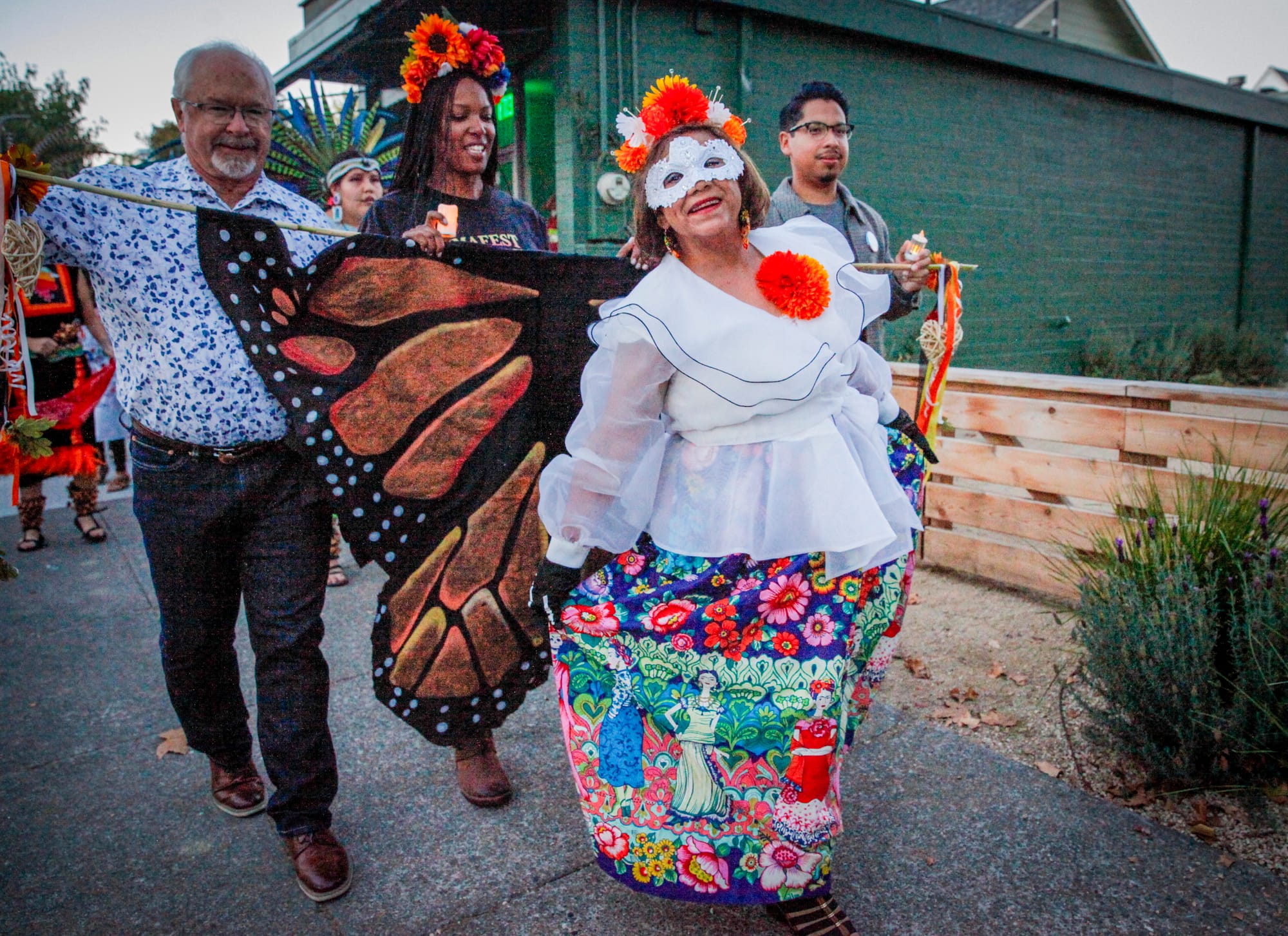
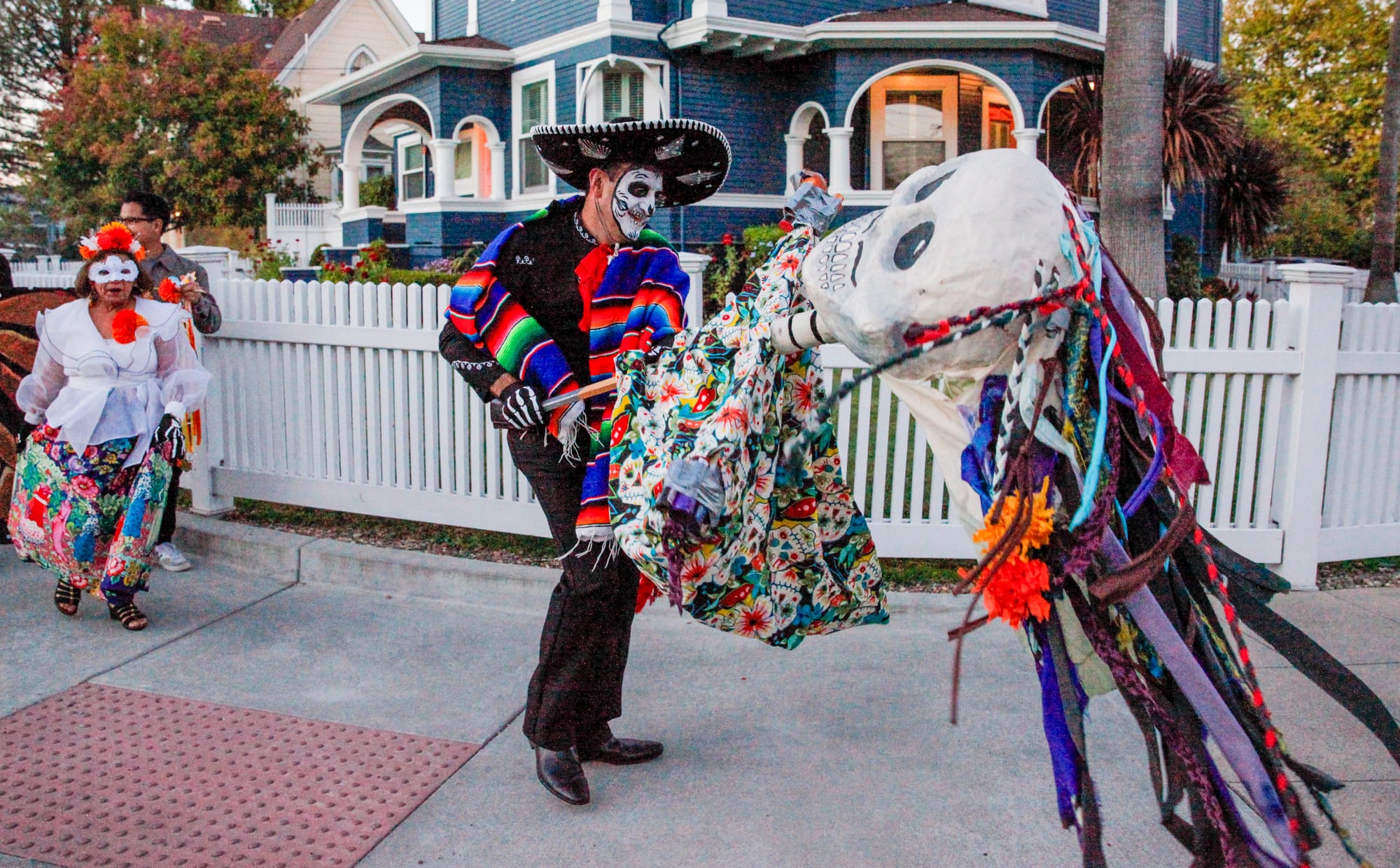
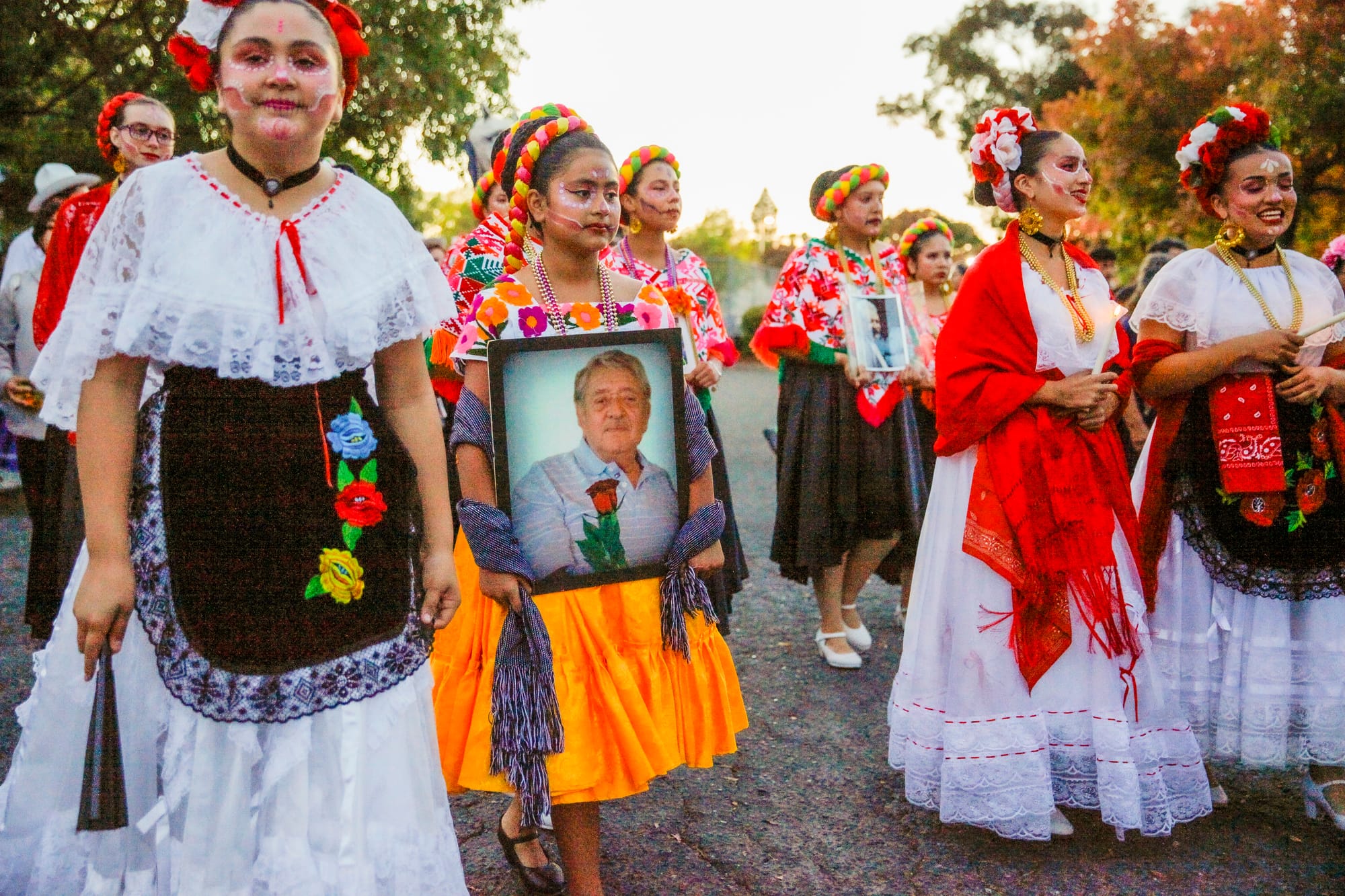
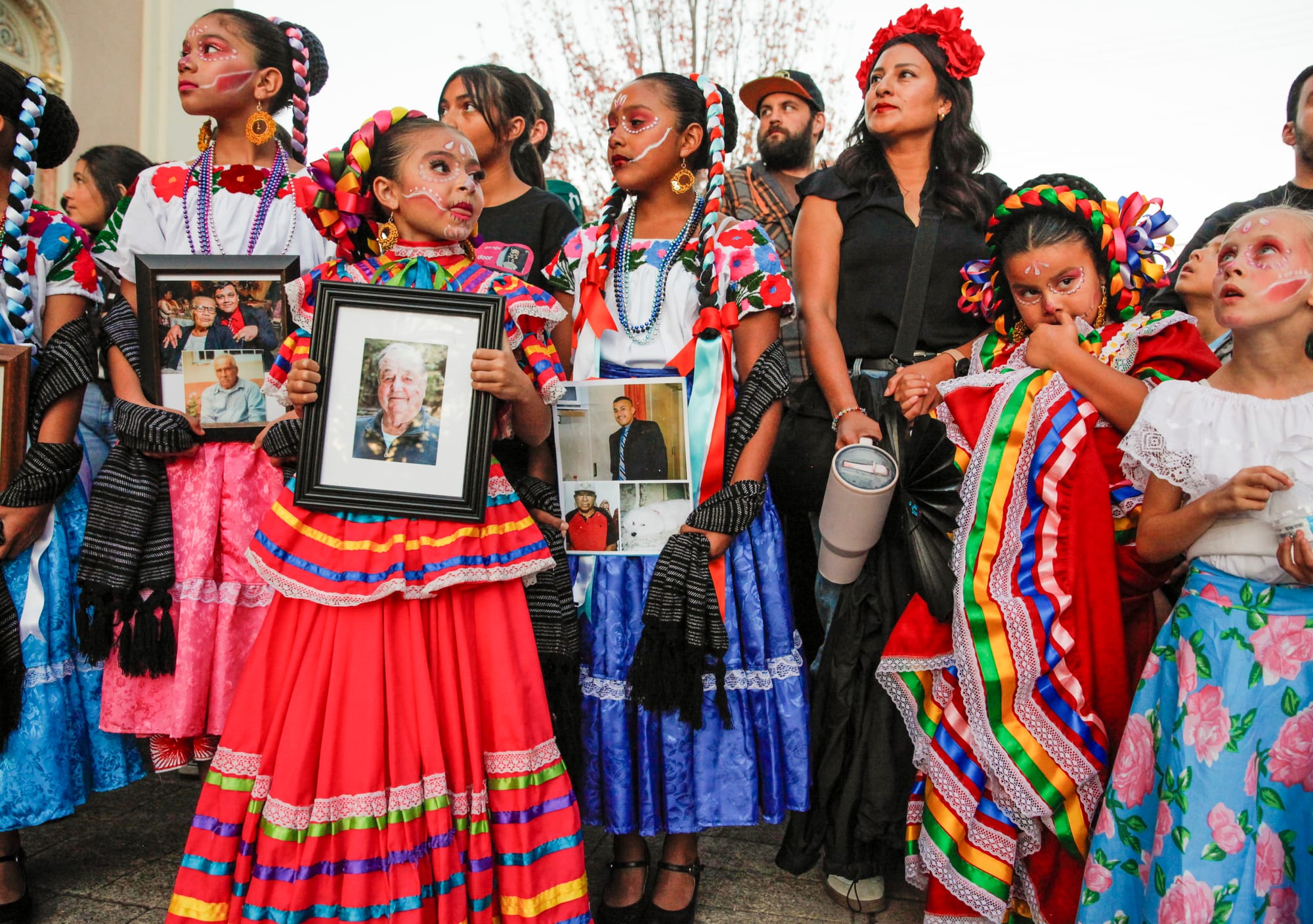
At the El Día de los Muertos event in downtown Petaluma on Saturday, Oct. 24, 2026, (left to right) Gloria walks toward the stage in front of the Petaluma Historical Library & Museum; Abraham Solar leads the crowd from St. Vincent de Paul Church to downtown; and Ballet Folklorico dancers walk in the procession.
Talk about cross-cultural sharing and building bridges with all members of the community and how you keep this Mexican tradition authentic.
I have the good fortune to work with and have friends from other cultures. My belief is that the more we know about each other, the better chance we have to understand each other and the better chance to respect one another and our differences.
If Día de Muertos can be an inspiration for others then, yes, let’s celebrate. It’s an opportunity to show the world we can intertwine and be a bridge. We can come together to learn each other’s way of mourning. I can learn something from them that helps me with my loss and vice versa. So Petaluma can be our own multicultural Día de los Muertos and each of us can have space within the circle.
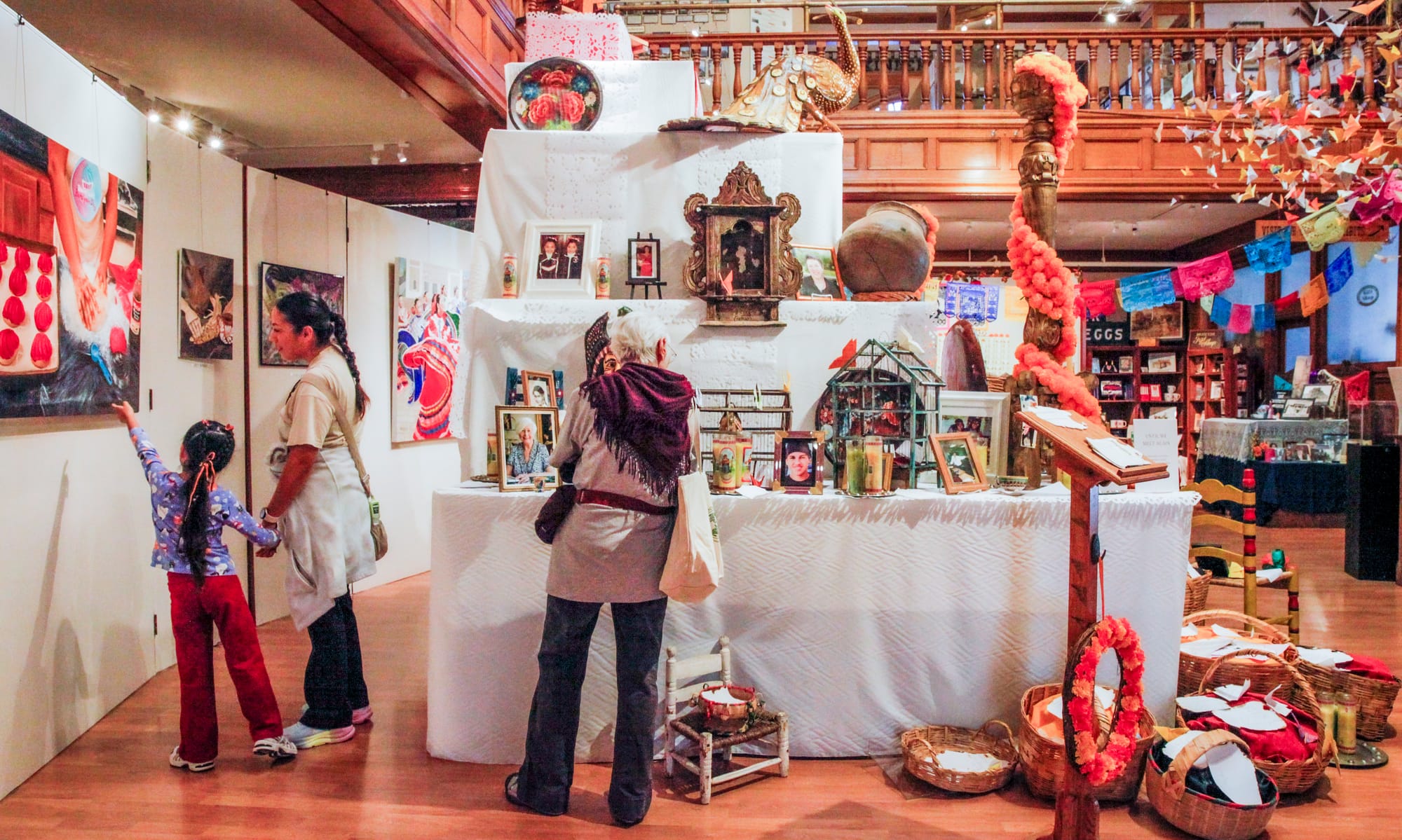
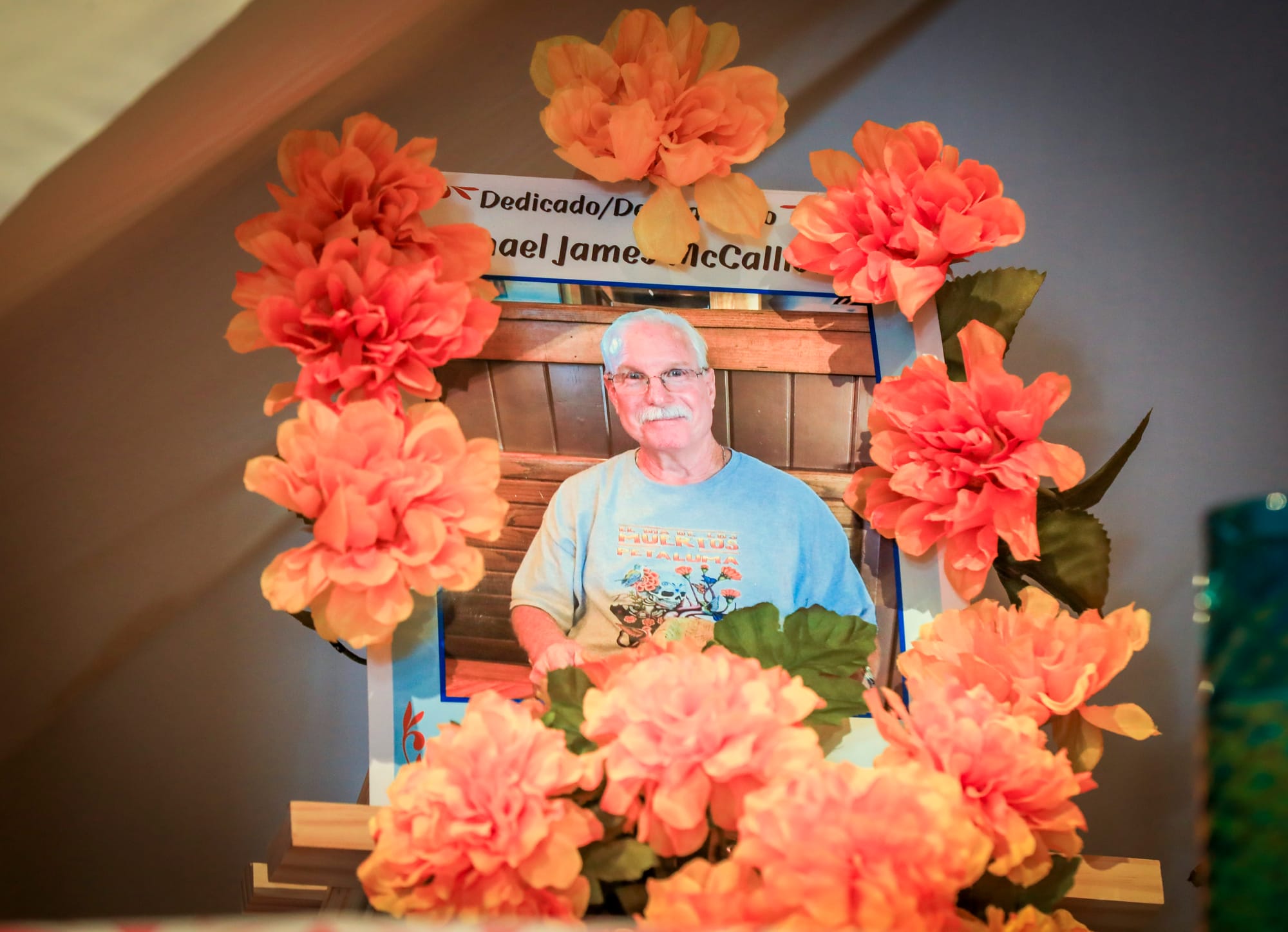
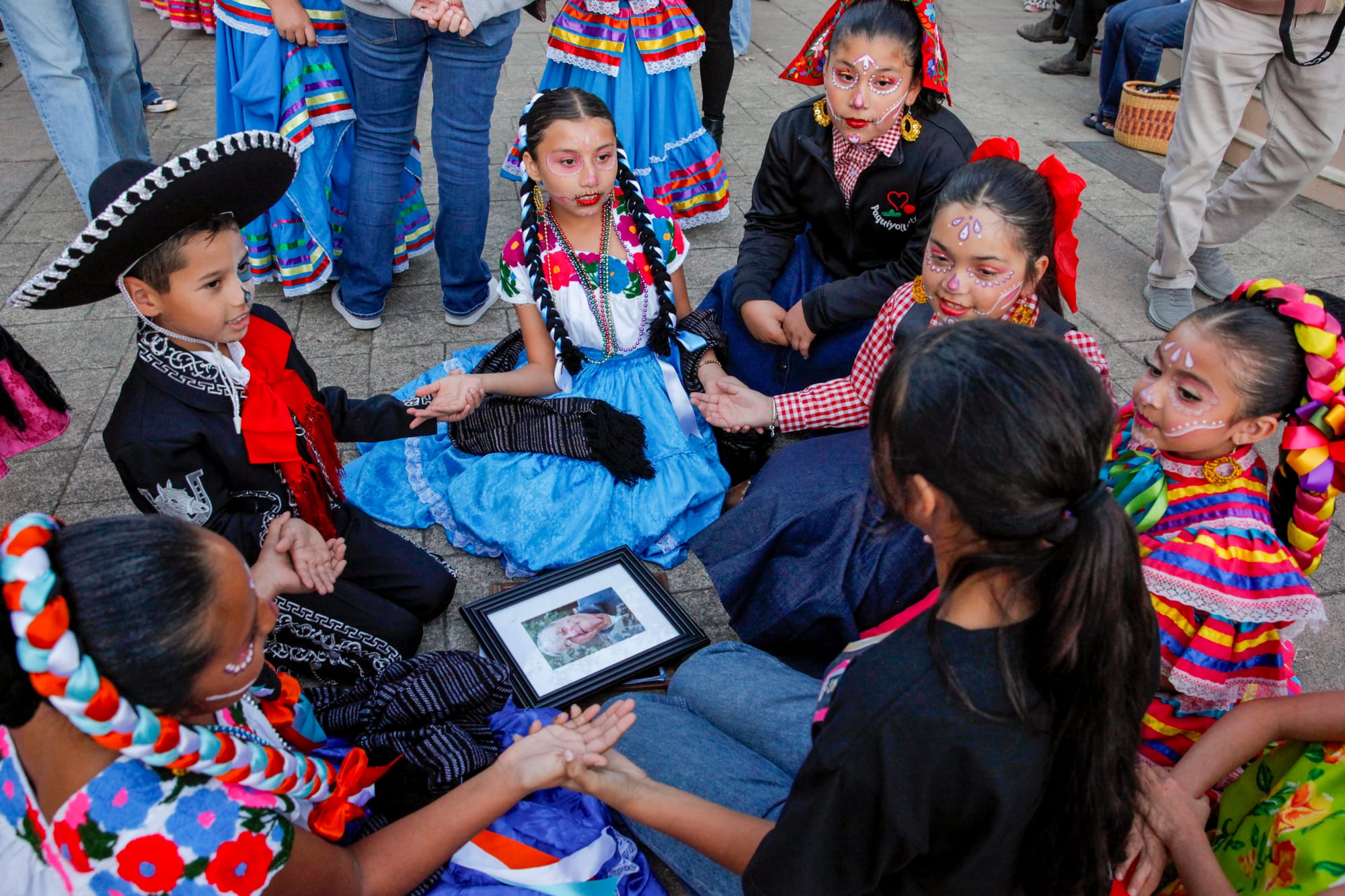
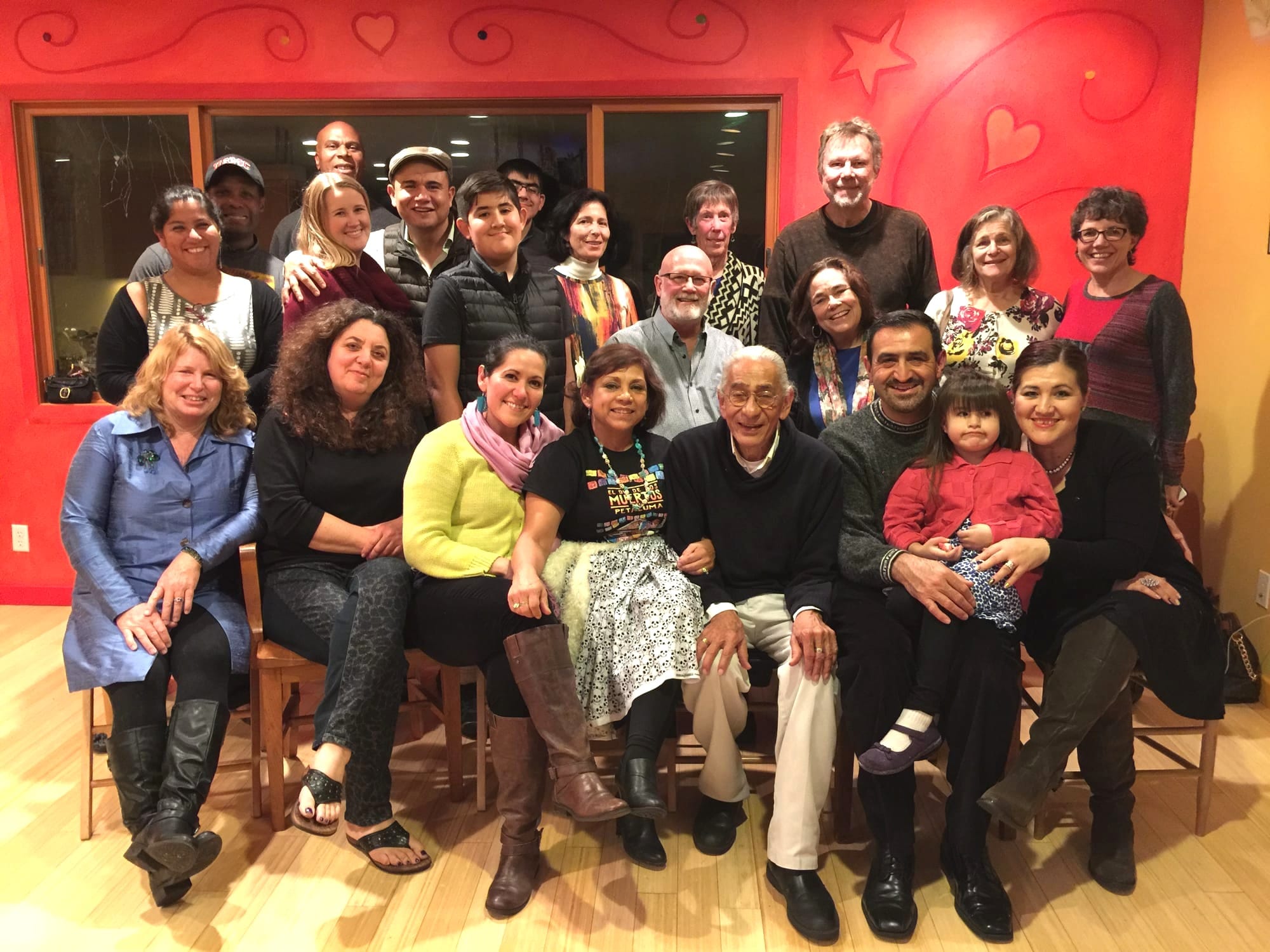
Guests check out the ofrendas and art on display in the Petaluma Historical Library & Museum. Mike McCallister's photo was placed on the large altar by Gloria's friends. (Friday, Oct. 23, 2026. Photo by CRISSY PASCUAL/PETALUMA VOICE ©2026)
Mike would tell me that Dia de los Muertos is healing. He would say, “It’s so nice to see you joking about your grandfather.” He would say that it made him feel lighter. He opened up quickly because there was no escape of being exposed to our way of doing things. He was reserved in the beginning. But he would read obituaries every single day – he called it the Irish sports page.
The altar is my favorite tradition because it’s the core of the celebration and next year, I’ll make one for Mike. I’ll put his favorite beer, Miller Lite.
What goes into the preparation and how has it changed over the years?
It takes a lot. We start a whole year ahead. We are already talking about next year. It’s an ongoing conversation: How else can we help people be part of Day of the Dead? How many more flowers to make? How much papel picado? How much more education?

In the early days it was small. It was at City Hall in 2000. We did a tamale making fundraiser at McNear School so it started as a school event. It was a procession from McNear to City Hall. We invited people by word of mouth. But it was very well attended and we ran out of food!
It didn't occur to me that it was going to be totally misunderstood. Some people thought of it as a religious thing, a cult thing. I’m proud that finally people opened up their eyes and understand that it’s not a religious thing. Yes, we are Catholics so we put our beliefs into it but anybody can put their own religion into their altars or none at all.
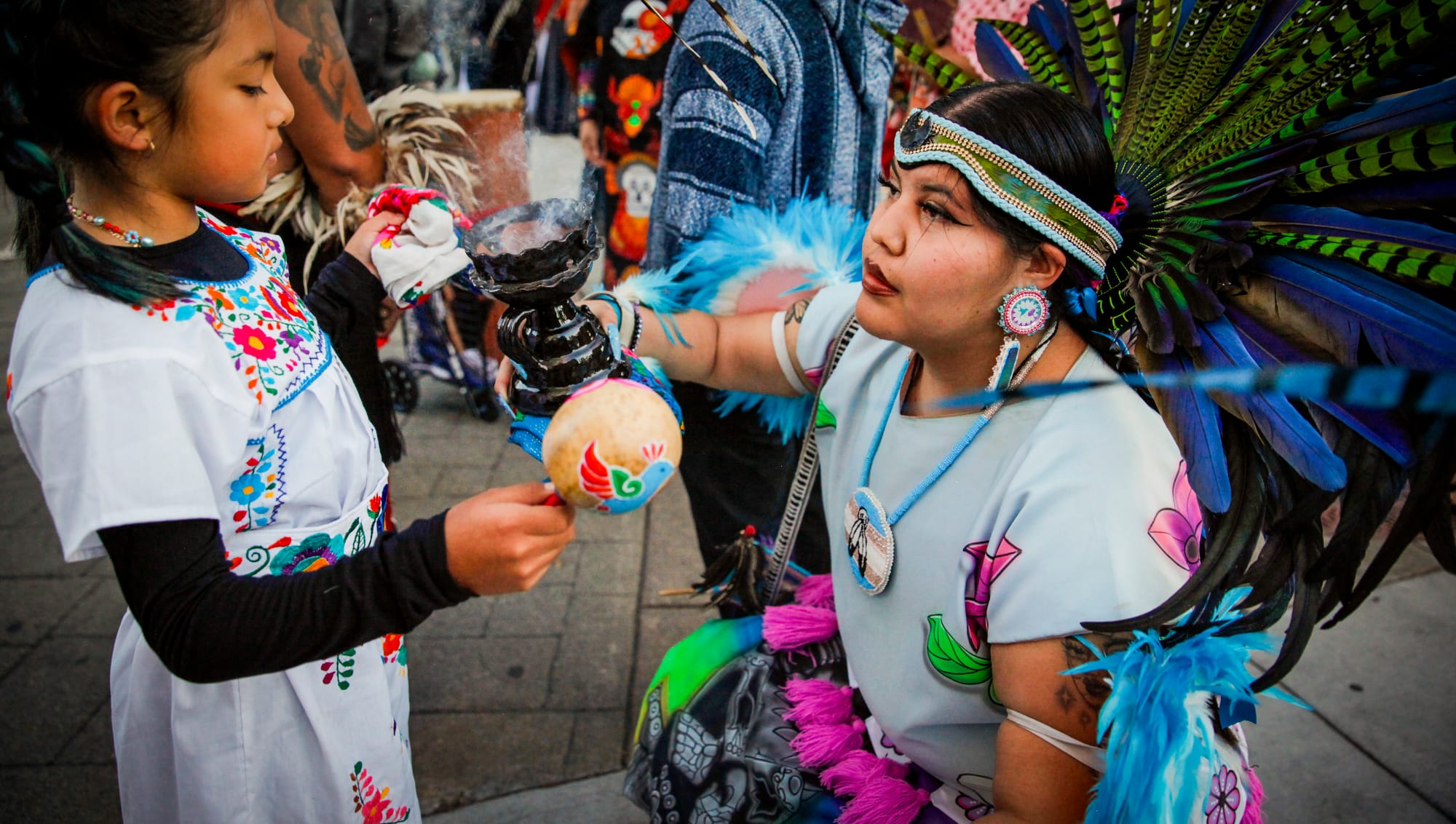
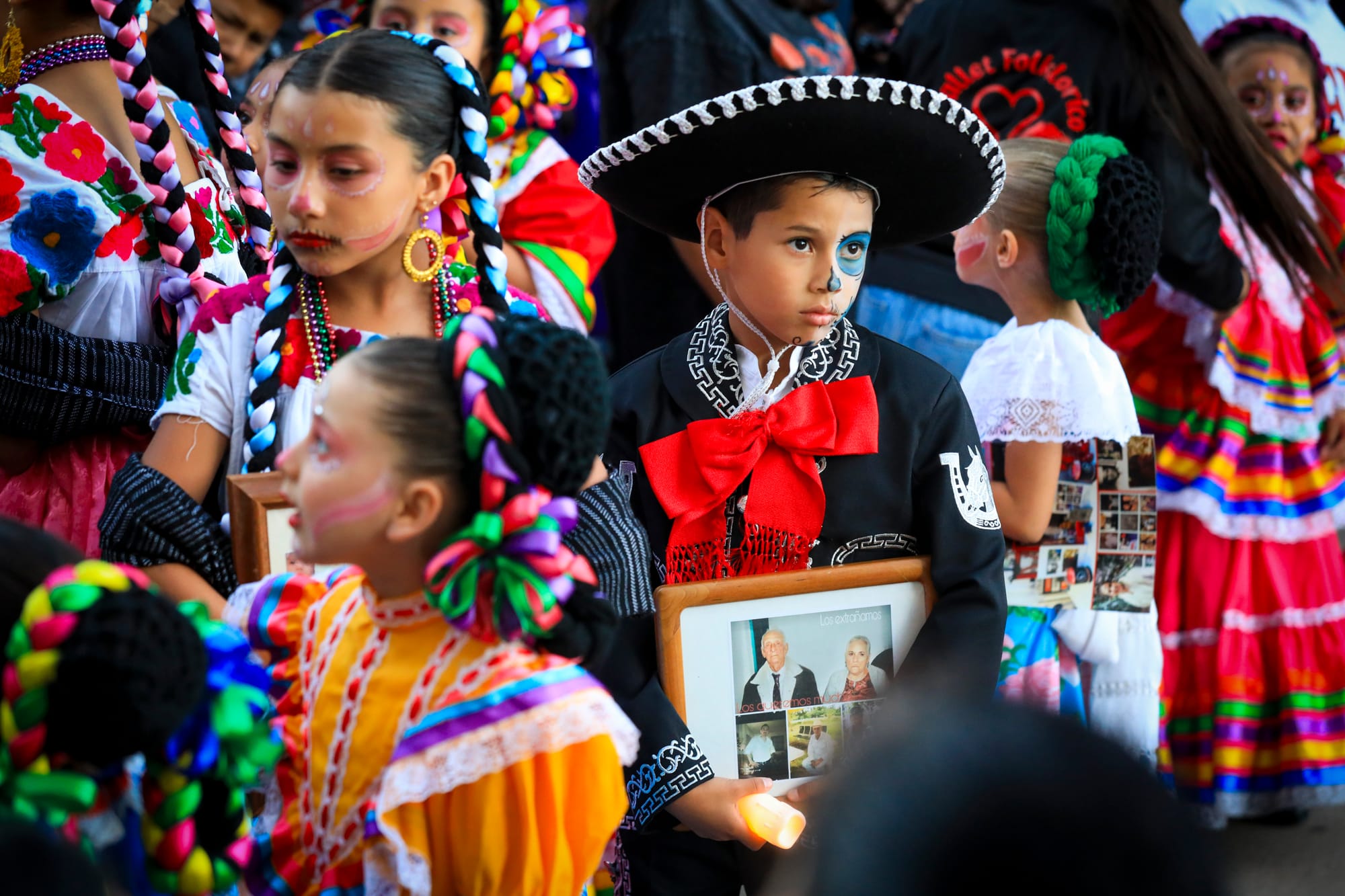
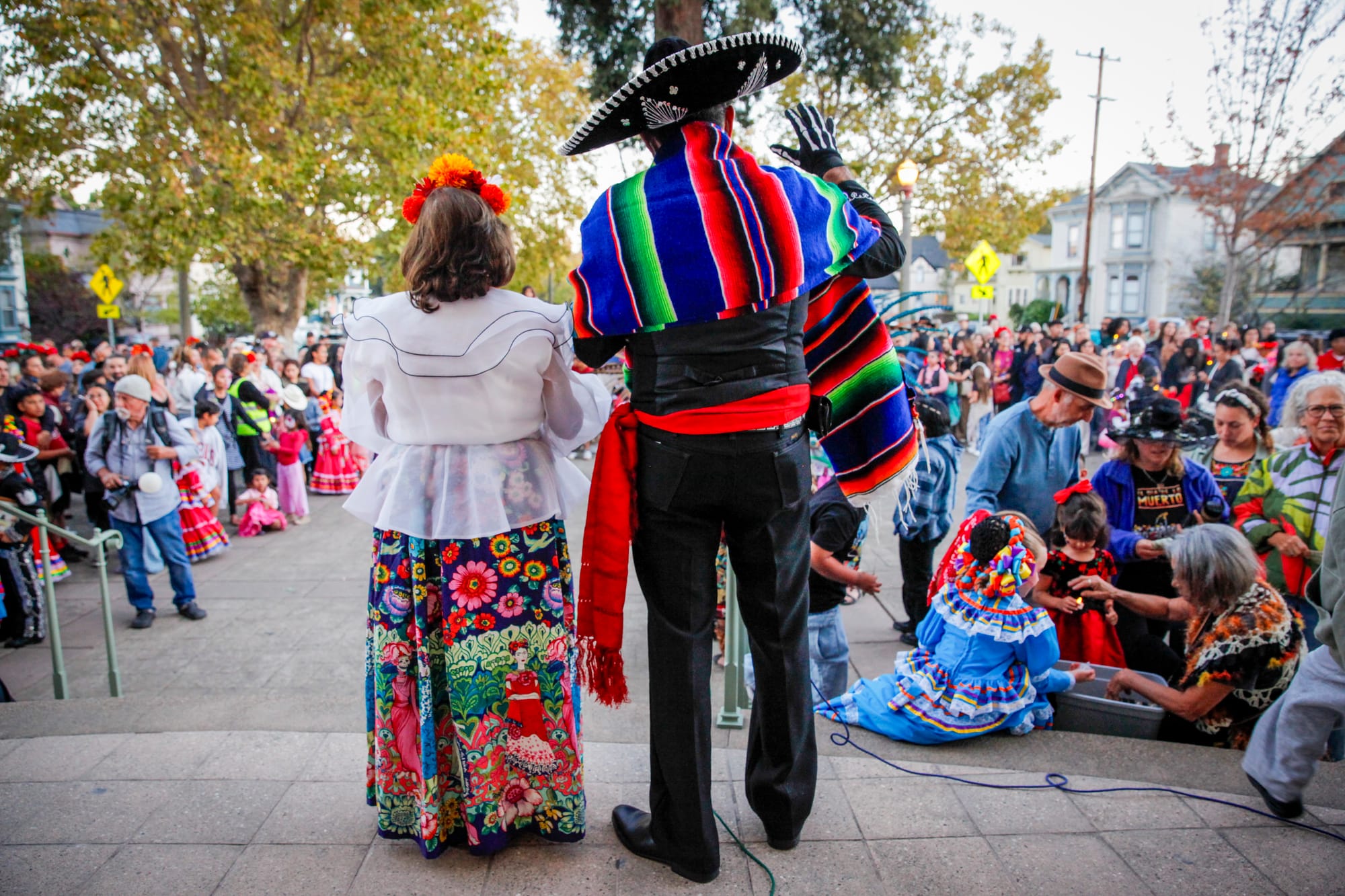
(Left) Ballet Folklorico dancers wait for the procession. (Right) Gloria McCallister and Abraham Solar greet guests as they gather in front of St. Vincent de Paul Church. (Saturday, Oct. 24 ,2026. Photos by CRISSY PASCUAL/PETALUMA VOICE ©2026)
It’s a matter of being educated and learning about it. We weren’t daunted. And I thought, “Someday, this will be big.” We cannot bury it. We survived the COVID years and we are carrying on now. We’re very pleased that it’s this big.
What is something that most people don’t know about you?
I’m a community gardener. I love gardens. I grow a lot of herbs, tomatoes, peppers, kale, strawberries, asparagus. My father was a farmer (in Mexico). We learned to grow everything from corn to sugar cane to beans to peanuts.
I like to grow things. I am a grower of many things – like friendships and love.

Watch a video by volunteer and organizer Margo Gallagher celebrating 25 years of Petaluma's El Día de los Muertos.
The Día de los Muertos exhibit at the Petaluma Historical Library & Museum is on display until Nov. 8.
This conversation has been lightly edited for clarity and readability.
Crissy Pascual is a photojournalist and co-founder of Petaluma Voice. She can be reached at photos@petalumavoice.org.
Do you like our work? Support us with a tip.