5Qs with Upper Room Petaluma tattoo artist Jimmy Bruce
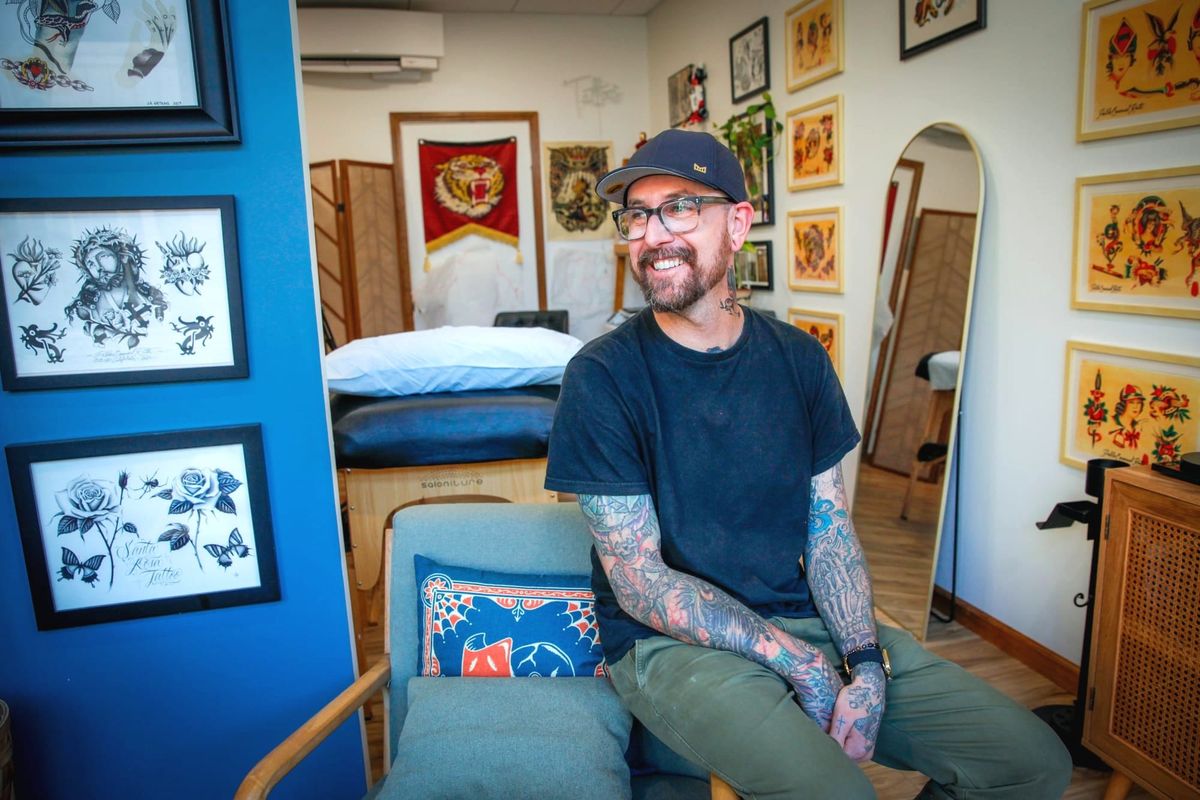
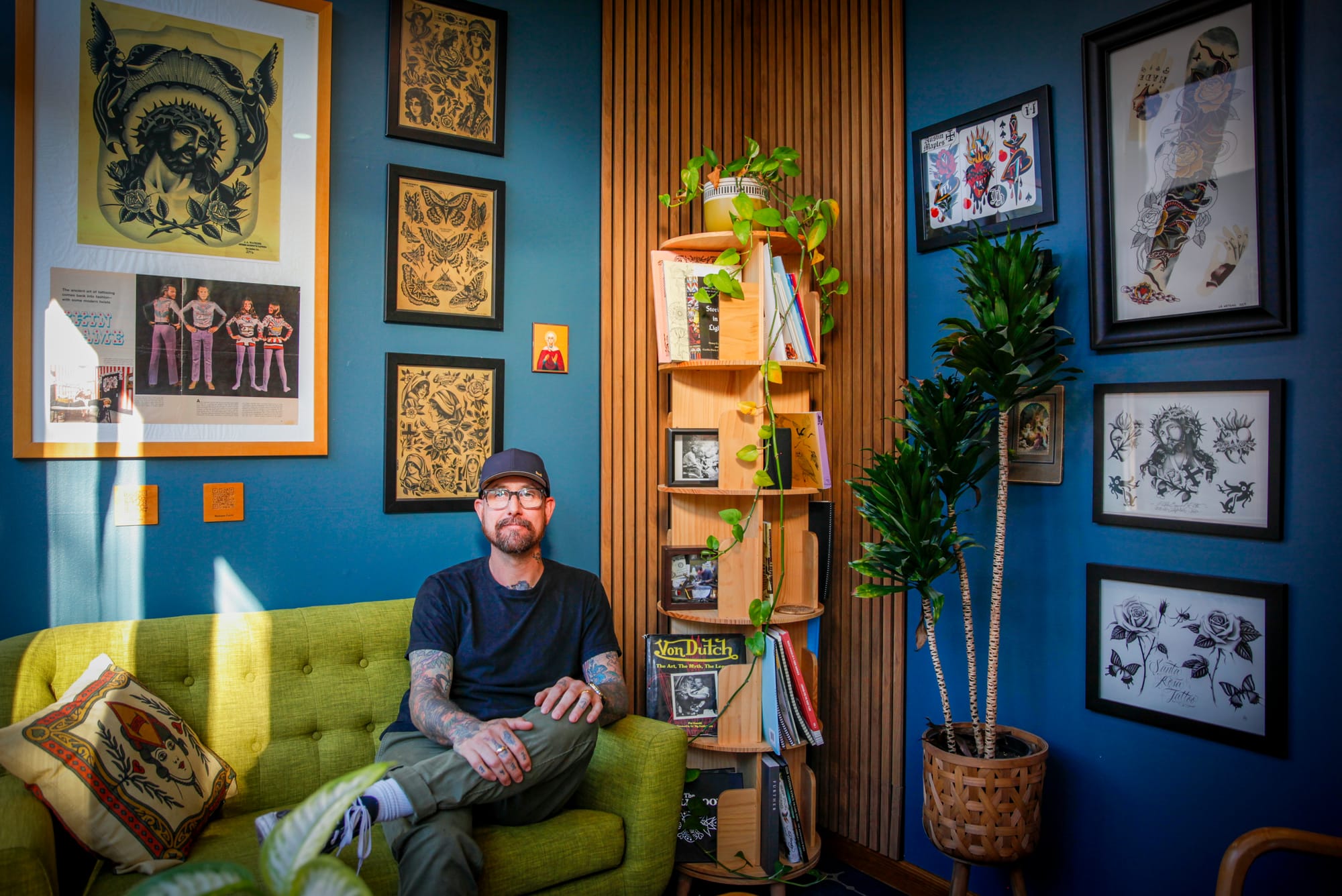
Bruce, 37, is a Petaluma native who has been tattooing in town for 16 years, opening Aces Over Eights with two colleagues in 2011 and moving to his own private studio in 2024
How did you get your start in tattooing?
Originally, my idea was to work on cars. I was gonna go to school, learn how to paint cars, do airbrushing, and just do the creative side of custom car building. So much so that I was enrolled in a school out in Wyoming. I was supposed to go in 2007, right after high school.
Because of where I thought my life was headed – you know, tattoos are totally fine in that profession and it wasn't something that would stop me from getting a job – when I turned 18 I got some tattoos, because I wanted them and didn't think it was gonna hold me back with my career.
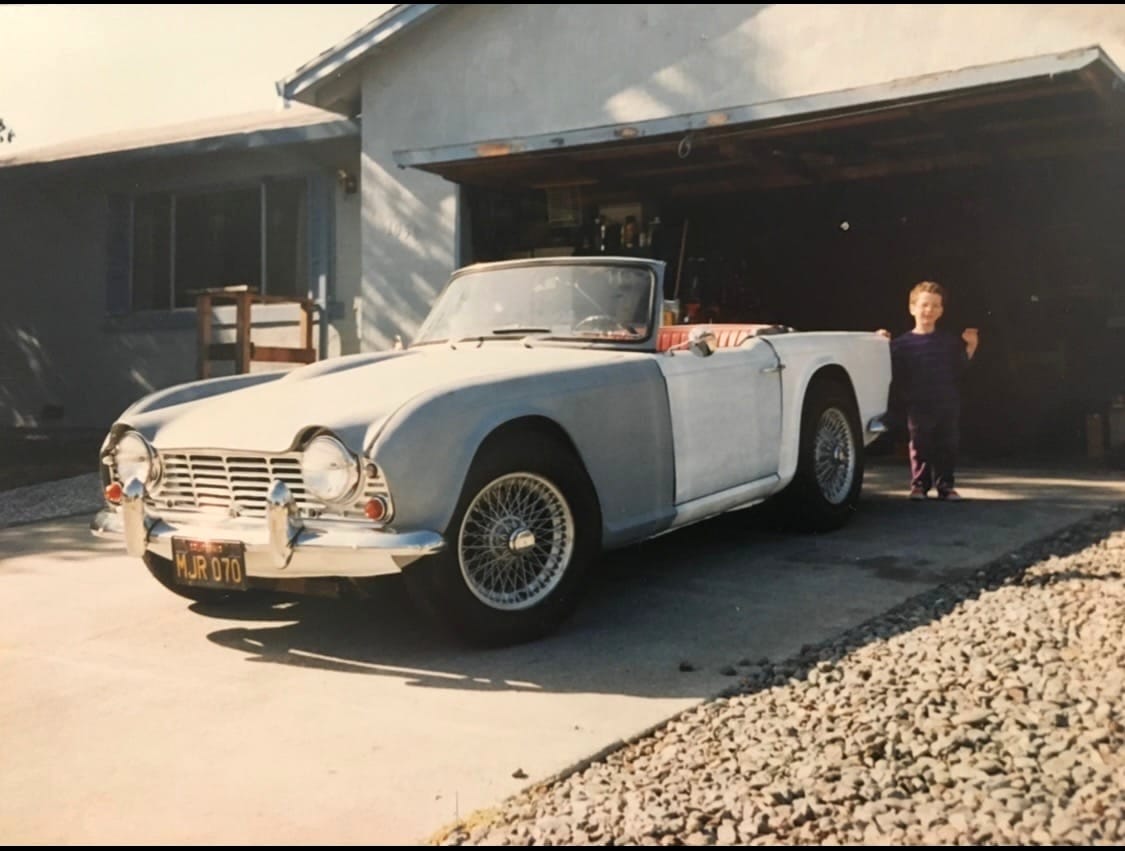
Well, I was working at a car shop in Petaluma at the time, and getting tattooed by the late John Gerhard from Lucky Drive Tattoos in San Rafael, and I just fell in love with the atmosphere of the tattoo shop. And I think it was just a good time because I was already working in the car industry, what I thought I wanted to be doing, and then I was exposed to this subculture, this life, this career that I had no idea about previously, and it was just really clear. I was like, "Wow, I would much rather be doing this, actually.”
It just seemed so much better, easier on your body – that was totally a misconception; it's not. But it was just great. John really romanticized it, and of course I got some hard reality checks when I actually got into it, but that was really what started me towards tattooing.
I took some time to work on art, go to the junior college, take art classes, study, actually become an artist. Then I started to seek out an apprenticeship. I ended up finding one up in Santa Rosa at Evolution Tattoo under Mike Mertz. I apprenticed there, started tattooing in 2009, and moved out to Petaluma in December of 2010 and opened Aces Over Eights.
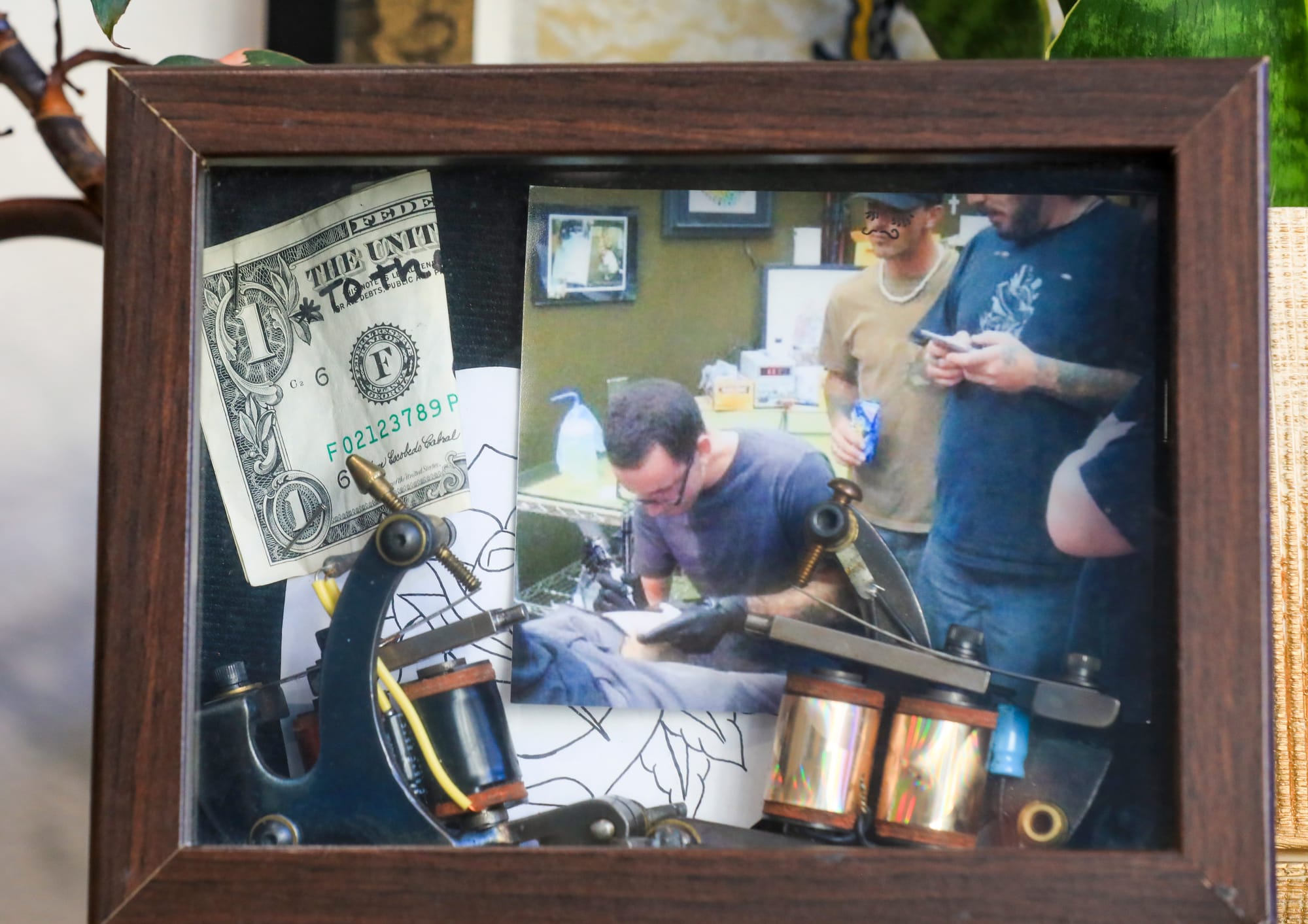
What’s your style as an artist, and what do people come to you for?
I don't think that I have a personal style. Honestly, I think that I've always tried to be well-rounded in tattooing. I've always done a mix of different art forms, different styles, and I feel like that has had a large impact on just how busy I've always been and the support that this community has shown me.
I don't think that there's anything wrong with specializing and only doing one style. I think that's more and more common with younger generations of tattooers that have a personal style. Coming up in the industry, I was at a walk-in street shop, where you're in competition, so to speak, with other artists. There's a rotation for walk-ins, but if you're up for the walk-in and the tattoo comes in and it's a style you can't do, then it goes to the person who can do that style. So I always tried to be someone who could do any style, and purely from a practical standpoint, that meant that I didn't have to say no very often to work. Starting out, I think it’s really important to just explore different styles.
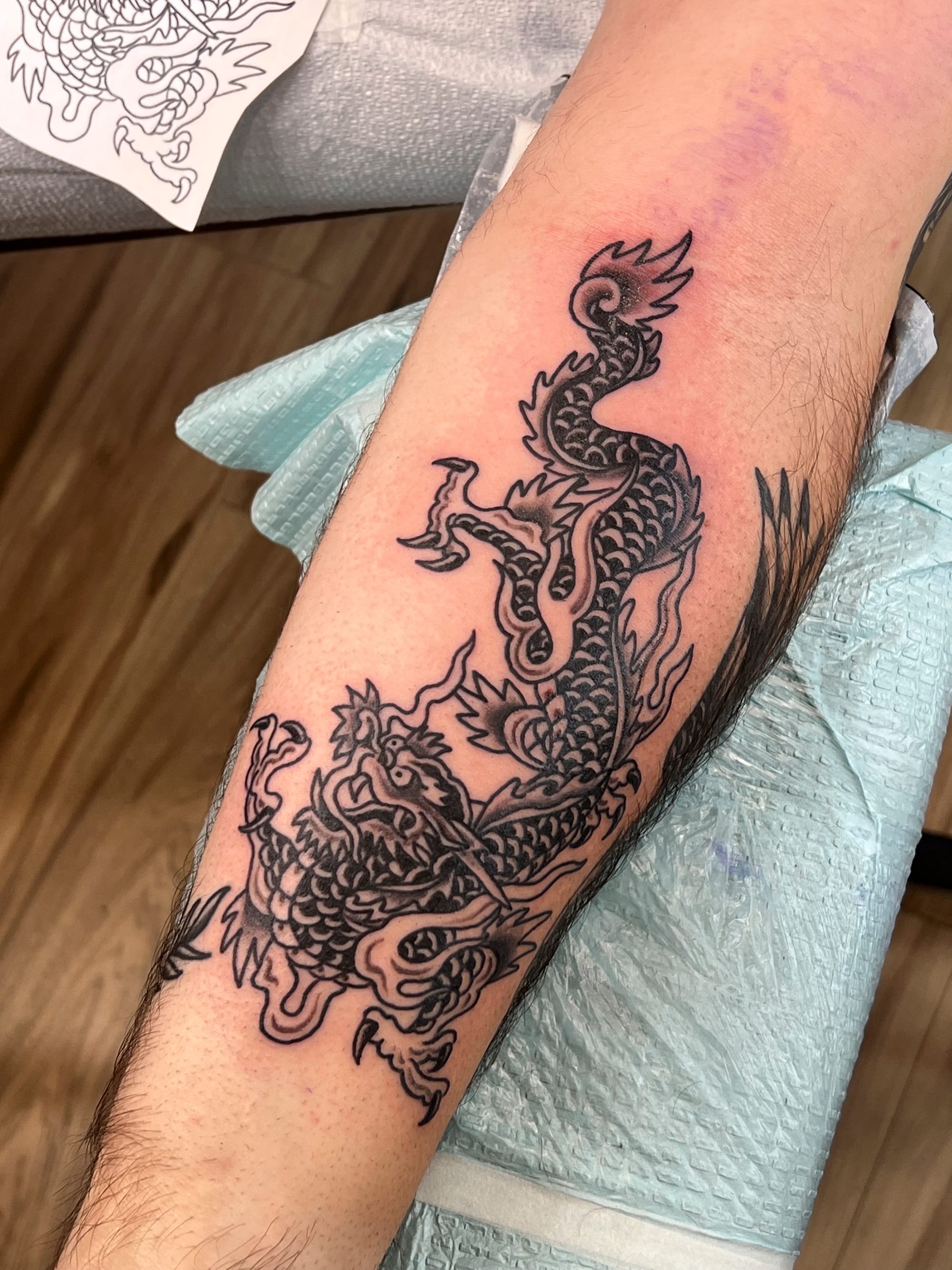
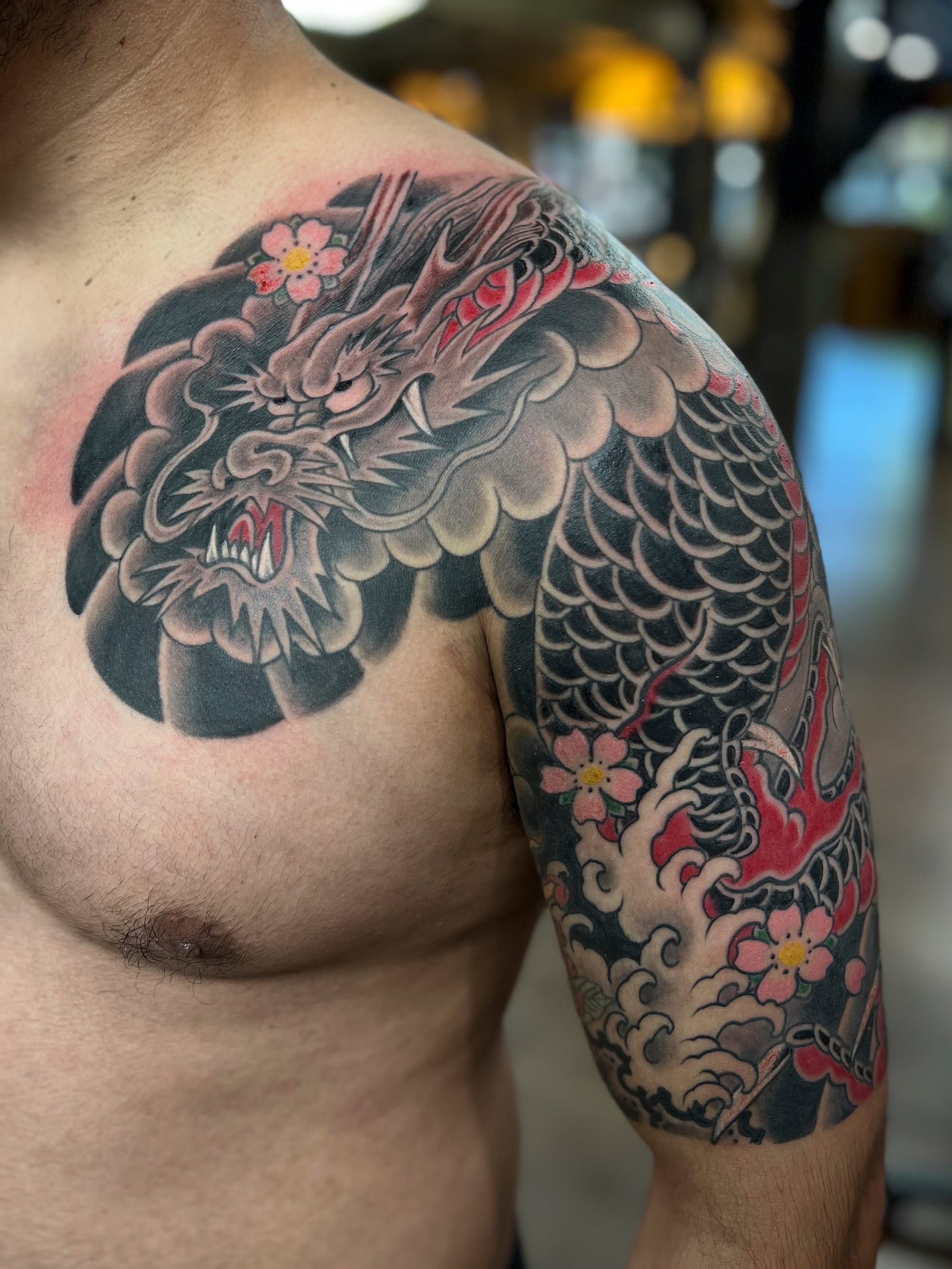
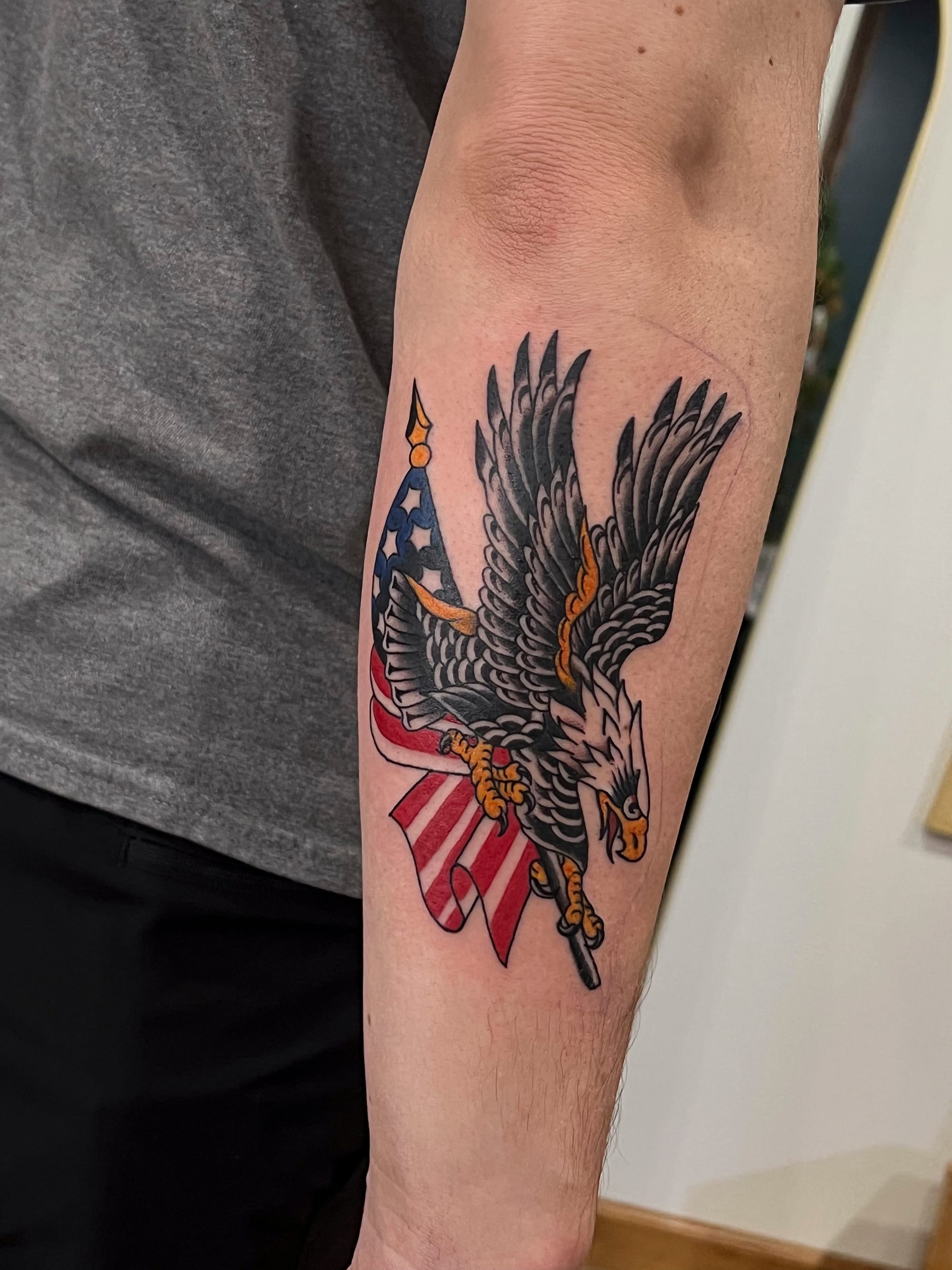
Bruce learned to tattoo in various styles. (Courtesy of Jimmy Bruce)
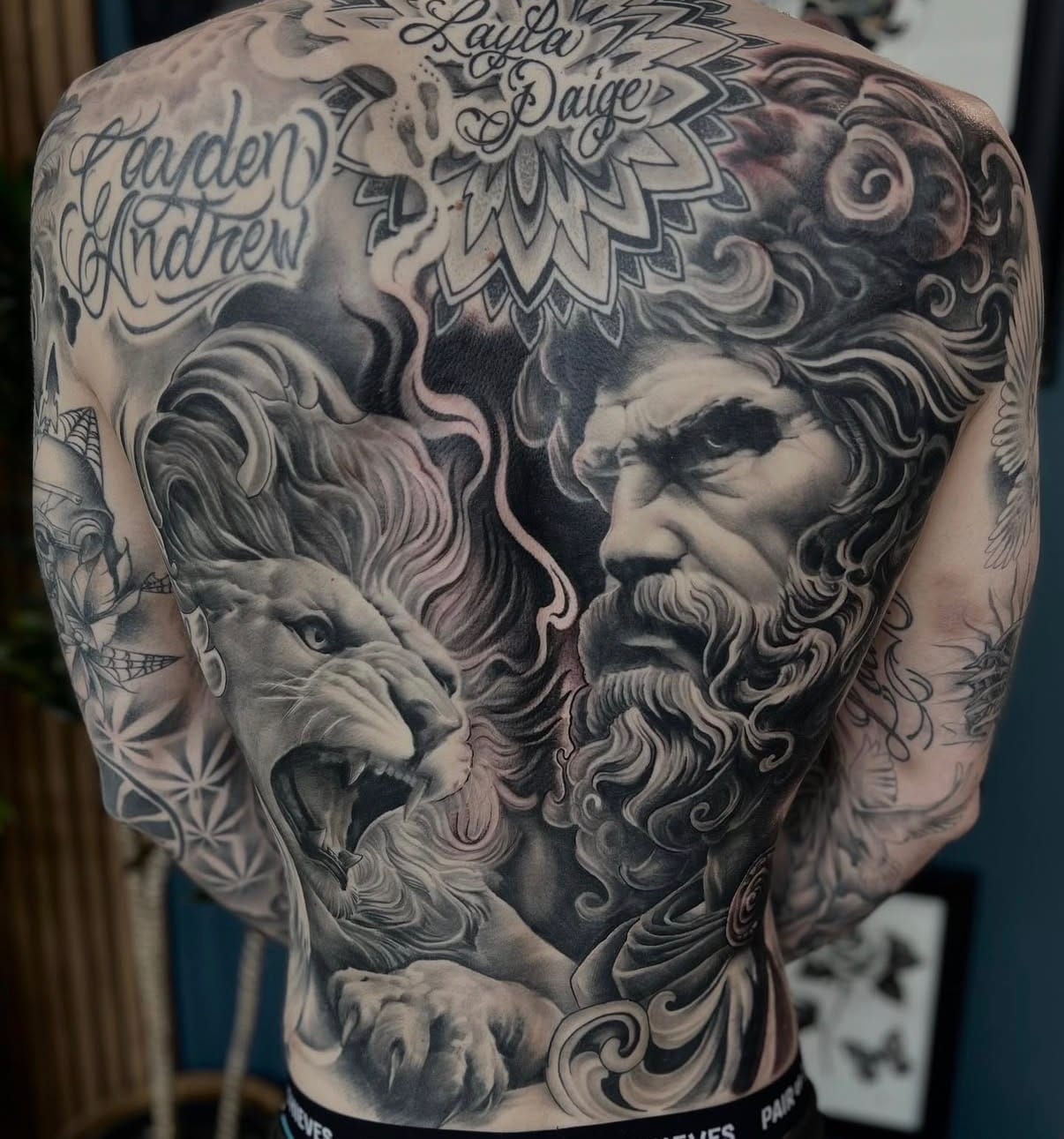
I don't think I was ever necessarily drawn to portrait-style work or photorealism, but it started to get really popular. And so I said, okay, I need to dedicate myself, I need to learn this, you know – hopefully, become somewhat proficient at it. And now that's the number-one style that I do: black-and-gray, portrait-style work, large scale. It's very popular.
So I think it's helpful to be well-rounded. But if I were to pick, I would say that if for the rest of my life, I could only do one, it would probably be traditional Japanese. I would love to be able to dedicate myself to that, to explore that. I feel like I'm maybe mediocre at best right now at it, but I love it. That style specifically is really a lifelong pursuit, and a lot of the time, the real day-to-day work gets in the way of me exploring that further on my own time. But I still do, and I still get the opportunity to do a lot of that work.
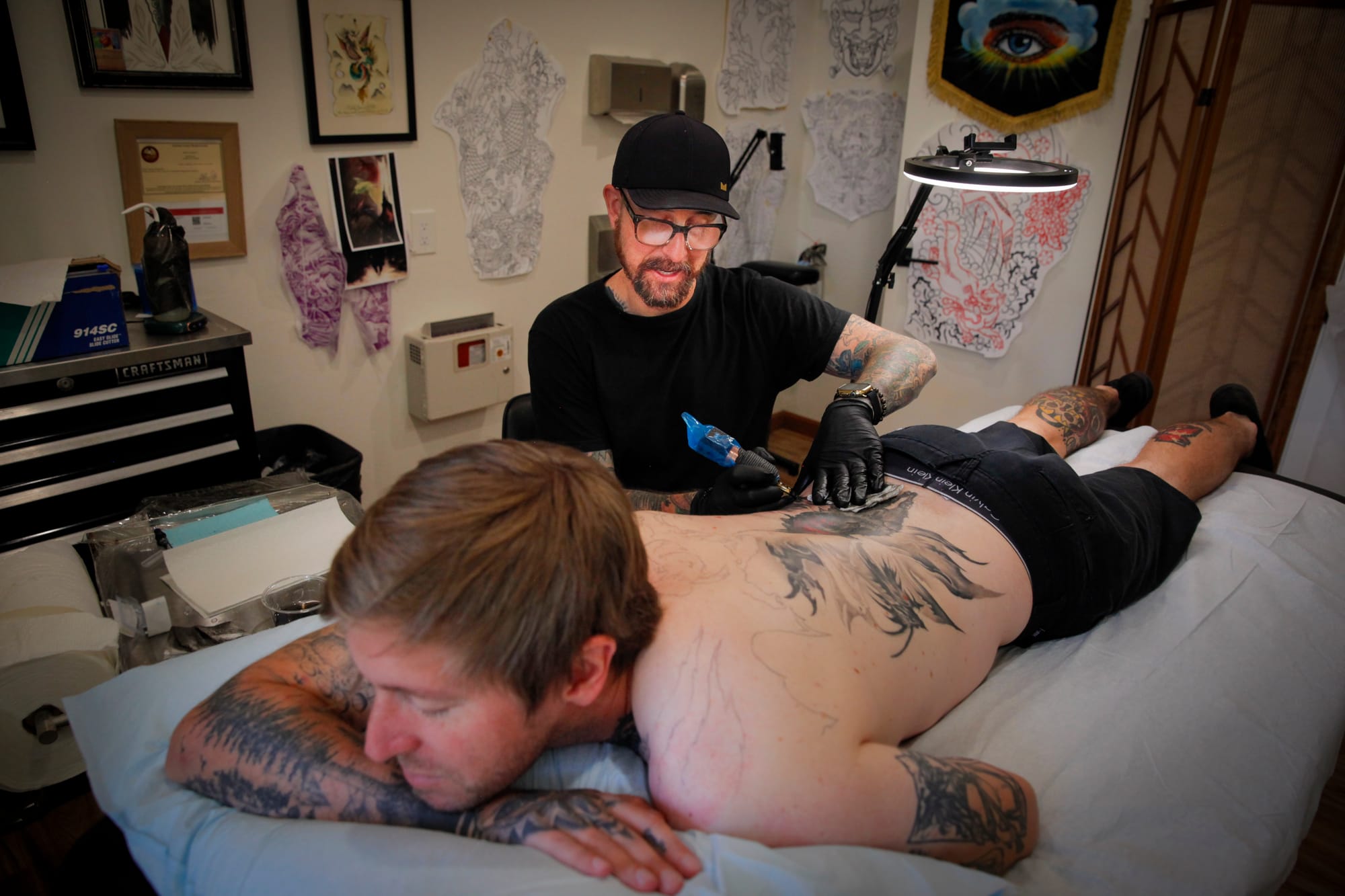
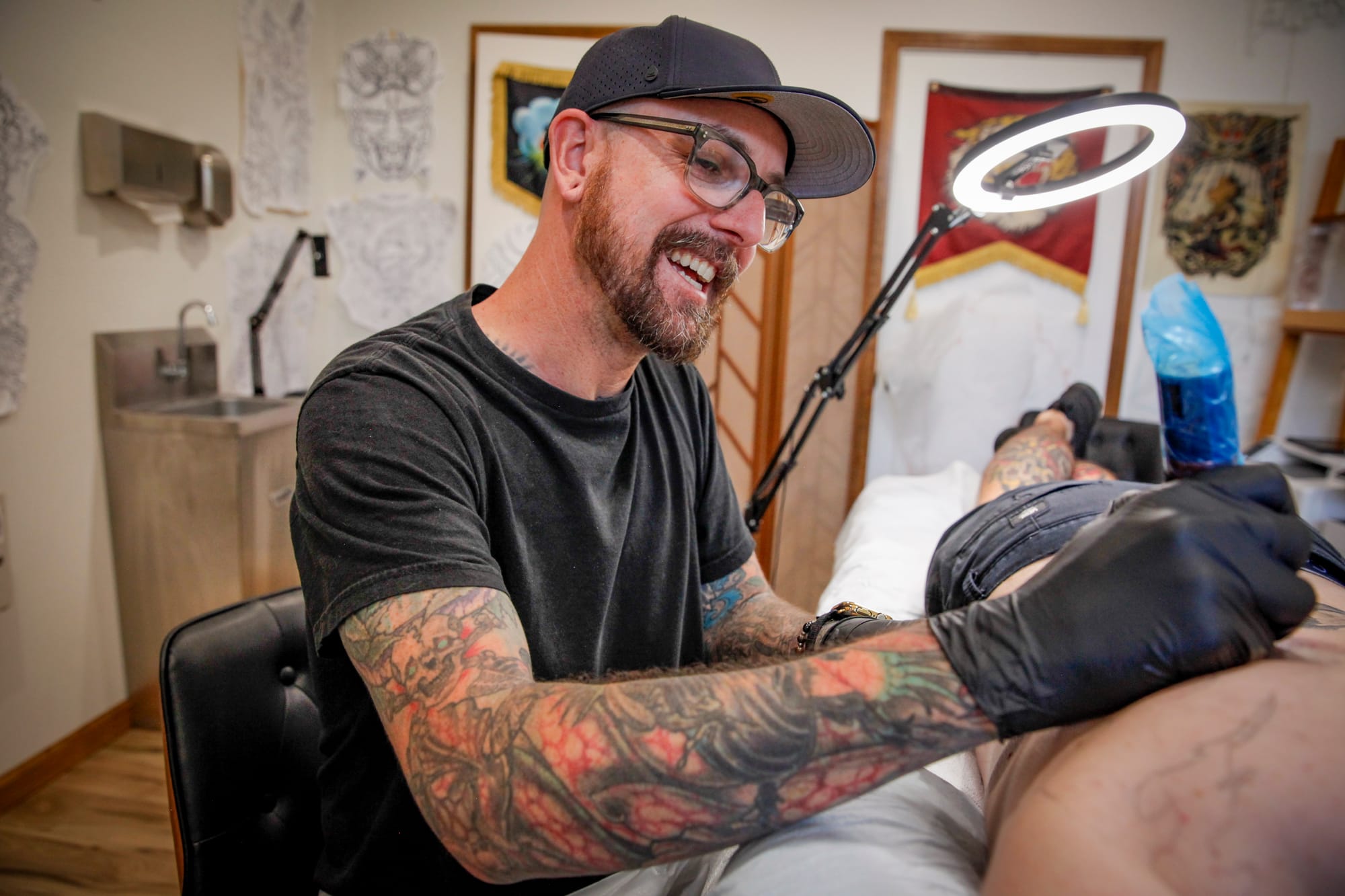
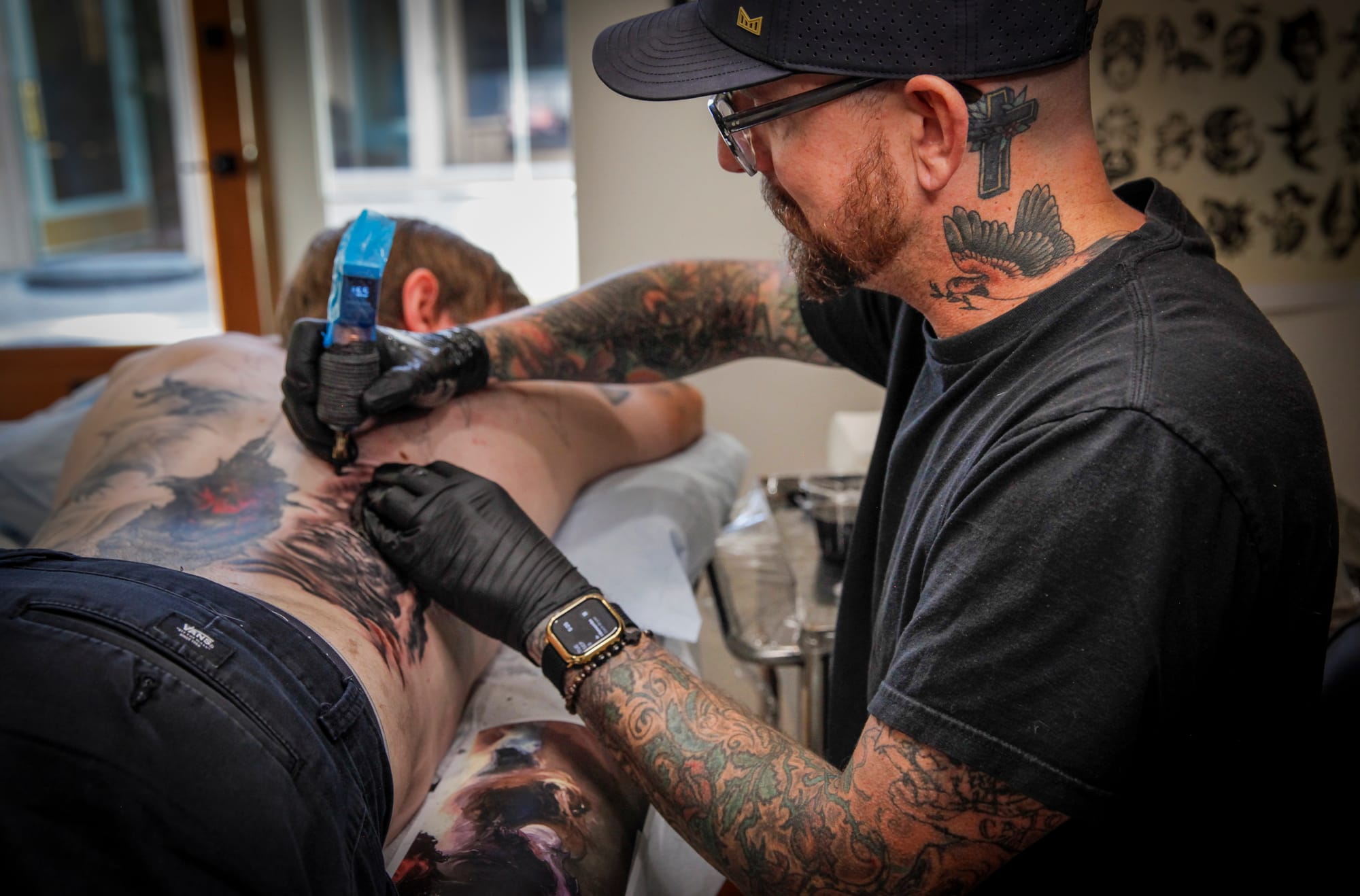
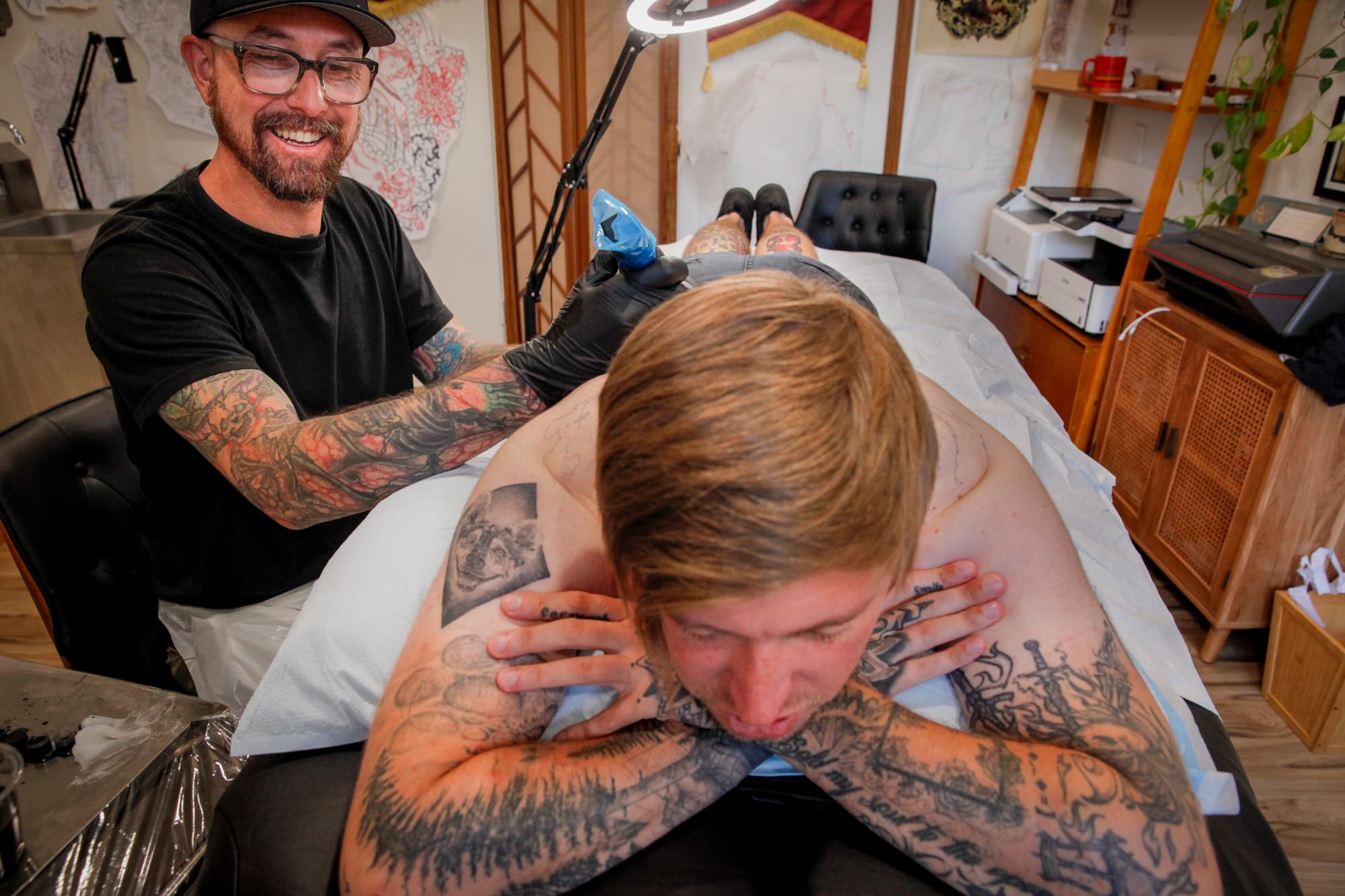
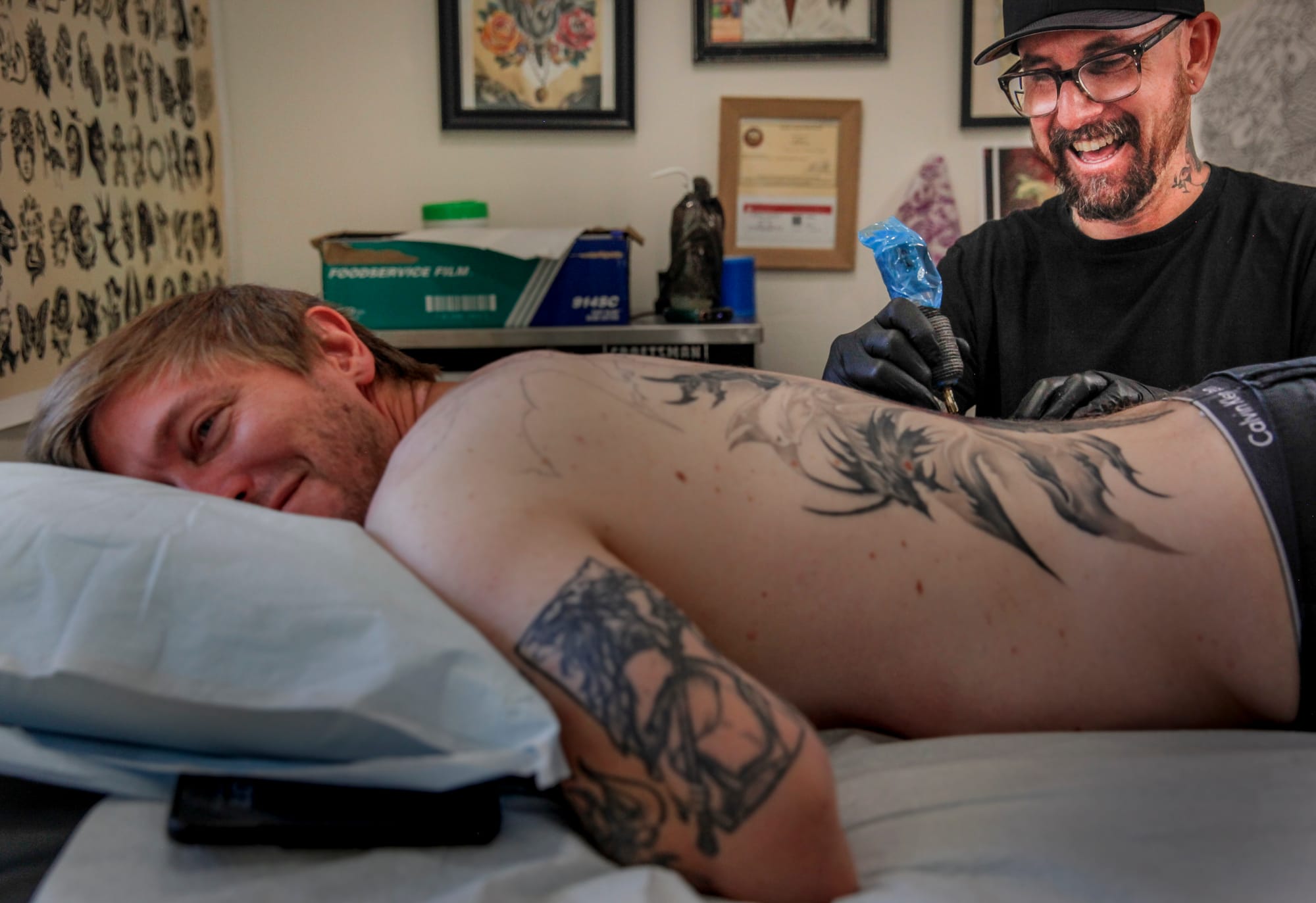
Bruce inks his friend, Eric Molyneaux. (Tuesday, Sept. 8, 2026. Photos by CRISSY PASCUAL/PETALUMA VOICE ©2026)
As a lifelong Petaluman, what’s it like seeing your artwork walking around all over town – and do you get to tattoo a lot of Petaluma landmarks or symbols?
Yeah! Man, the trestle bridge, I've done the grain mill countless times, I've done the clock tower, the Masonic building, countless times. A lot of chicken tattoos. A lot of eggs. I mean, people love Petaluma. Petalumans love Petaluma, and transplants love it, too. They come to love it, right?
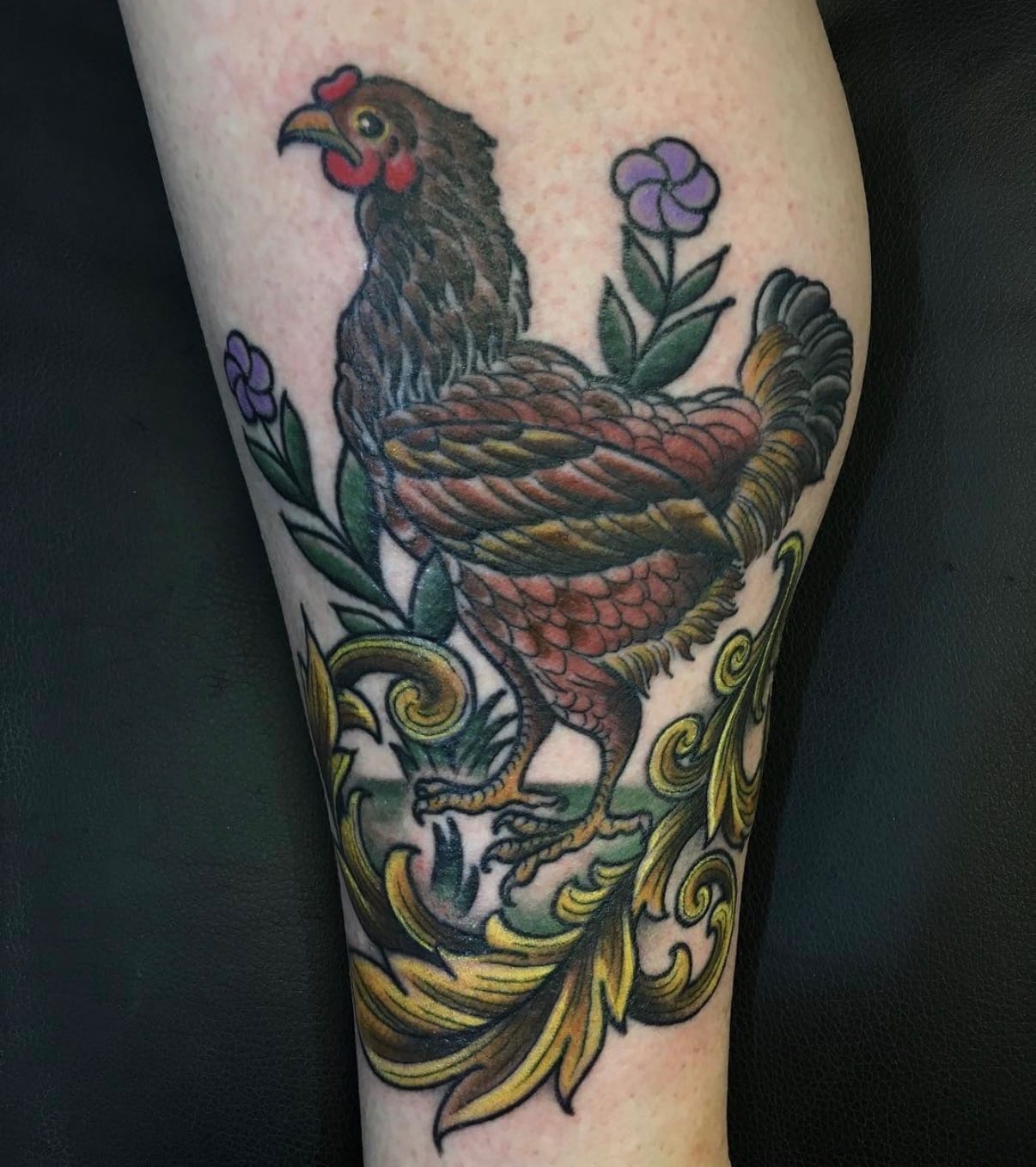
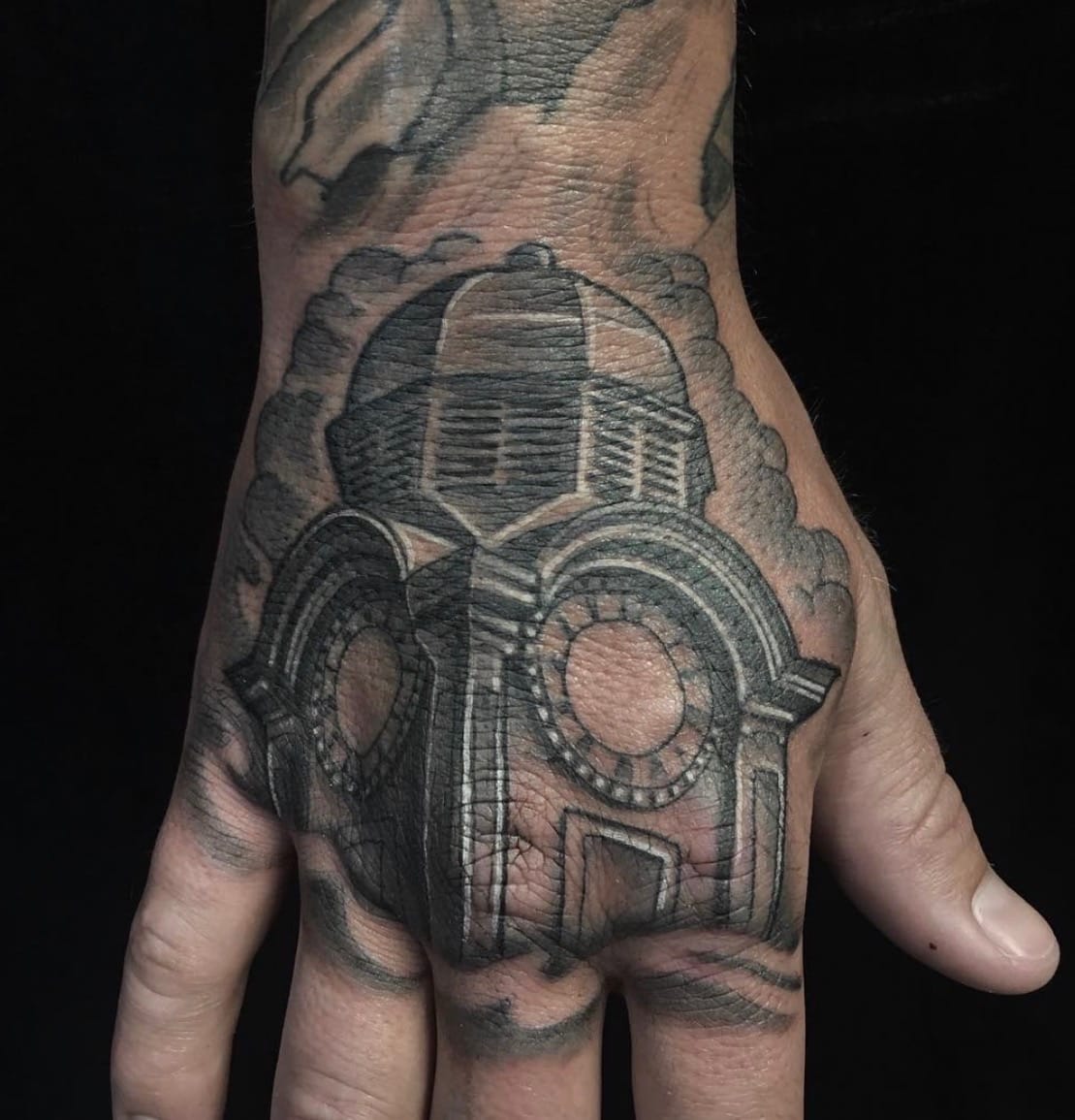
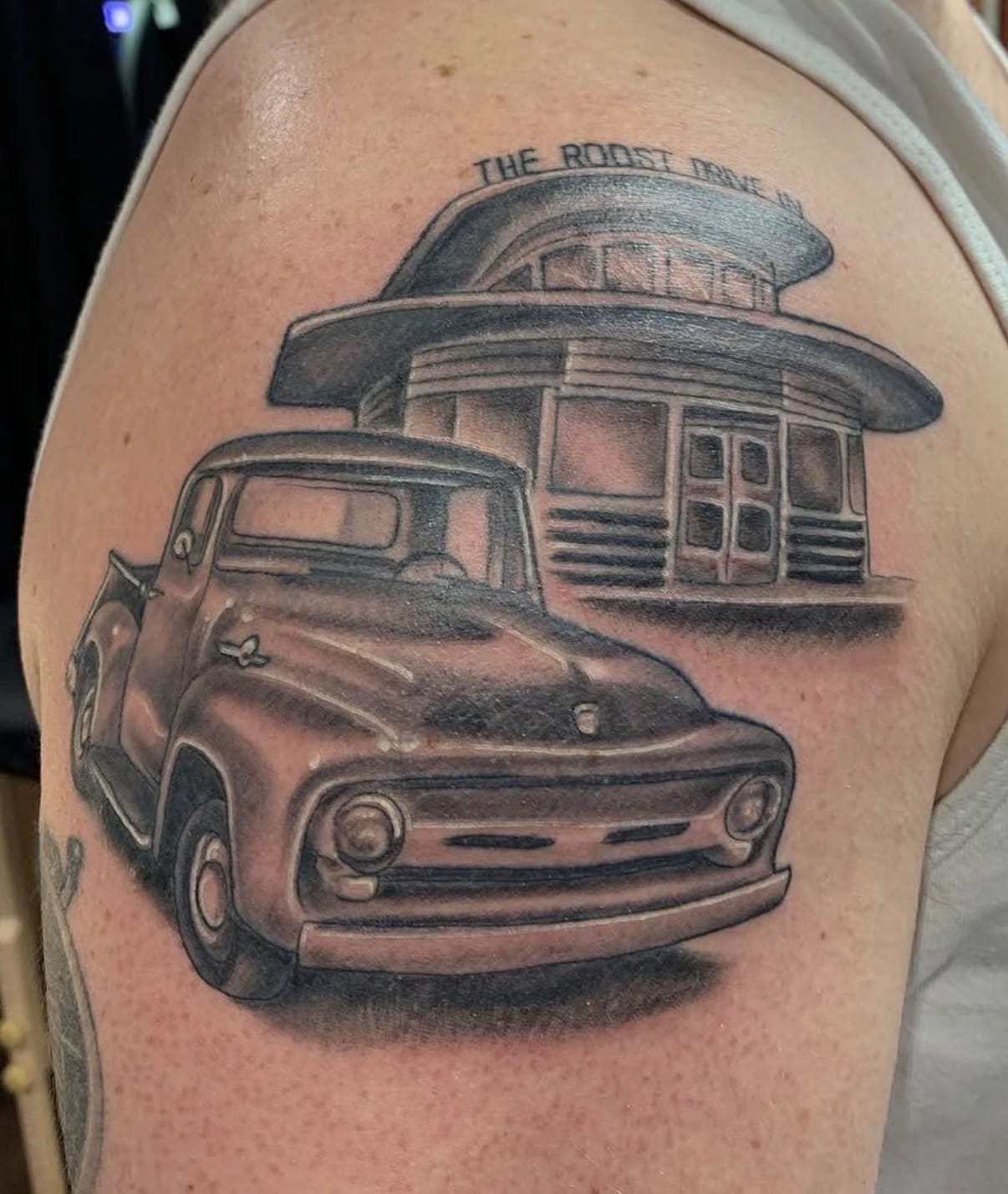
I would say a lot of the landmarks, I think those are near and dear to people that have grown up here because we've seen them for such a long time. This town was so small and sparse that those landmarks stuck out a lot more than they even do now. For a lot of people that grew up here, those things are big for them. So I think that's why they get them tattooed.
And absolutely, I see my clients and my work out in the wild all the time, like every day. Tattooing in Petaluma since 2010, almost 16 years, it's pretty hard for me to go out and not see a tattoo I've done, or for someone to just be like, "Hey, you did my cousin's tattoo,” or something like that. It's kind of a trip, honestly. My kids trip out all the time. Like, “You know so many people!”
How has the tattoo scene in town evolved over the years?
I was definitely part of the cultural revolution of tattoos becoming more mainstream. That's how I really became aware of and fascinated with it. And I think I got in at a really great time, when it was still hard to get in the industry, and there were not a ton of shops around, even in Santa Rosa.
I mean, if you didn't know them personally, you knew every artist in town by name. There wasn't a name I heard that I didn't know what shop they worked at. And now, I ask people all the time, if they have visible tattoos, "Oh, who did your work?” I'll hear a name, and I'll expect them to say like, "Oh, they tattoo in L.A.,” and they're like, "They tattoo in Rohnert Park, or Santa Rosa.” It's crazy. I can't keep up with the amount of people entering the industry now.
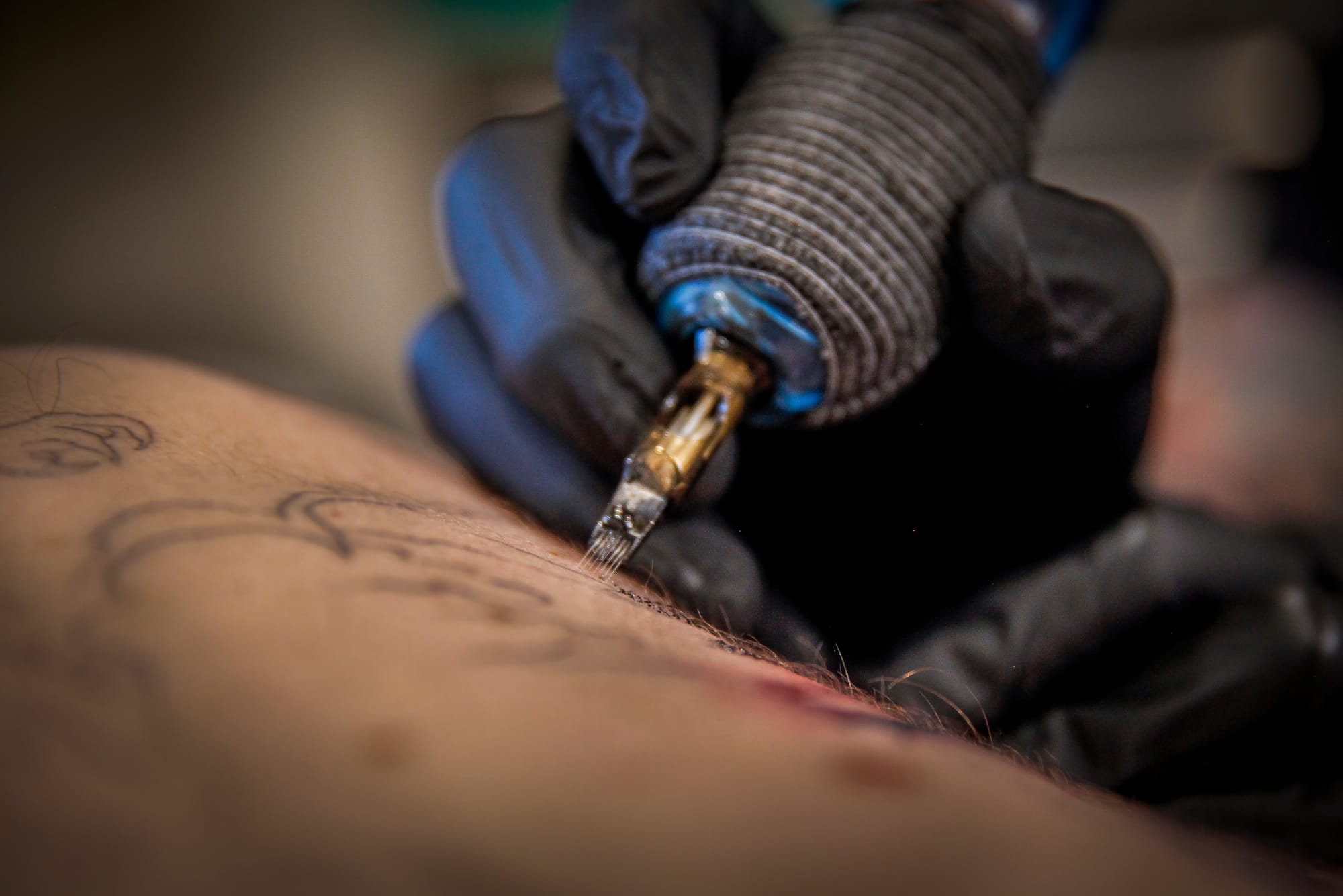
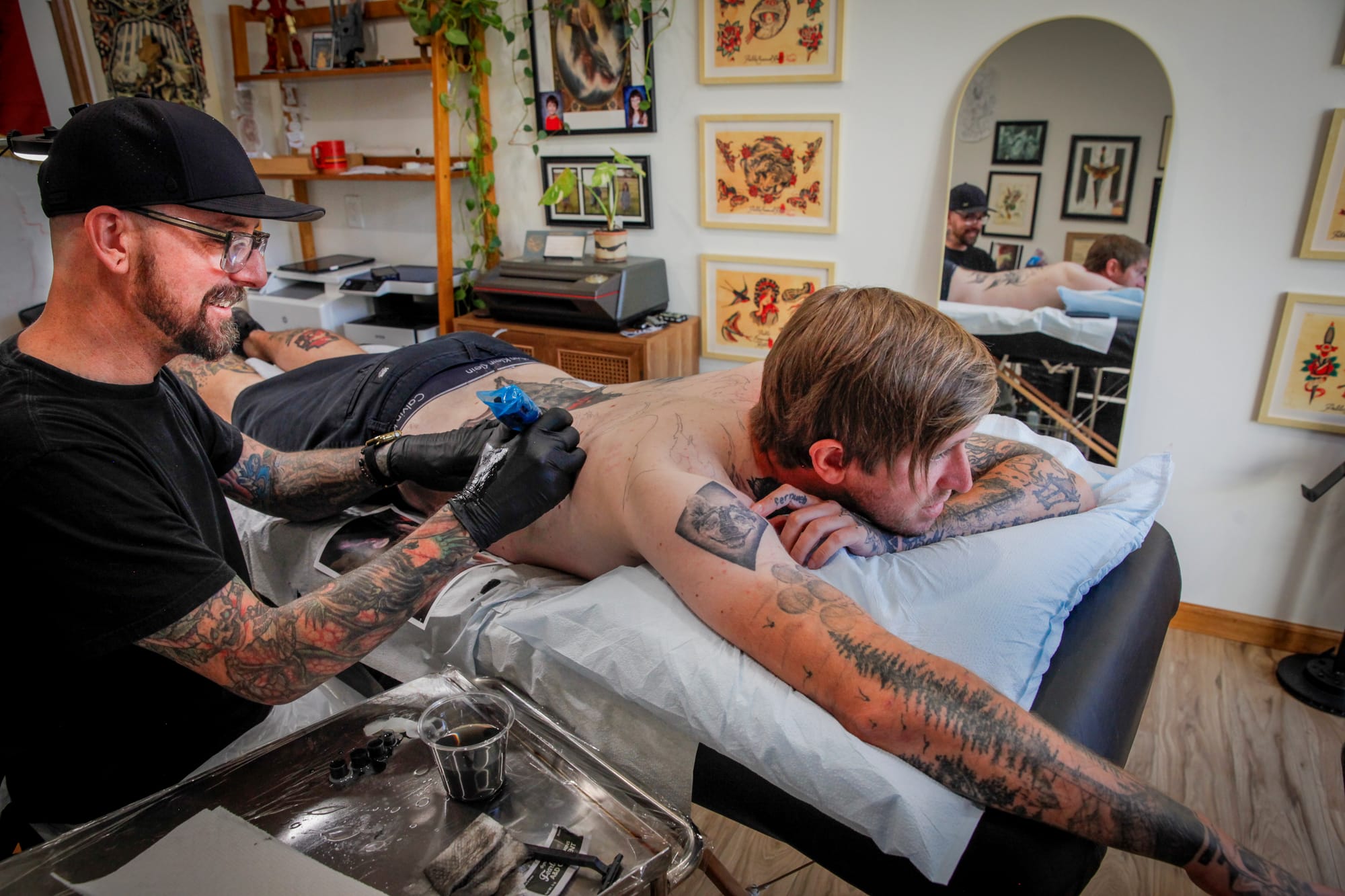
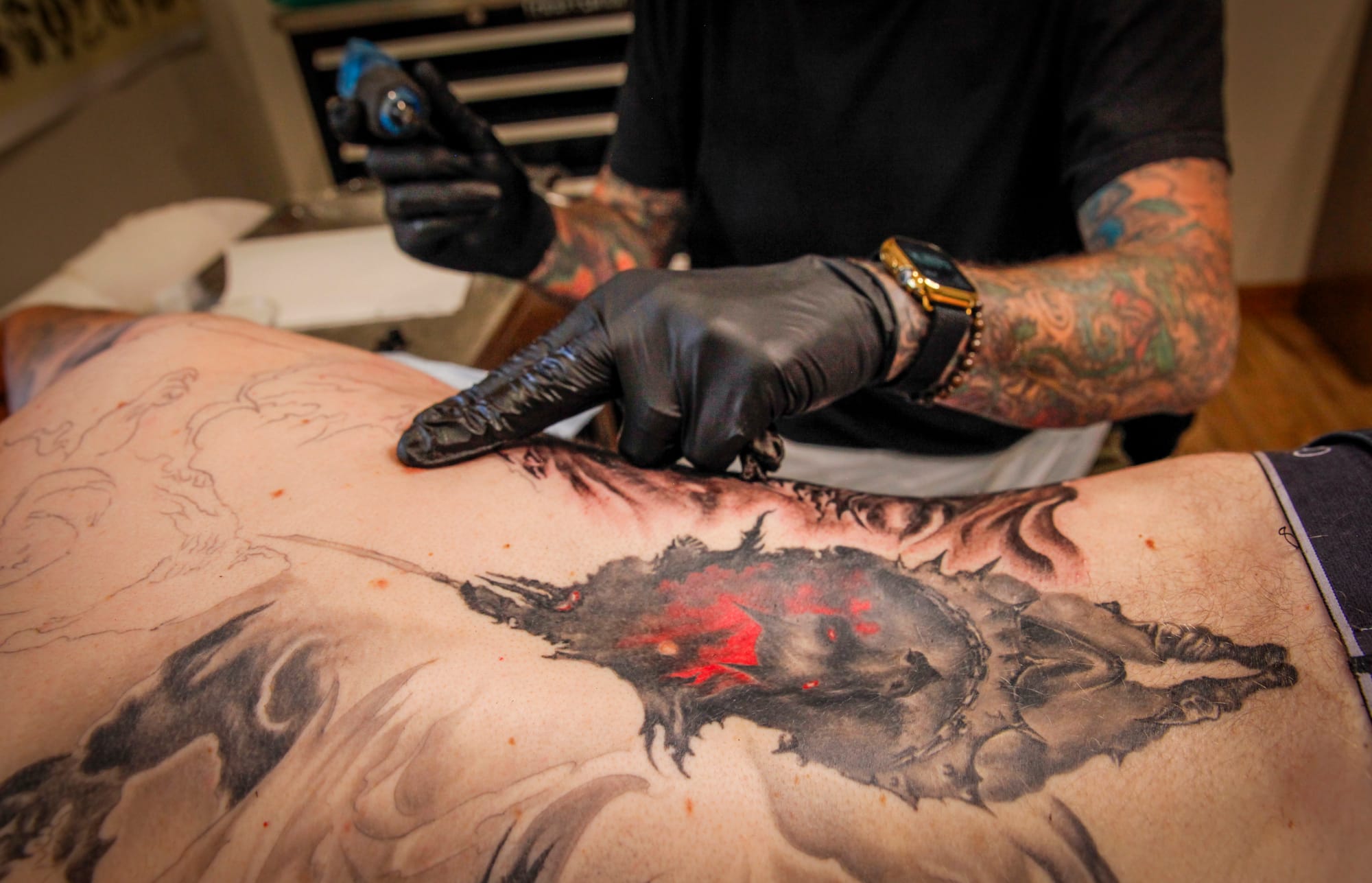
Bruce tattoos his friend, Eric Molyneaux. (Tuesday, Sept. 8, 2026. Photos by CRISSY PASCUAL/PETALUMA VOICE ©2026)
I think that says two things. It says the demand is high, but it's also much easier to enter into the industry. When I started, there was really only respect if you did a proper traditional apprenticeship program, which was at minimum two years, and it's free labor. You know, you don't get paid for that apprenticeship. You just work and you pay your dues, and you learn how to tattoo. And that was really the only legitimate way in.
Now, you can buy a kit on Amazon. You could be tattooing tomorrow. There are a lot more self-taught people. With the resources out there, it’s much easier to open a business, to open a private studio, and go squeak out a career that way. So it's very different in that respect.
I think that one of the biggest changes I've seen in the industry is the rise in popularity of private studios like mine. When we started in Petaluma in 2010, 2011, we were the fourth shop in town. There were only three other shops. One of them left a few years in, and the other two are still around. Today I think there are nine, including private studios. That’s a lot for a small town.
What’s something that you’d like people to know about you?
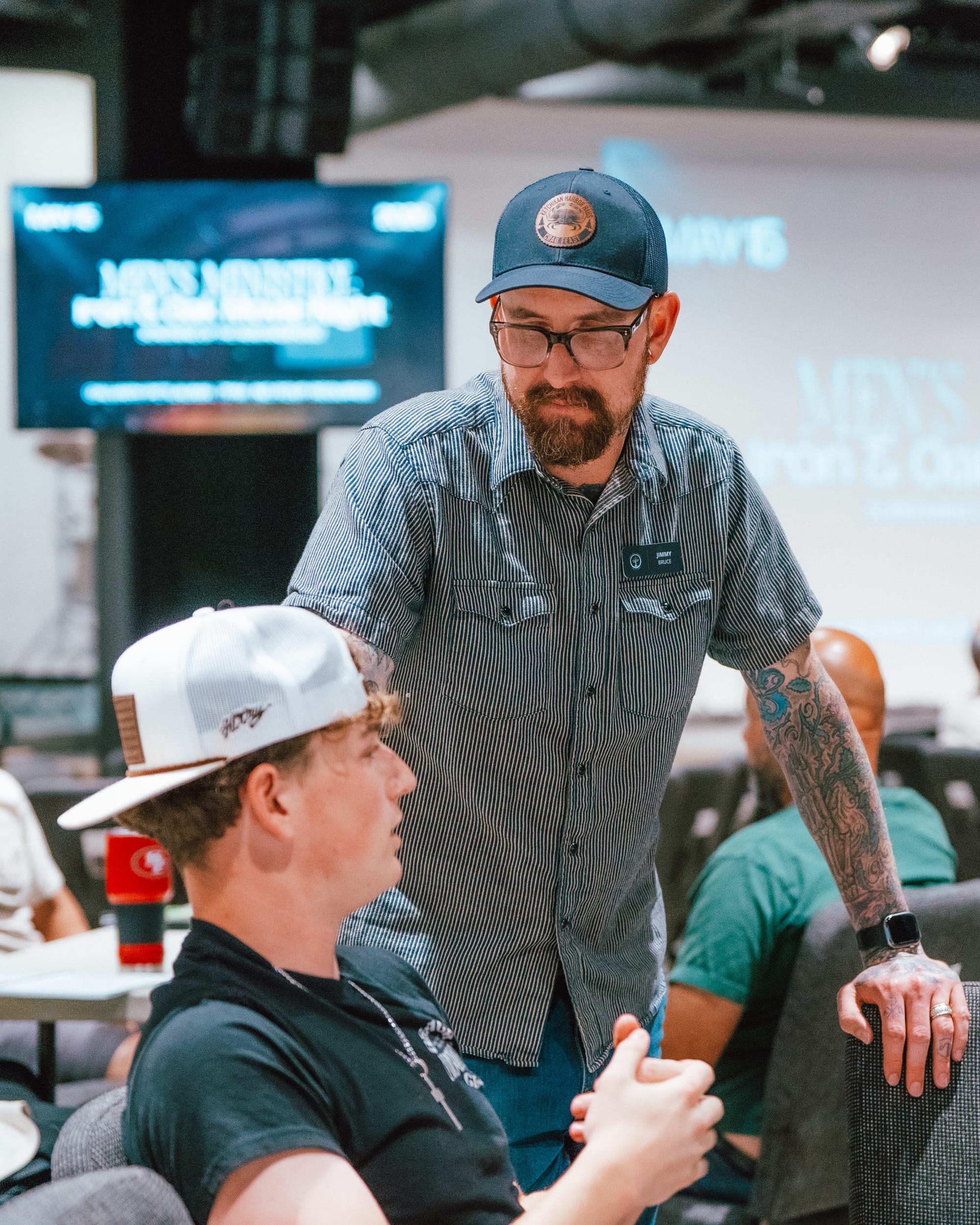
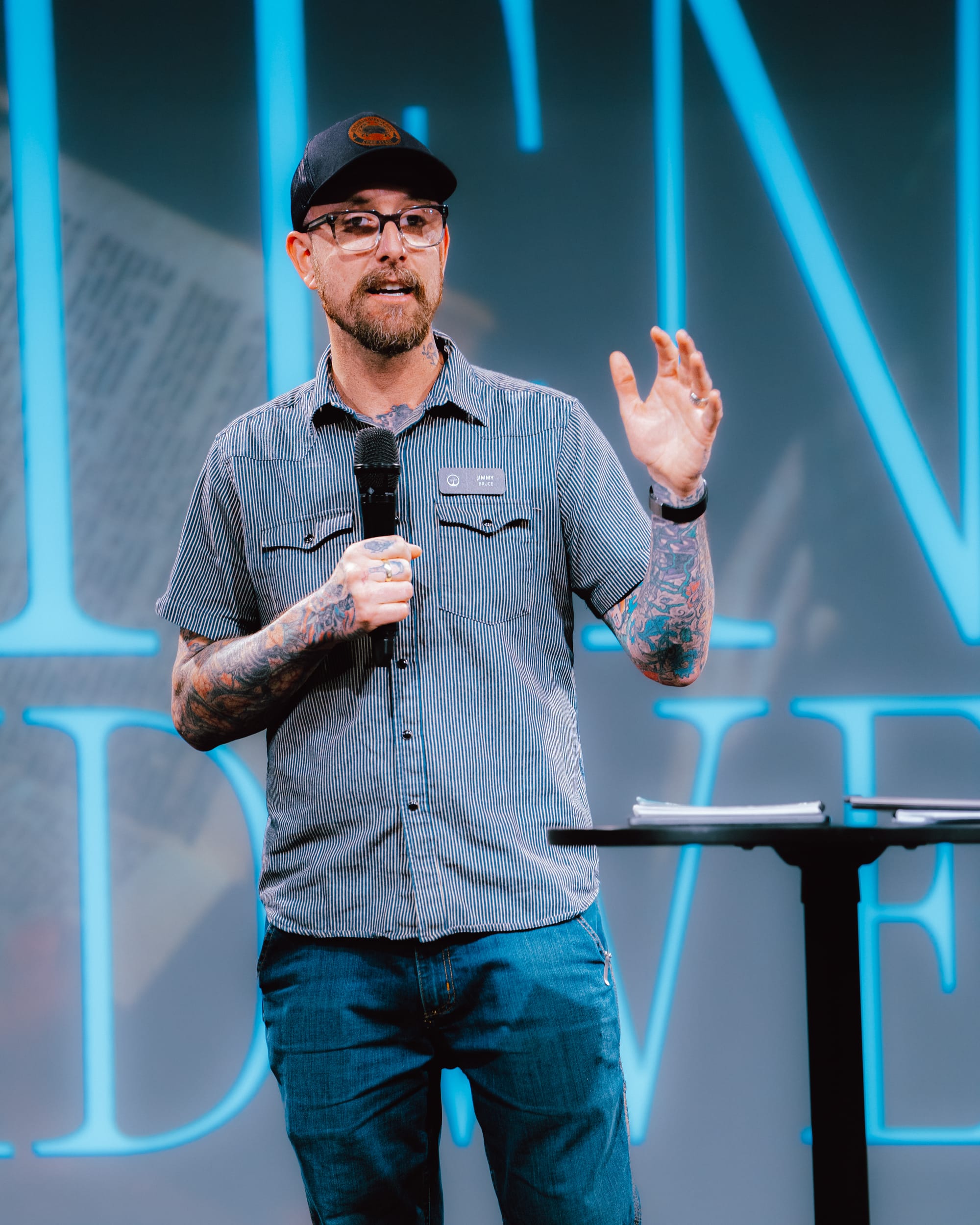
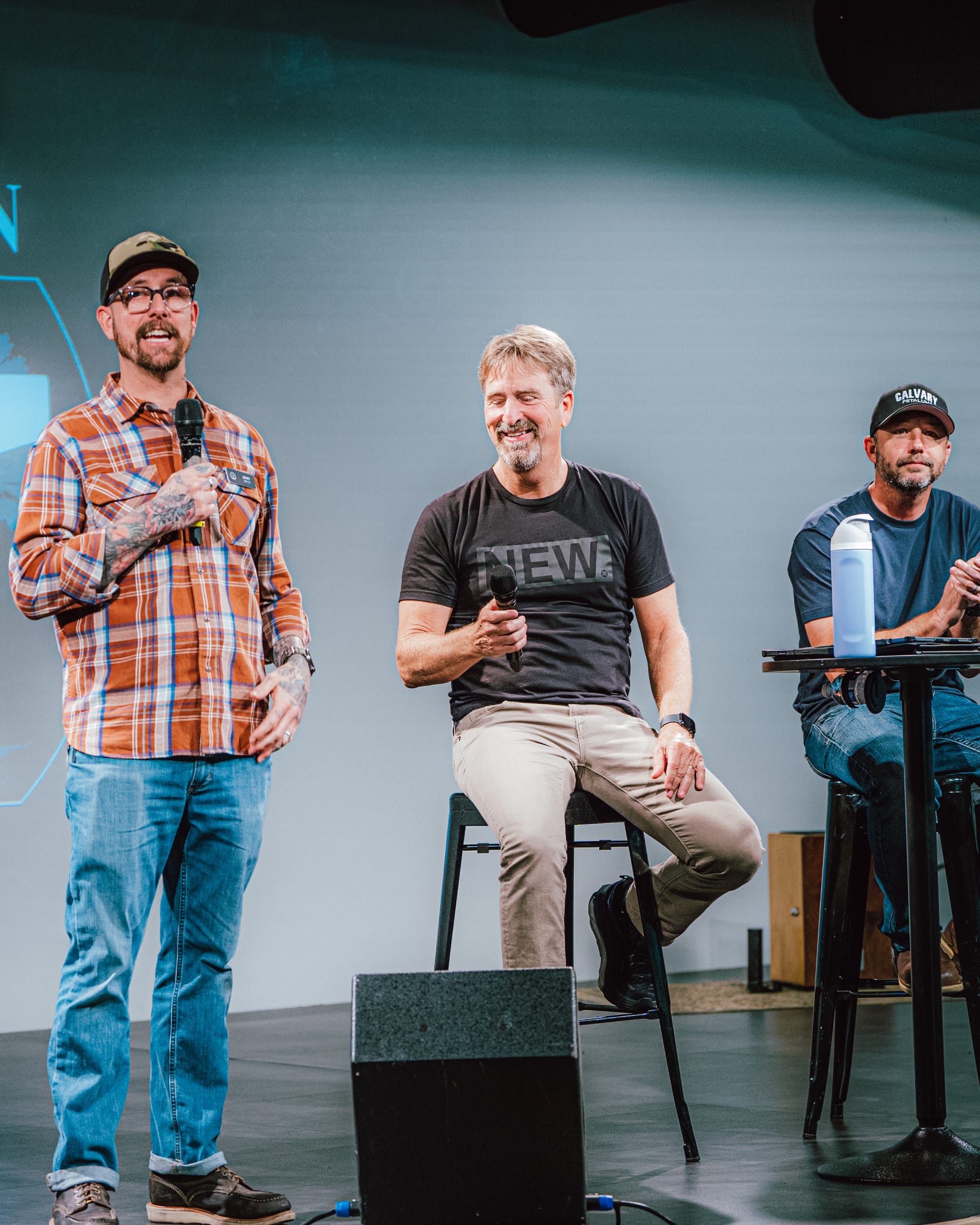
Tattooing is not my only job. I also work part-time at Calvary Chapel Petaluma. I'm a men's ministry director there, so I dedicate a huge part of my life to my faith, and service to God.
That comes up a lot in conversation. People come in hurting a lot of the time to the studio, and I think that being able to speak to them and meet them where they're at is really like the most privileged part of what I get to do. It's honestly why I keep doing it.
I think the personal aspect is really what has stood out to me as what this job is. It’s a customer service job. I’m there in service to my client. I’m there to make their request and their dream come true. I’m there to speak to them, to meet them where they’re at.
I do a lot of memorial tattoos. It’s a huge privilege to get to be a stepping stone in the healing process for someone. And so that just ties in so beautifully, I think, to the work in ministry that I am also so privileged to get to do.
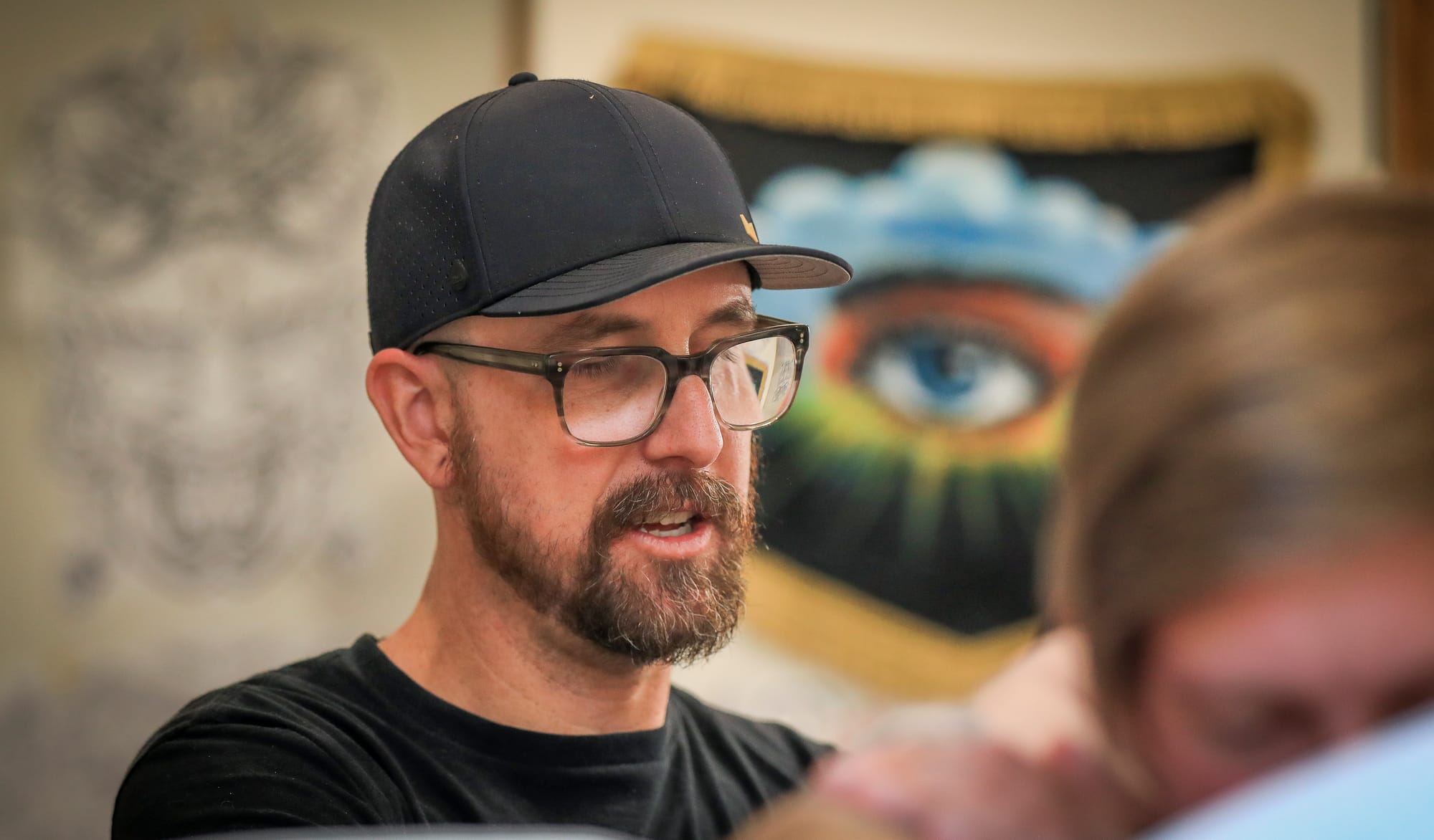
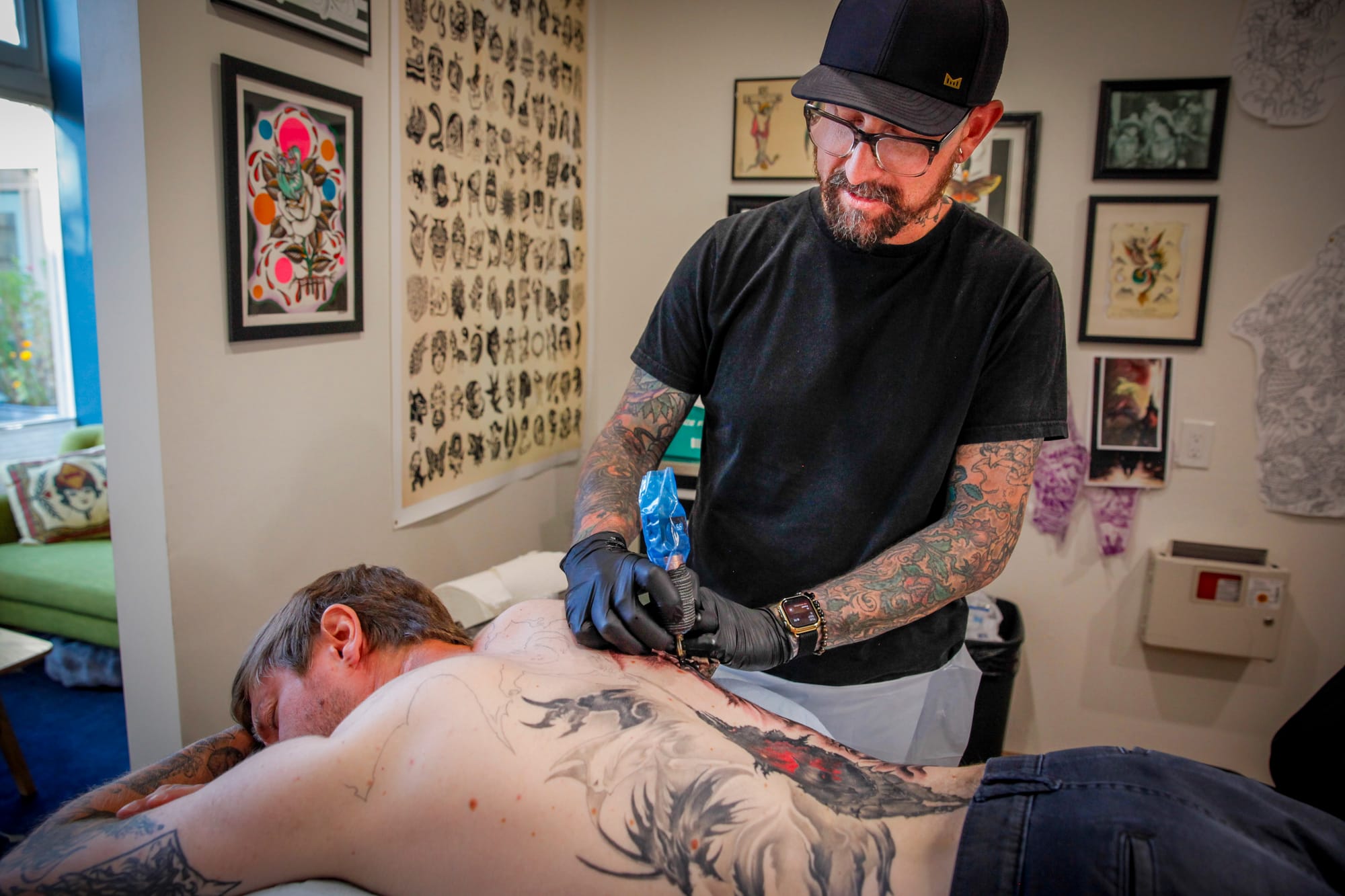
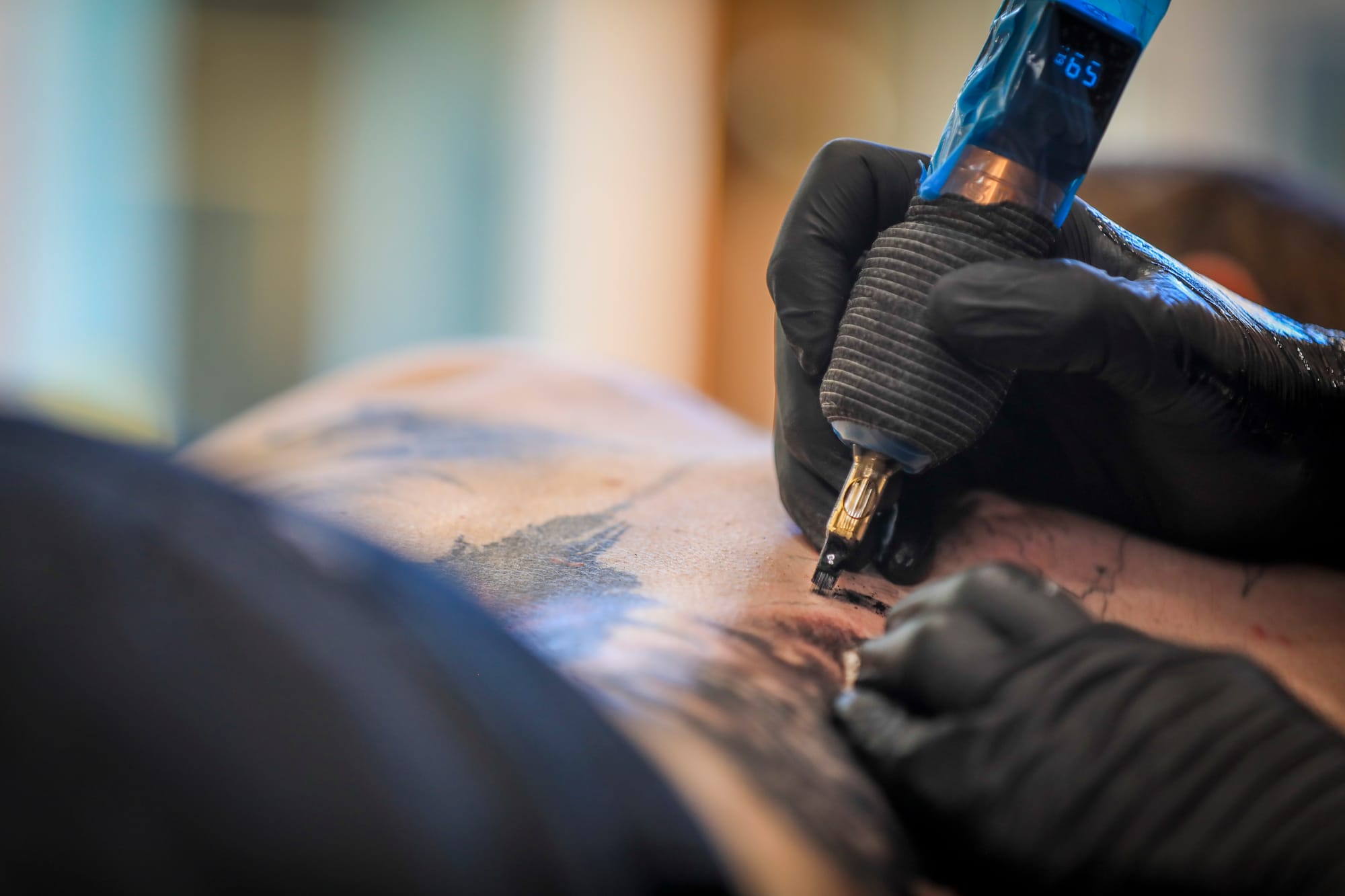
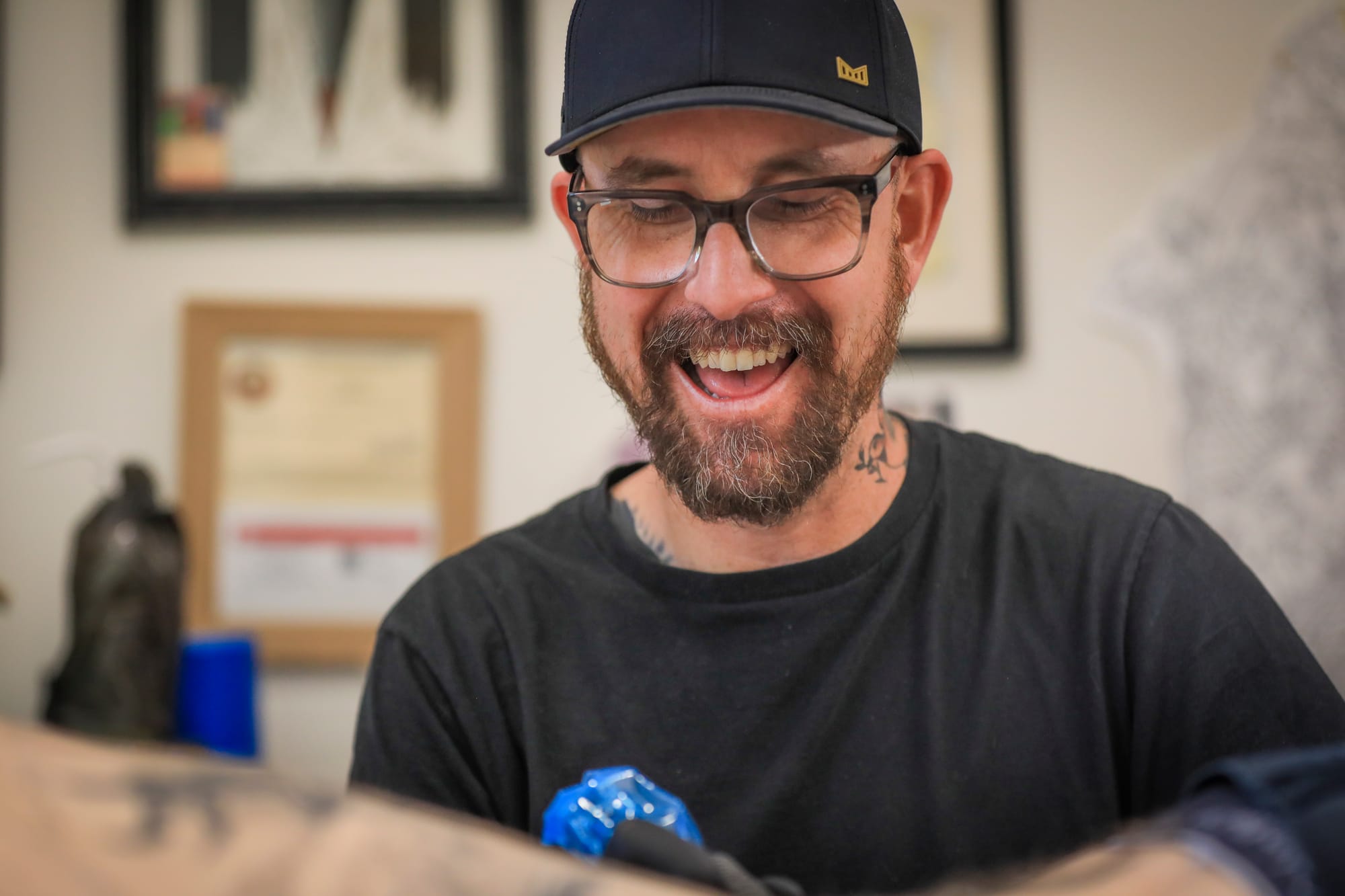
Bruce at work in his studio. (Tuesday, Sept. 8, 2026. Photos by CRISSY PASCUAL/PETALUMA VOICE ©2026)
This conversation has been lightly edited for clarity and readability.
Nate Seltenrich is an editor and reporter at Petaluma Voice. He can be reached at nseltenrich@petalumavoice.org.
Do you like our work? Support us with a tip.