Meet the Weed Team
Petaluma Wetlands Alliance volunteers, including an 88-year-old former Petaluma ER doc, help manage invasive plants at Shollenberger Park
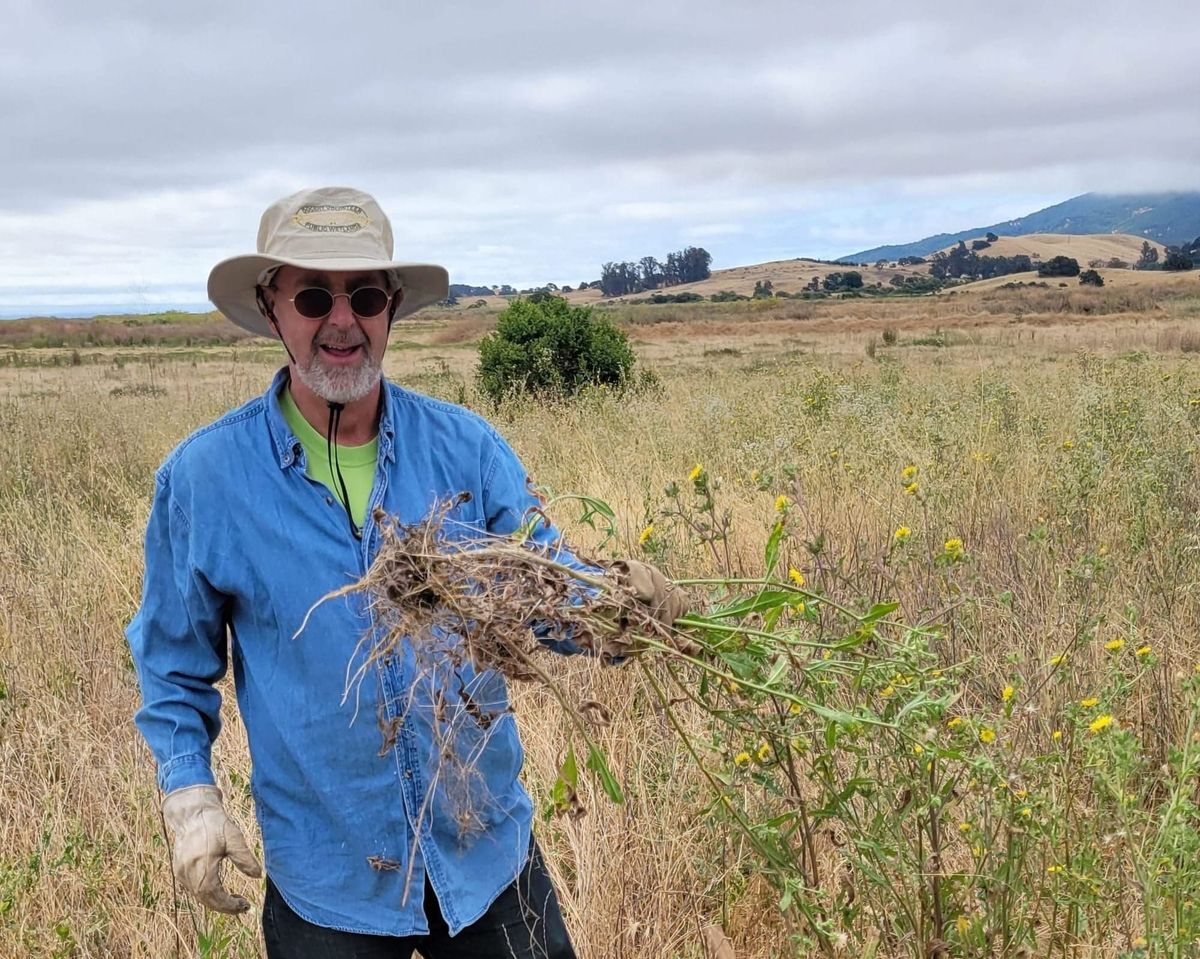
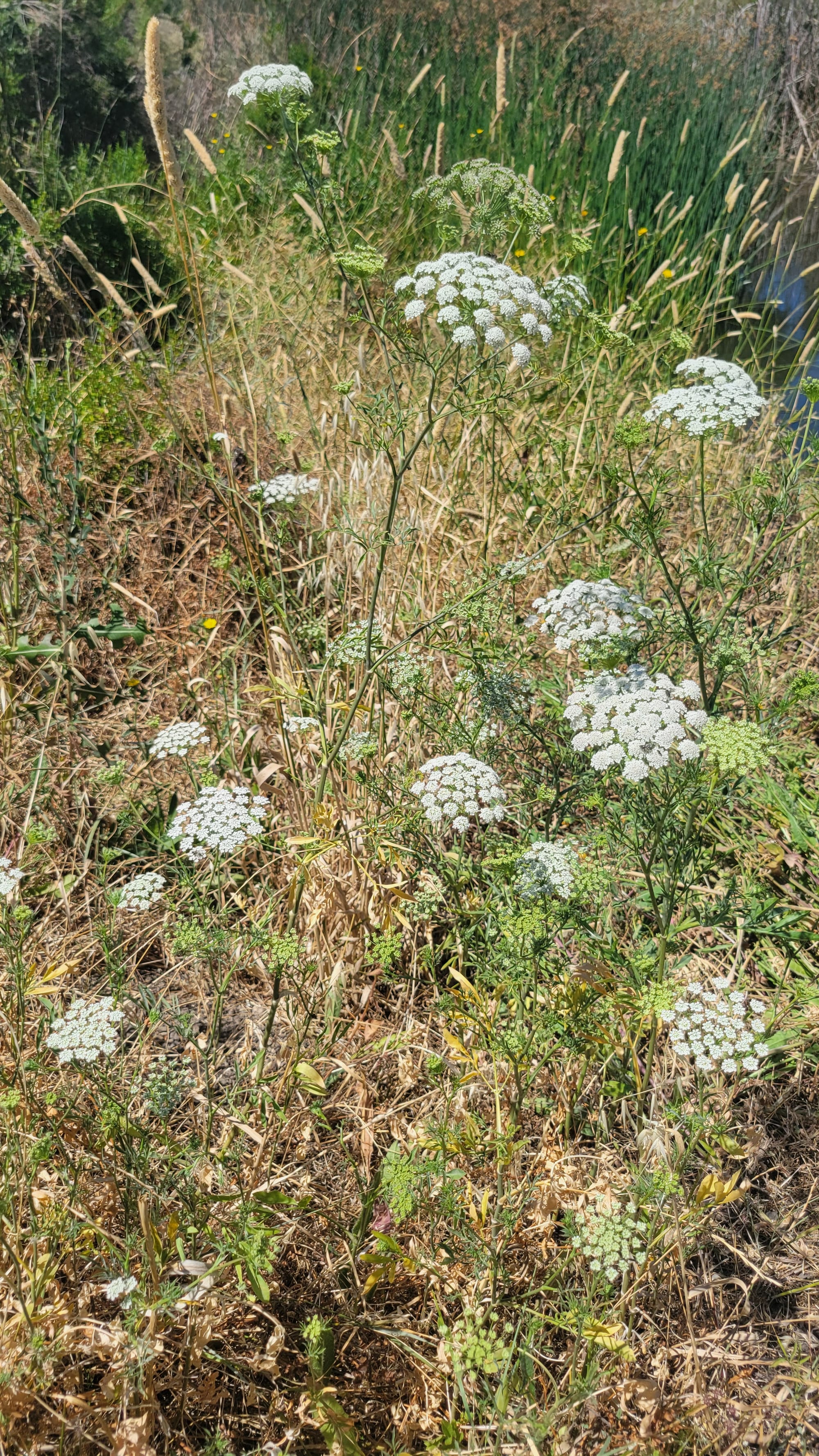
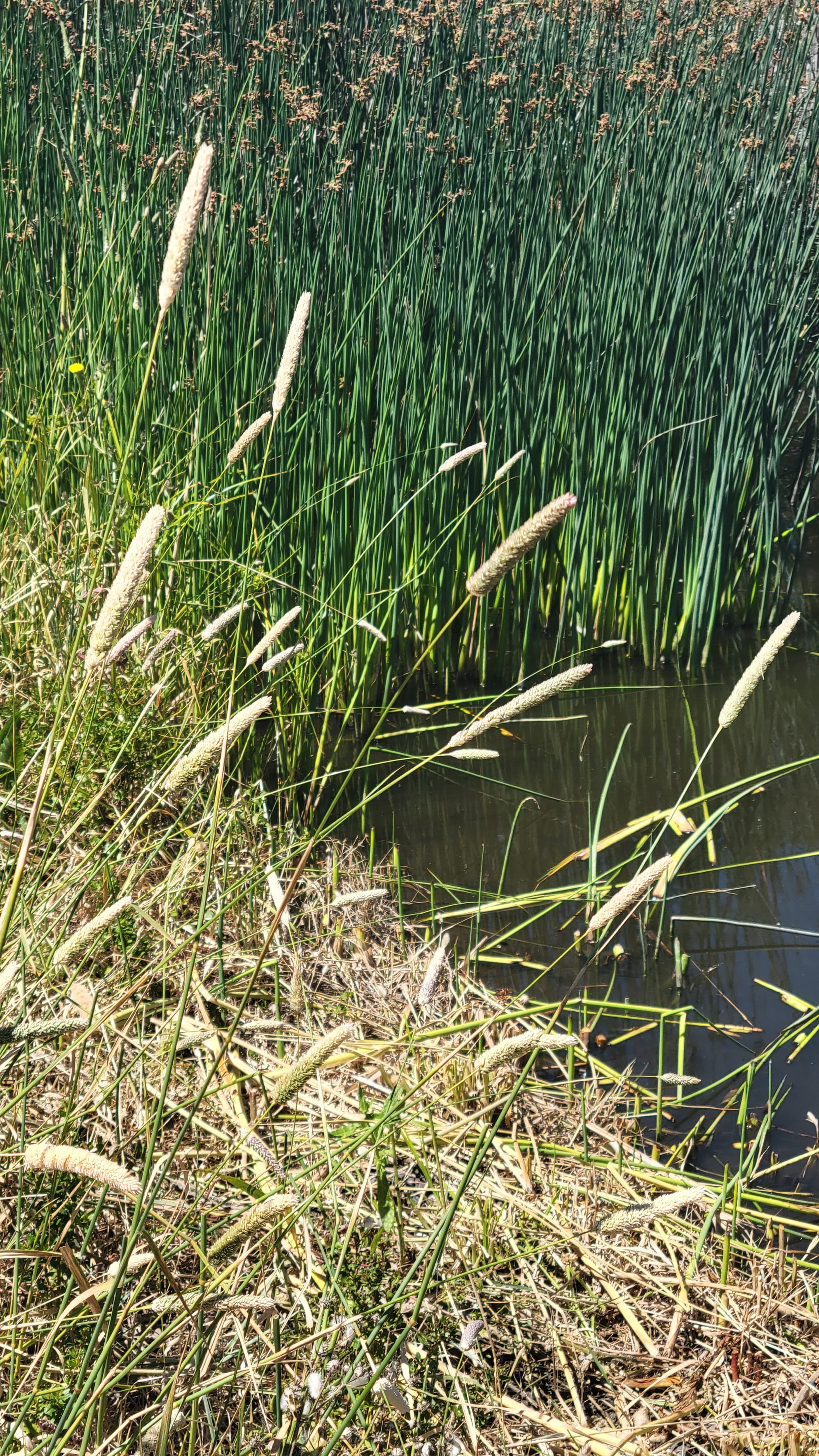
It’s late June, and the hills and fields of Petaluma have turned a uniform golden hue. Yet visitors to Shollenberger Park are greeted by something different: an array of yellow, orange, and white flowers.
To the casual observer, this splash of color appears cheerful enough – even welcome against the drab background of dried-out annual grasses.
Mary Kadri, however, is not a casual observer.
“Once you know all the plants, and you know the beneficial and the harmful, you kind of see the wetlands in a different way,” said Kadri, president of the Petaluma Wetlands Alliance. “Sometimes you wish you didn’t. Because a lot of these are just so pretty, right? Just enjoy the look.”
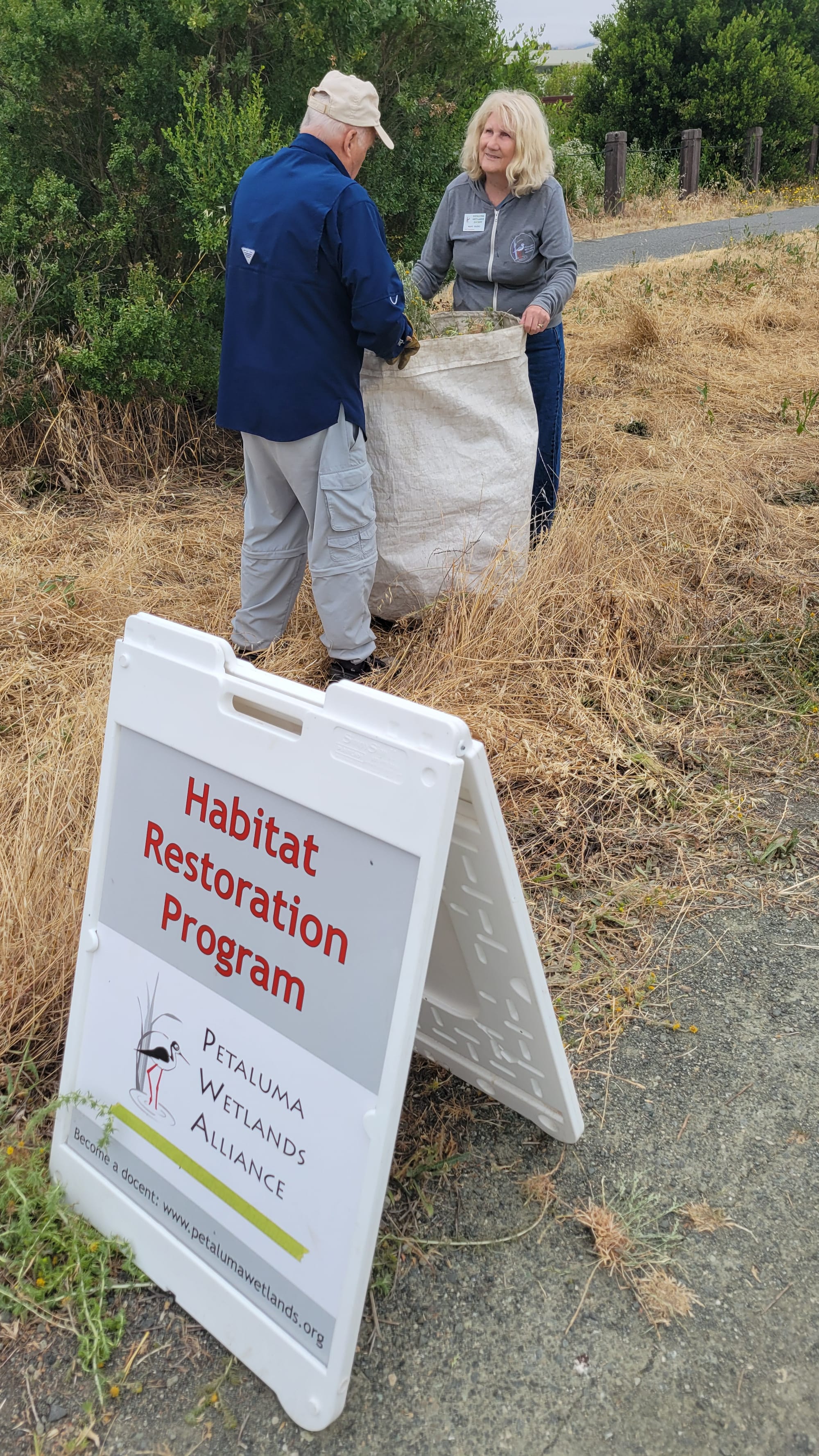
On a recent Tuesday morning, stopping and smelling the roses was not on the agenda for Kadri and the seven or so volunteers who assembled in the Shollenberger parking lot.
Quite the opposite. Because along the park’s well-traveled paths, introduced species from Europe, Asia, and other places around the globe represent the majority of flowering plants, in much the same way that non-native grasses now dominate our hillsides.
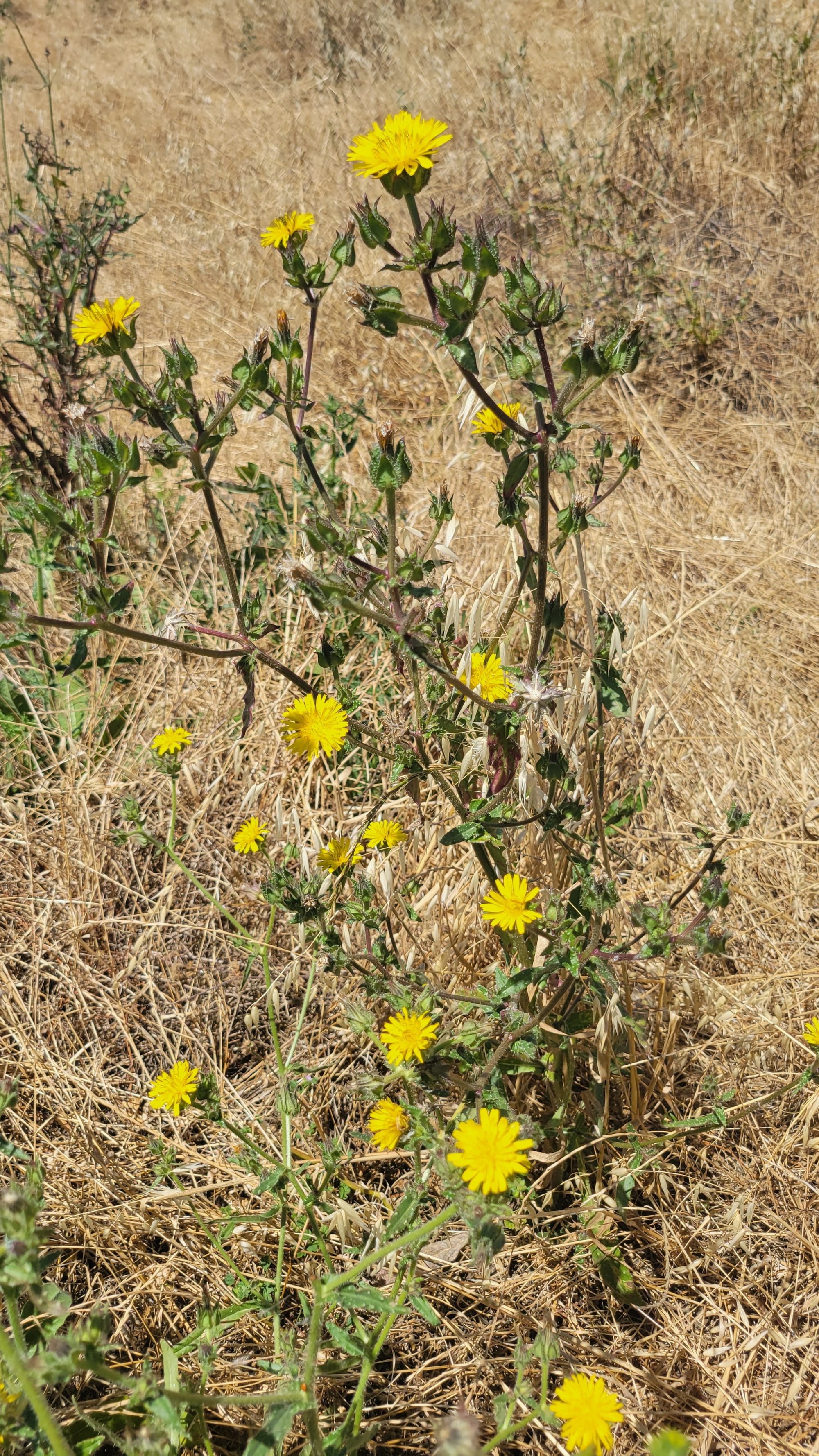
The day’s target: bristly oxtongue. A member of the sunflower family that loosely resembles its cousin the dandelion (just bigger and pricklier and less nicely named), bristly oxtongue does, in fairness, sport some very sunny yellow flowers.
“We’re trying to get them out by the roots as much as possible,” said Tom Benson, a newer member of the weed team. That’s not easy in the hard, compacted soil of summer.
“I’m waiting for another tool so I can get at these,” he added. “The shovel won’t go into the ground right here.”
He resumed digging and hacking while he waited for the preferred digging tool.
“There we go,” Benson said, finally, presenting the three-foot weed, roots intact, like a hunter who has bagged his quarry.
Next I met Ray Cendana. He started pulling weeds with the alliance earlier this year. Last year he volunteered on its nest watch program at Tolay Regional Park, performing monthly surveys of western bluebirds and tree swallows.
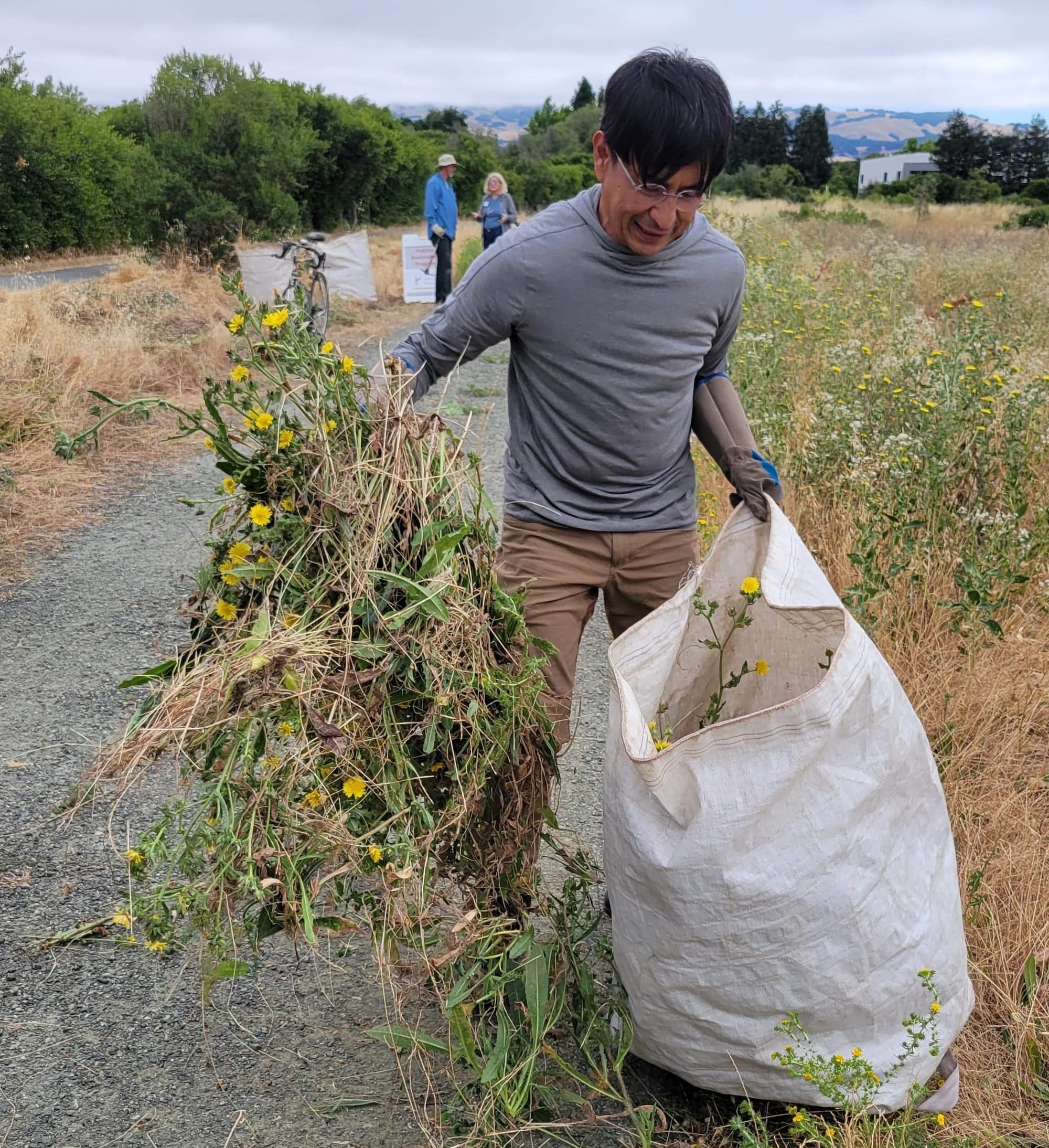
I asked how he likes the new work.
“I like being outside, and I feel like it’s helping, but also [the problem] is huge,” Cendana said. “There are smaller things, like you see birds nesting or a mouse running, or there are salmon that go up Adobe Creek. So if we’re clearing [weeds], you can kind of think, well, it’s hoping that. I’m like, okay, we’re clearing out space for them. I can’t say it’s gratifying immediately."
Better to focus on a small area, he said, and not look beyond it. Kadri had a similar comment when we first arrived this morning: “It’s daunting.”
But volunteer Mary Ashby, who moved to Petaluma a year and a half ago to be near her grandchildren and has been working at Shollenberger for a little over a year, had a more positive outlook.
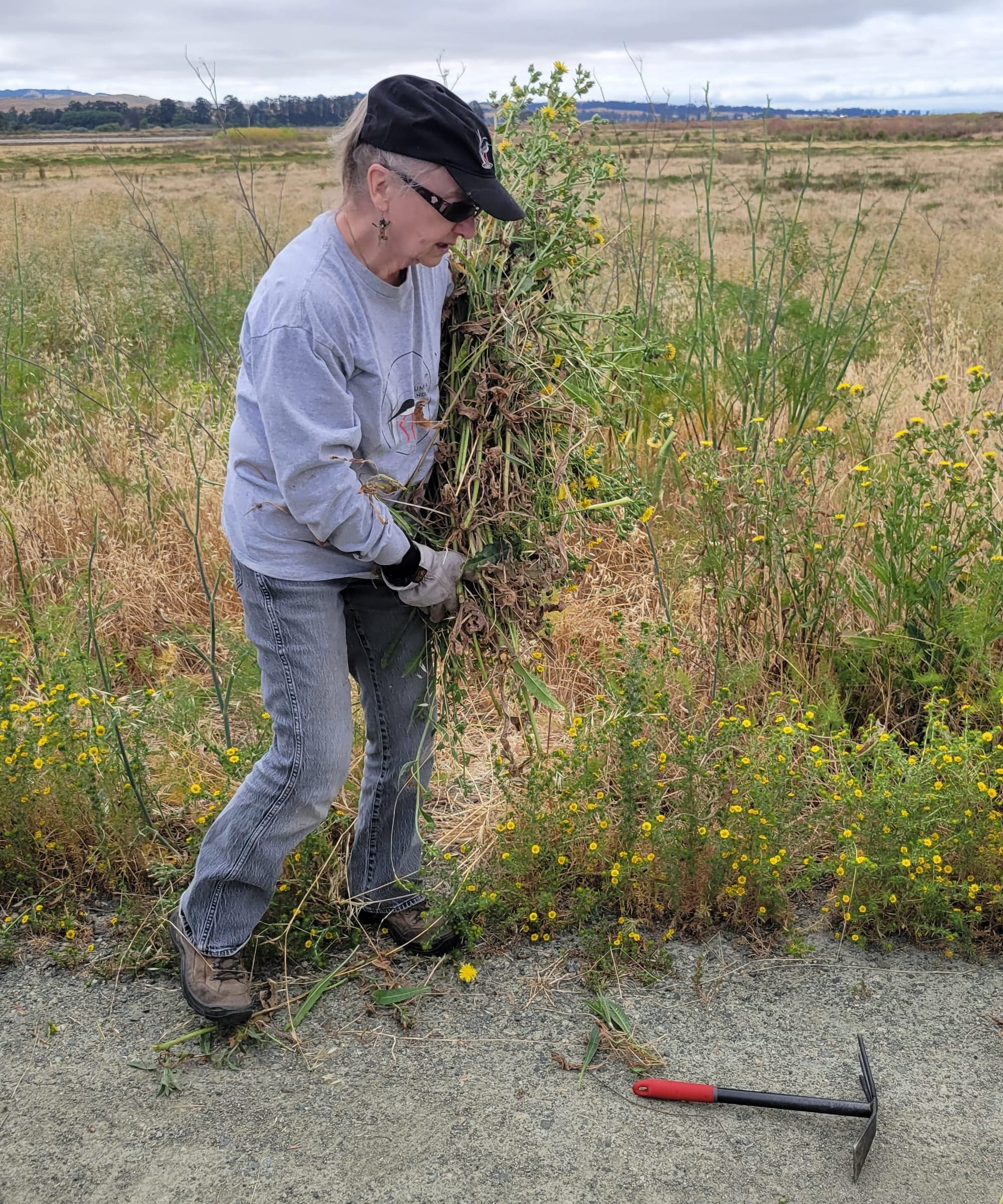
“I just wanted to pull weeds, and I love doing it,” she said. “I love this organization. It’s just good people, and the people that weed I just love all of them. Good camaraderie, good effort.”
It helps that passersby are appreciative. “They walk by and say, ‘What are you doing?’ We tell them and they say, ‘Thank you, thank you!’ So there are lots of rewards.”
Later, on the way out, I met Earl Herr, working by himself. I’d already heard about him from Kadri and the other volunteers. He was working low to the ground, hunched over, using a gas-powered hedge trimmer to clear grasses.
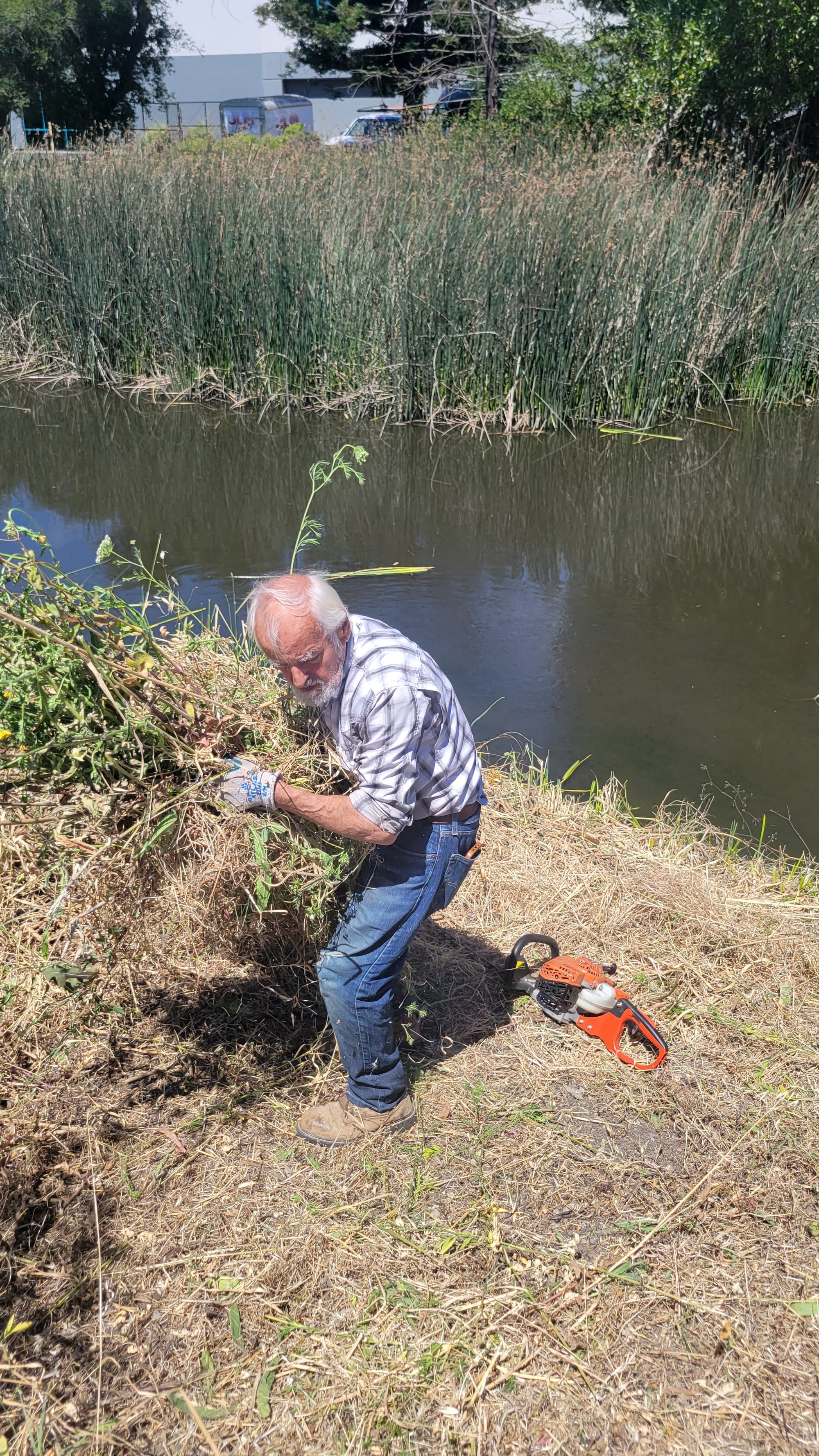
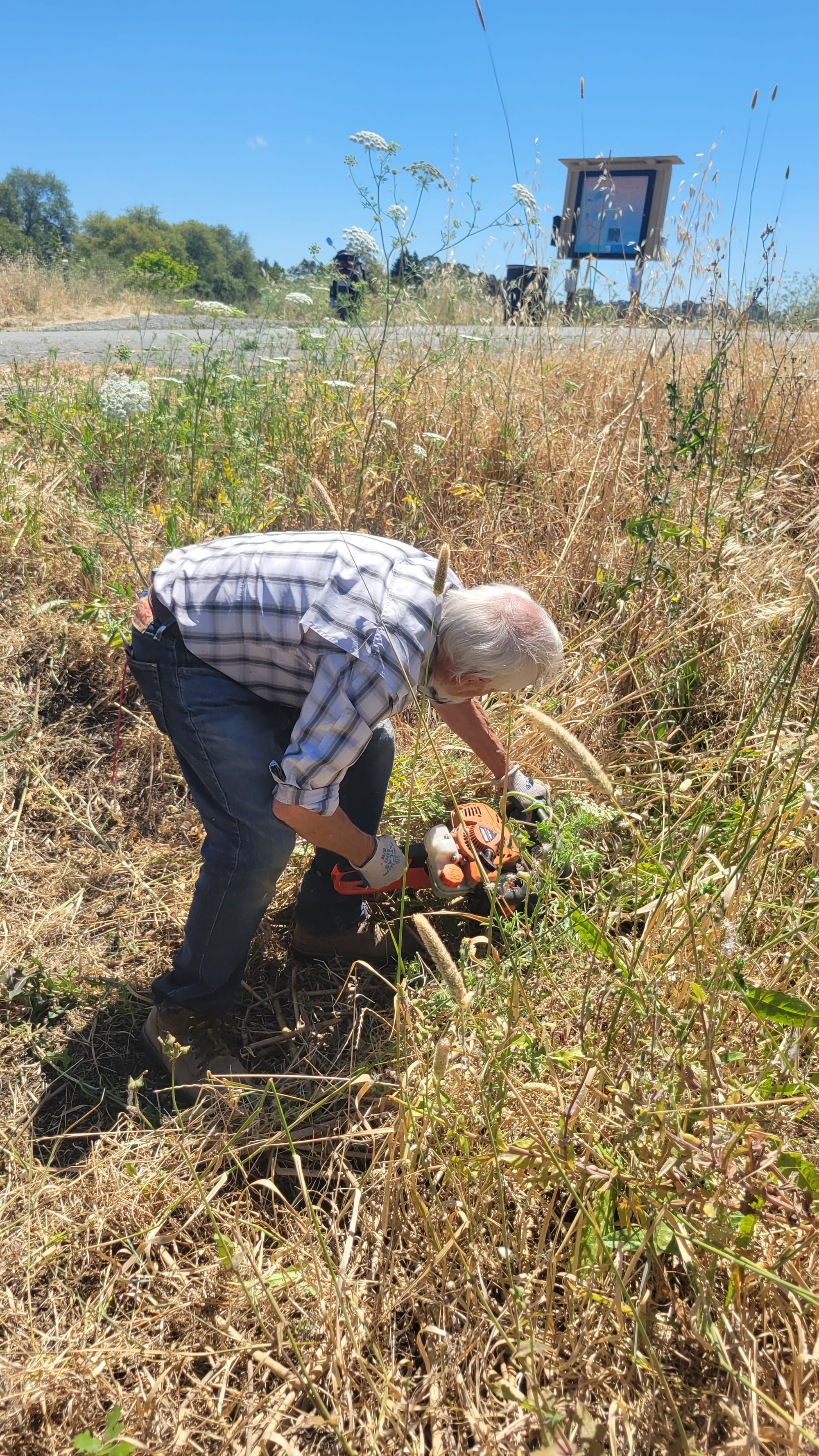
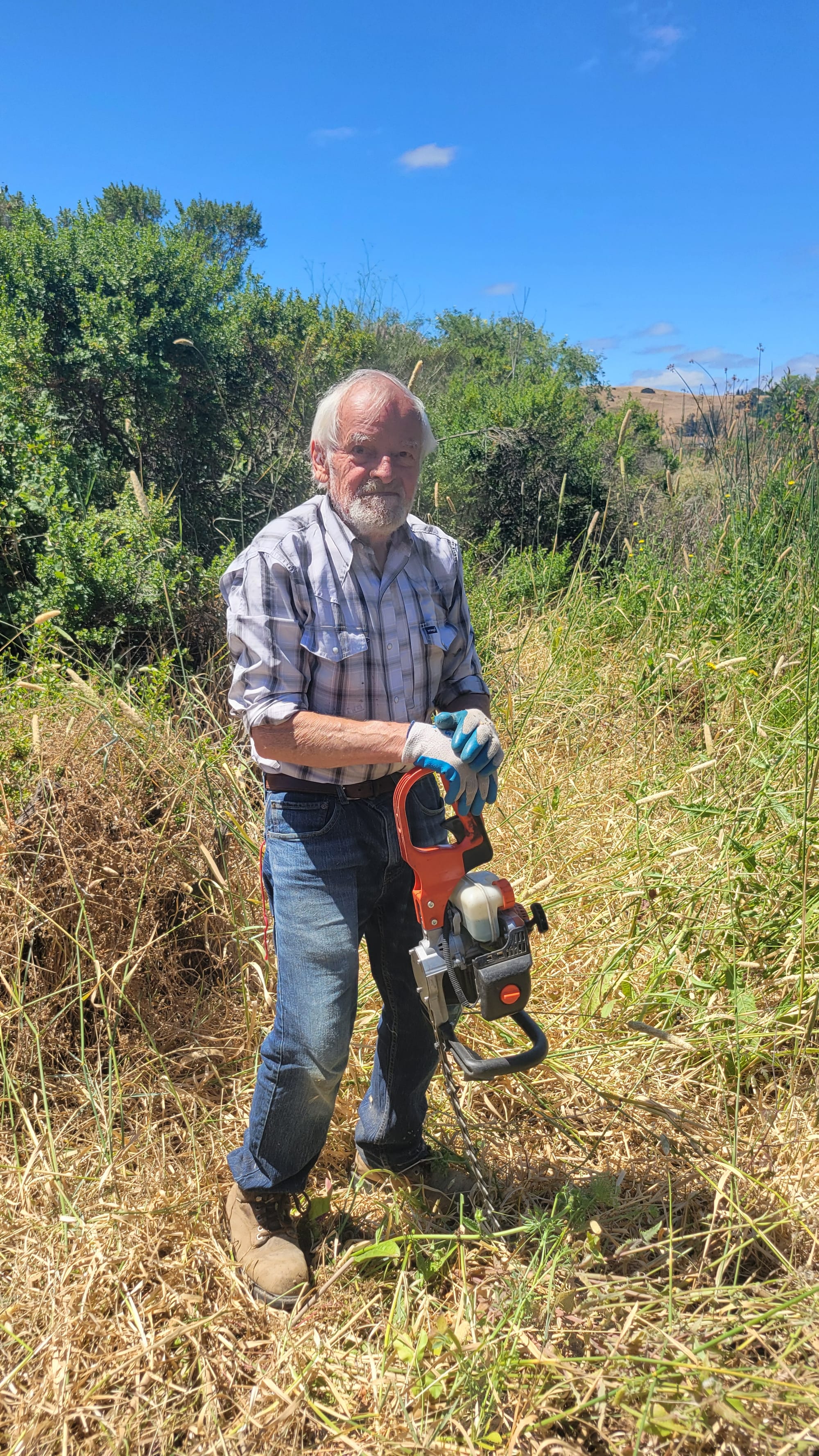
Earl Herr, 88, worked as an emergency room doctor in Petaluma hospitals for 36 years. Now he spends time at what he calls his "gym," cutting and pulling weeds at Shollenberger Park and adjacent Alman Marsh three days a week for three hours at a time. (Saturday, June 20, 2026. NATE SELTENRICH/PETALUMA VOICE ©2026)
Kadri asked him to shut it off, on account of the noise. He politely obliged. But there’s no mistaking that Herr does things his way. At 88, he may have earned the right. Plus, he’s spent more time than anyone clearing noxious weeds from Shollenberger and adjacent Alman Marsh over the last six or so years – and he’s made a real impact.
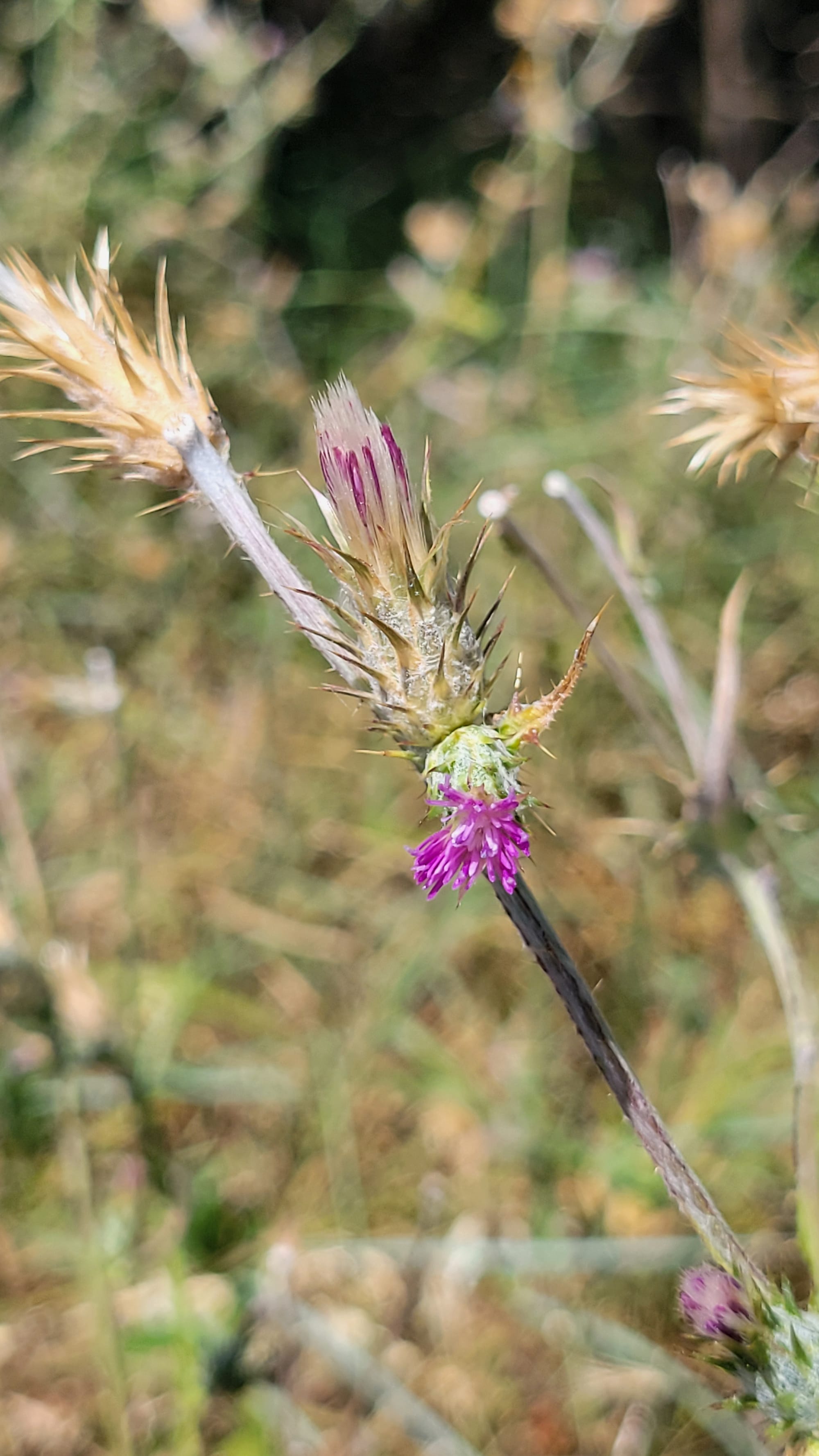
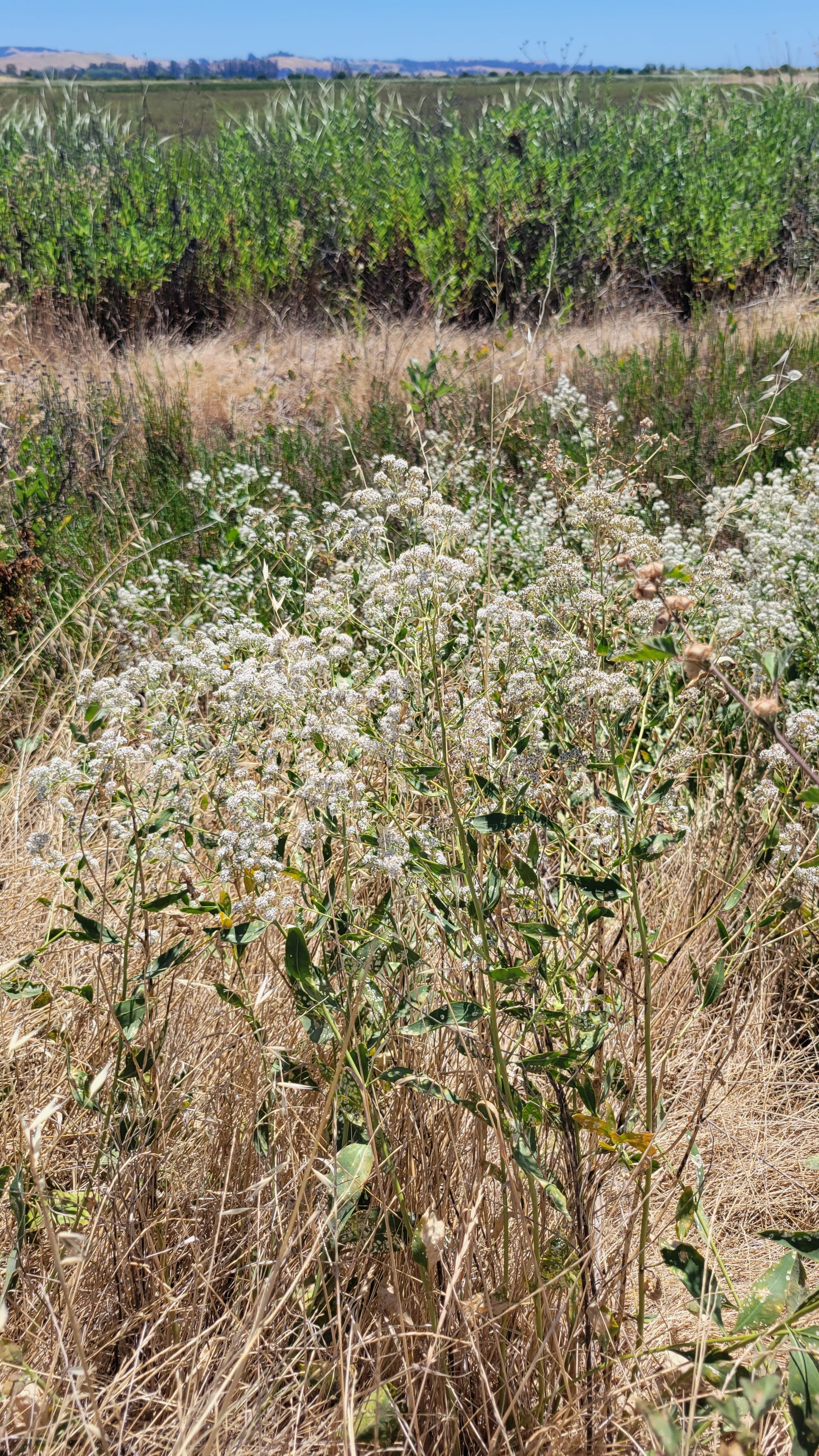
Prickly oxtongue, harding grass, poison hemlock, mullein, perennial pepperweed, Italian thistle: few weeds are safe. They go in piles just off the trail, to be later collected in canvas bags then dumped in the trash, not the green bin, so their seeds can’t spread through compost.
“I tend to do three days a week, three hours each, and it keeps me in shape,” he said. “At 88, you need to use it or they’ll put you in a box.”
Herr works on his own schedule, not with the Tuesday team, riding a moped scooter from his home in northwest Petaluma to the park. He’s lived in town since 2015, and for 36 years before that, he worked as an emergency room doctor at the old Hillcrest Hospital and then Petaluma Valley Hospital.
But his story goes back even further, to his upbringing in Amish Mennonite country in Lancaster County, Pennsylvania.
“Farming is my background. That’s why I can survive all the stuff outdoors. I love it,” he said. “This is wonderful territory.”
Get Out! is Petaluma Voice’s monthly outdoors and nature column. Join our iNaturalist project to contribute your own observations of local plants and animals.
For more information about Petaluma Wetlands Alliance or to become a volunteer, visit https://petalumawetlands.org//become-a-volunteer/.