
Get Out: Re-oaking Petaluma, an acorn at a time
ReLeaf Petaluma's unique restoration program involves collecting acorns from local oaks and using them to plant new trees on city-owned parcels throughout town
Get Out is Petaluma Voice’s monthly outdoors and nature column.
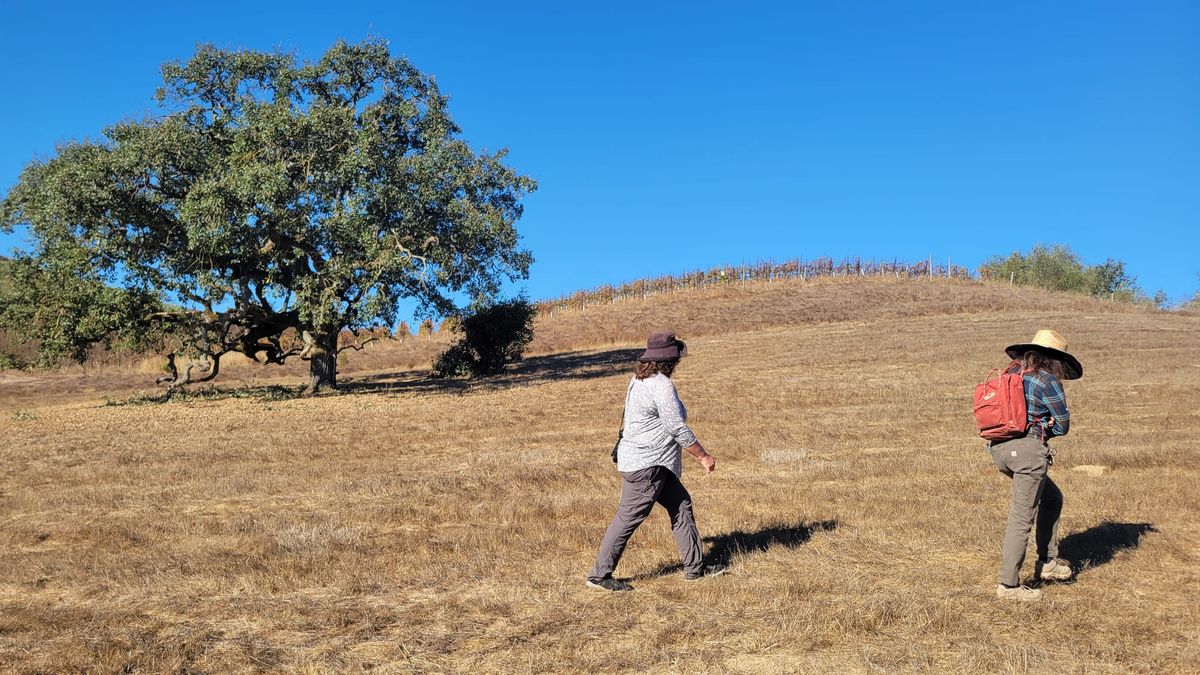
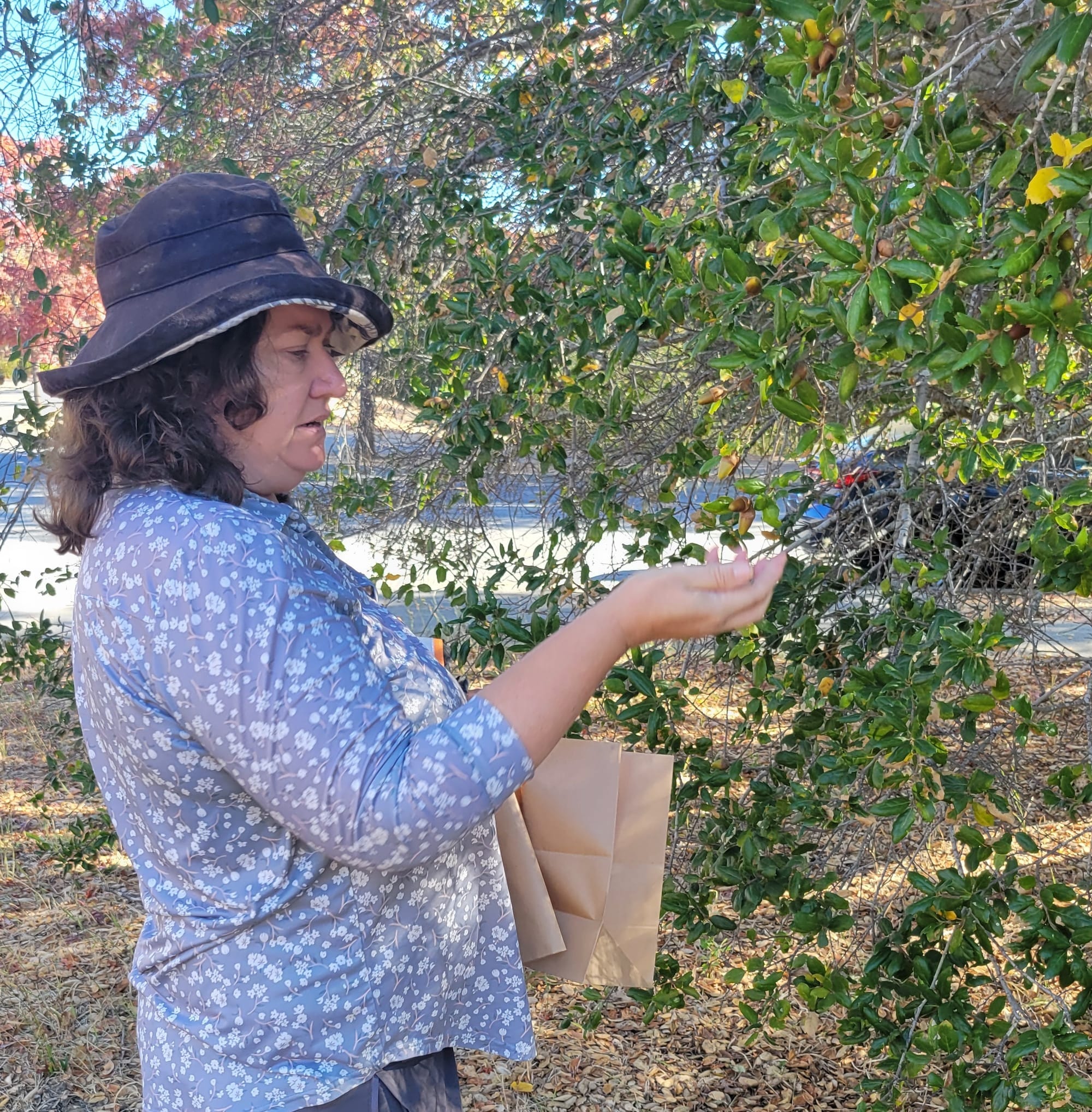
Carolyn Lacerra and Kaitlin Magoon are on the hunt. It’s a warm morning in mid-October: acorn season. These oak tree fruits are ripening from pale-green to deep-brown and nearly ready to fall, if not already blanketing the ground.
I pitch in, picking low-hanging acorns from a coast live oak – the most common native oak in town, producing small, torpedo-shaped nuts. Golden-brown in color, they slip with the slightest tug from their caps, properly known as cupules, which often remain behind on the branch. We drop the acorns into a small paper bag, and once we have cleaned the bottom reaches of a tree, we move on to the next.
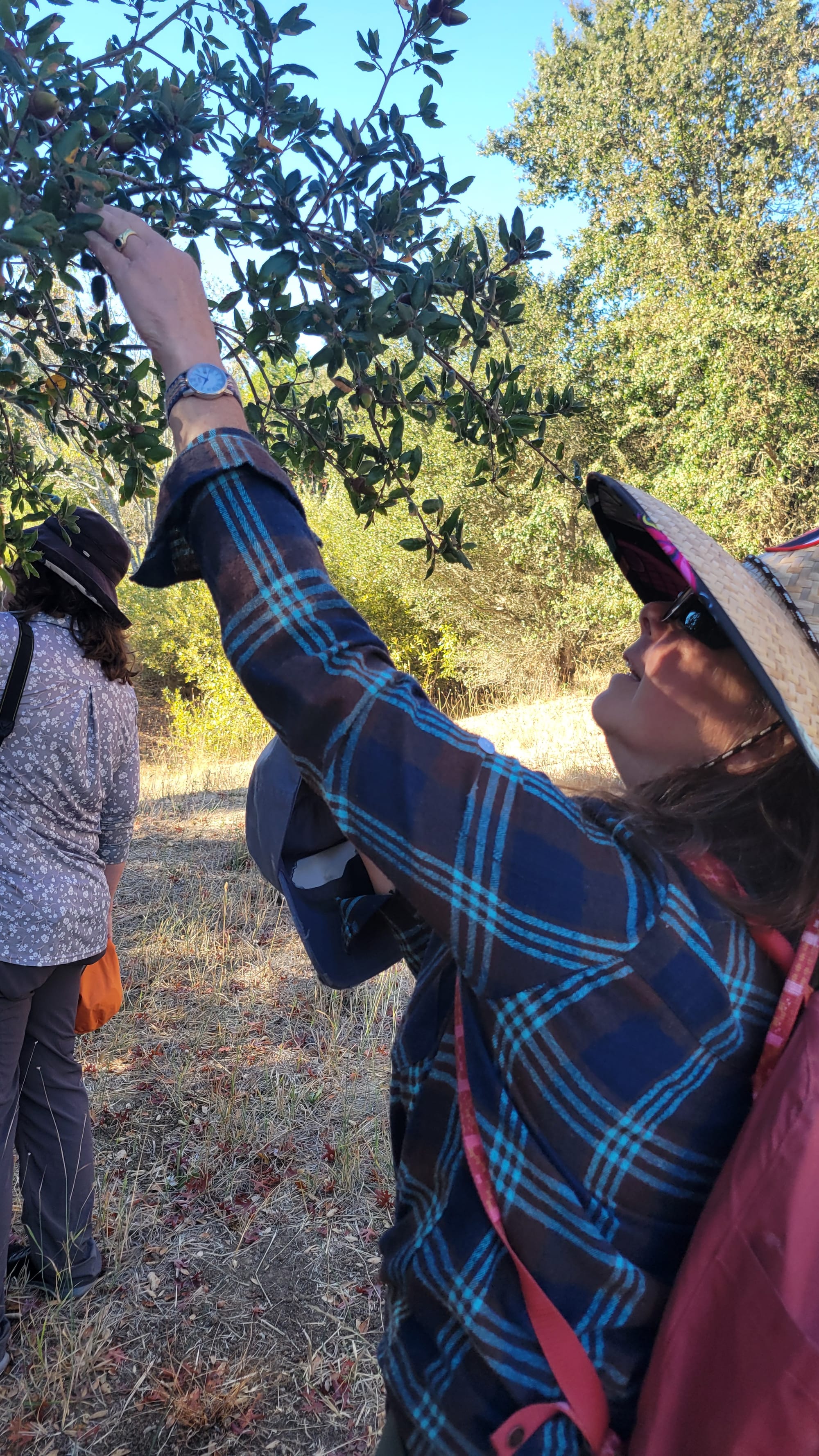
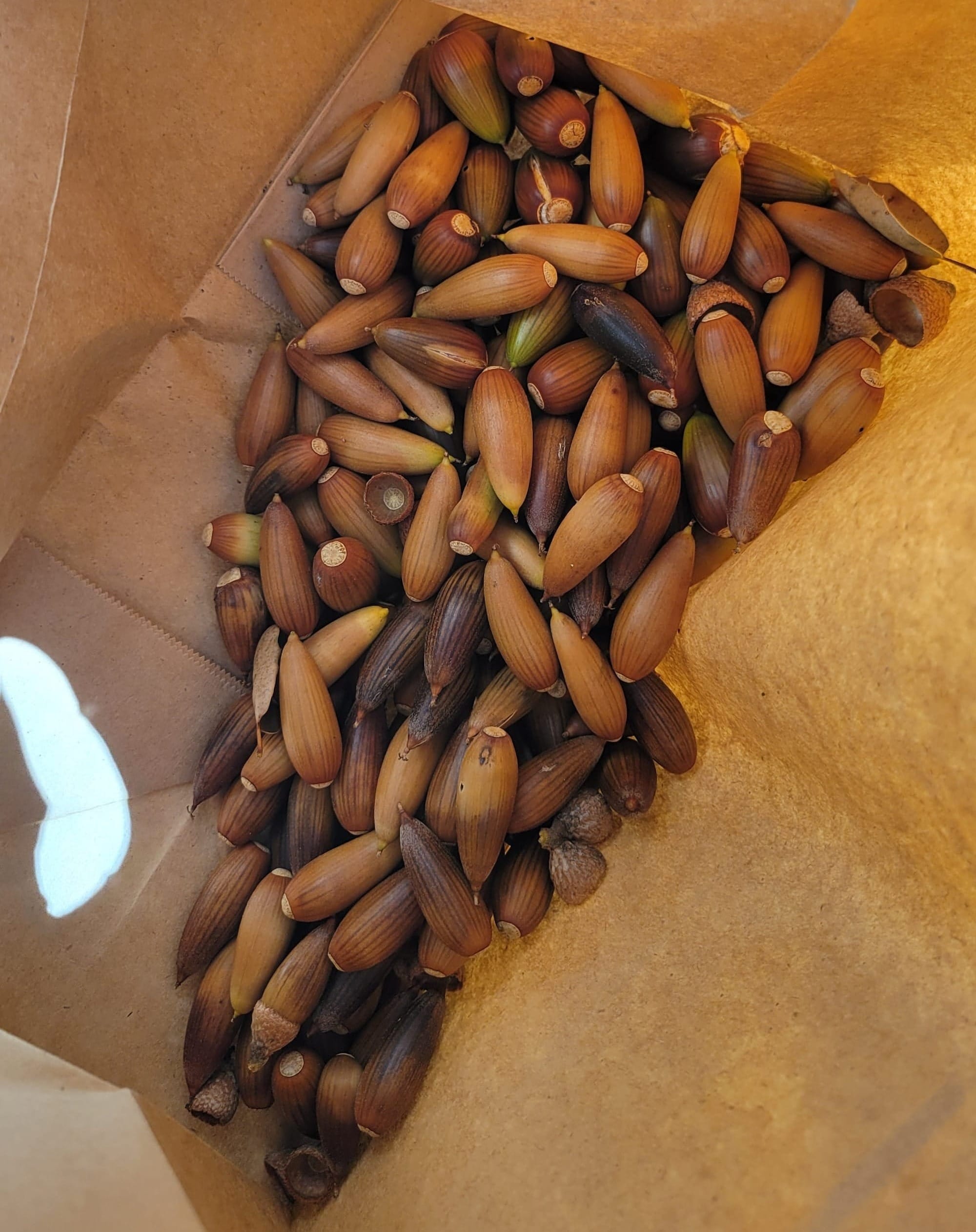
“This is the one I’ve been watching,” says Magoon, a project consultant with the nonprofit ReLeaf Petaluma, as we approach a mature coast live oak bordering a sidewalk in a southwest Petaluma neighborhood. “(The acorns) are really ripe. They fall out of the cups. You can basically grab handfuls of them.”
Petaluma’s original inhabitants, the Coast Miwok, harvested huge numbers of acorns this time of year. Acorns were a staple food, carefully cached to avoid spoilage and painstakingly processed into mush through splitting, grinding, and leaching.
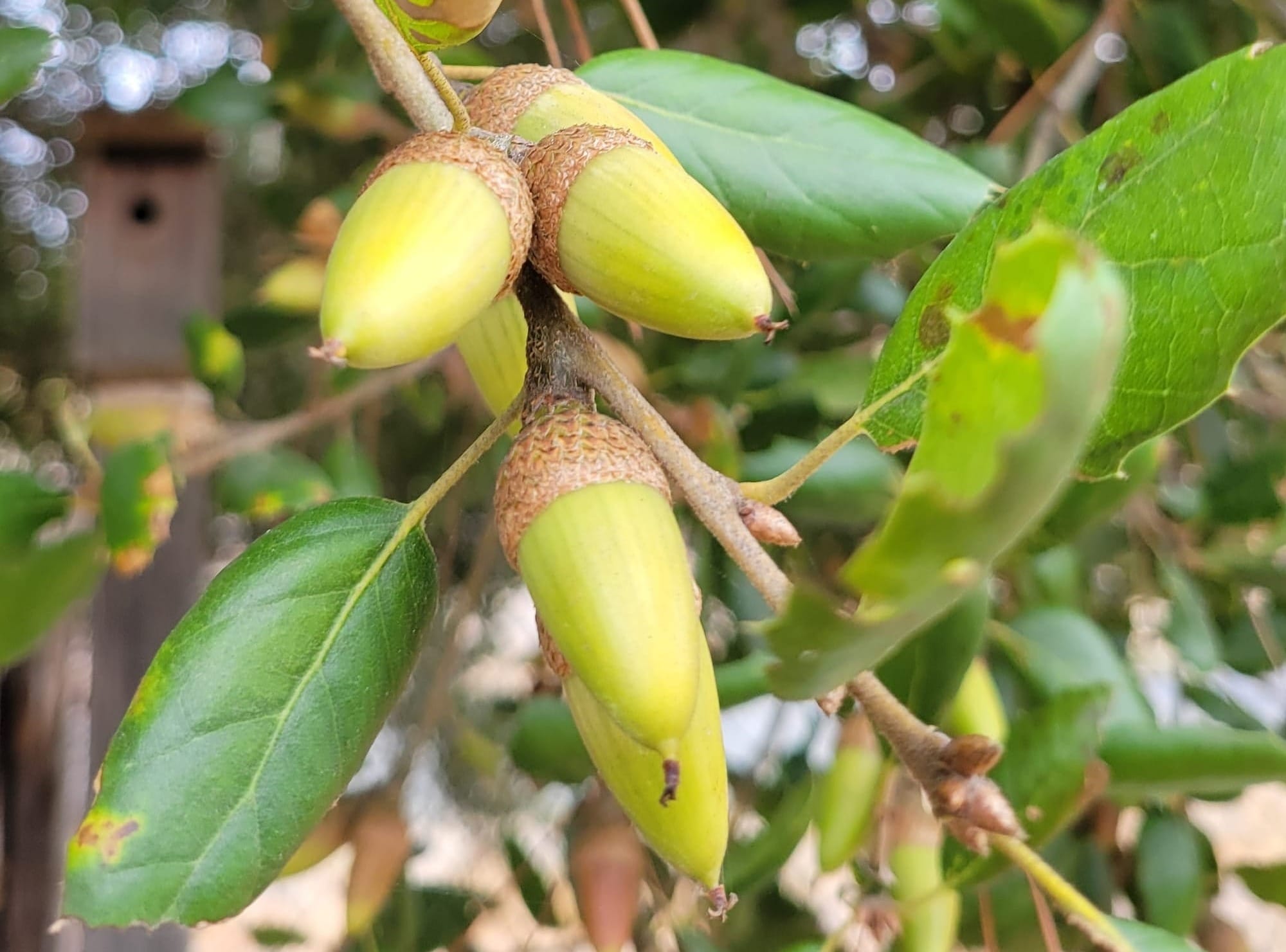
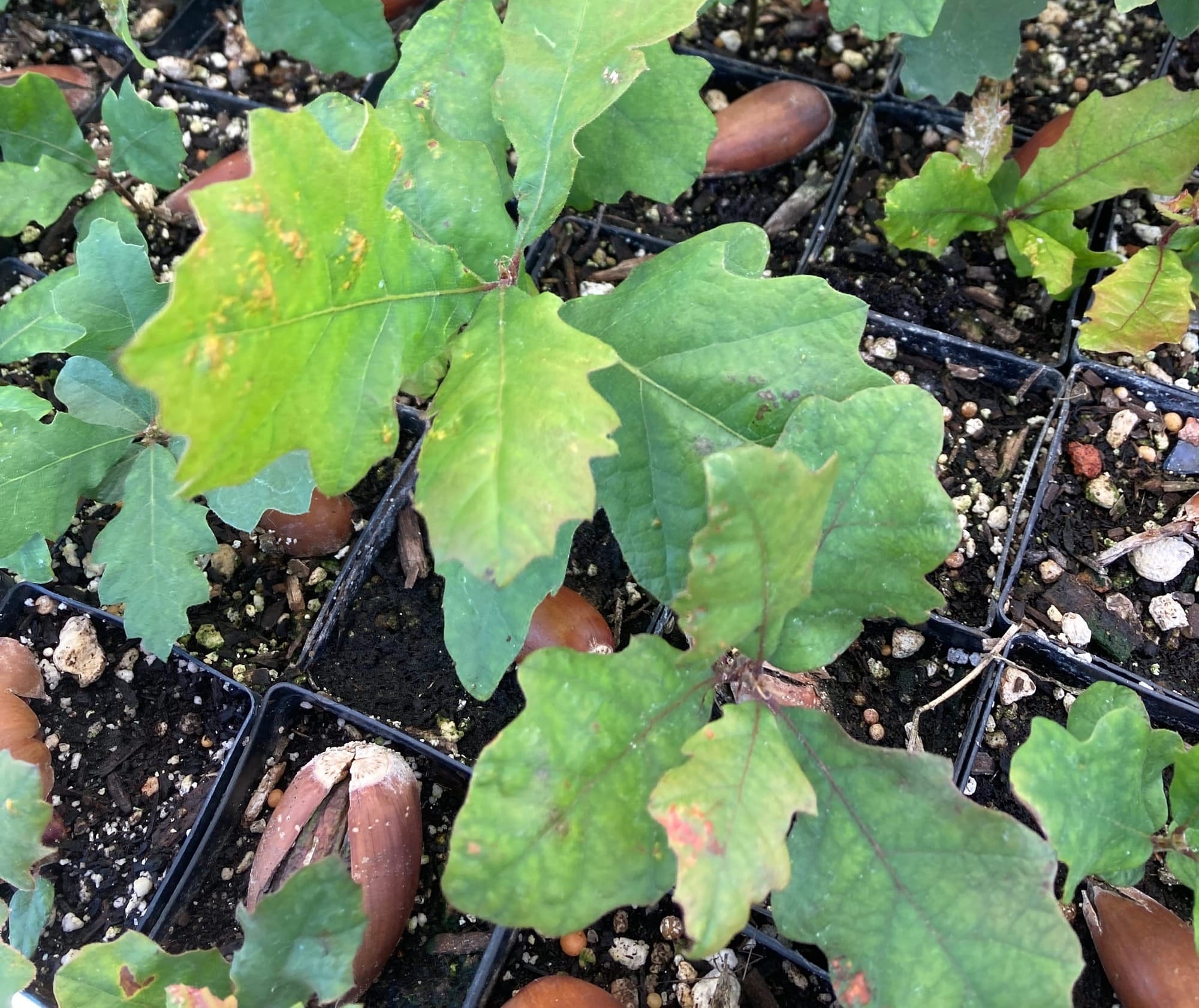
Lacerra and Magoon, however, are collecting for another reason: to plant and grow them into mature oaks on treeless city-owned parcels across Petaluma, either directly into the ground, three to a hole, or as seedlings started in small pots. Through ReLeaf Petaluma’s ReOaking program, launched in 2024 with a grant from the United States Forest Service, their goal is to restore local landscapes by putting a total of 750 new oaks and other native trees into the ground. These trees, in turn, will provide decades of what are commonly called “ecosystem services” to humans and wildlife alike.
“The program was developed to meet the city's desire to protect its residents from increased temperatures, and also to do all the things that oaks do,” said Lacerra, programs manager for ReLeaf, whose broader mission is to expand Petaluma’s urban tree canopy. “They're a keystone species, so they'll support the most biodiversity and their roots will help hold on to soil and protect the waterways.”
With much of Petaluma’s historical oak savanna either developed or converted to grassland for farming and ranching over the past century and a half, the ReOaking program is designed to “reclaim” select city-owned open spaces that likely once harbored intermittent mature oak trees, Lacerra said, anchoring and engineering local ecosystems.
Earlier this month, ReLeaf’s small staff of four corralled 20 volunteers to plant another 70 trees, including four species of oak (coast live oak, black oak, scrub oak, and valley oak) as well as other natives including black walnut, bigleaf maple, Oregon ash, western sycamore, and toyon.
Their goal of 750 trees is close at hand. And 100 of those are slated for the huge Westridge Open Space, an unmarked, trail-less parcel on the southwest edge of town. With volunteers’ help, hundreds of acorns collected nearby, and some additional young trees of other species, will be planted here on Saturday, Nov. 21.
Even before then, 48 trees, a combination of seedlings and acorns, will be planted on the East Side Connector Trail adjacent to Tulare Street and Castle Drive on Saturday, Oct. 24. Later, on Dec. 5, 34 spots will be planted with seedlings or acorns in the Southgate Open Space, and on Dec. 10, 14 more will go along the East Side trail near Lennox Drive.
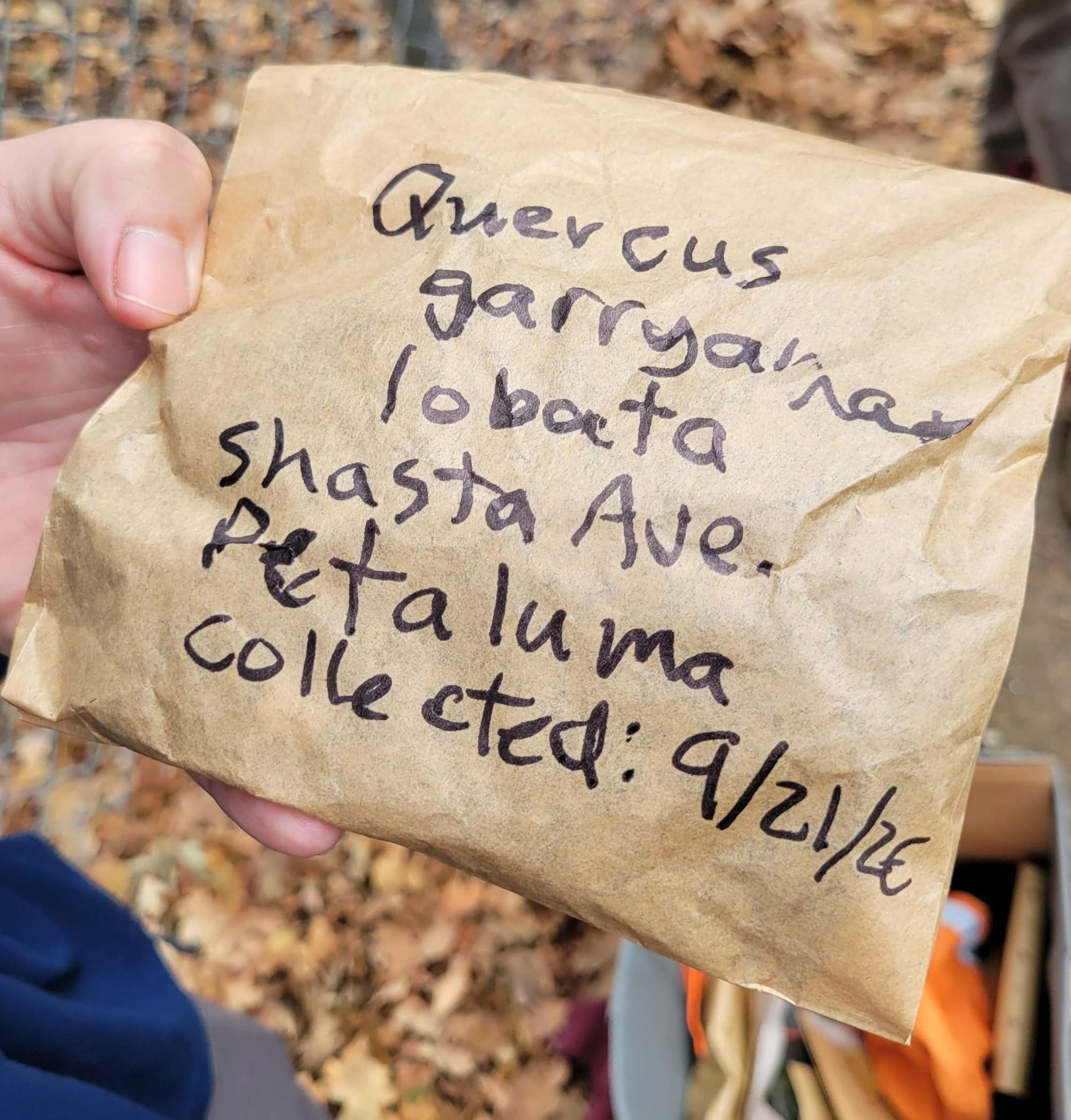
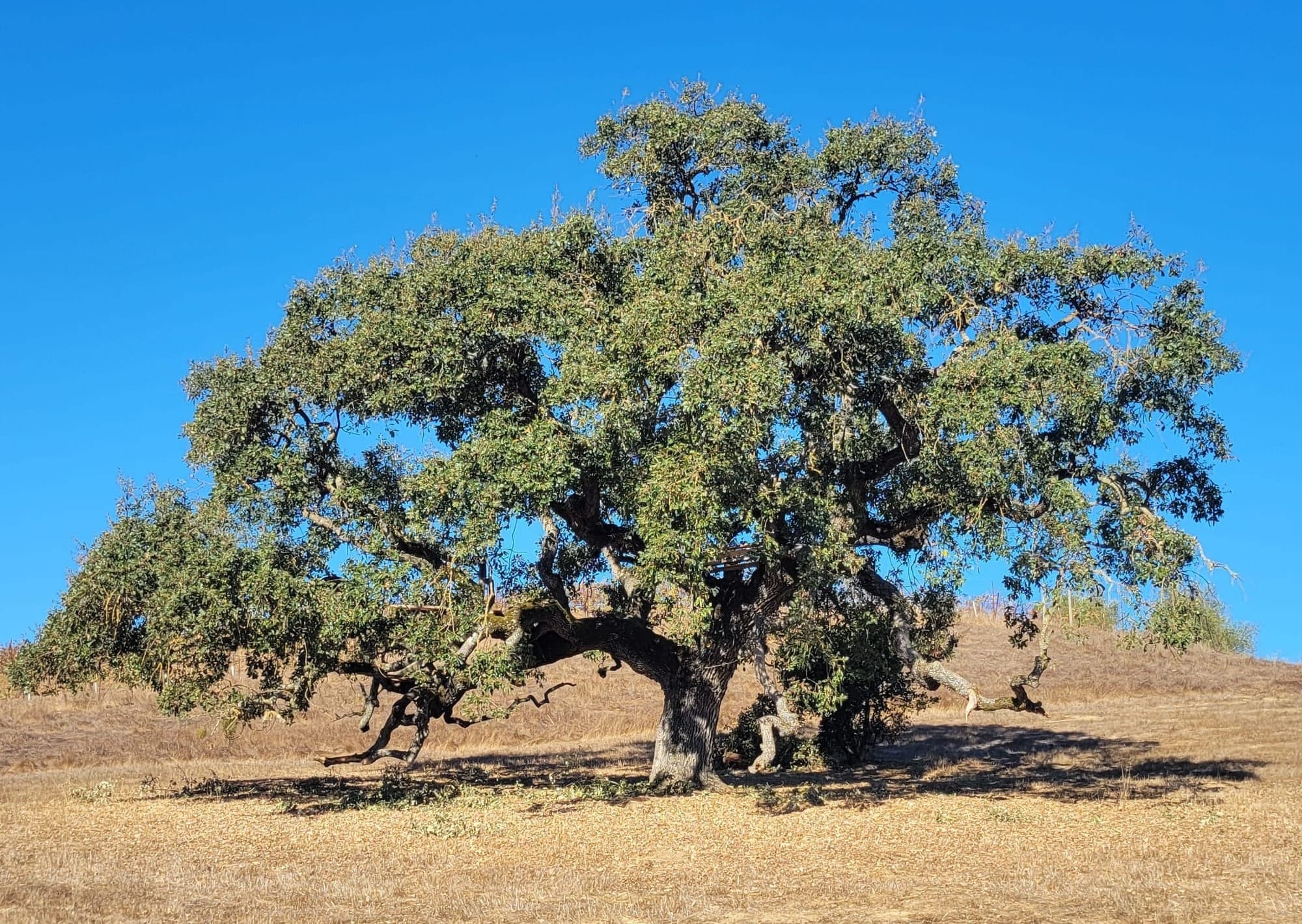
As we walk the Westridge property, Lacerra notes one of the few mature oaks still surviving here, a large Garry oak. Its branches spread like gnarled octopus arms around a patch of fallen leaves and acorns that serve as natural mulch supporting native plants. The tree's massive canopy is alive with birds flitting in and out, a deep-green beacon amid a sea of brown grass.
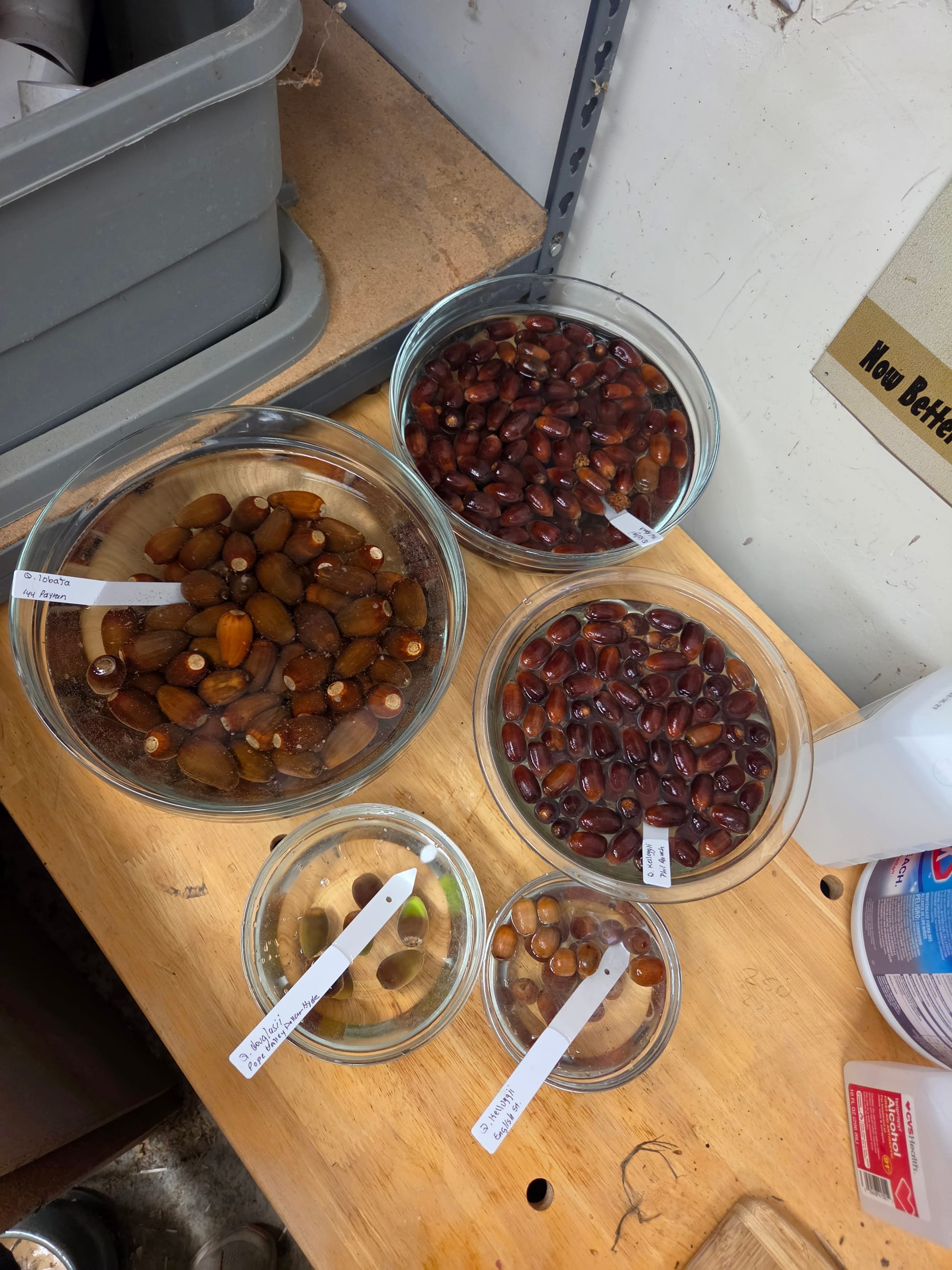
After collecting acorns, Lacerra and Magoon sterilize them with alcohol and bleach to prevent the spread of sudden oak death, a pathogen that is already decimating the state’s coastal oak forests. That’s also why they prefer to collect acorns from trees rather than the ground, where soil can harbor the deadly mold.
Some acorns then undergo a treatment called “cold stratification” – basically, refrigerating them in a moist medium for one to two months – to mimic natural wintertime conditions that prompt them to germinate. Among these, some will later be planted in small pots while others will be sown directly in the earth alongside non-chilled acorns as a sort of experiment, Magoon said, to see which do better.
Small plastic tubes and an additional layer of welded-wire deer fencing protect the young acorns, which are not buried but nestled gently into the dirt. If more than one successfully sprouts in any given spot, extras will be pulled. And all 750 trees planted through the ReOaking program will be watered until December 2028, to give them the best shot at thriving for many seasons to come.
In another couple decades, young oaks will begin producing acorns of their own.
“When you go back and you look at these areas that we planted, it's just sort of amazing to think about what it's going to look like, you know?” Lacerra said. “Twenty years from now, 30 years from now, it's going to be amazing."

ReLeaf Petaluma is seeking volunteers for upcoming planting days. See their website for the latest info and additional opportunities.
Planting days:
- Saturday, Oct. 24, 9 a.m.: East Side Connector Trail (Tulare St. and Castle Dr.)
- Saturday, Nov. 7, 9 a.m.: Meadow View Park (Abercrombie and Macmahan ways)
- Saturday, Nov. 14, 9 a.m.: St. Vincent Elementary School
- Saturday, Nov. 21, 9 a.m.: Westridge Open Space
- Saturday, Dec. 5, 9 a.m.: Southgate Open Space
- Saturday, Dec. 19, 9 a.m.: East Side Connector Trail (Lennox Drive) and Stratford Park
Planting prep and setup:
- Tuesday, Oct. 27, 5 p.m.: Cutting wire to make deer/sheep cages for seedlings
- Thursday, Nov. 19: 2 p.m.: Site set-up and prep for Westridge Open Space planting
Nate Seltenrich is an editor and reporter at Petaluma Voice. He can be reached at nseltenrich@petalumavoice.org.
Do you like our work? Support us with a tip.