The Slow Death of a Phoenix
San Antonio High School's closure is 'on the table'
By Jennifer Sawhney and Crissy Pascual
Petaluma Voice will begin to publish regularly in the spring. However, because a decisive vote may happen soon, we decided to publish this story before any decisions are made to educate and empower readers like you about what is happening locally.
Thank you for supporting local and independent news.
Update March 13, 2026
In late February, Petaluma City Schools’ Board of Education approved a plan to restructure alternative education as part of major budget cuts. Some of those changes – in particular, moving San Antonio High School staff to support junior high students showing initial signs of academic distress – would be implemented next school year then reviewed this October, according to a Feb. 24 board presentation.
But in a surprising twist, a resolution later appeared on the March 10 Board of Education agenda to close San Antonio High School at the end of this school year. The school is run by a tight-knit staff who’ve taught generations of students dealing with major life events and at risk of not graduating.
However, at the meeting’s start, Superintendent Matthew Harris recommended the resolution be removed, drawing support from several San Antonio High School staffers who remain uneasy about the school’s fate and the future of the alternative education program.
On average, alternative education students have four or more adverse childhood experiences, said Nikki Jackson, a Petaluma City Schools district guidance coordinator and licensed marriage and family therapist. Several of these students deal with "significant mental health issues" such as depression, anxiety or psychosis, she said, underscoring that this needs to be considered in the public discourse on school closure.
“We are engaged in suicide and threat assessing on a regular basis for our students. We help to maintain safety, not only for our students, but for the entire campus,” she said.
She and others pointed to influences outside school control, like housing, poverty, immigration status, and wondered why student voices weren’t being widely included. A few teachers read testimonials from current students who lauded the program.
Two unnamed board members brought the school closure resolution forward, according to the agenda item, and a request for comment from the board president was not immediately returned to clarify involvement.
President Mady Cloud read a statement where she underscored the need to correct the district’s “failure” to “adequately address the needs of our struggling secondary students and providing them with needed adequate support and intervention.” She said it “can only be corrected with a comprehensive, collaborative strategic plan to create a viable system of intervention and support that will be inclusive, equitable and sustainable. This resolution was meant to begin this process.”
Cloud said, given a lack of clarity of goals with an alternative education task force, misunderstandings, and the “upheaval of the superintendent and cabinet levels, I do not think we can succeed with a plan as stated in the resolution.”
Fellow Board member Joanna Paun, who is also running for the 2nd District seat on the Board of Supervisors, called for more review and an early warning system for students at risk of failure.
At the February meeting she pointed to Chicago Public Schools’ added support for ninth graders, which boosted graduation rates, and has been replicated by other districts.
Moving forward, the district aims to continue to work with the task force to clarify goals, objectives and timelines for restructuring this program.
Original story published Feb. 17, 2026
Staff at San Antonio High School, a continuation high school for students behind on credits, were excited to improve alternative education when they were recruited for a task force in 2024 to do just that. It’s something they’d wanted to do for years.
The Alternative Education Task Force, as it is known, was implemented to better understand the alternative education options, which included working on early warning systems to make referrals to the program, according to an April 2025 school board presentation.
“We’re the safety net for the kids who cannot graduate,” said Melissa McGarry, who has taught at San Antonio High School for the past 19 years.
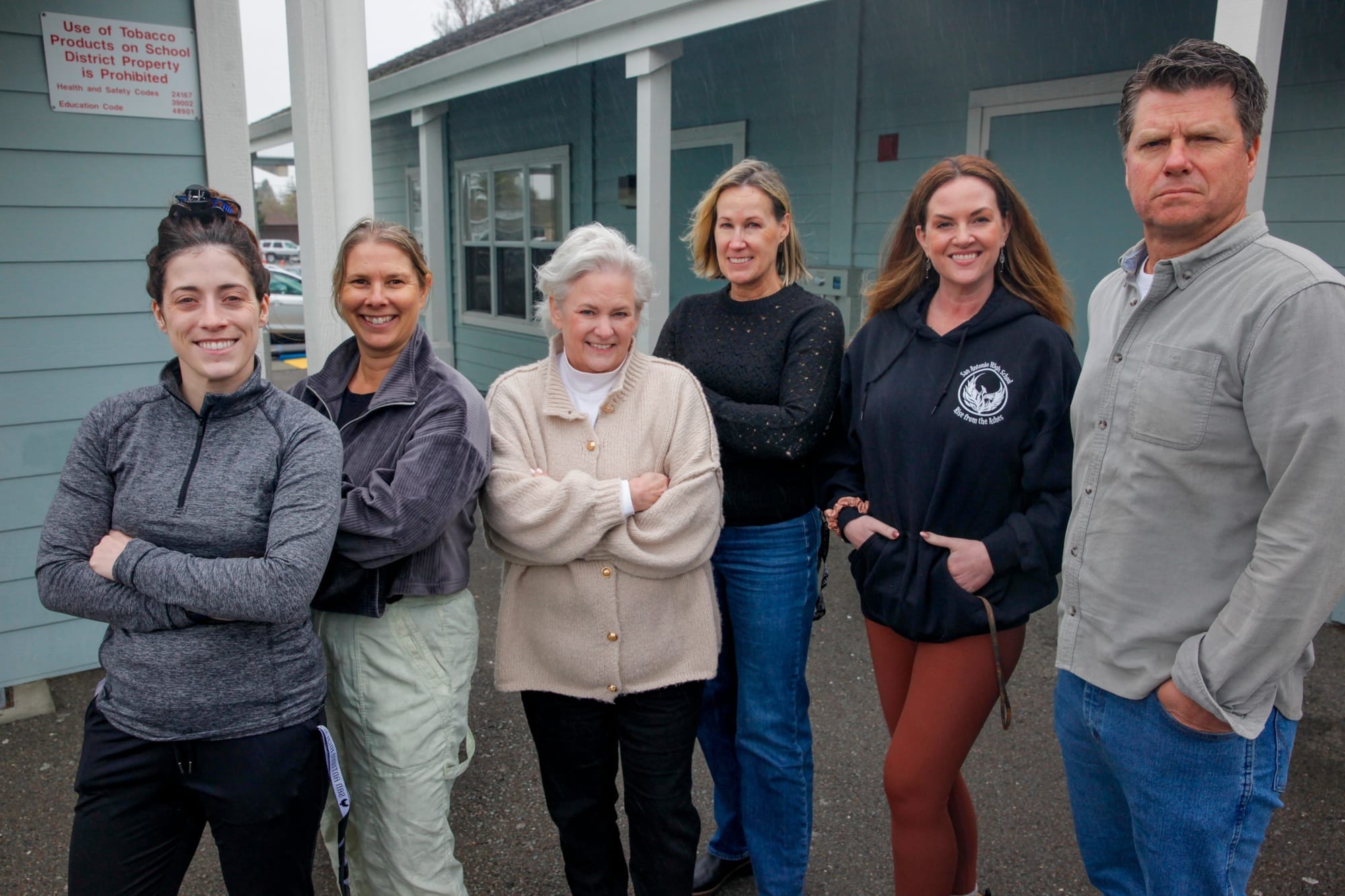
McGarry is one of eight teachers, an instructional aide and nine on-campus staffers and has borne witness to generations of students who have risen to overcome challenging circumstances. The Phoenix – the mythological bird reborn from its ashes – is the school’s mascot.
But, around the time the Petaluma City Schools budget came out in December, teachers said they felt “blindsided” when they learned from behind closed doors that San Antonio High School would likely close.
As painful budget cuts followed in the wake of the pandemic, the school that for decades has served as a lifeline for thousands of Petaluma students – some young parents, others with learning disabilities, some with tumultuous home lives – could close its doors for good.
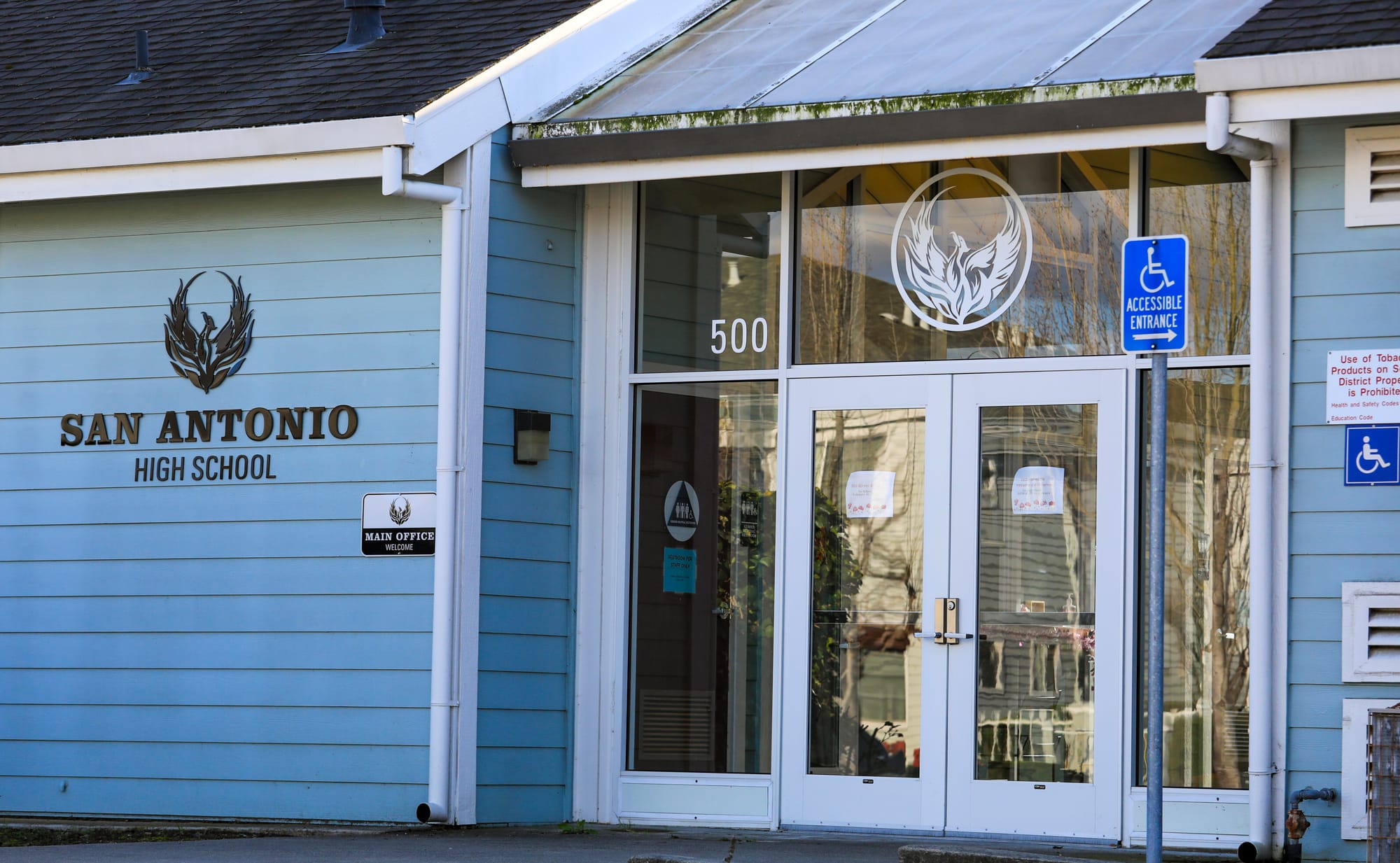
Petaluma City Schools isn’t alone. As COVID-19 funds come to an end across the country, school leaders have been forced to make difficult decisions. Santa Rosa City Schools, the county’s largest district, just approved the elimination of over 100 positions and closed two schools within a $14.4 million budget cut as they look to further cut $34 million to avoid state takeover. In Petaluma, the reduction of $6.1 million dollars has cost the district 44 full-time positions.
And it comes as the district – one of nine in Petaluma and 40 in Sonoma County – already has the second lowest per-pupil funding in the county, exacerbating the strain.
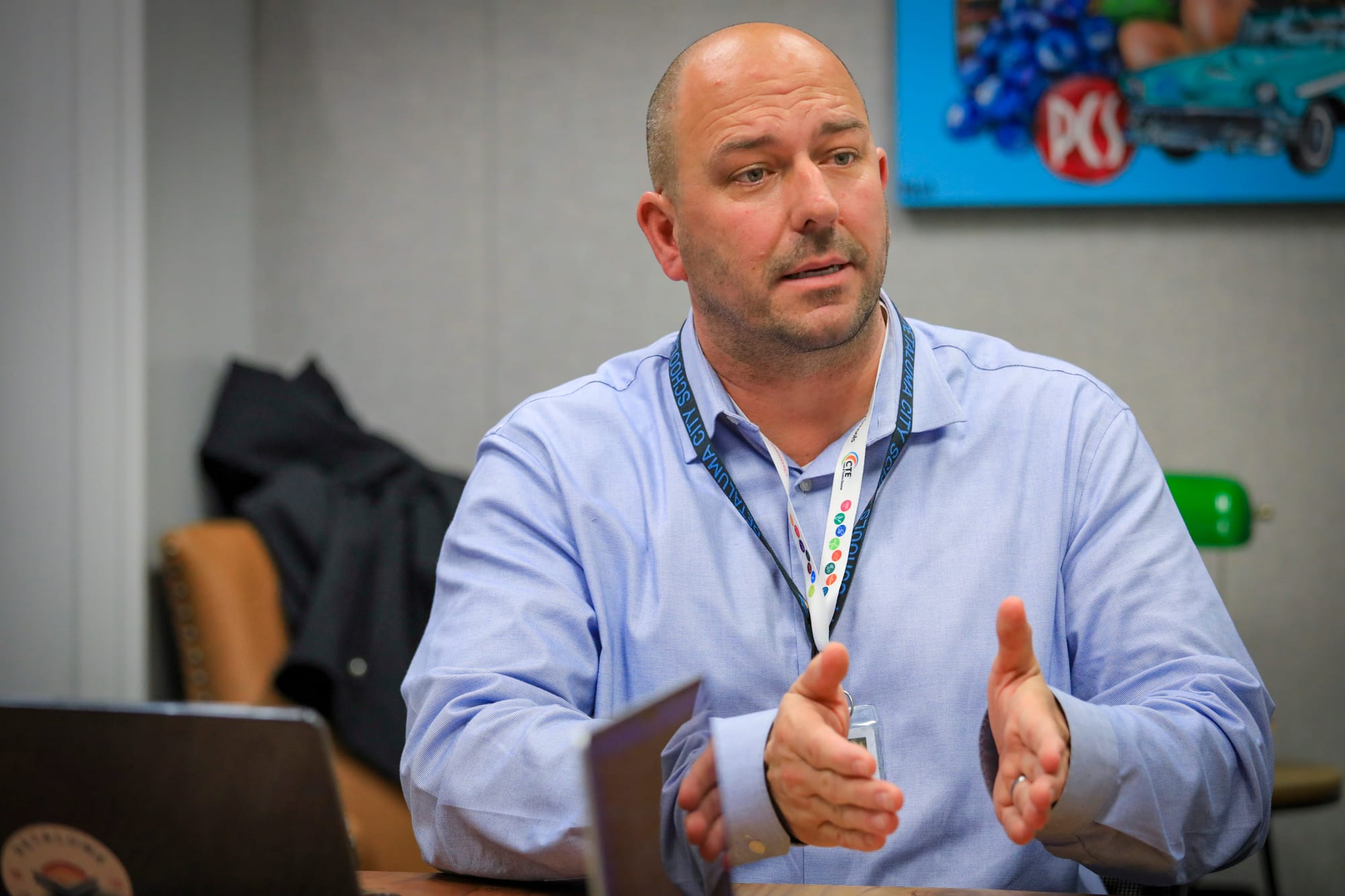
“Restructuring” alternative education by cutting 4.4 total teaching positions plus the equivalent of over three staff positions across multiple sites, would save the district about $663,000, Petaluma City Schools Superintendent Matthew Harris said, accounting for nearly 11% of the total reductions for the next fiscal year.
‘Wait-to-fail model’
In July 2025 the district approved a consultant to address anti-racism and anti-discrimination of students, which prompted the district to reconsider the alternative education model as the last stop-gap measure for struggling students.
This work, Harris said, was supposed to bring “more equitable” outcomes to male Latino students, the majority of the alternative high schools’ population.
The school’s population fluctuates, serving more than 100 students each school year, though it may have about 60 students at any given time as some students return to their home high school once they’ve caught up on credits, or others graduate. Last school year it had an 82% graduation rate, the year prior 43%, and 51% the year before that.
“Our alternative ed program is fabulous,” Harris said. “The teachers are dedicated, hardworking. They do wonderful things for kids. And here's the issue that we have. … We have what's described as a beautiful wait-to-fail model.”
At some point in their elementary school education certain students begin to struggle, he said. “And what happens is we have social promotion.”
By seventh grade, staff at the junior highs can often identify which of the struggling students will eventually transfer into the alternative education schools, Harris said.
“We say, ‘Oh, well,’ and pass you along to eighth grade,” Harris said.
That cycle, he said, repeats through tenth grade, and it’s at that point that students are told they may not have enough credits to graduate so they transfer to an alternative high school such as San Antonio.
With smaller class sizes and more direct support, students often feel successful, he said.
One school board goal is to ensure all graduating students are college and career ready, but if they graduate from San Antonio, he said, they cannot go straight to a four-year college.
“It’s impossible,” he said. The school doesn’t offer the classes that would qualify them for the California State University or University of California systems.
But, he repeated, “it’s not an alt-ed problem... we have a systems problem in our school district,” he said.
For Harris, this means diverting alternative education resources to junior highs with even larger student bodies, and referring potential San Antonio students to other existing campuses.
San Antonio is one of four alternative education options in Petaluma. Harris said that students who still need the additional support may be referred to Sonoma Mountain High School at Casa Grande High School’s campus or Carpe Diem High School at the Petaluma High campus. For independent study, they may attend Valley Oak High School.
But, San Antonio teachers see holes in the proposal.
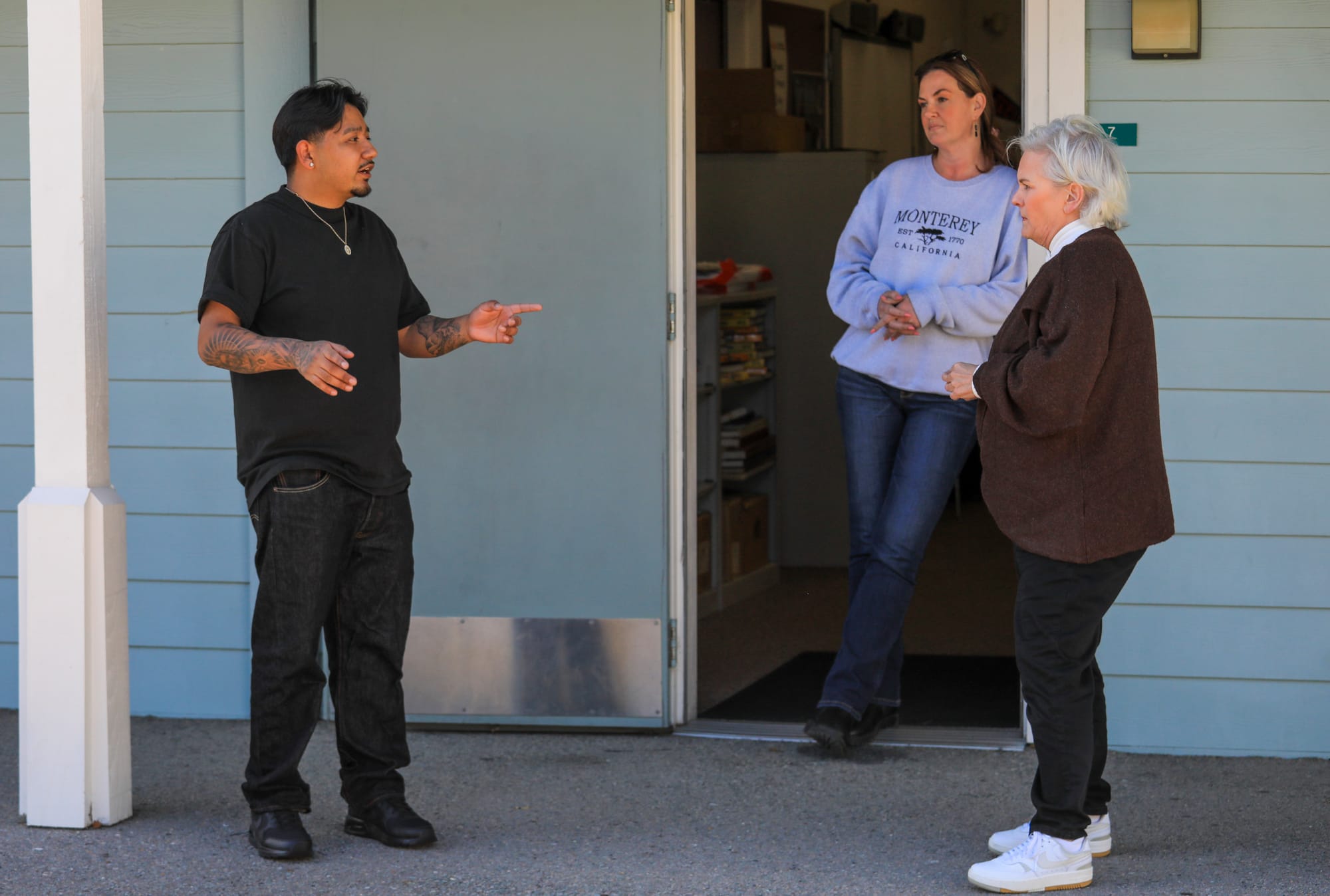
It’s never “one thing” that brings students to San Antonio, McGarry said.
“The kids who come here, it's not because they're bad kids. They have all different stories of family trauma and moving and illness and things that are totally outside of their control. … Kids who are hurting academically, often, it's because of their social emotional needs and we can take care of that here.”
The Restructure
Current plans call for San Antonio to remain open at least through 2026-27 school year, Harris said. But the school won’t be unscathed.
Pending approval from the District’s Board of Education, one teacher will be laid off and one will be moved to the junior high level to support students when they show the earlier signs of struggle, Harris said.
As part of the alternative education’s restructuring, 3.4 positions will also be laid off from Valley Oak High School, an independent study program, bringing the total to 4.4 teacher layoffs plus cuts to custodial, administrative and bilingual support staff, among others.
A detailed plan hasn’t been approved by the board yet, said longtime teacher Eric Smith. He was told it is slated for the school board’s initial approval on Feb. 24.
As for San Antonio’s ultimate closure? It’s “still on the table,” Harris said.
That decision won’t be considered until October 2026, when leaders re-evaluate the changes at the junior high level and closely monitor the district’s budget, he said.
"These reductions are going to impact everybody.”
‘I never felt like a teacher cared’
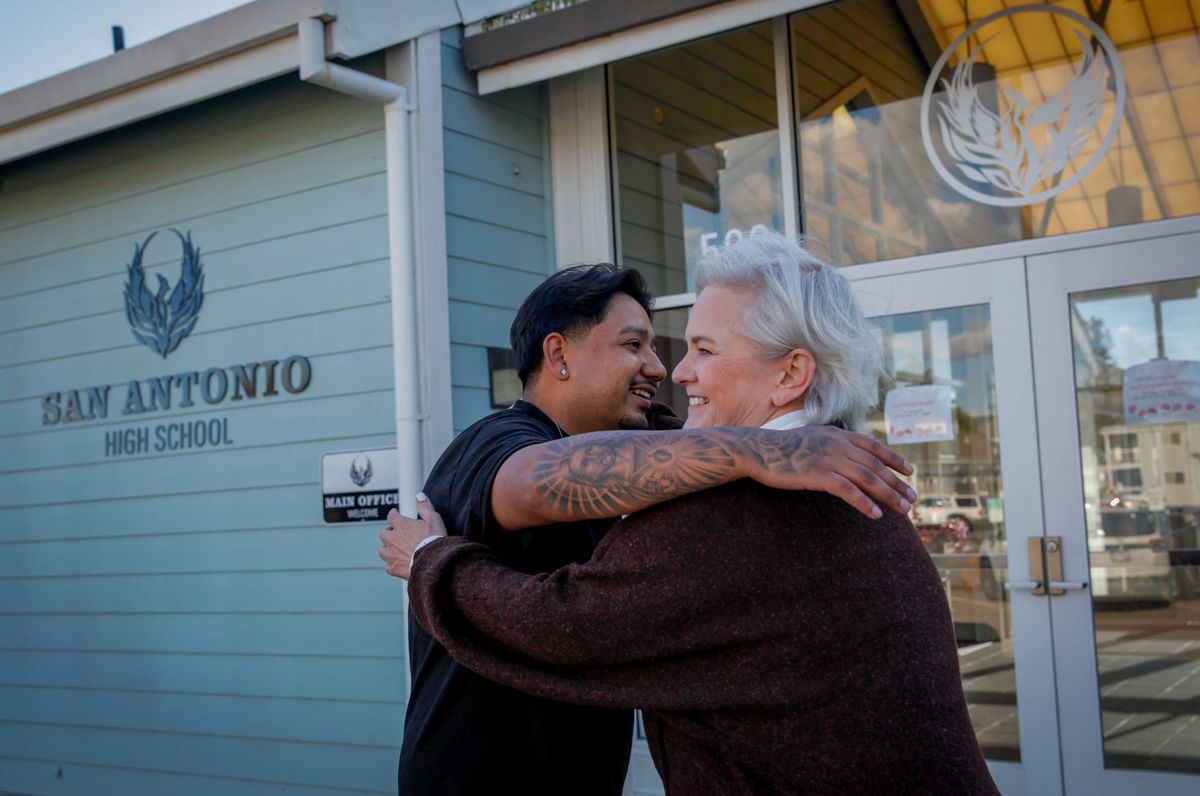
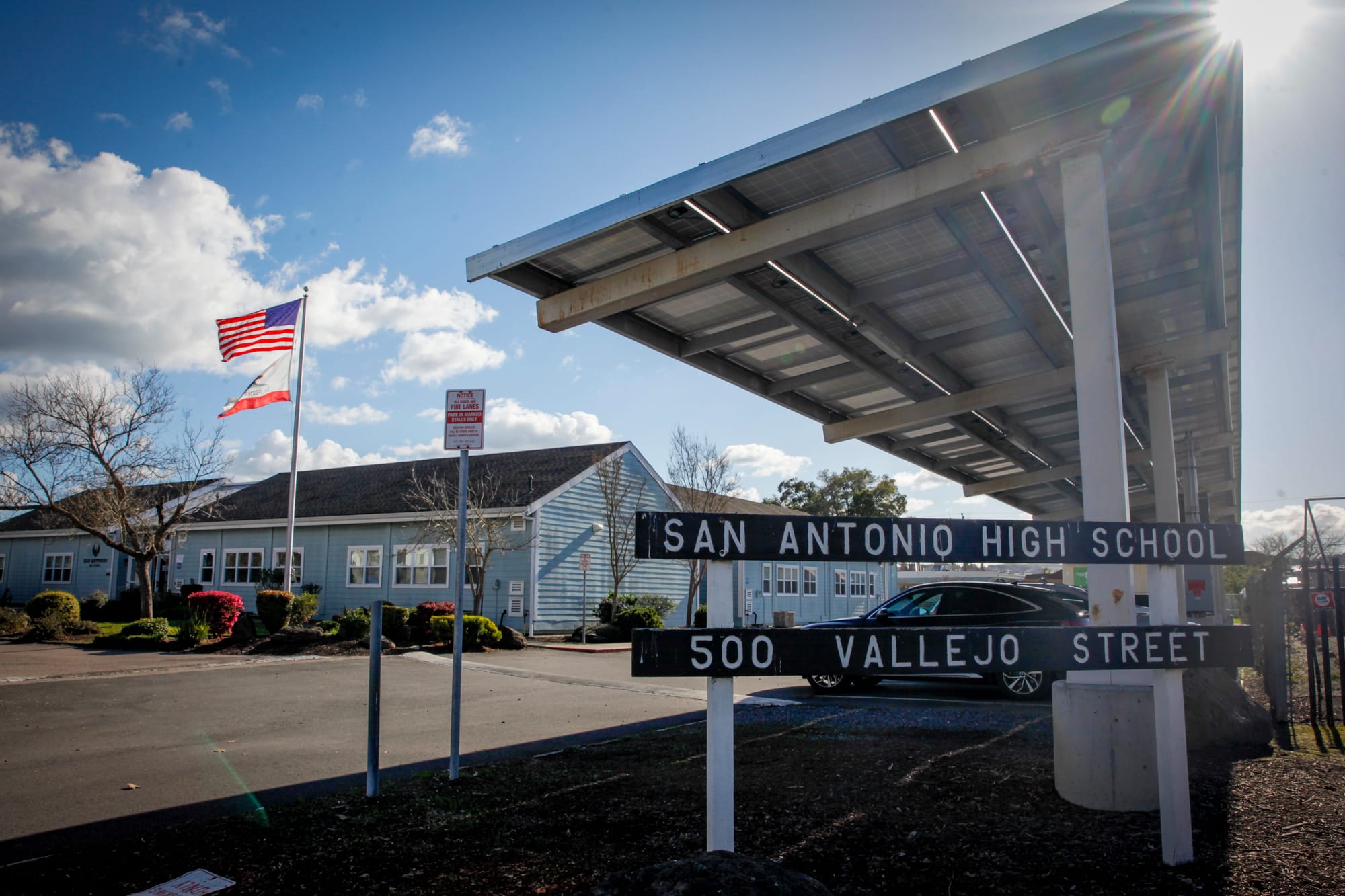
Surrounded by a seniors-only apartment complex and single family homes at the end of Vallejo Street, San Antonio High School is special to both staff and alumni.
It once housed a baby program, which allowed teen parents to learn how to care for their babies as they earned their diploma. The Petaluma Health Center operates a health clinic on campus, never turning away students in need of medical, dental and other preventative care.
And students say they benefited not only from the school’s approach to sharing practical life skills, but from teachers who really cared about them.
Berenice Arango Perez, 28, said she didn’t think much about her future until she went to San Antonio.
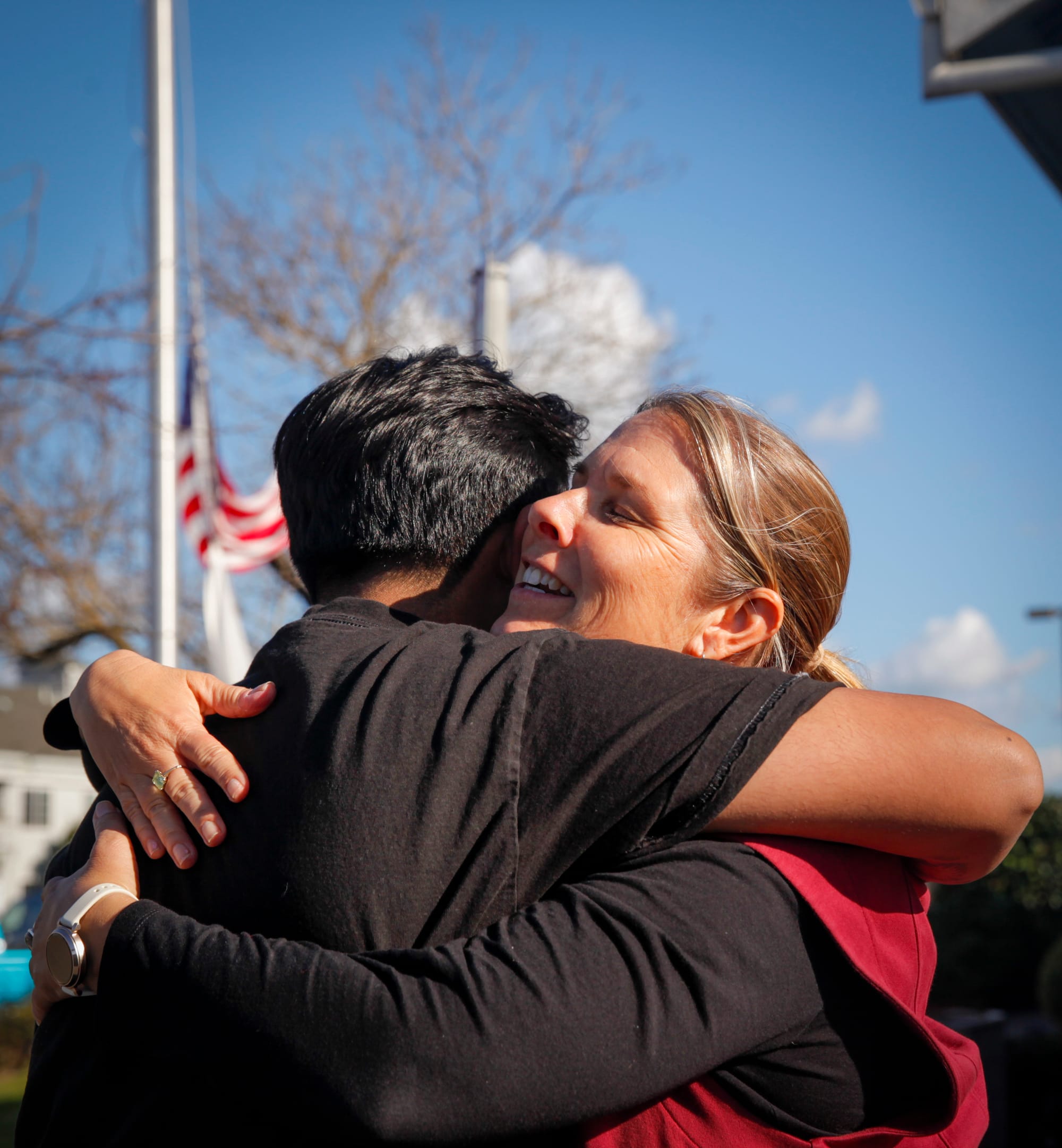
“I never felt like a teacher cared about me until I got to that school,” said Arango Perez, who graduated in 2016.
From the start, a counselor guided her to get through the inevitable “bumps in the road,” and her English teacher, Ms. McGarry, taught her how to find a healthy outlet through journaling, which she does to this day.
“It was like a sanctuary for many of us… It’s not because we didn’t have adult presence, but it was just busy parents who didn’t have the time,” she said. “And they were the adults who did give us the time.”
They encouraged her to self-reflect on her interests.
“Now I’m a makeup artist and I really love my job,” she said.

Jose Alvarez, 33, attended four high schools across the North Bay, including two in Petaluma, before finding success with San Antonio, calling it “one of the only schools that really had what I needed especially for a troubled youth.”
“They didn’t treat kids like kids there,” said Alvarez, a 2011 graduate. “We were becoming adults and they did a very good job treating us as such.”
Now, Alvarez owns two barber shops in Sonoma County, Barber’s Garage, having opened the first one just two years after graduating.

On a recent Tuesday night, two other barbers, Junior Pacheco and Alex Sierra, who both work at Authentics Barbershop in Petaluma, traded stories about San Antonio. They both agreed they would have dropped out if not for that program. Pacheco likely would have remained at his minimum wage job.
“Imagine if you had a kid who also had trouble with school, and needed to go to a school like San Antonio to build up more credit, but if it wasn't there, what would you do?” Pacheco said.
The upcoming Petaluma City Schools Board of Education meeting is scheduled for Feb. 24 at 6 p.m. For more information and to contact board members, visit petalumacityschools.org/our-district/board-of-education
If you've made it this far, please consider donating to support our work.
We exist as a social service to empower and engage our community by providing non-partisan, trustworthy news.
Petaluma Voice is built by, for, and with locals.