5Qs with DeLeon Judo Club Sensei Henry Kaku
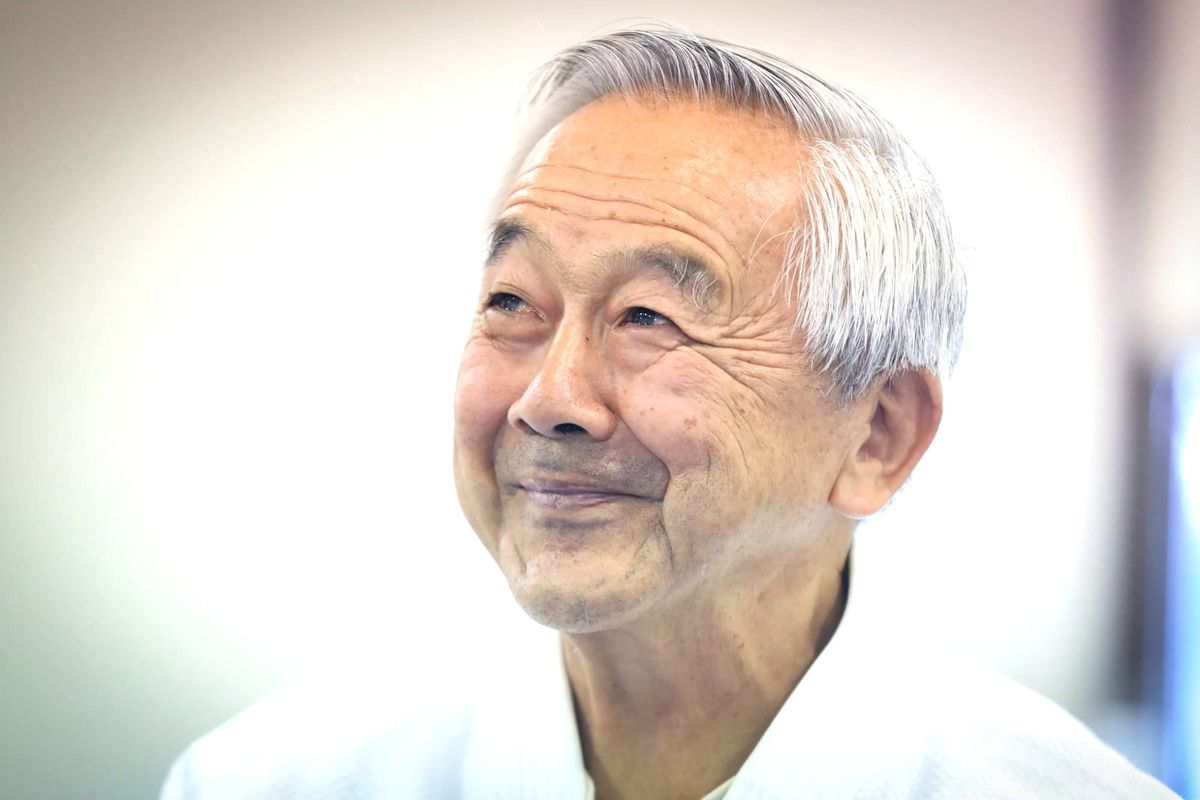
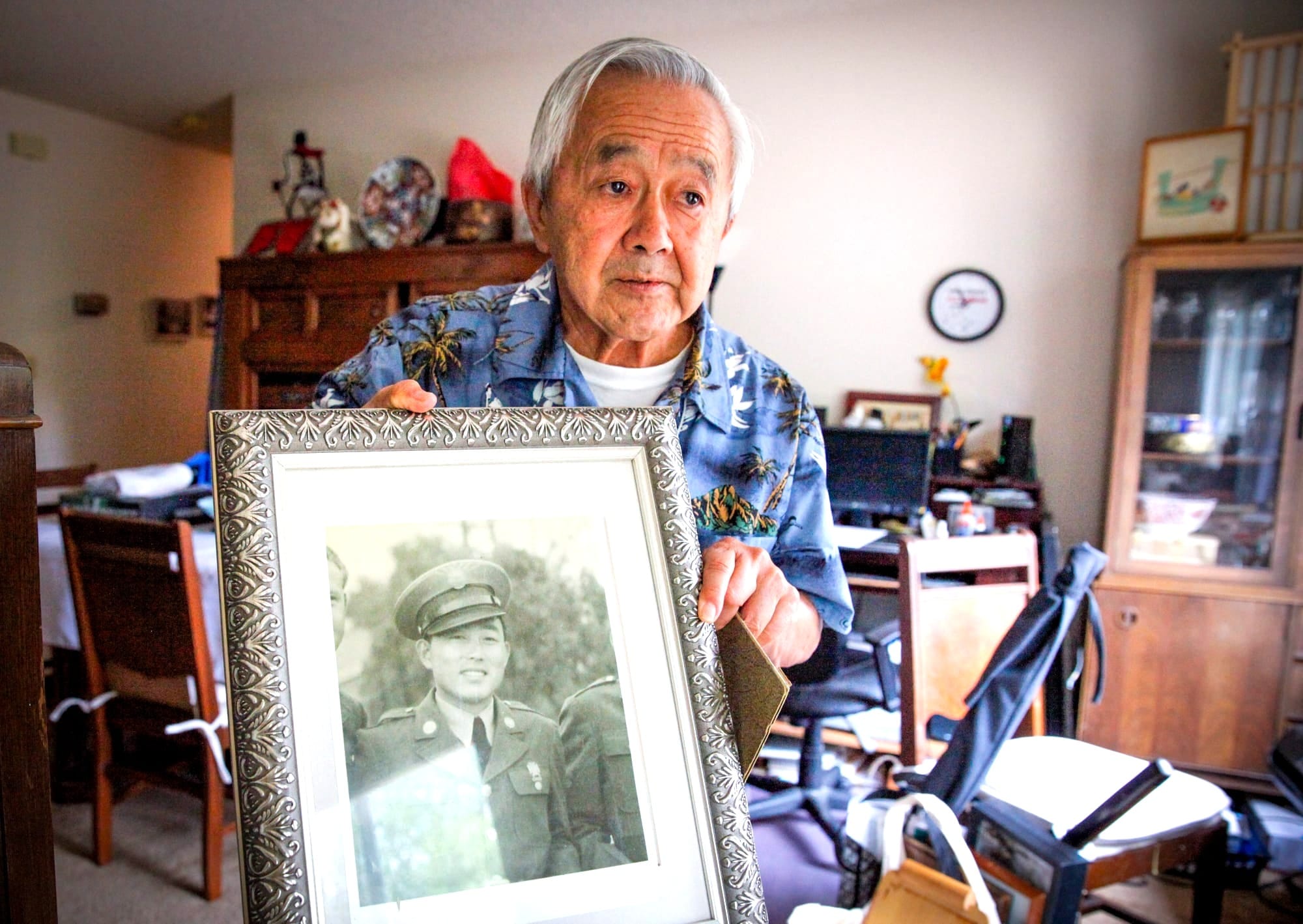
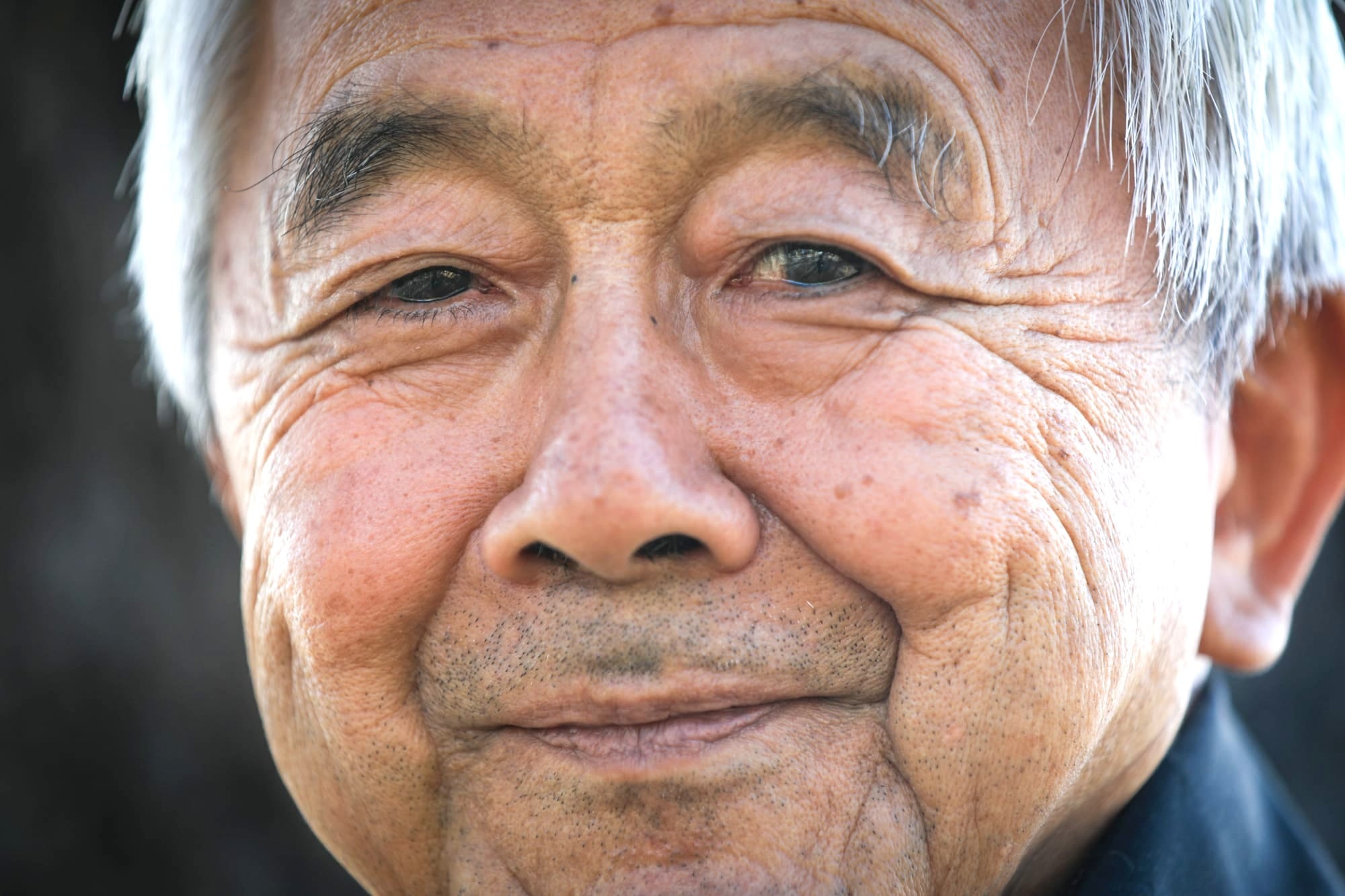
Kaku, 78, was born in Japan to parents imprisoned during World World II, moved to the Bay Area as a child, and settled in Petaluma in 1985 with his own family; both of his children also still live in town. In addition to judo, he teaches origami and Japanese-American history.
I understand that you follow the philosophy, “The more knowledge you have, the more confident you will feel.” Can you explain what that means?
An analogy would be in martial arts, which I’ve been studying for almost 70 years. The more you learn, the more you don’t need to fight. The more you learn, the more you avoid getting into confrontations, both physical and verbal. Also, they say that you study history so that you don’t repeat history.
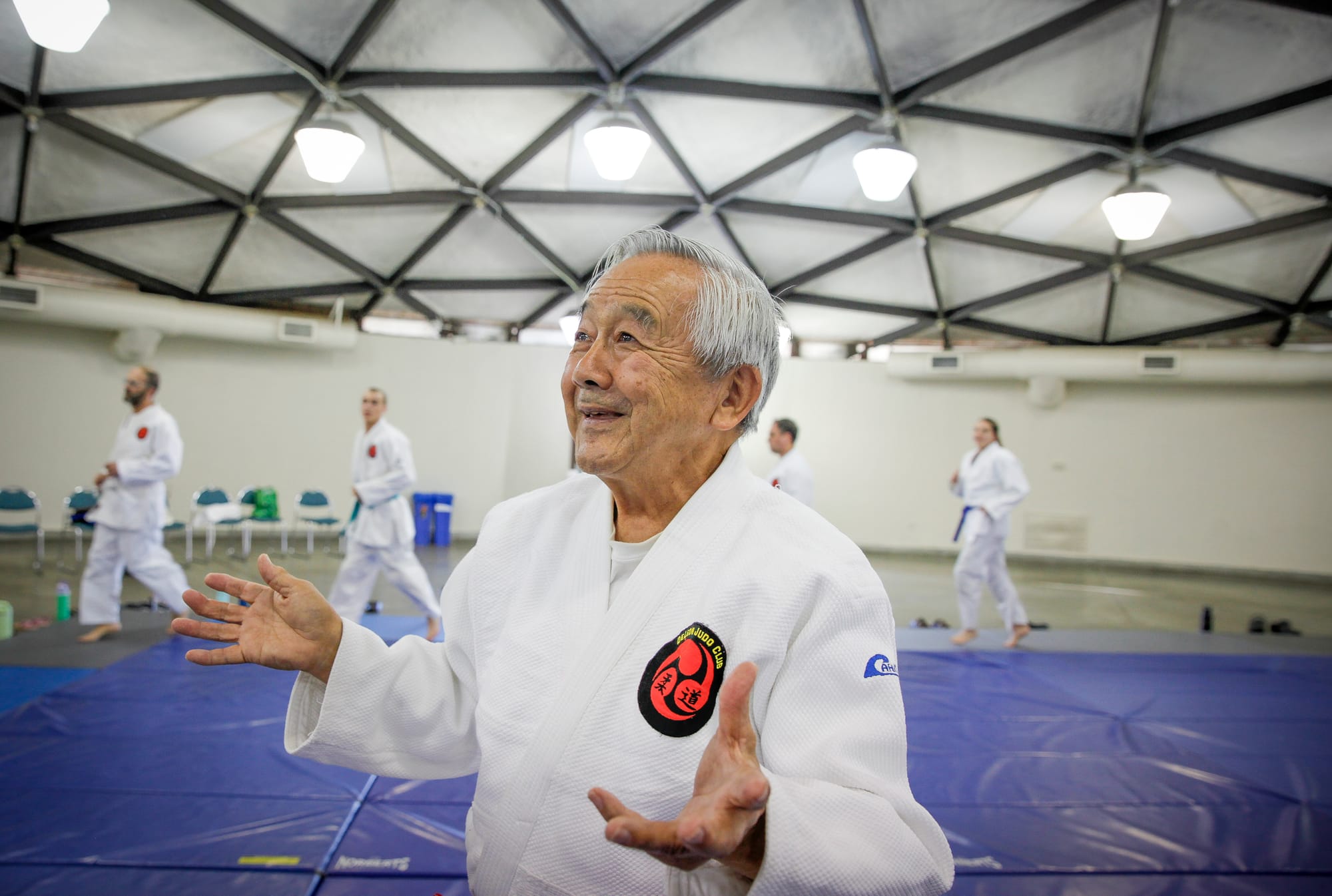
The other thing that I’ve done for the past 30 years is I’ve given talks about what happened to Japanese-Americans during World War II. The more we know about what happened, hopefully, things like that won’t happen again in the future. And it just makes you more well-rounded when you are more knowledgeable about different things, and not so narrow-minded in terms of information.
This applies to everything from knowledge of the world and knowledge of politics and history to martial arts. You can be more confident when you are having a discussion with someone. You may have differences in political opinion, but if you’re more knowledgeable about both sides of the story, then you’re more confident to feel comfortable with your own position and not be so negative or distracted by the opposite opinion.
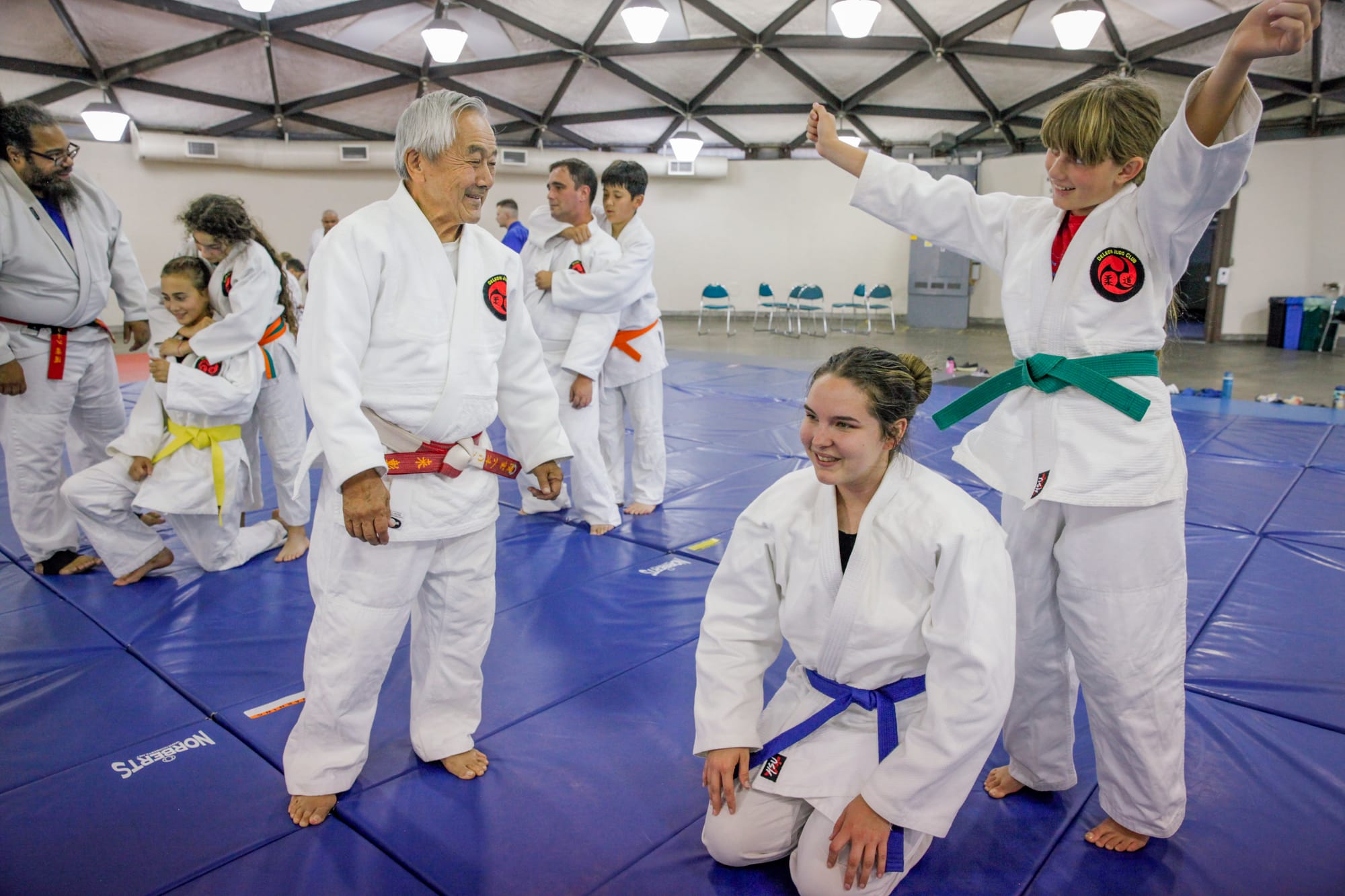
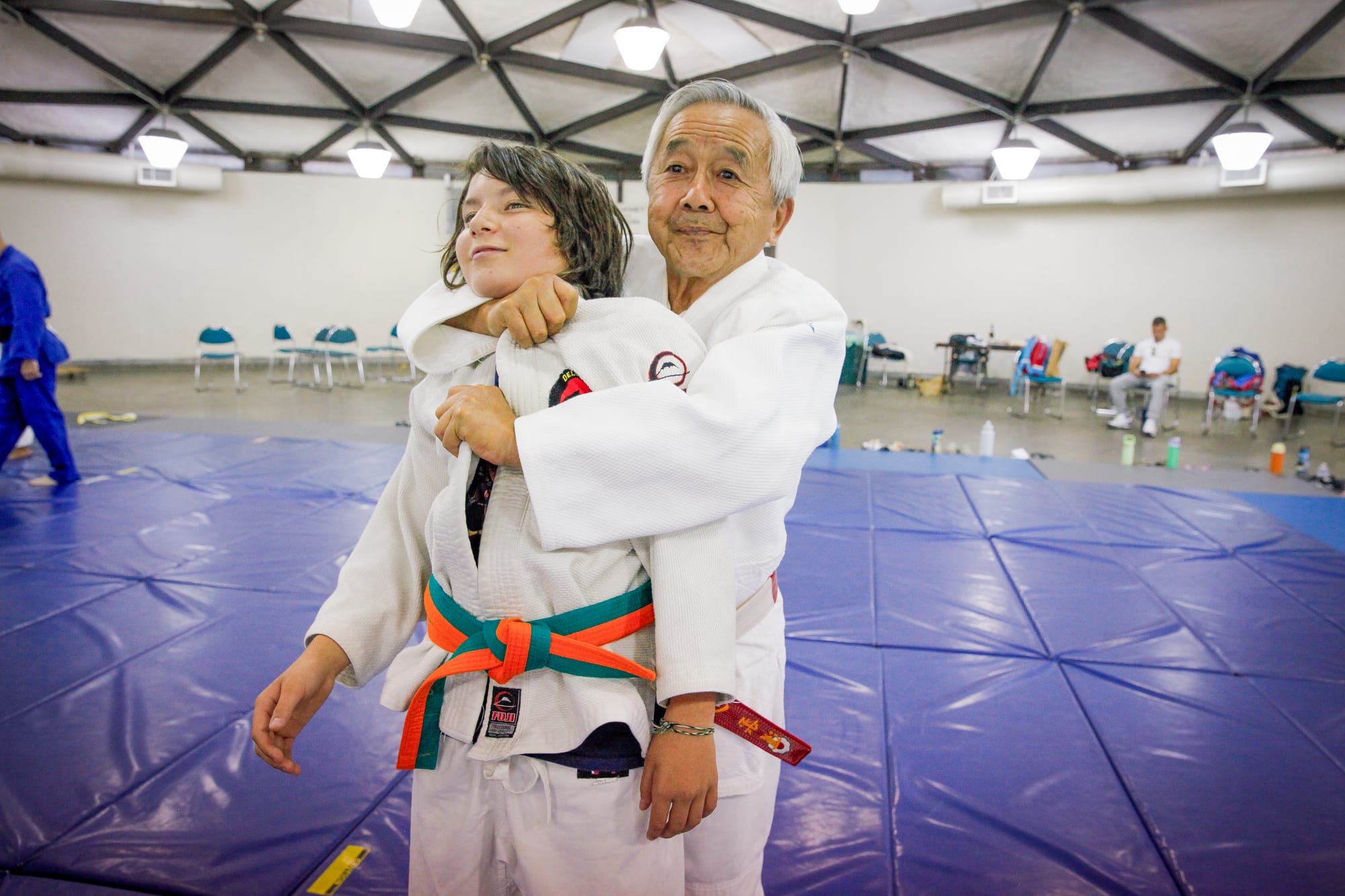
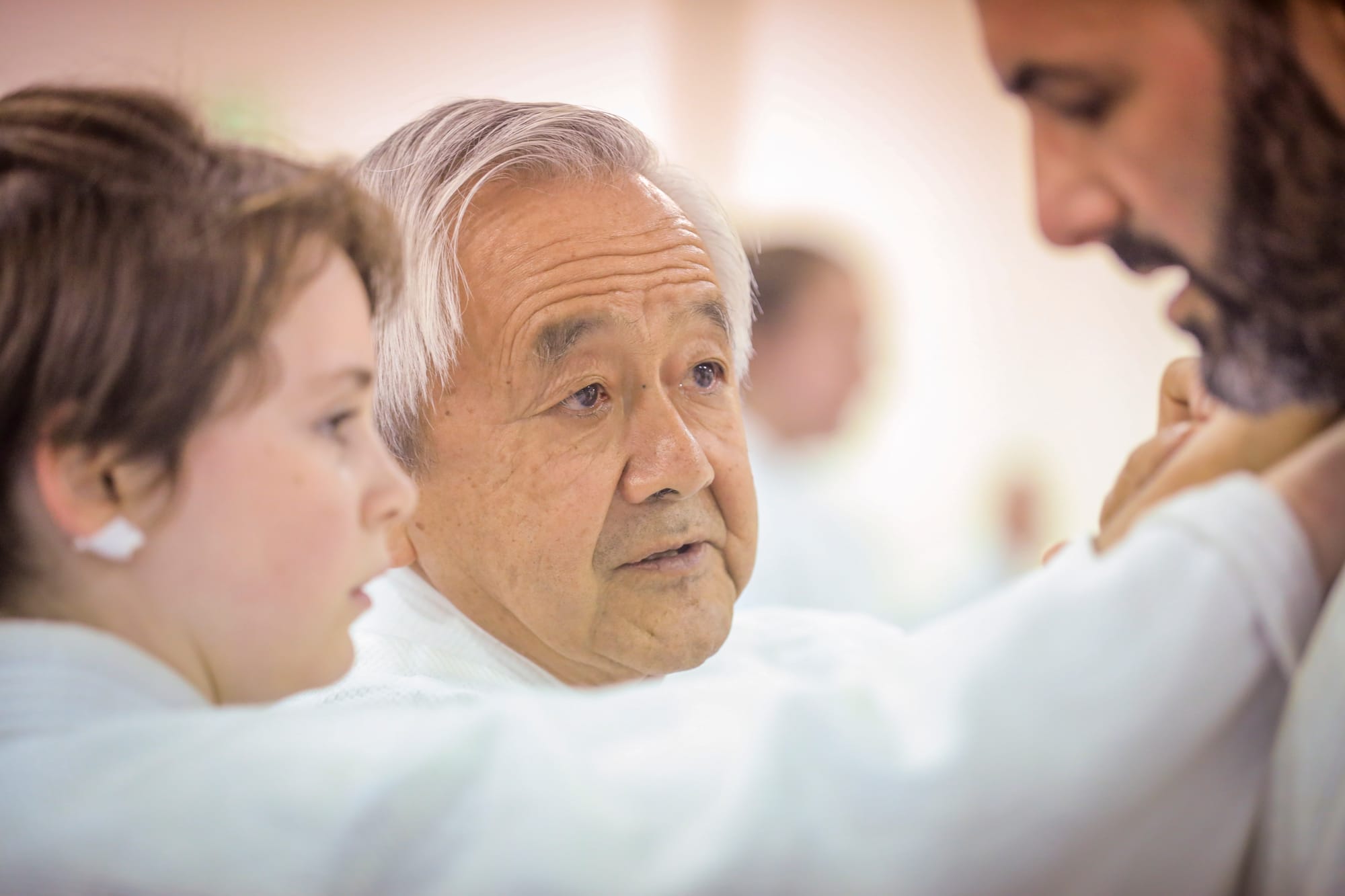
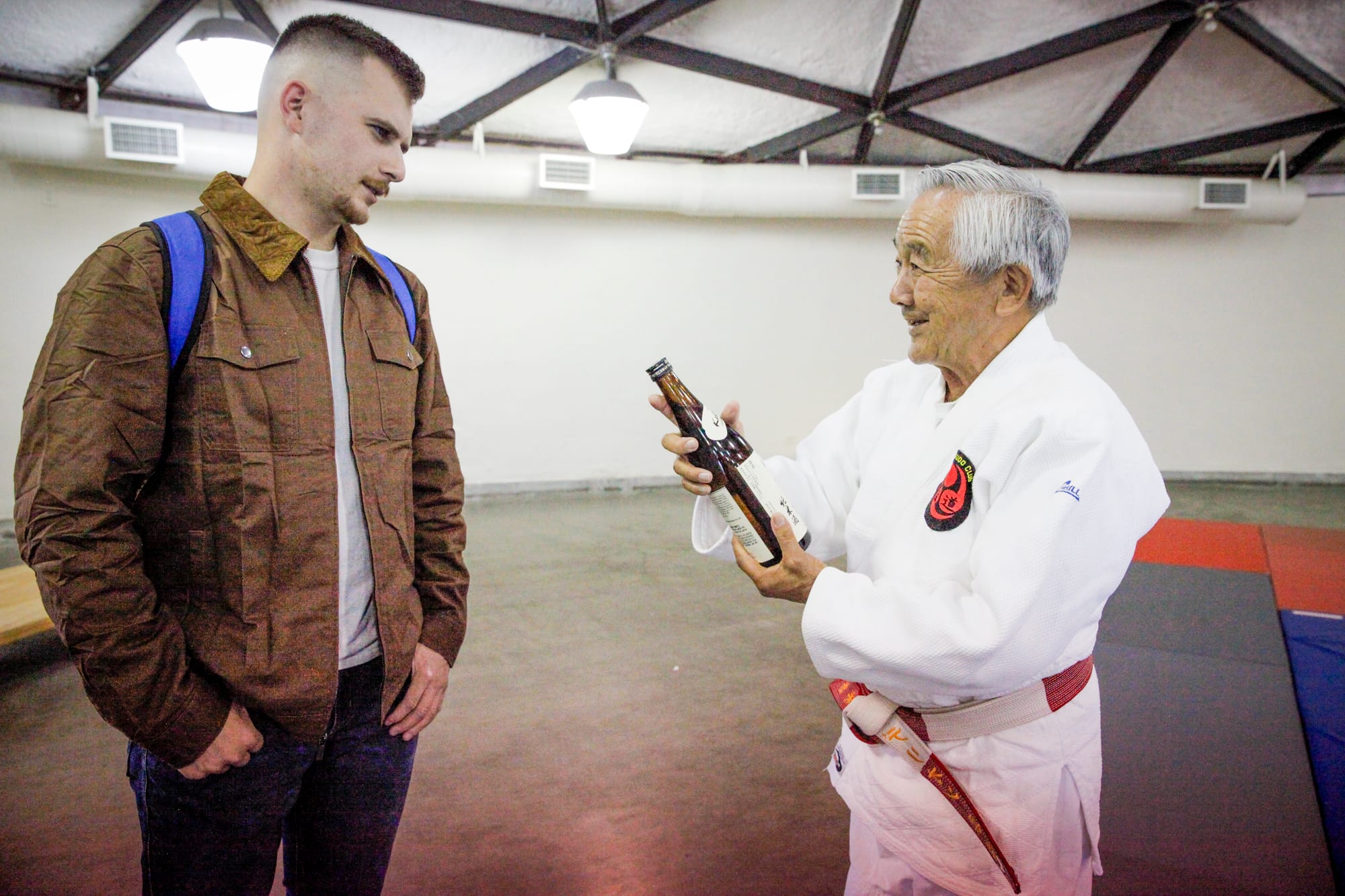
(Left photo) Kaku watches judo students Inga Fliflet and Viva Luna work on techniques with choke holds. (Right photo) Kaku demonstrates a choke on 12-year-old judo student Sam Wilson. (Thursday, Sept. 17, 2026. Photo by CRISSY PASCUAL/PETALUMA VOICE ©2026)
Tell me more about your efforts to speak about the history of the Japanese-American experience during World War II. Do you make explicit ties to current events or political or social issues?
My main purpose is to keep the story alive. The first probably 10 to 15 years of my talking, it was just a general, generic history of the Japanese Americans and what they faced, and the living conditions of being in prison for four years, and their fears, what causes racism, or hysteria, etc., that caused all of this. And then I just briefly touched upon my family's personal experience of being deported and losing their U.S. citizenship.
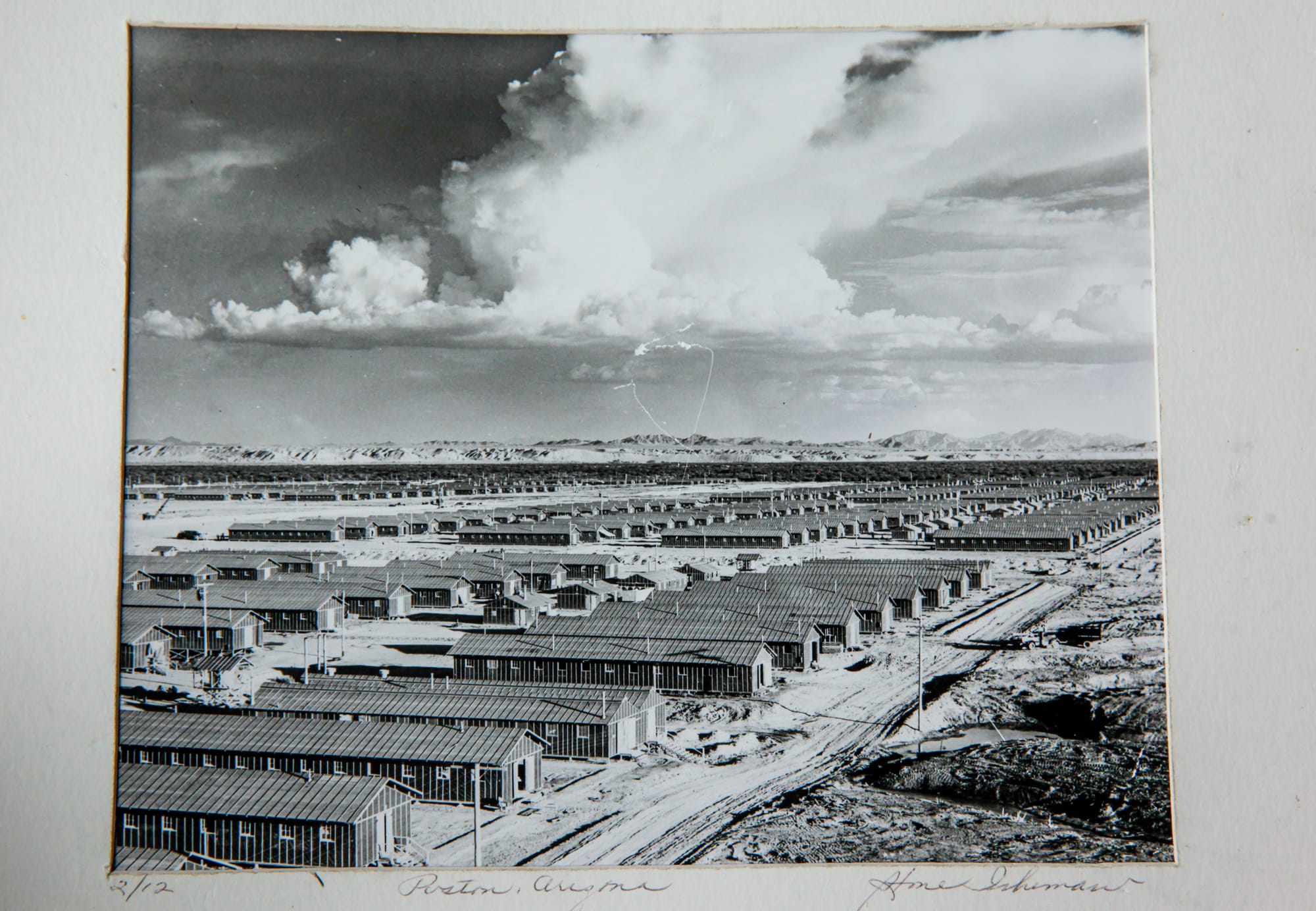
But in the last 10 years, it's really hit home more than ever before, and actually maybe even more than 10 years. Over 10 years ago, what was going on on the southern border, before President Trump, was the arrest of people and families and separating families from Mexico coming into the United States. And then especially with President Trump coming into the presidency the last term and this current term, I constantly, now more than ever before, draw parallels to what happened to the Japanese Americans and unfortunately what's happening today. This goes back to me saying, you know, learn the history, and hopefully you could do something about it.
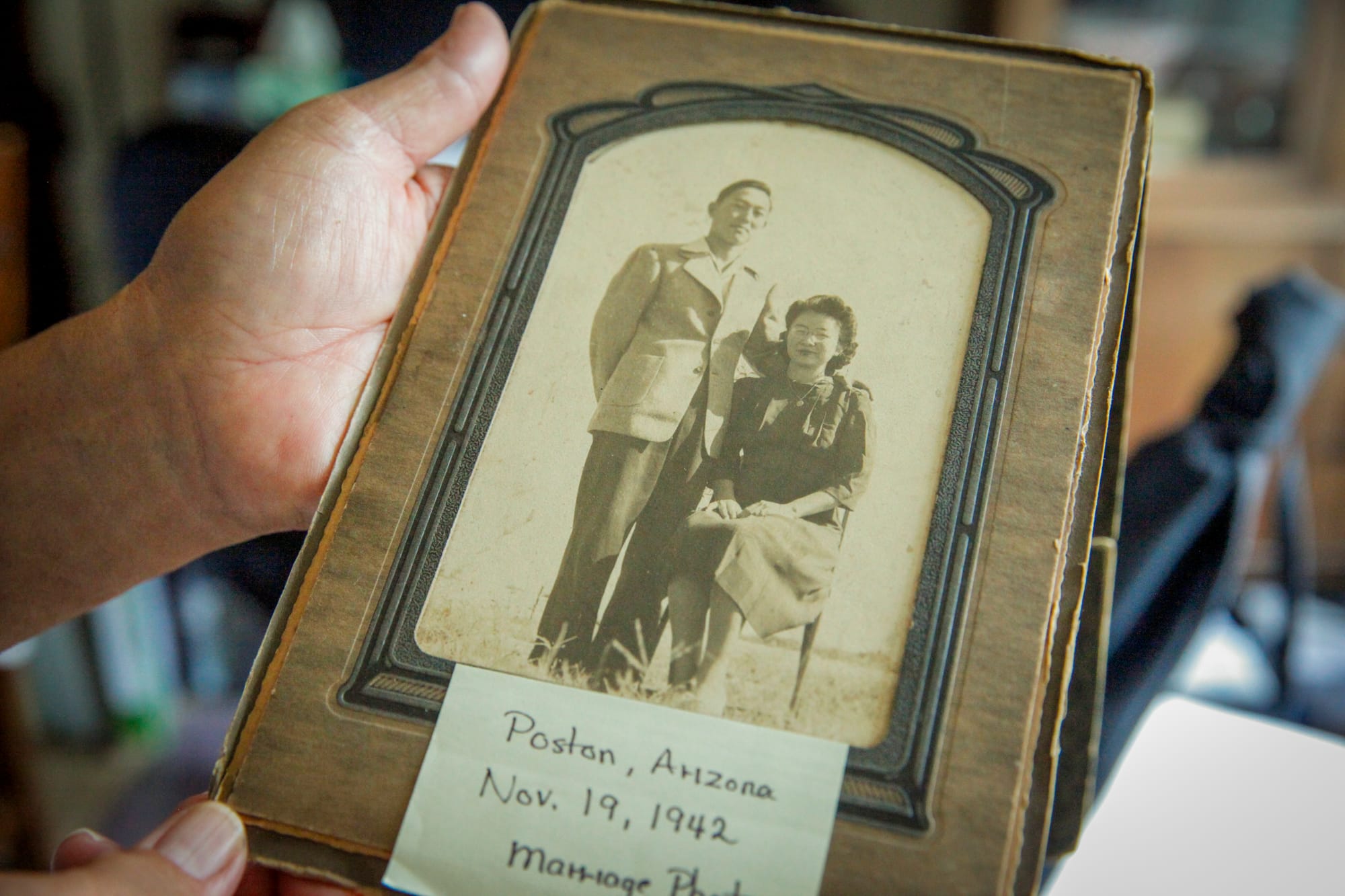
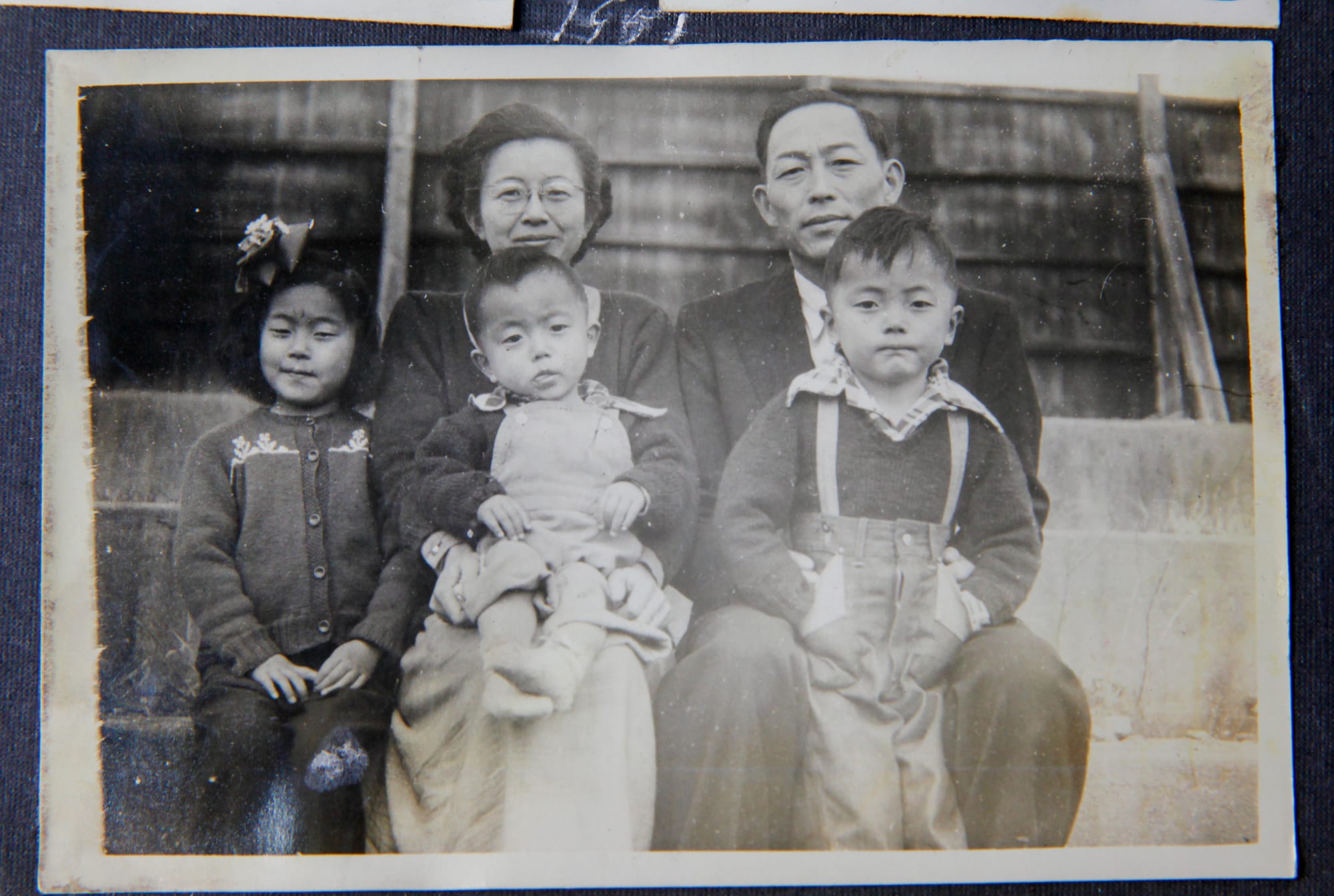
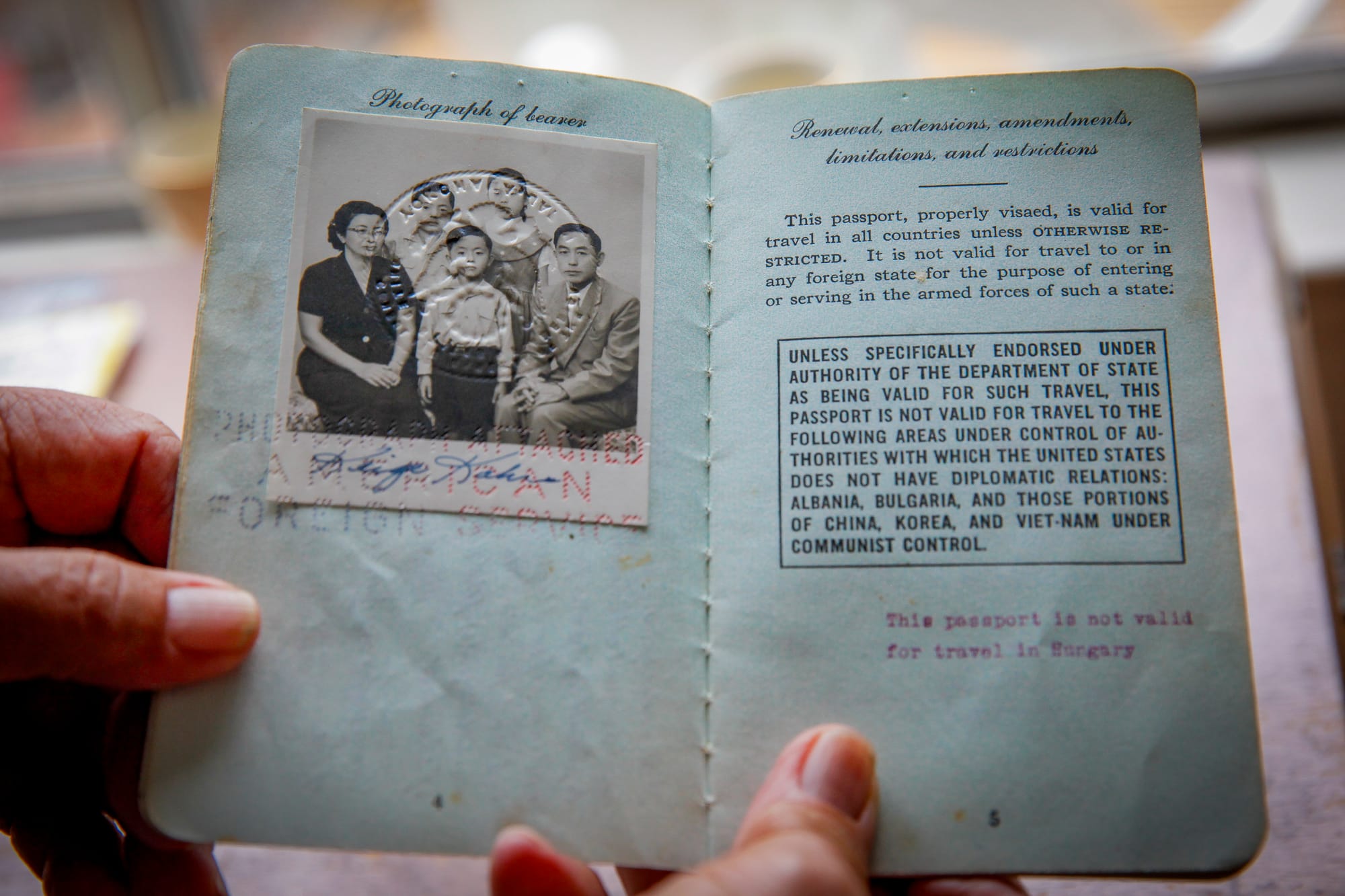
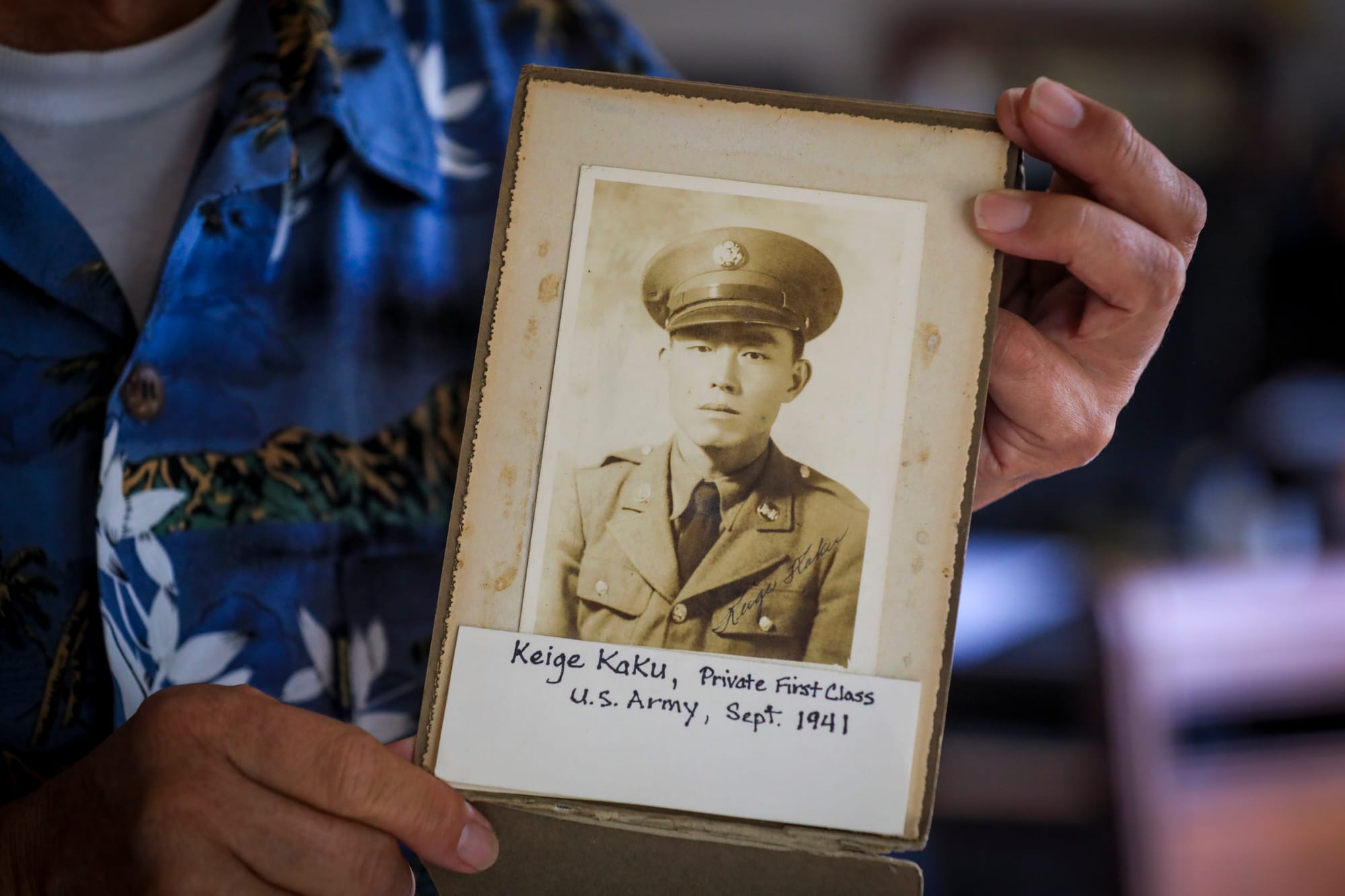
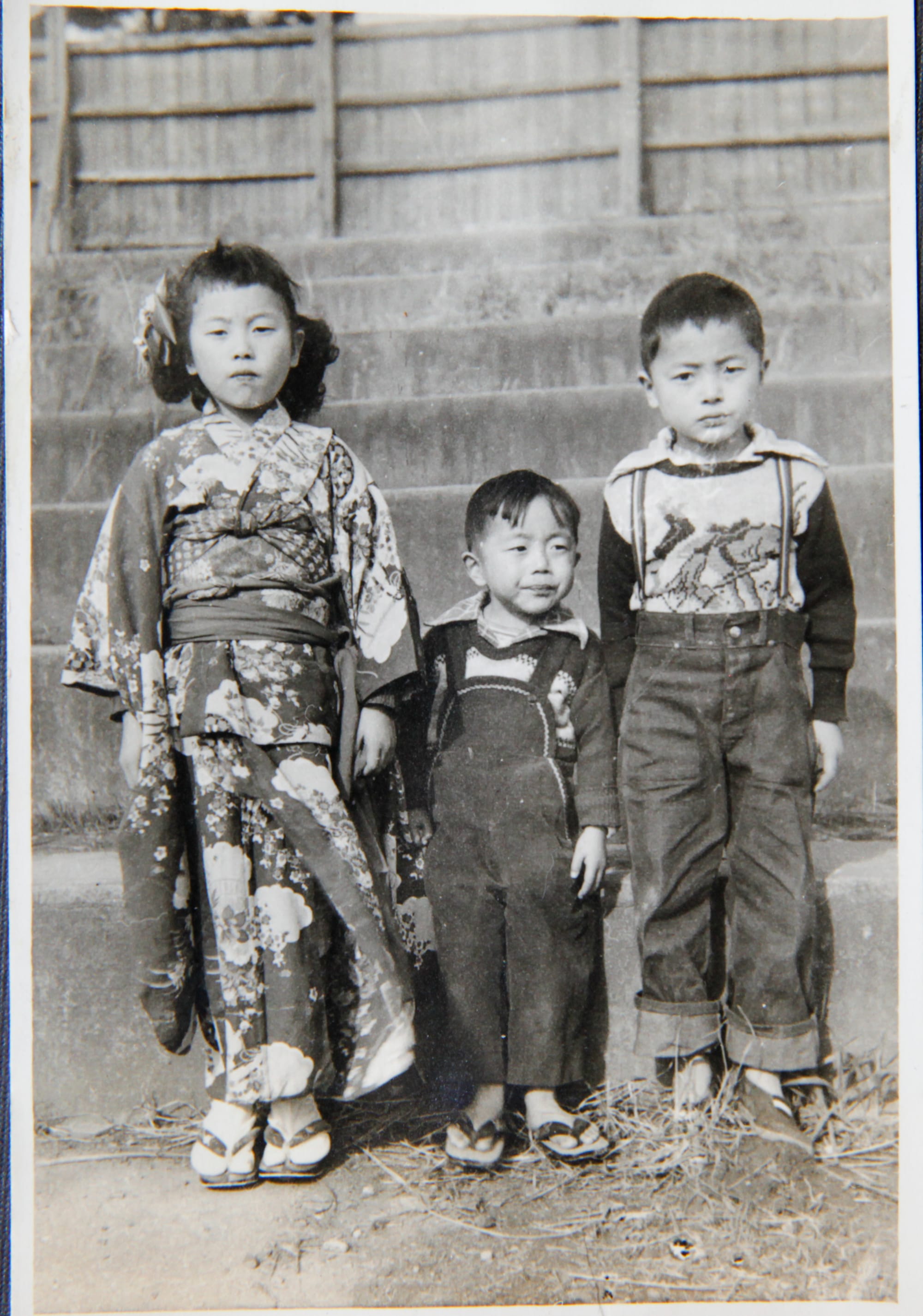
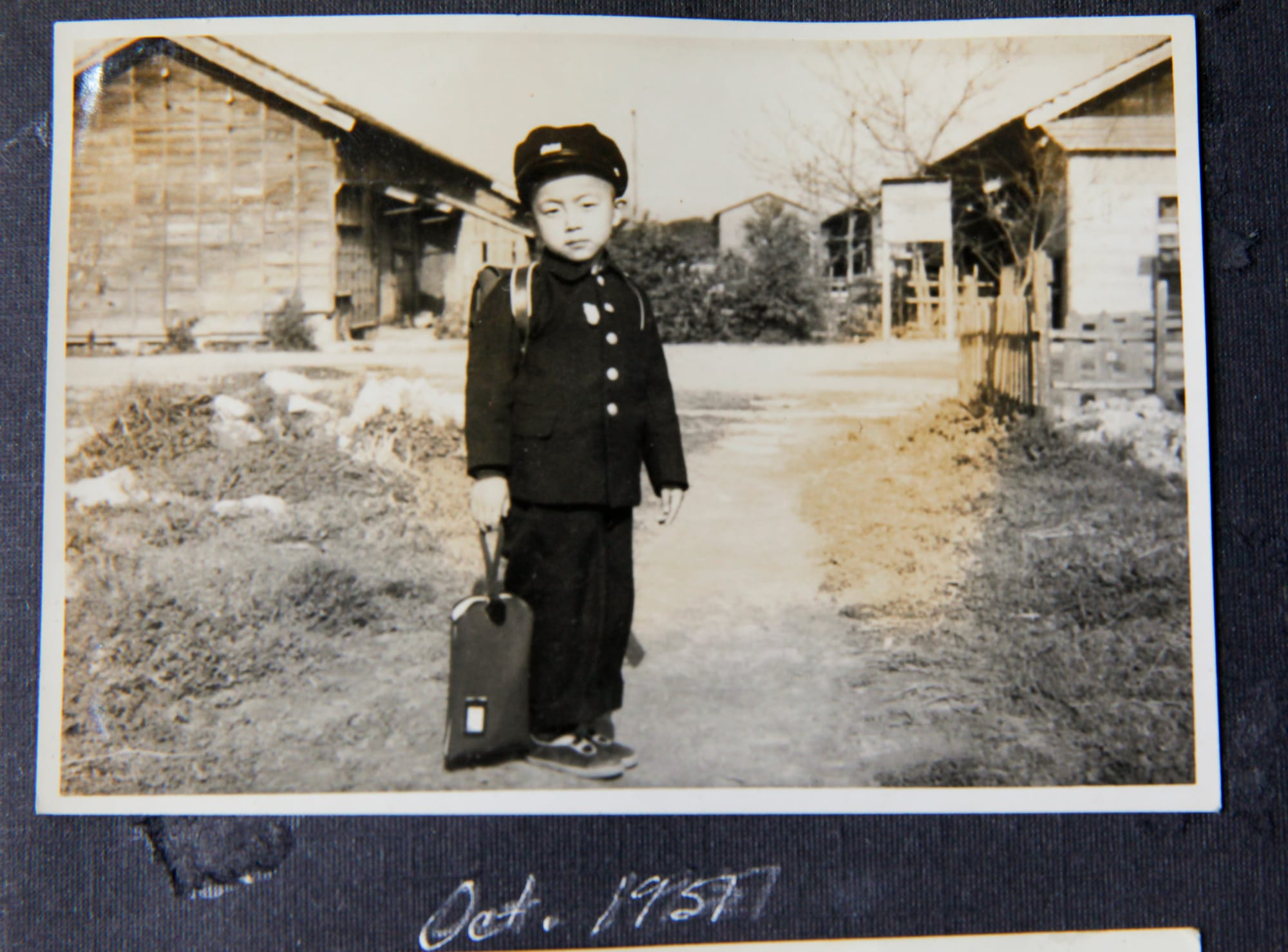
(Left photo) Kaku's parents met and were married in the Japanese incarceration camp at Poston, AZ, in 1942. (Right photo) The Kaku family in Kokura, Japan. Kaku's parents were American-born citizens who were deported to Japan after World War II. (Tuesday, Sept. 22, 2026. Photo by CRISSY PASCUAL/PETALUMA VOICE ©2026)
I tell high school kids that I speak to that what you could do, for example, could be just one small thing. If you find a neighbor's husband is taken away by ICE, for example, you could go and take them a bowl of casserole, and say, we're sorry that you're having a difficult time. At least this is what I could do. You maybe can't stop the deportation, but you could make your neighbor feel comfortable. And these little small acts of kindness really helped comfort Japanese Americans, especially in Sonoma County, which I know a lot of stories about, who were taken away and put in prison. Doing that little act of kindness is what I talk about when I give presentations to high schools about what happened to the Japanese Americans and parallels to today.
Watch "Loyal American," a 10-minute film released in 2025 that features Henry Kaku telling the story of his family's imprisonment during World War II.
In your teaching of history, judo, and origami, is there a common thread?
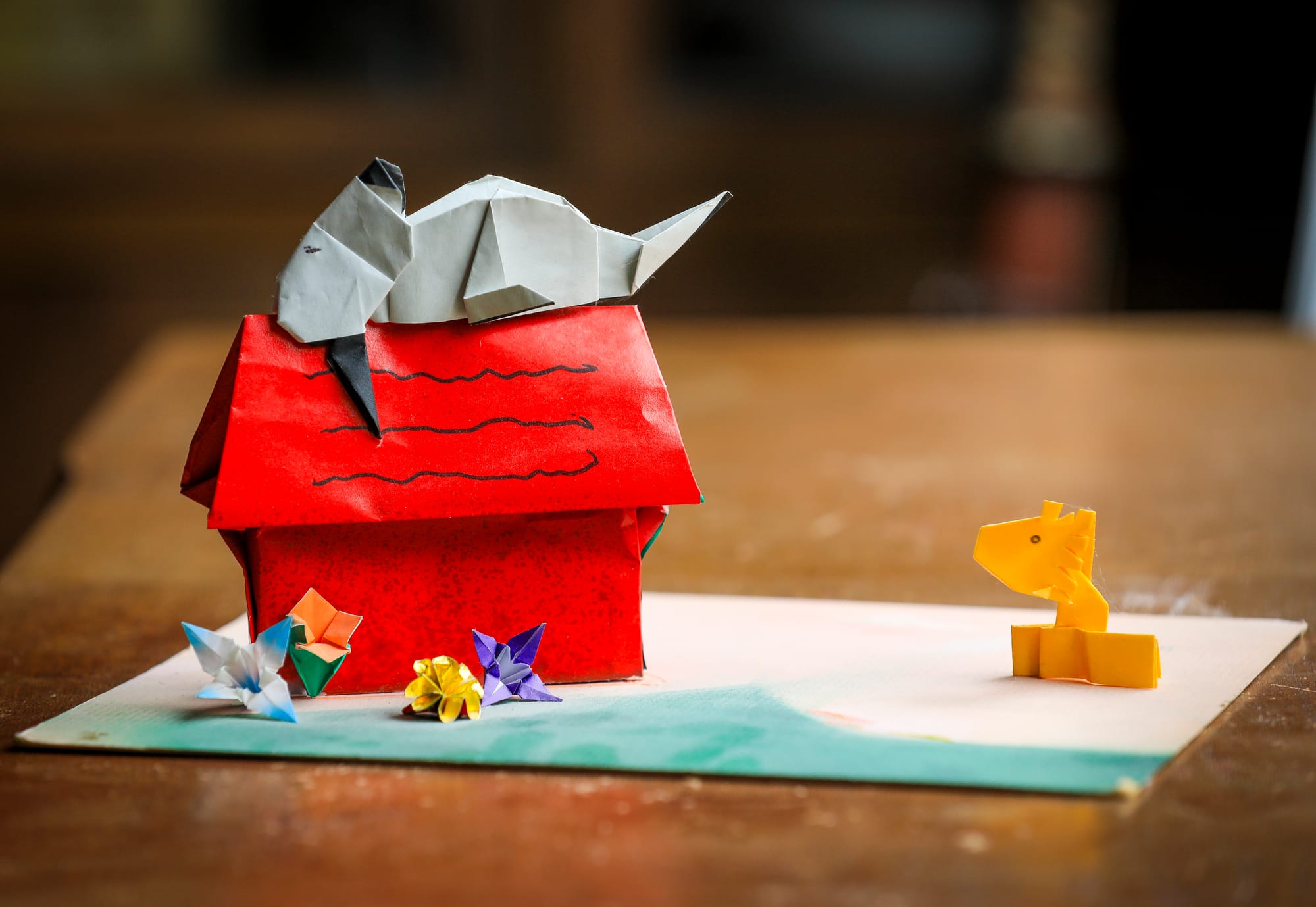
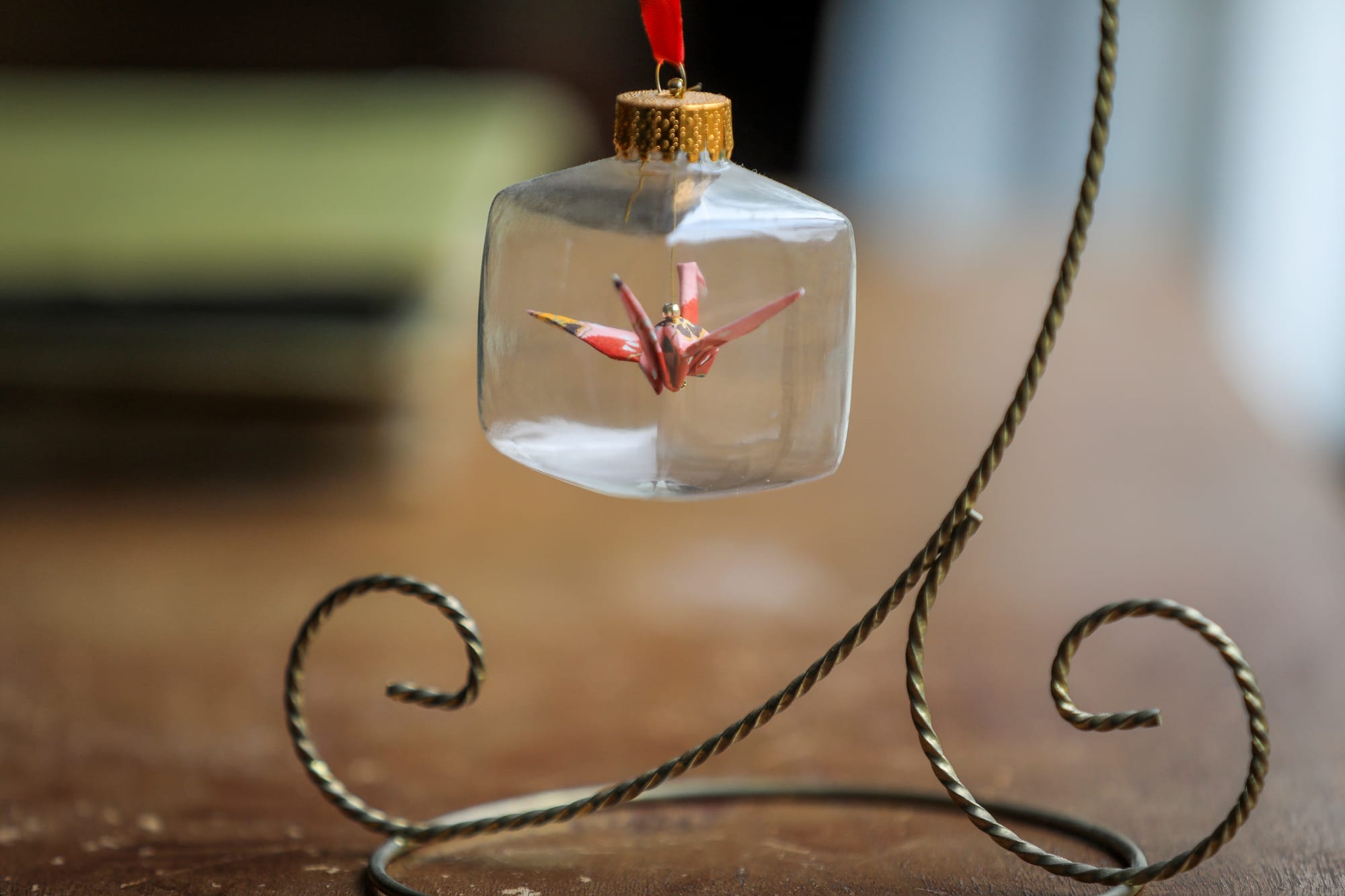
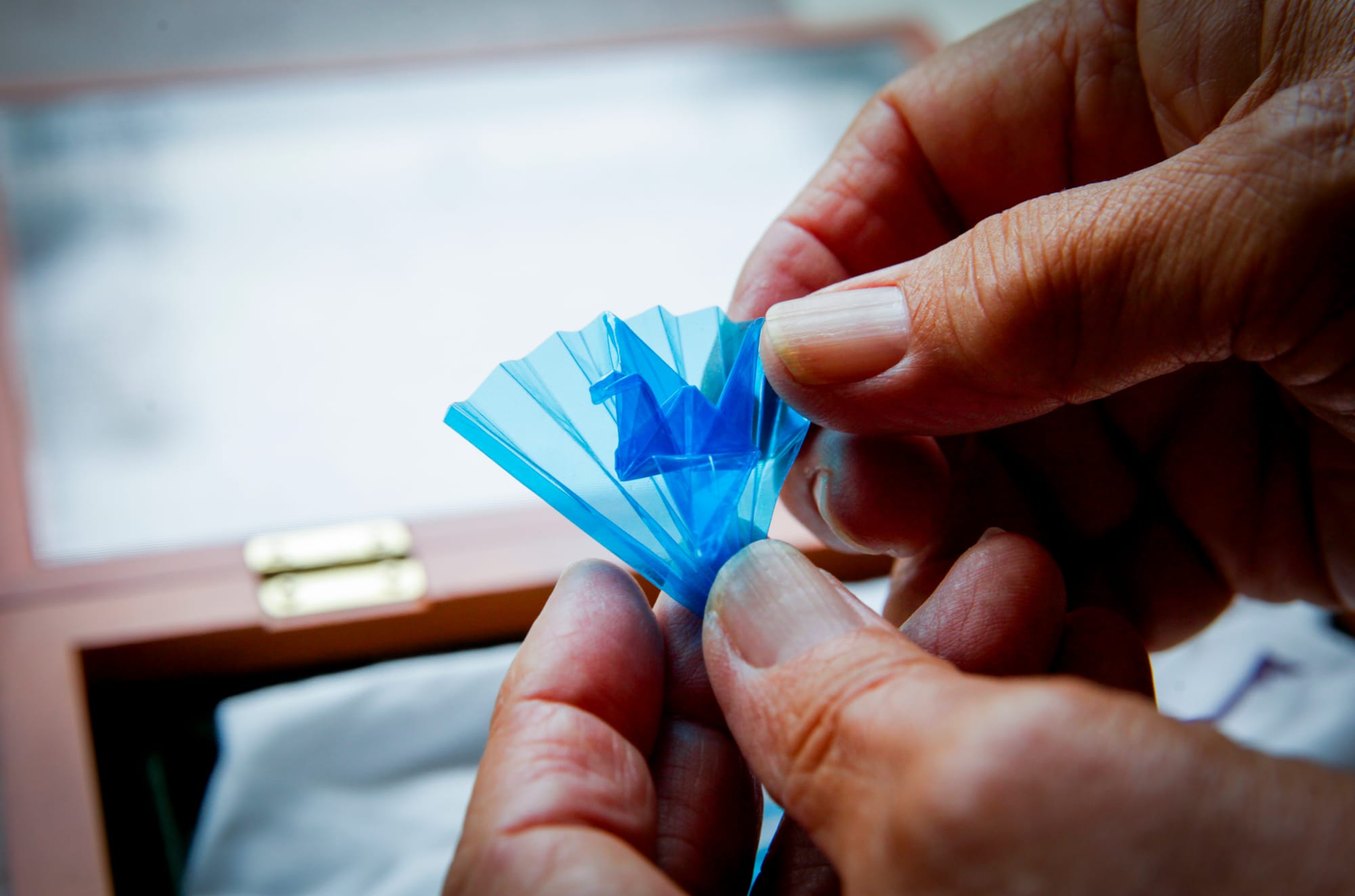
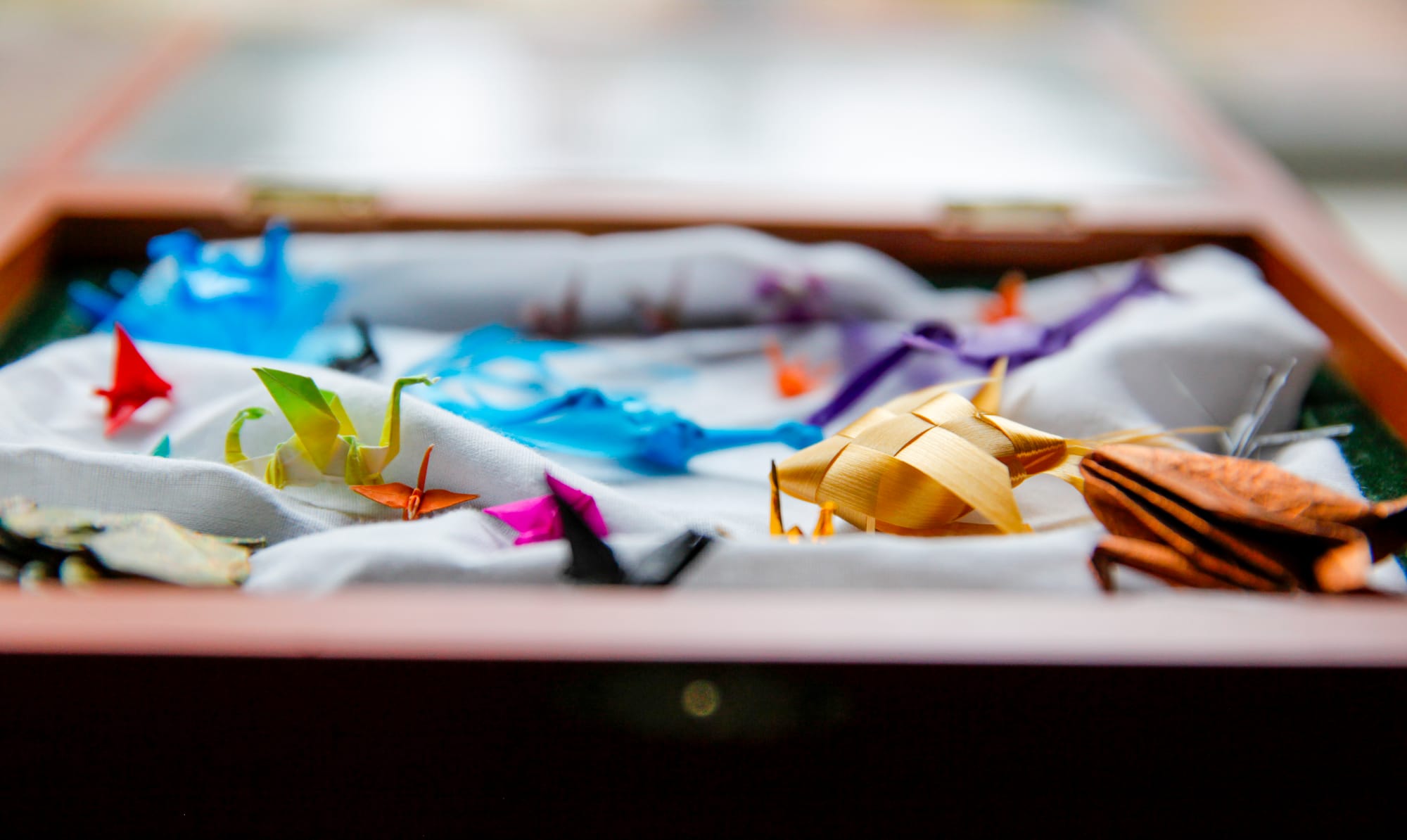
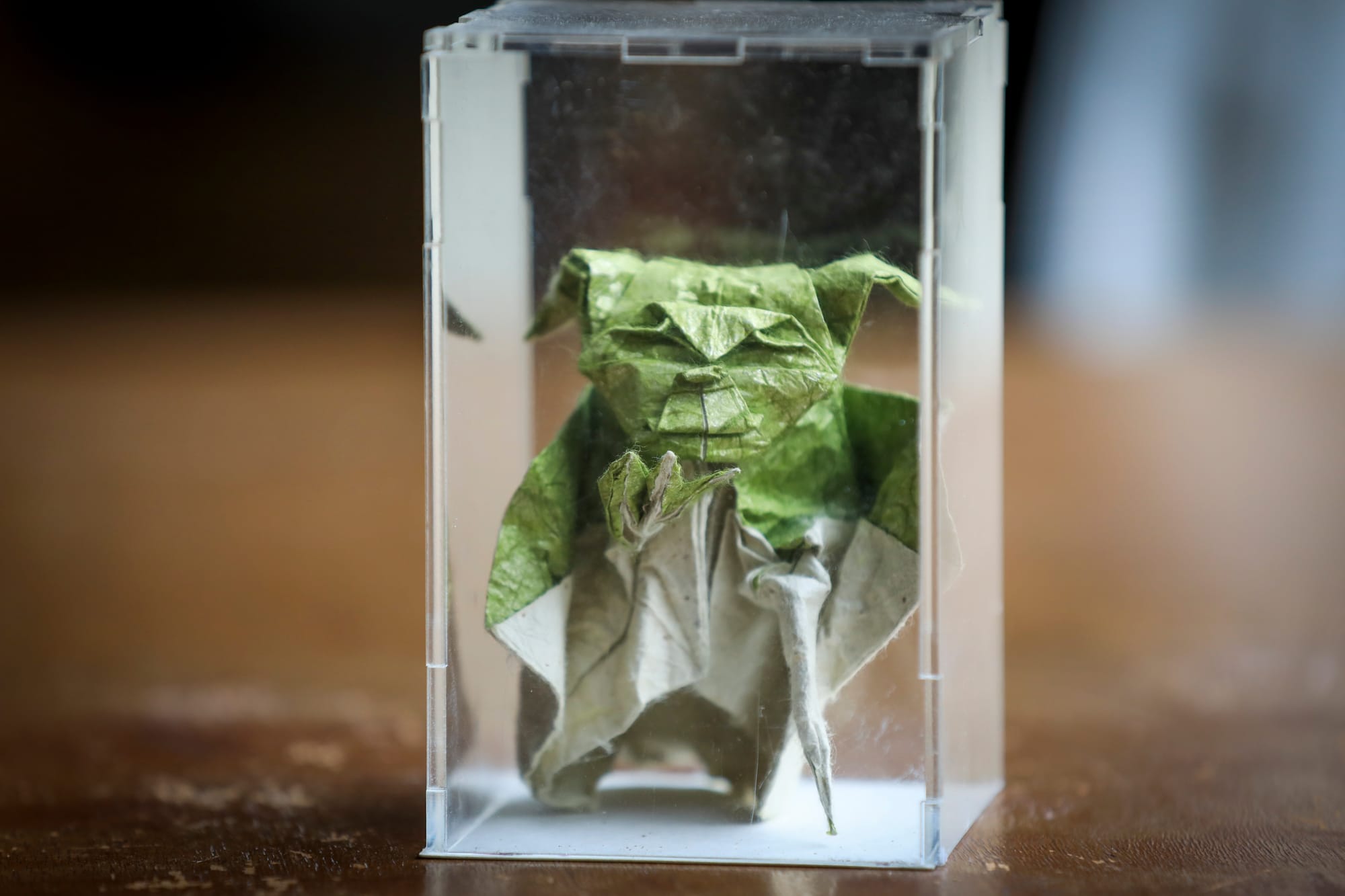
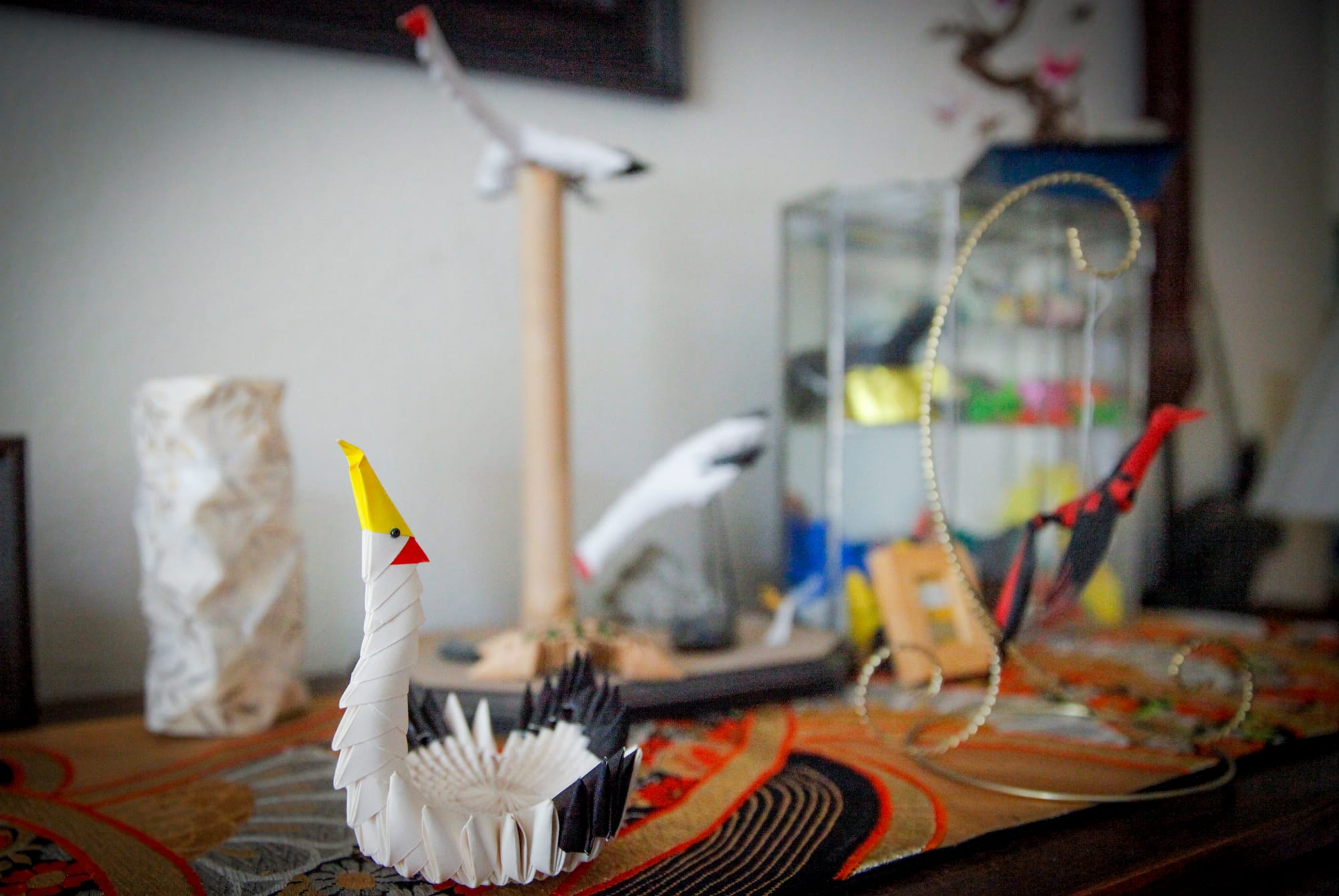
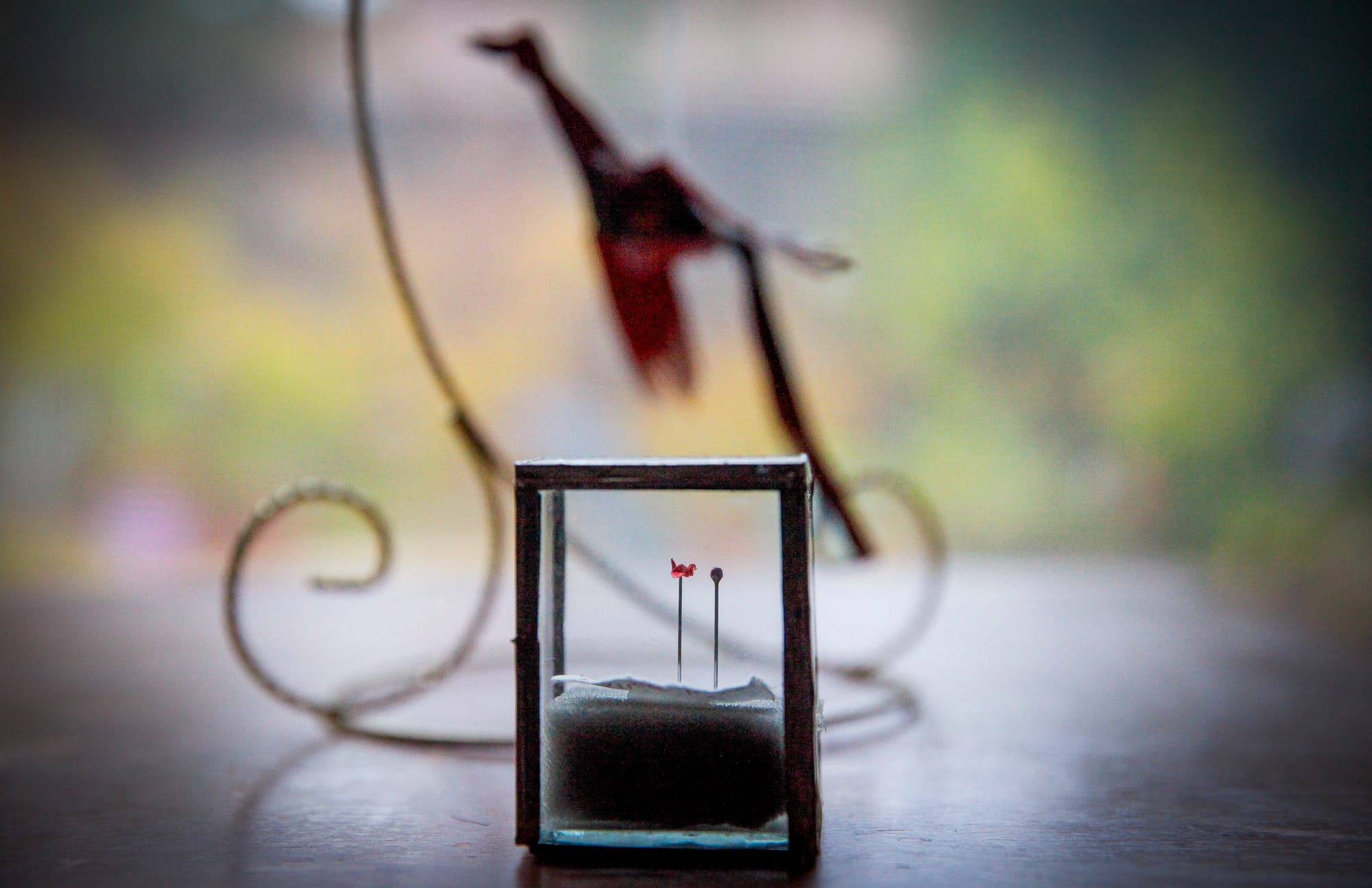
I've been teaching origami all my life as well. I guess I'm considered an expert in origami. In all of them, my hope is that they become better than me – better than what I've become. And I've got a number of students who I could look up at and say, they've accomplished more in martial arts than I have, or they've mastered the art of origami to the point where they're making things that are beyond my ability now. And that's what teaching is all about: it’s sharing the knowledge that you have so that your students can become better and more accomplished than you are.
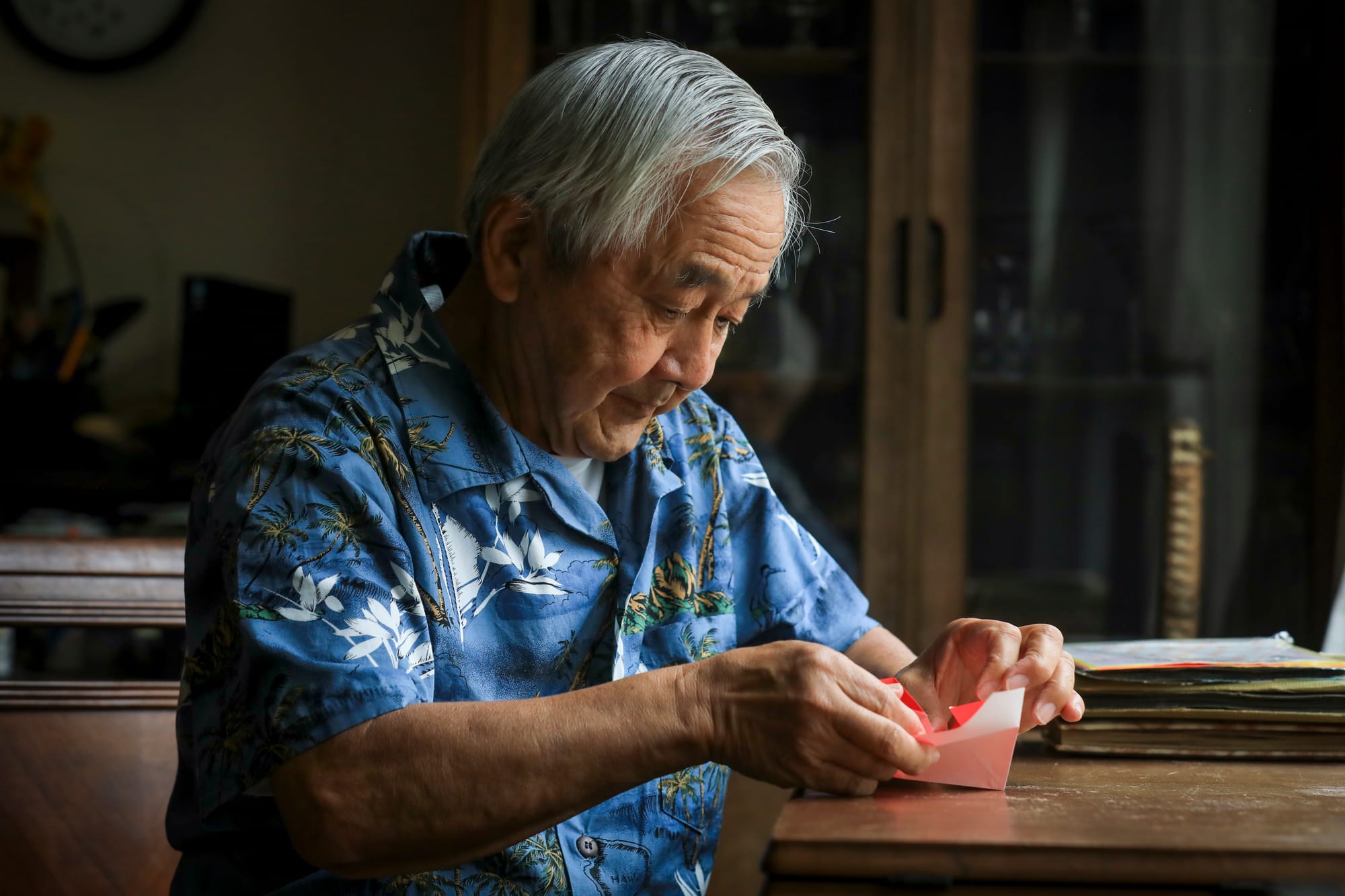
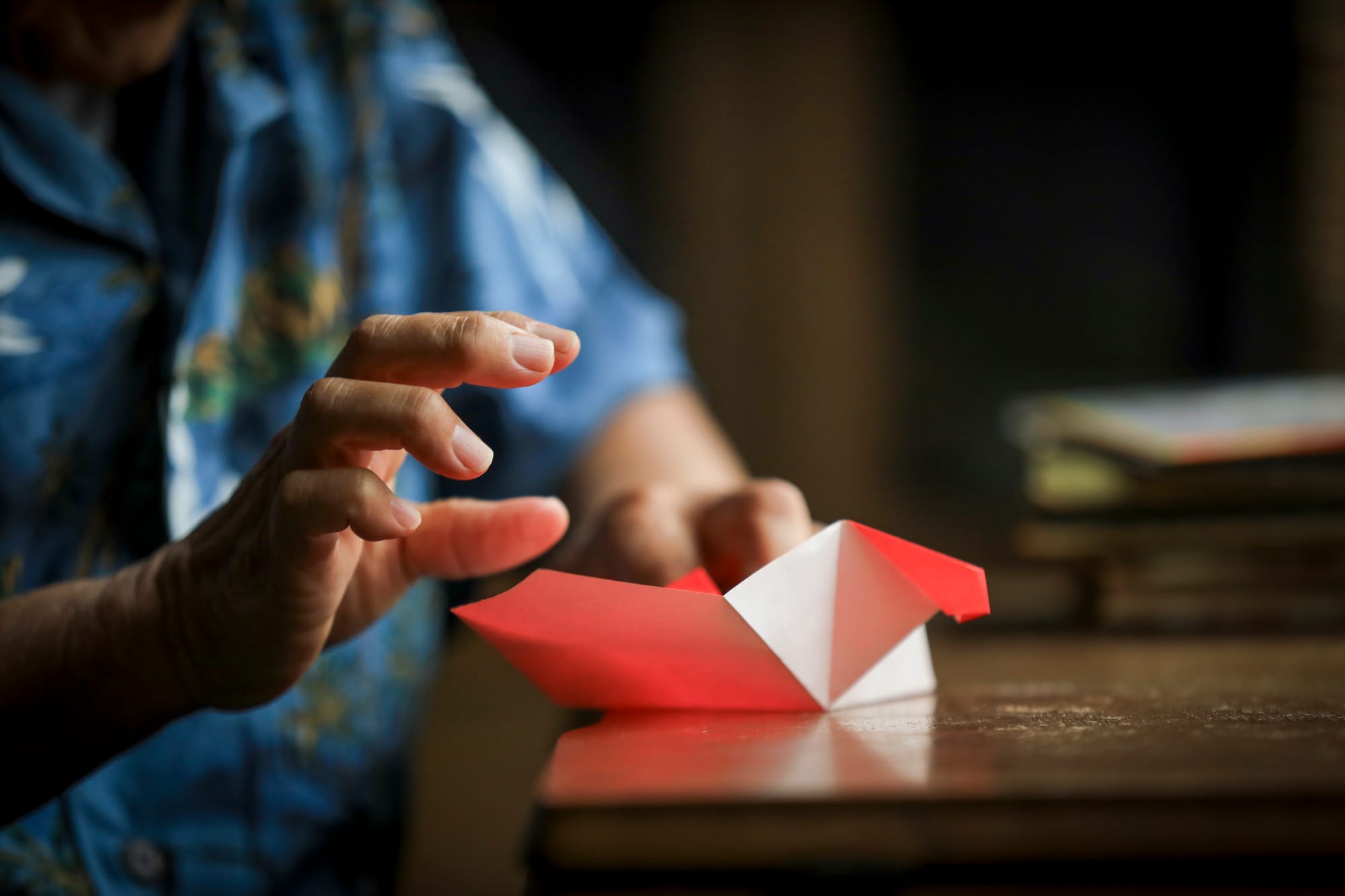
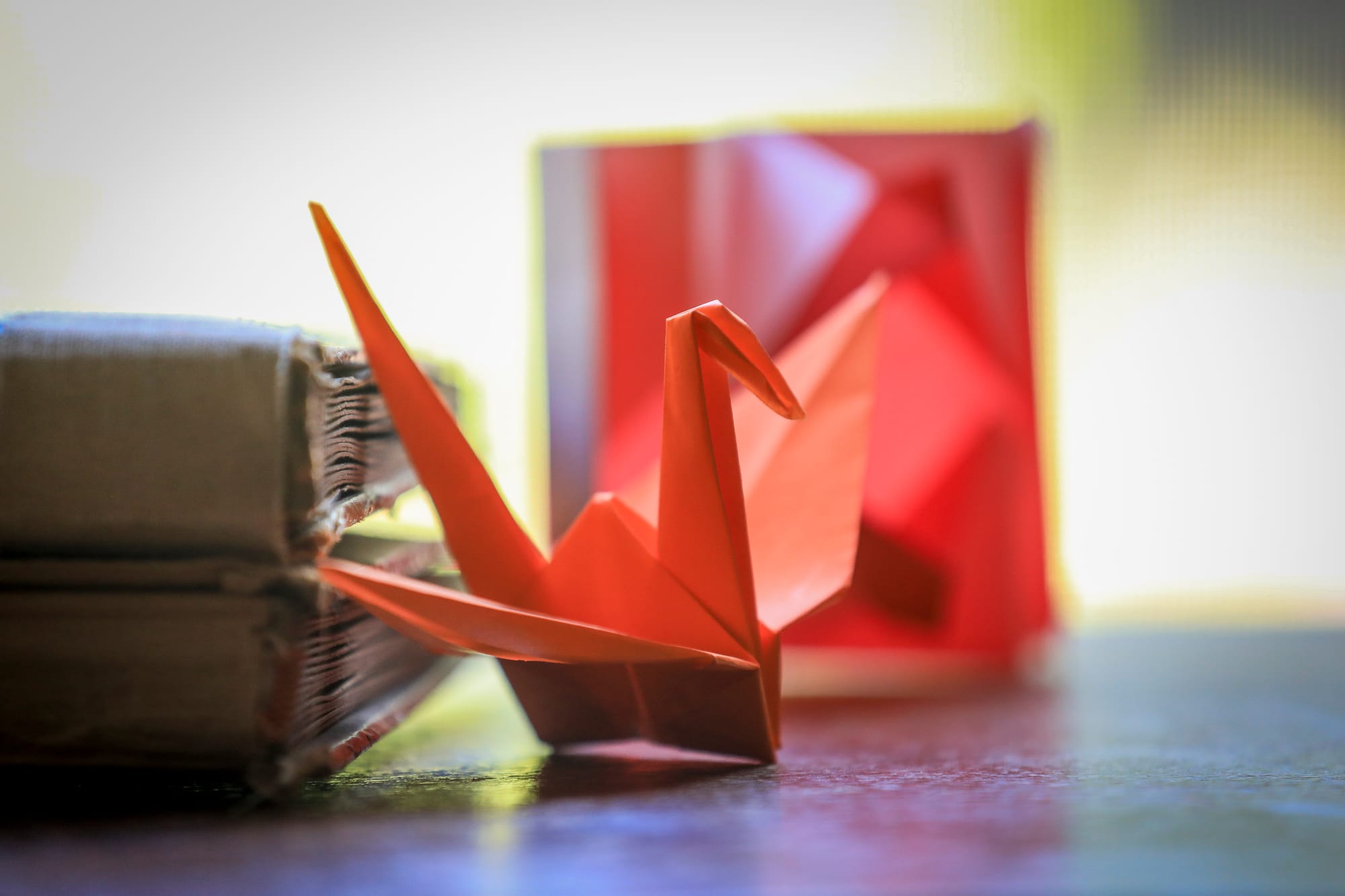
Kaku demonstrates how to fold an origami crane. (Tuesday, Sept. 22, 2026. Photo by CRISSY PASCUAL/PETALUMA VOICE ©2026)
Over the years you’ve been active in and even founded many nonprofits and community organizations in Petaluma. I’m curious what perspective this has given you on life here, and how things have changed over the last 41 years.
My philosophy is that if I'm going to complain about something, I'm going to get involved in it, or if I want to see something happen, I'm not going to just sit on the outside and talk about it. I want to get involved, and one of the things that I've always been interested in is education.
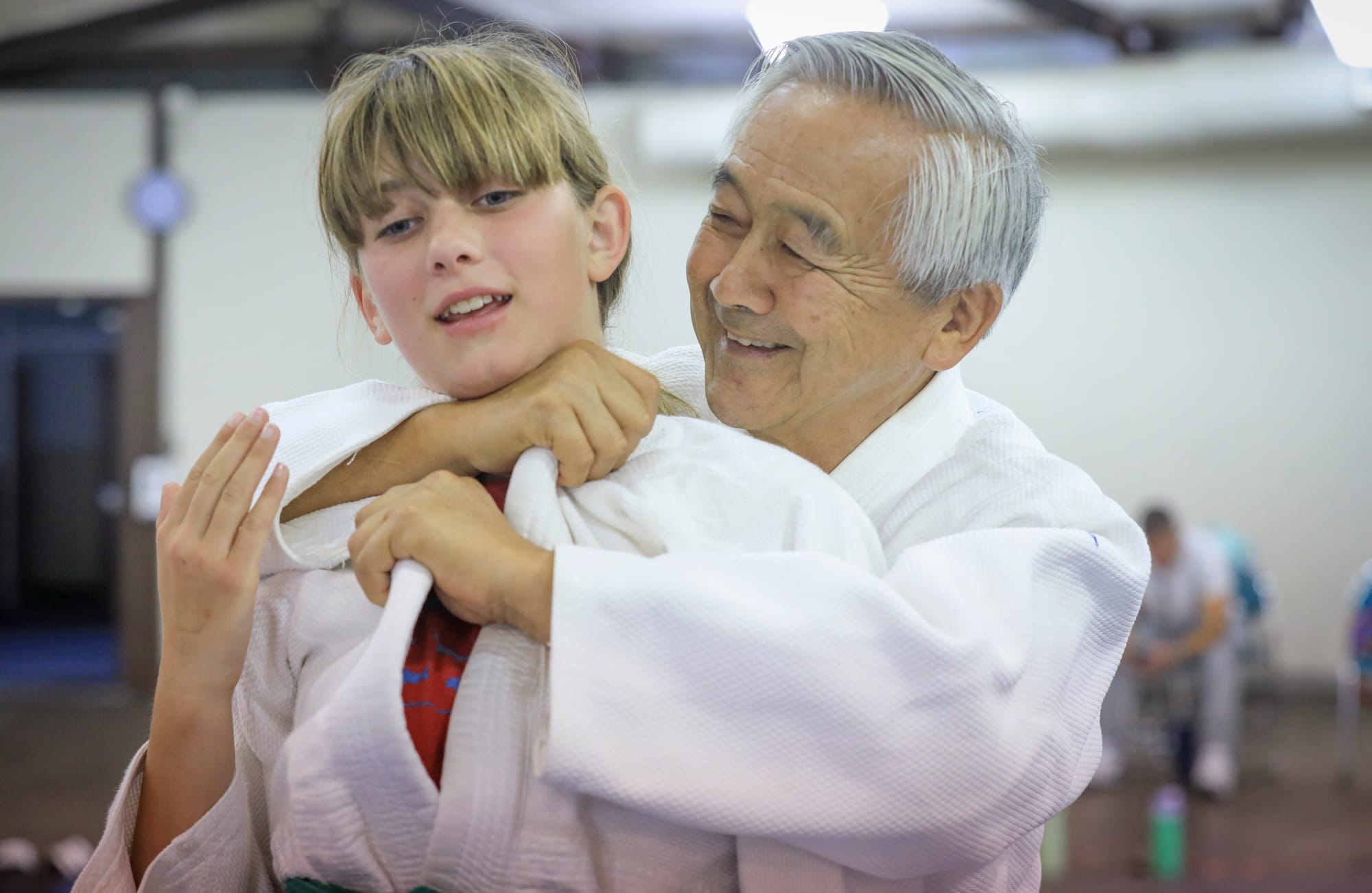
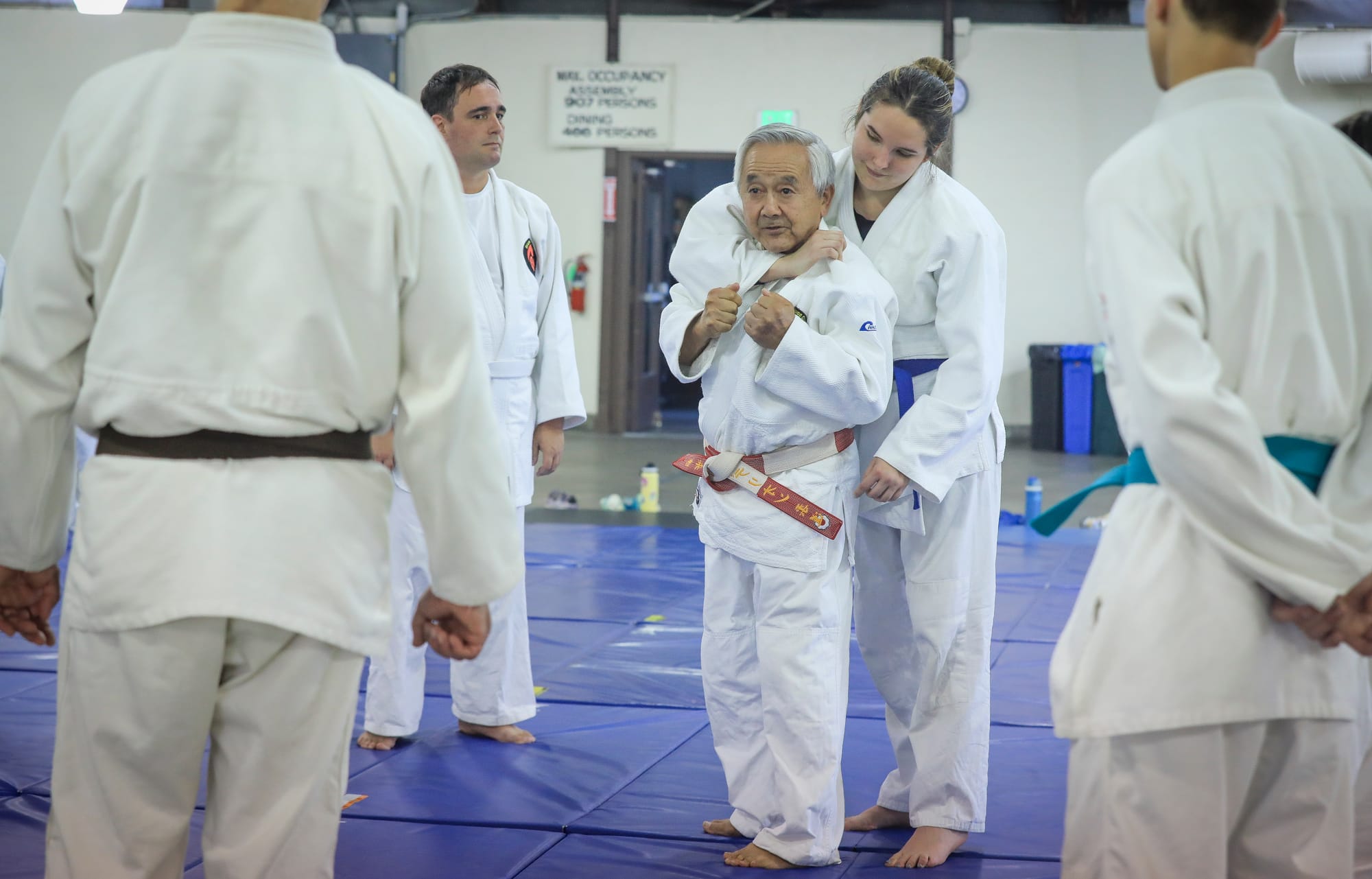
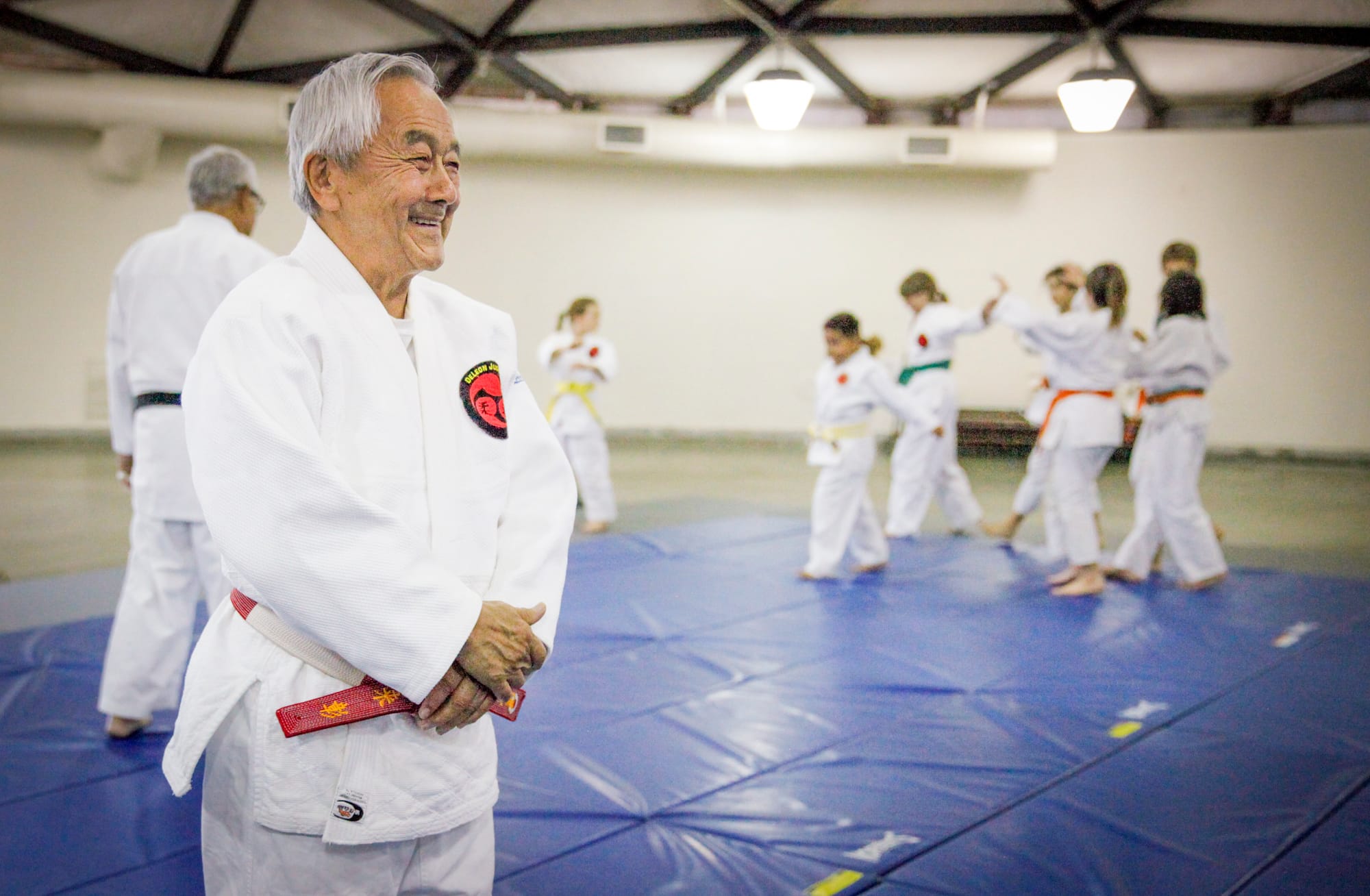
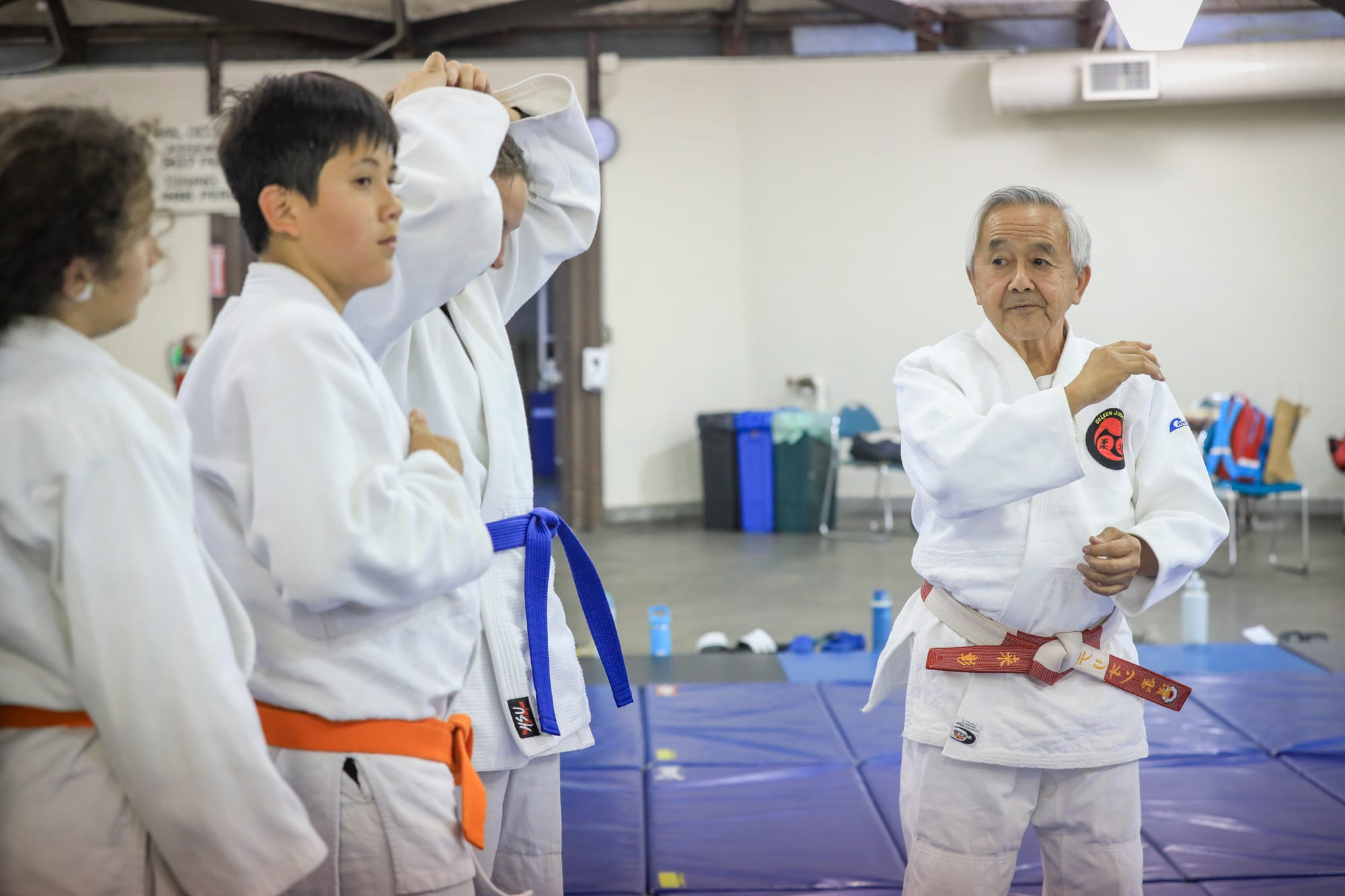
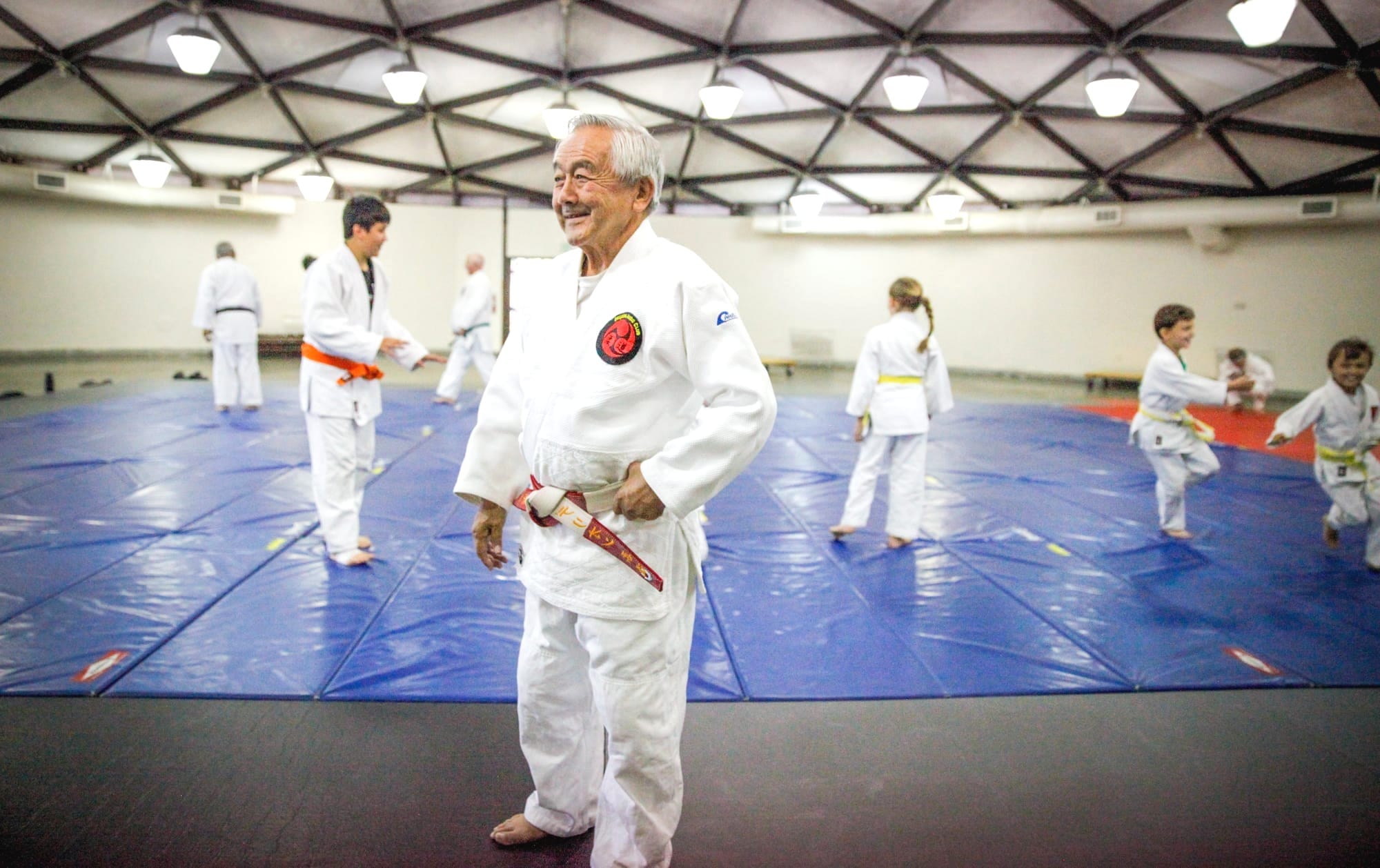
Kaku's judo class in Herzog Hall at the fairgrounds. (Thursday, Sept. 17, 2026. Photo by CRISSY PASCUAL/PETALUMA VOICE ©2026)
When I lived in San Francisco for 10 years, I was involved with San Francisco School Volunteers, and I worked there helping the school programs throughout the city. The moment I moved up here, I wanted to find out if there was anything similar. And here we have the Petaluma Educational Foundation. So the second year I was here, after I settled down, I called them up and I said, "I would like to be on your board.” And they said, "We've never had anybody call us and ask that.” But I served on their board for over 10 years, and got involved in a lot of their activities, and helped them raise funds for schools and teachers.
Since I’ve moved here, the population has almost doubled from 1985 to today. What I still like about Petaluma and all of Sonoma County is the urban growth boundaries. That was one of the highlights of the philosophy when we came to Petaluma. My wife looked at the city planning way back in 1985. There was talk back then about building the Rainier overpass. That’s one of the negative things about Petaluma – the Rainier overpass. That should’ve been built 20 years ago, 30 years ago. Overall, Petaluma has grown so much, but it still has a very small-town feeling, and everyone seems to know each other.
You’ve been very open about your own family’s history, but is there anything that these audiences or your students in other areas may not know about you that you’d like to share?
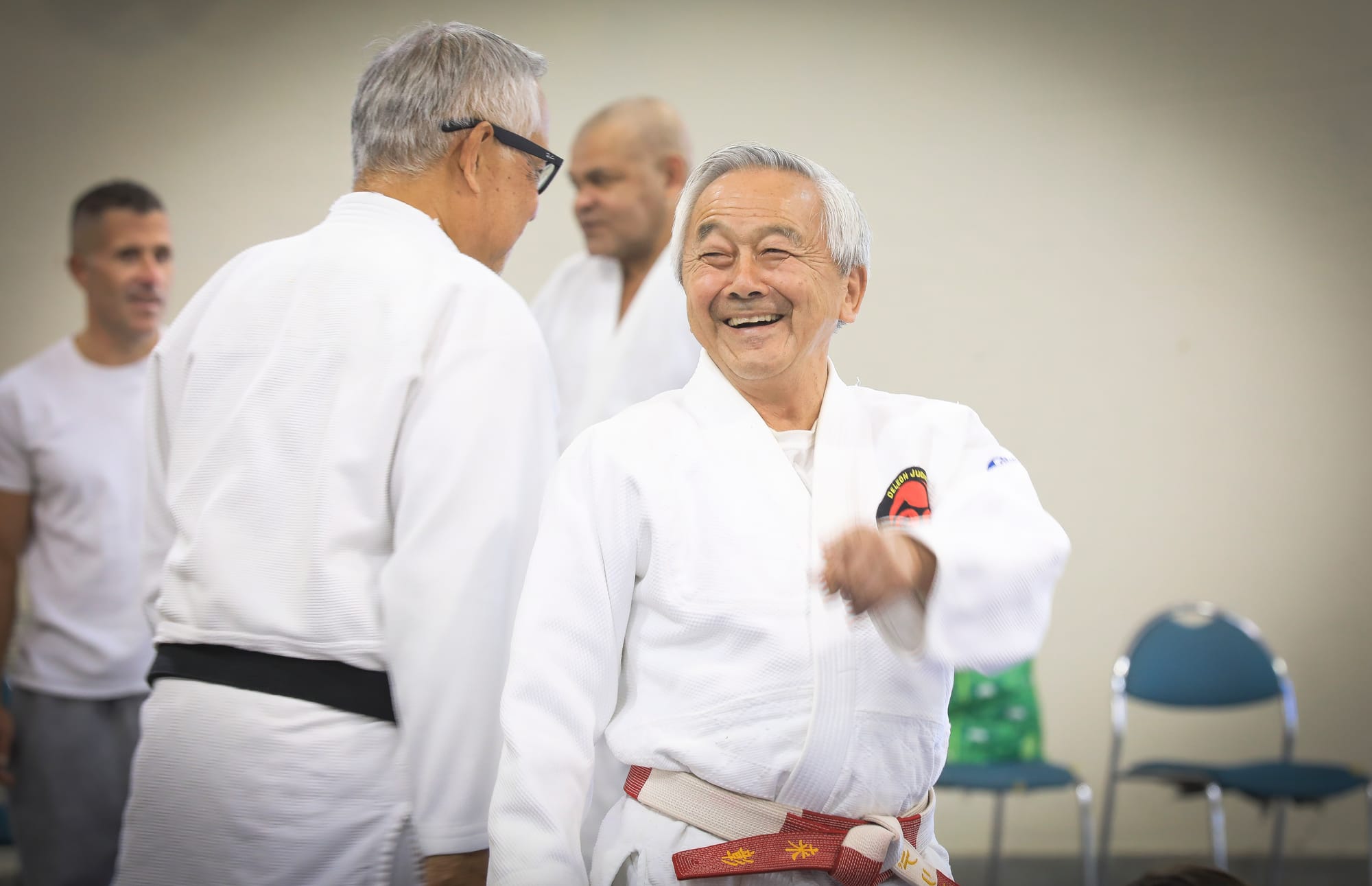
A lot of my friends know parts of me. I don’t think everybody knows all the different things. I’ve got people who learned origami from me when they were in kindergarten or first or second grade, and now they’re 40 years old, and they remember me for origami. Or someone who took judo from me 20 years ago, and they only stayed with me for six months or a year, they’ll remember me. So a lot of people know me from one thing or another, but not all the aspects. I get that every so often, where someone says, “Oh, I didn’t know you were an origami expert!” or whatever.
As far as my family’s story, I’m not ashamed of it. The more people that know about it, the better. I’m not afraid of being exposed and being shown.
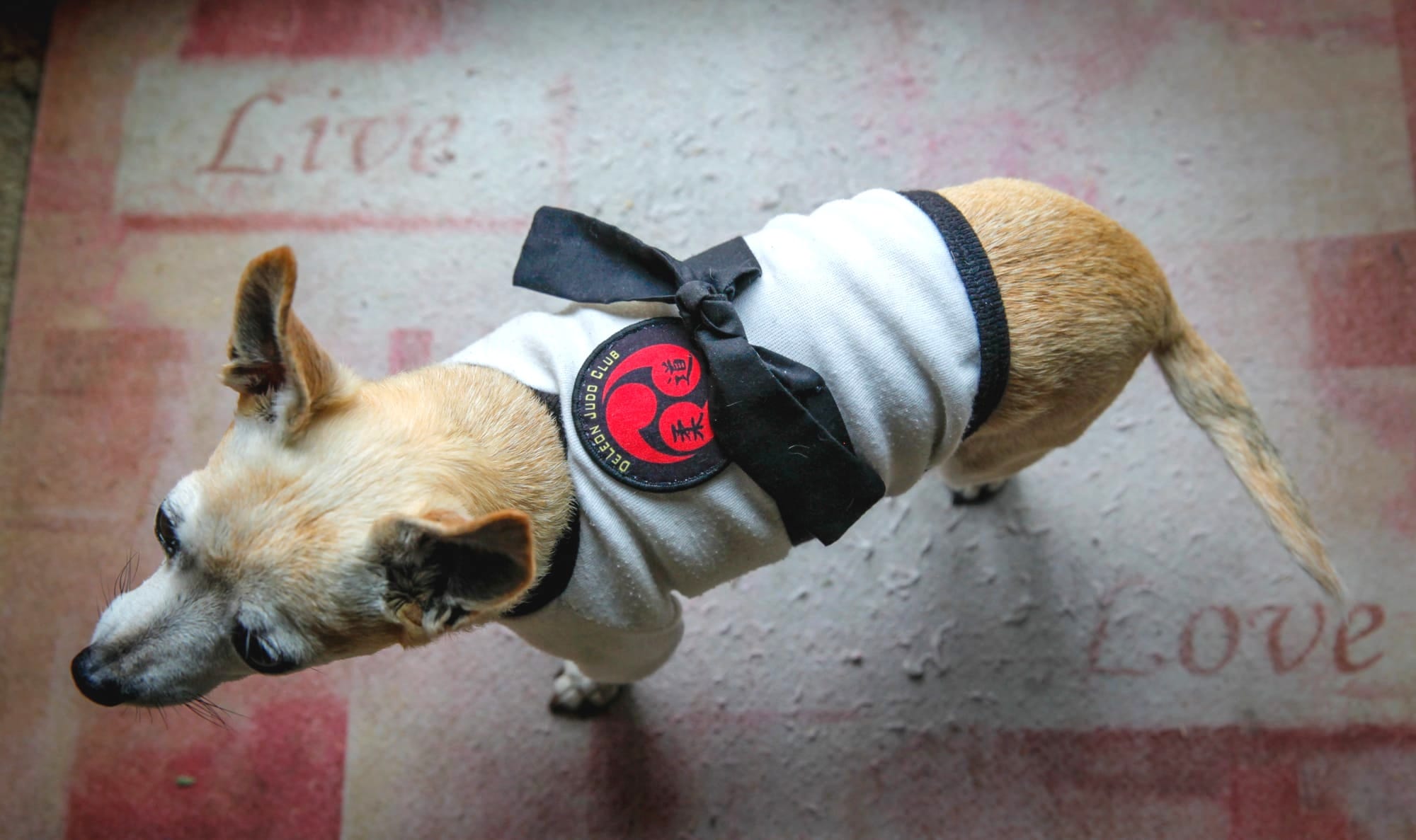
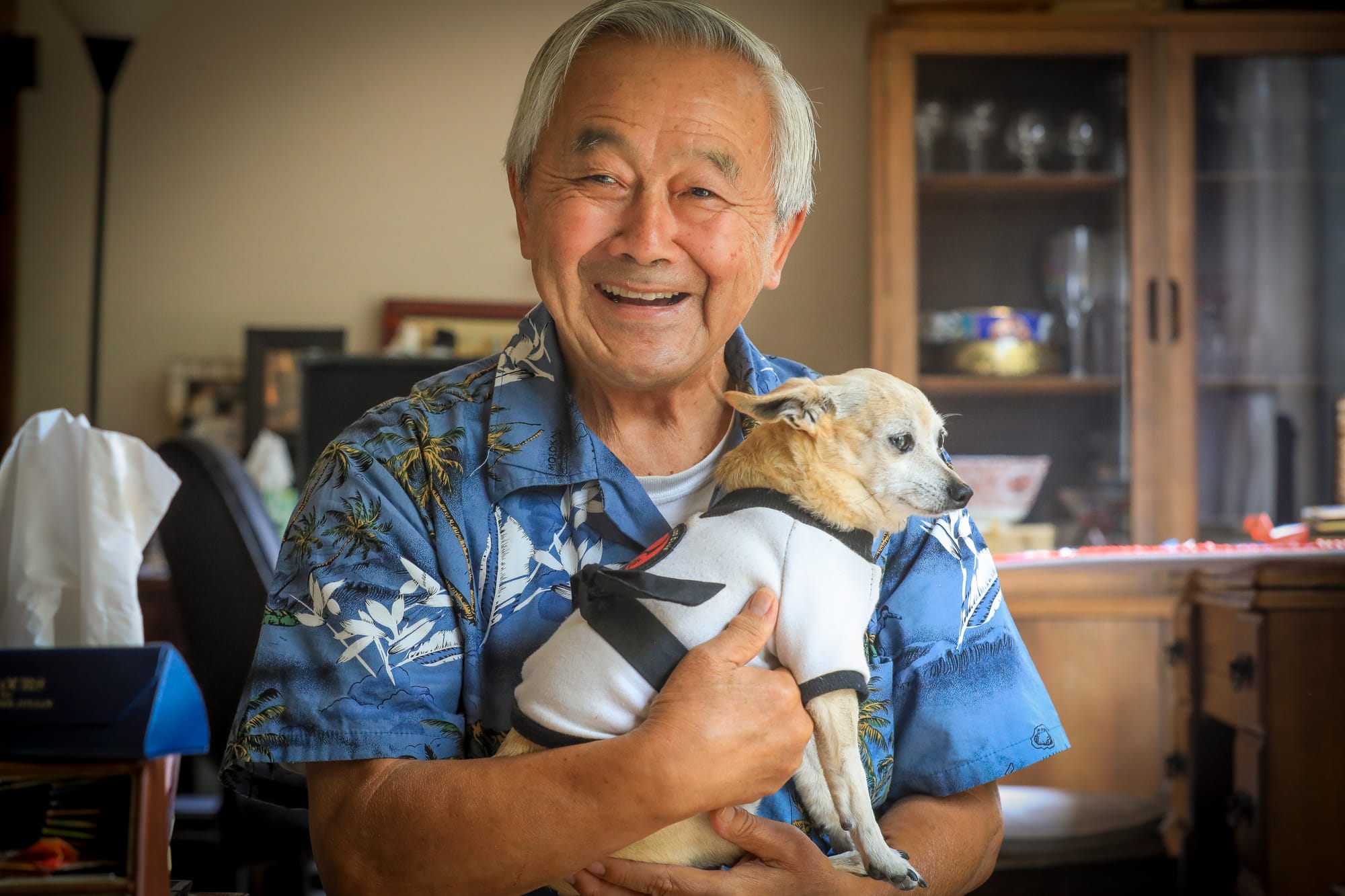
Watch Henry Kaku fold an origami crane. (Video by CRISSY PASCUAL/PETALUMA VOICE ©2026)
At noon on Tuesday, Sept. 29, Kaku will speak at the Sonoma State University Student Center Ballroom A, as part of the "Inspire Sonoma" series. Free, no registration required. For those who are unable to attend on campus, a virtual option will also be available via Zoom.
This conversation has been lightly edited for clarity and readability.
Nate Seltenrich is an editor and reporter at Petaluma Voice. He can be reached at nseltenrich@petalumavoice.org.
Do you like our work? Support us with a tip.