5Qs with Jupiter Foods founder Dan Bleakney-Formby
Bleakney-Formby, who launched his "European-style" market in downtown Petaluma in October 2020, talks seasonal produce, slow food, and fall flavors
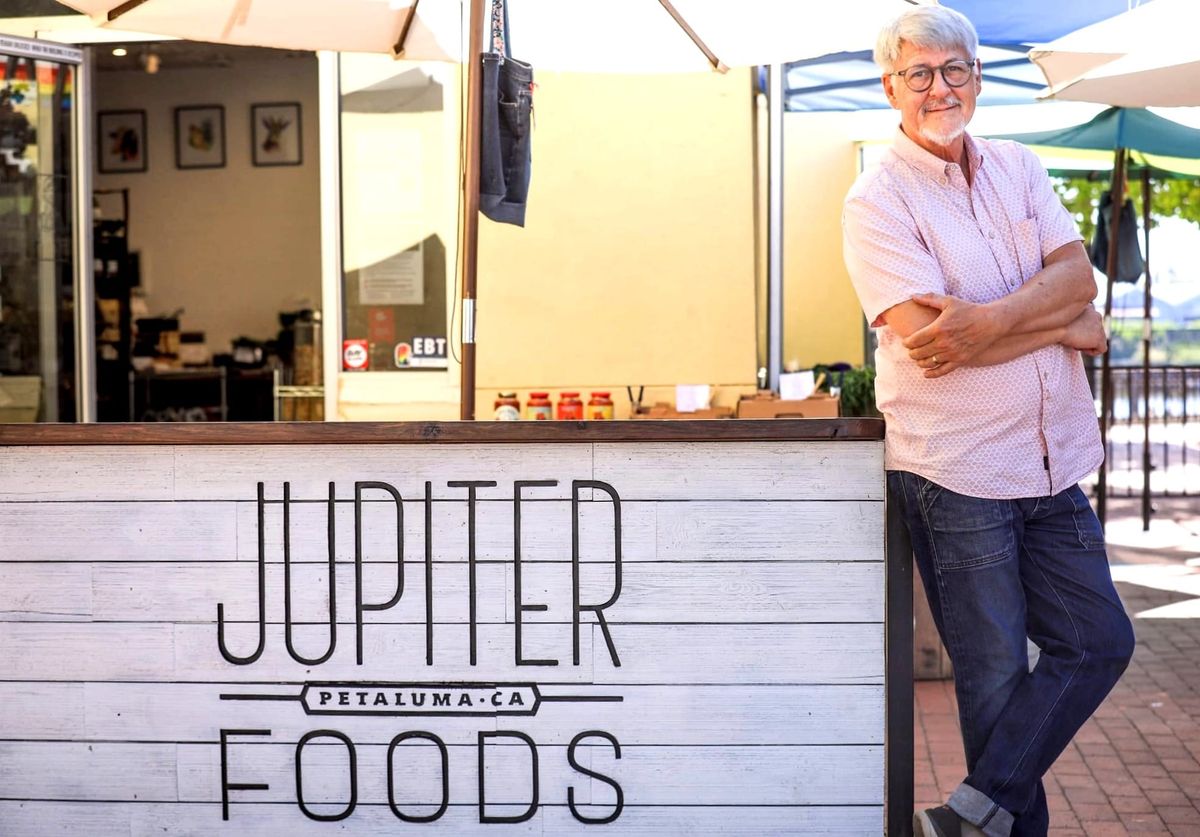
Tell me about your transition from flowers to food – how did that happen?
In the floral industry in Phoenix, I was a pretty big fish in a really big sea. At some point the company that I worked for was bought by a national company, which then was trying to do a rollout on FlowerShop.com. So I was a seasoned buyer, and a seasoned efficiency expert. This was a perishable product that had to be refrigerated and cared for in a manner that helps me today, knowing that produce is in the same kind of box.
It's the same kind of production mode where you have to have vendors that are the most reliable farmers, and their processing and after-harvest care have to be to a standard, and the product has to arrive to us in a condition that then needs to get ready for sale. So those processes overlap in a way, and certainly with the experience that I had doing all of that, it kind of was a natural progression.
And my interest in food was also a big part of it. When I moved to the Bay Area, I had 26 years in the floral industry. I was kind of done with that as much as I was done living in the desert. So a big change came about, and the food system became much more important to me after visiting a number of heirloom festivals and hearing speakers like Carla Petrini of the Slow Food movement and Vandana Shiva, an Indian activist. I was just motivated to do something different. The Hudson family in Napa, who have Hudson Greens and Goods at the Oxbow Market, were the people that had faith in me and my experience to be able to bridge that gap and turn it into a system that we could sell a lot of produce with.
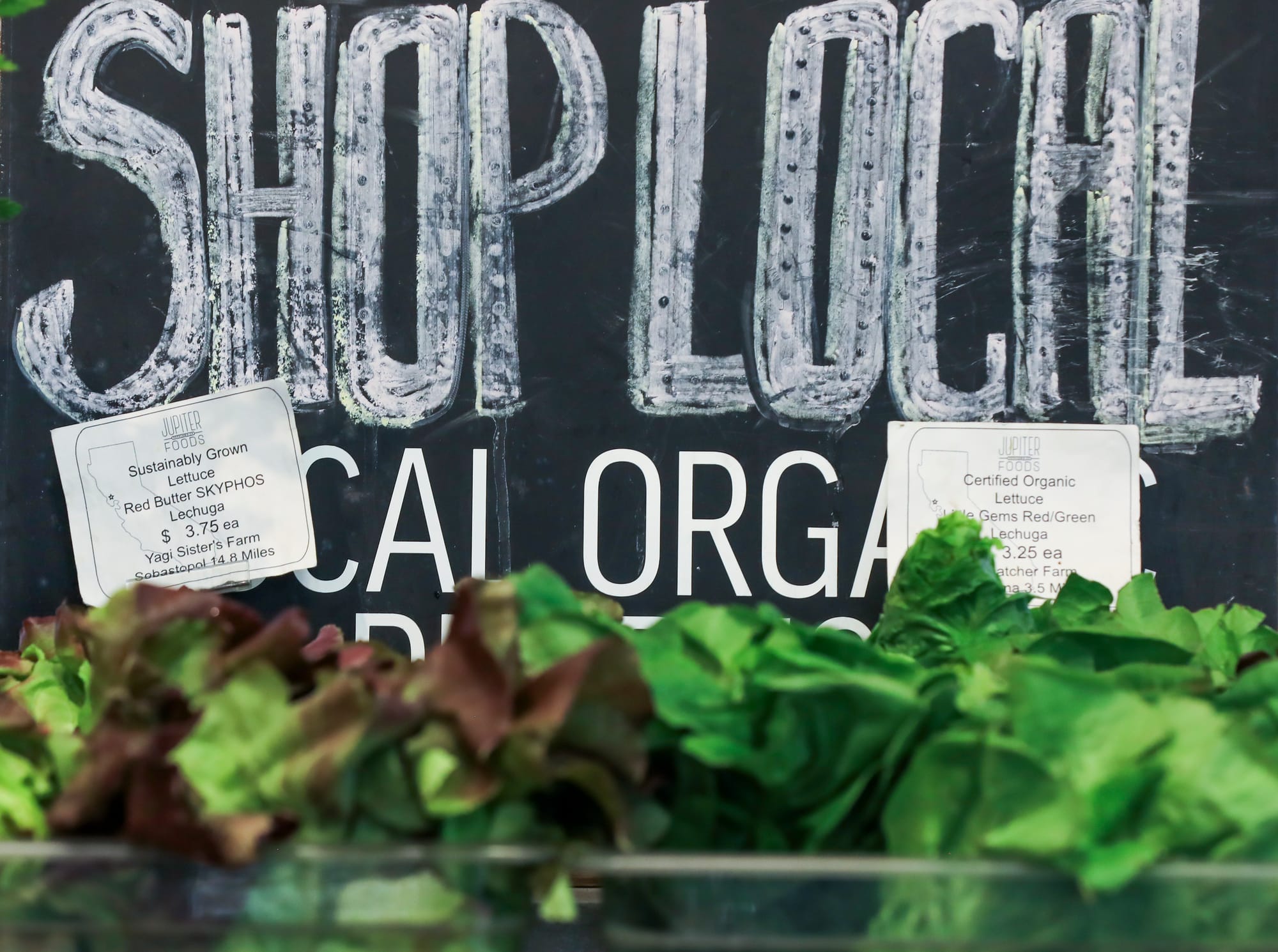
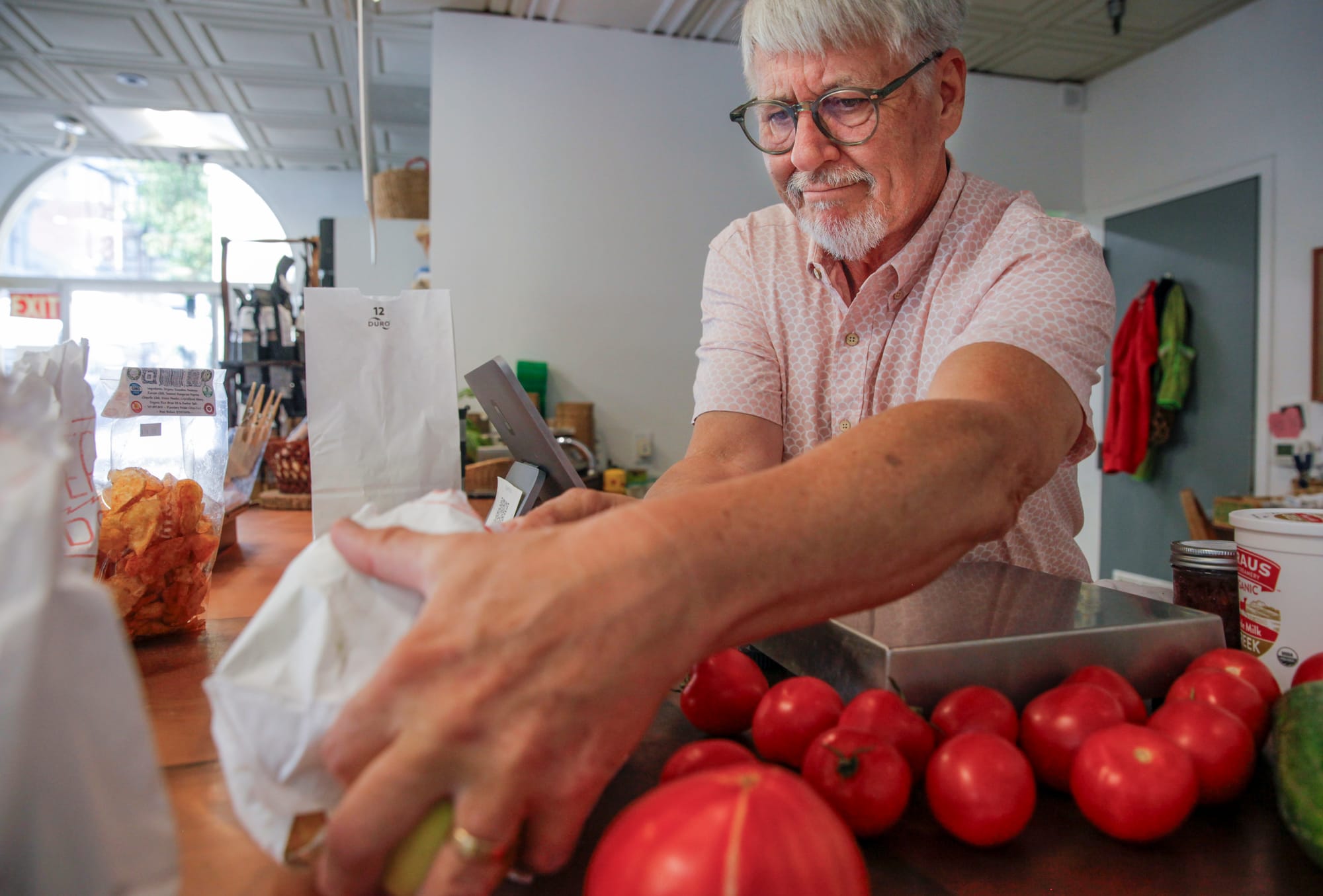
(Left) Heads of lettuce on display at Jupiter Foods. (Right) Bleakney-Formby rings up a customer. (Friday, July 31, 2026. CRISSY PASCUAL/PETALUMA VOICE ©2026)
How do your offerings compare to those from a farmers market, or a local CSA?
The farms that I source from, there's about 18, and they each have their own area, microclimate, their specialties. Some of them have overlap. You know, many grow dino kale. At some point, what I can do as compared to a CSA (consumer-supported agriculture subscription), where one farm is growing the one thing or the handful of things that they do well, I have the ability to pull from each of those farmers in their own specialized area to pull together more variety, but still in a seasonal nature.
So it's kind of a juggling act to find those farms that are doing the best with each of their own products, and many of them just are those that I find at farmers markets. I have Full Belly Farm (an organic farm in Yolo County), we go way back into my Napa days. The same with Kashiwase Farms (a family-owned organic stonefruit farm in Merced County). They come to market three times a week, which is great for me because every few days I can go get more and not have to store it. Their season starts in mid-April, and goes through October. Whereas if I were only focusing on a Sonoma County stonefruit grower, I might have four to five, maybe six weeks total of product from them. So I go with this farm that's farther away, but offers a greater variety and length of season and super high quality.
Other farms are closer to me – Suncatcher Farm, for example (on Bodega Avenue in Petaluma). Patrick was just dropping off last-minute things that I need for today to get me through tomorrow. He's the closest farmer to me, and that makes me lean on his dino kale, for example. I want it to be the closest thing to my front door.
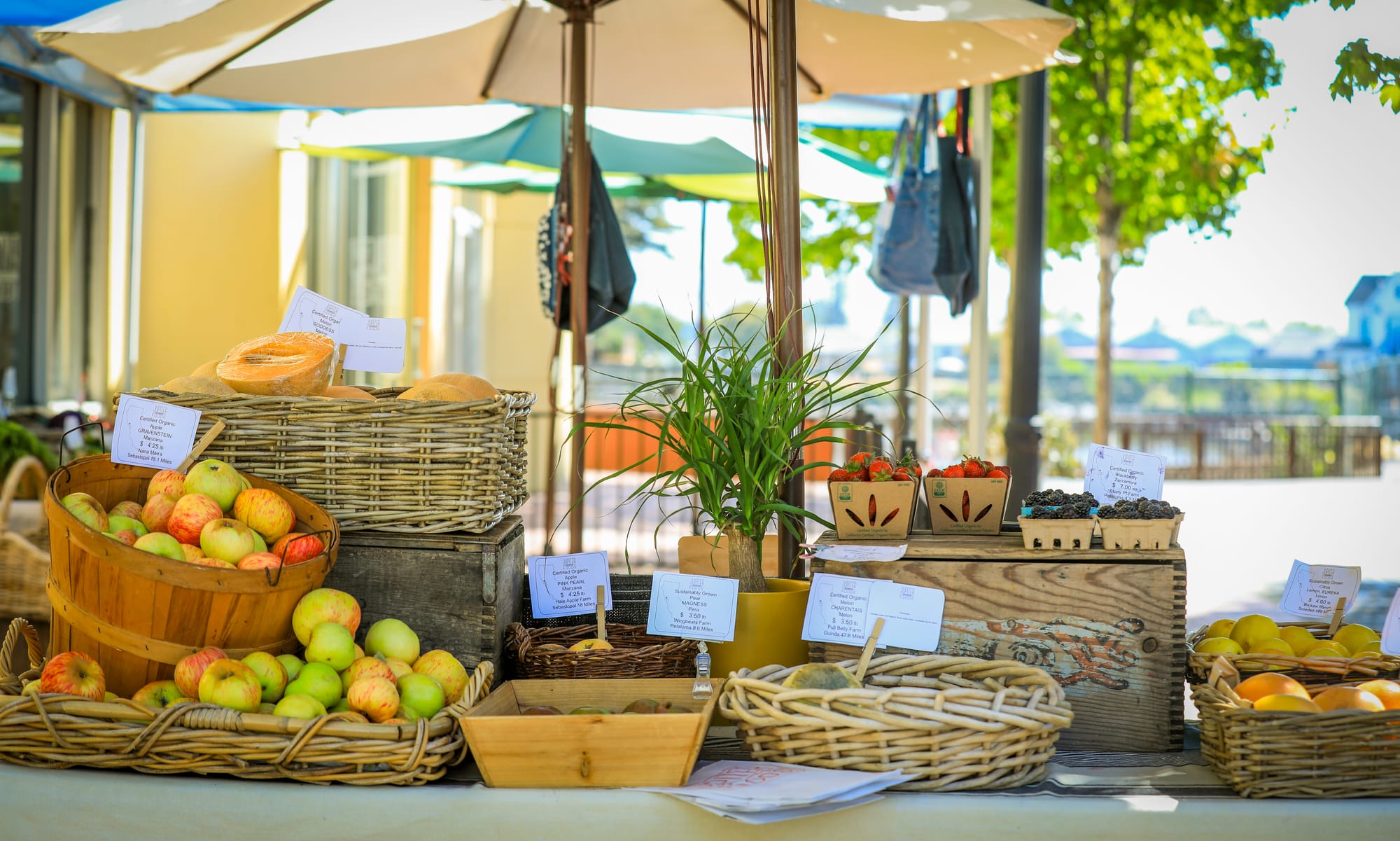
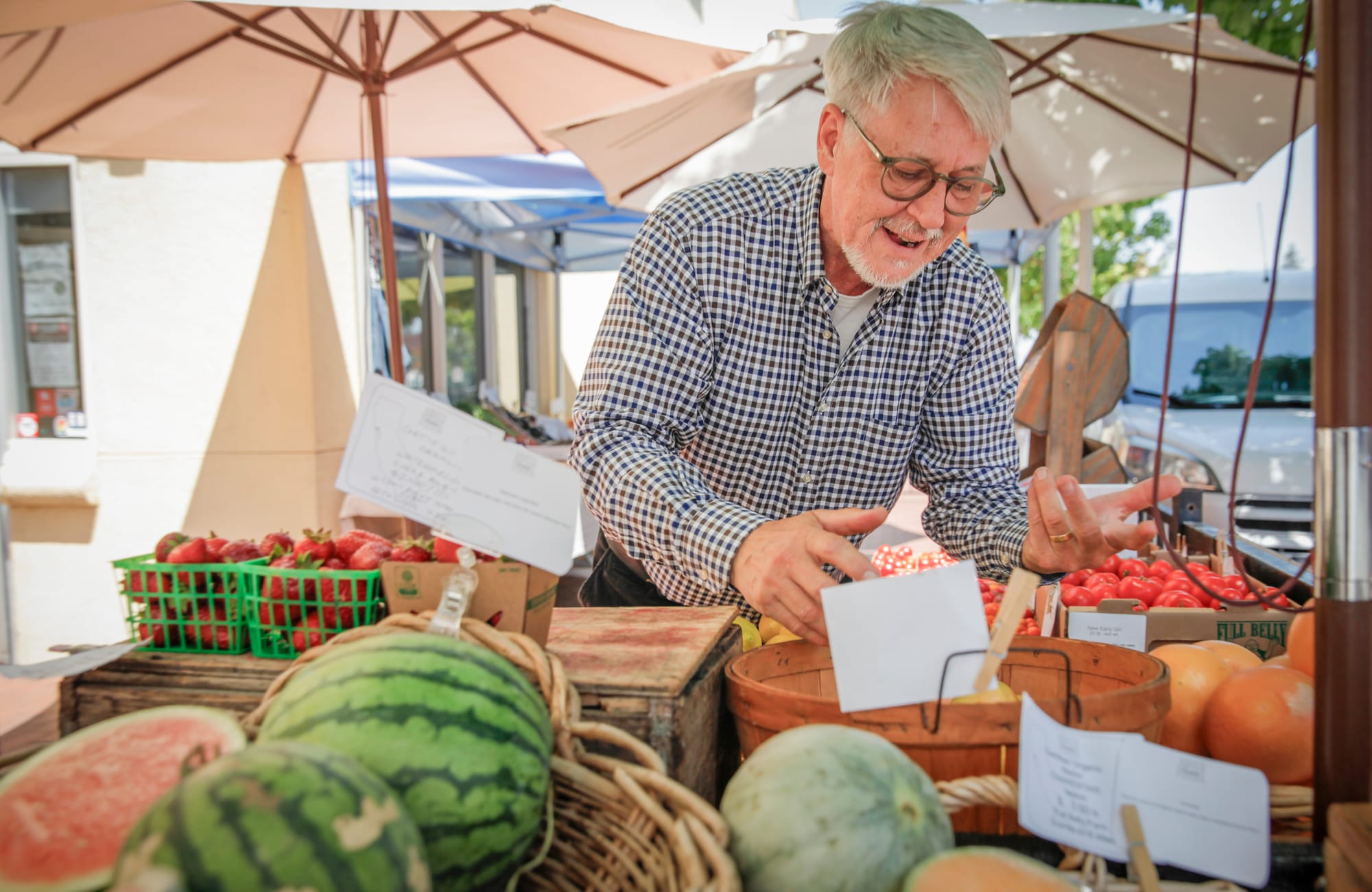
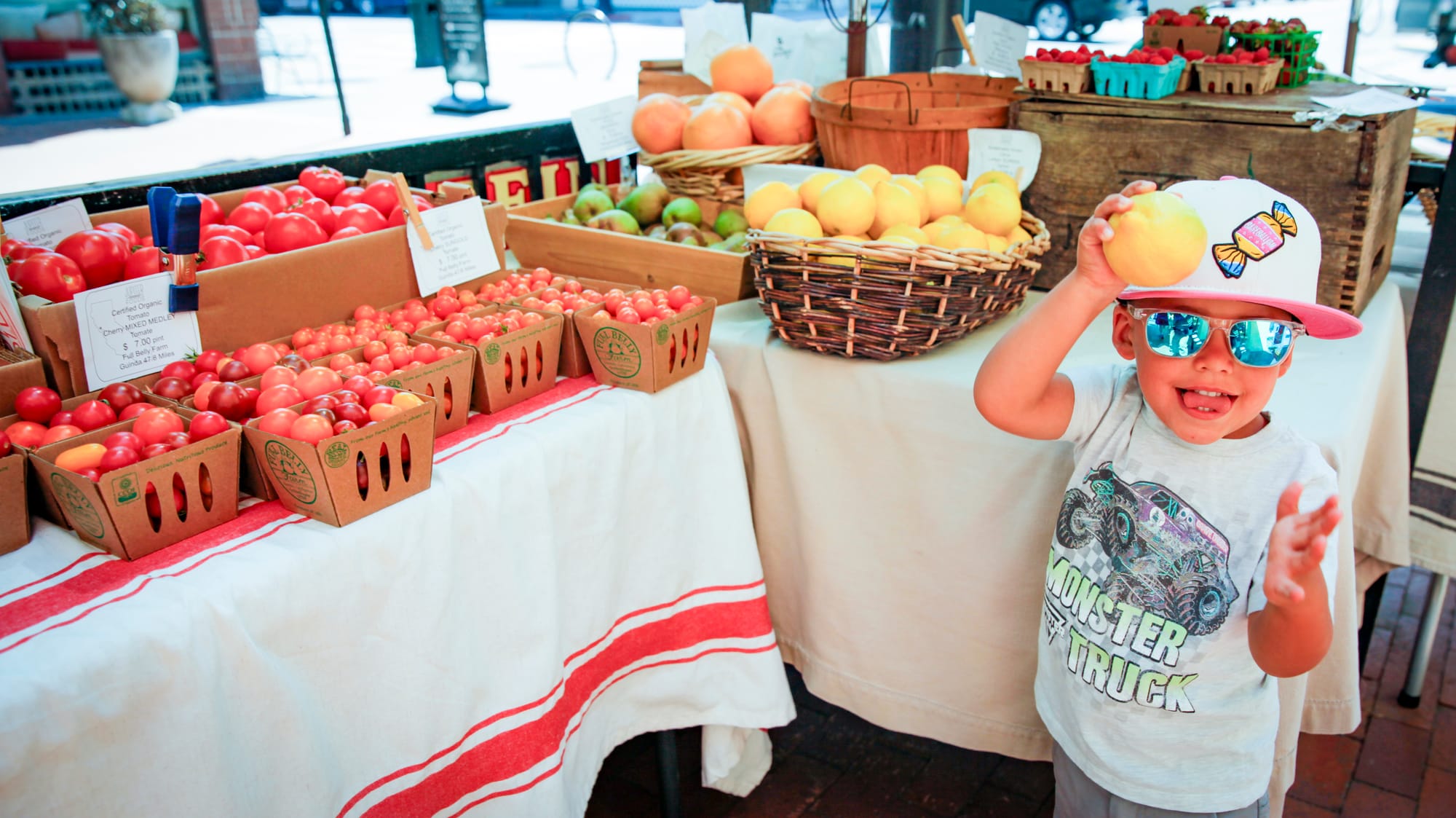
The produce stand outside Jupiter Foods in downtown Petaluma. (Friday, July 31, 2026. CRISSY PASCUAL/PETALUMA VOICE ©2026)
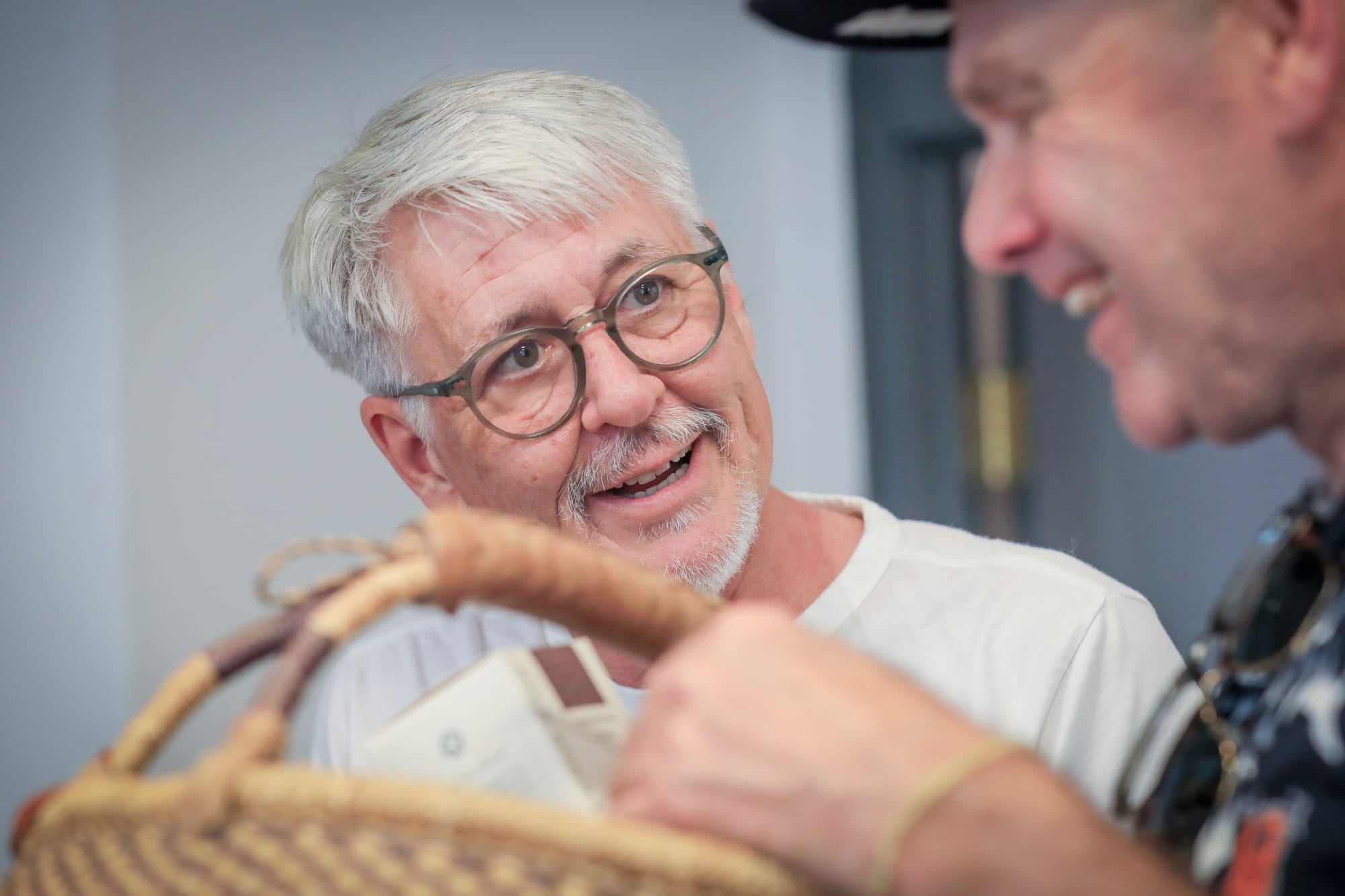
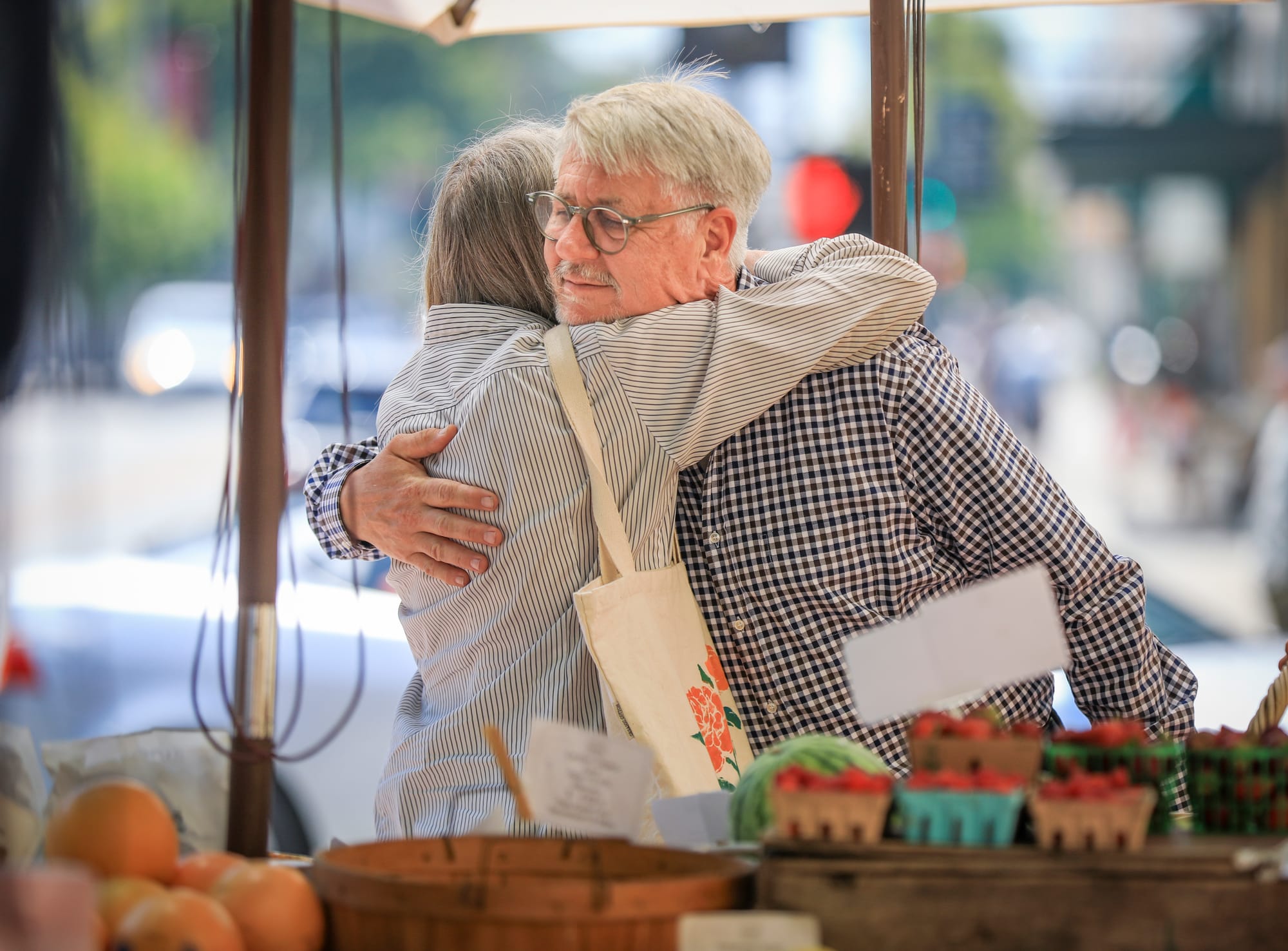
Bleakney-Formby chats with customer Rob Young. (Friday, July 31, 2026. CRISSY PASCUAL/PETALUMA VOICE ©2026)
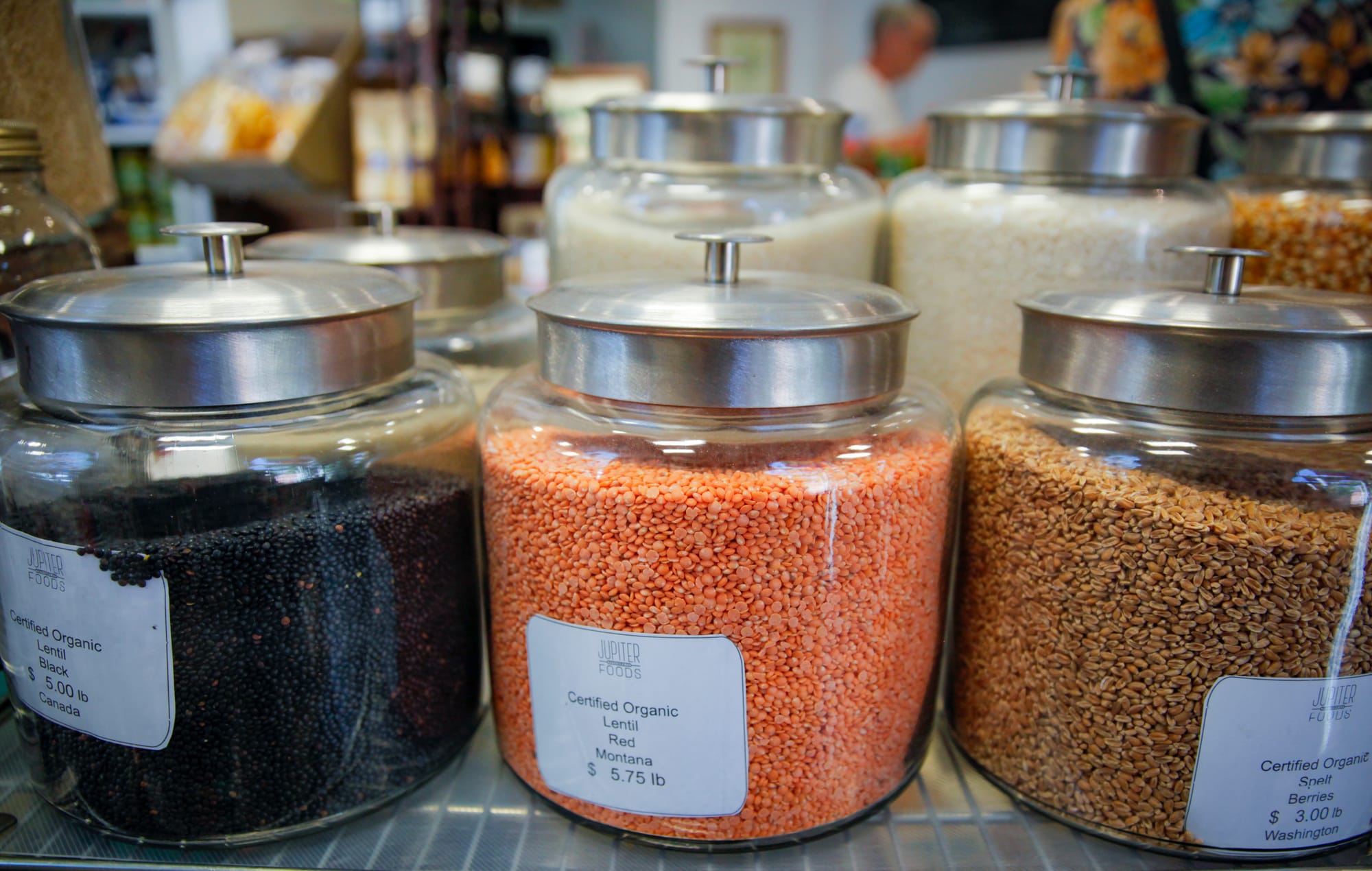
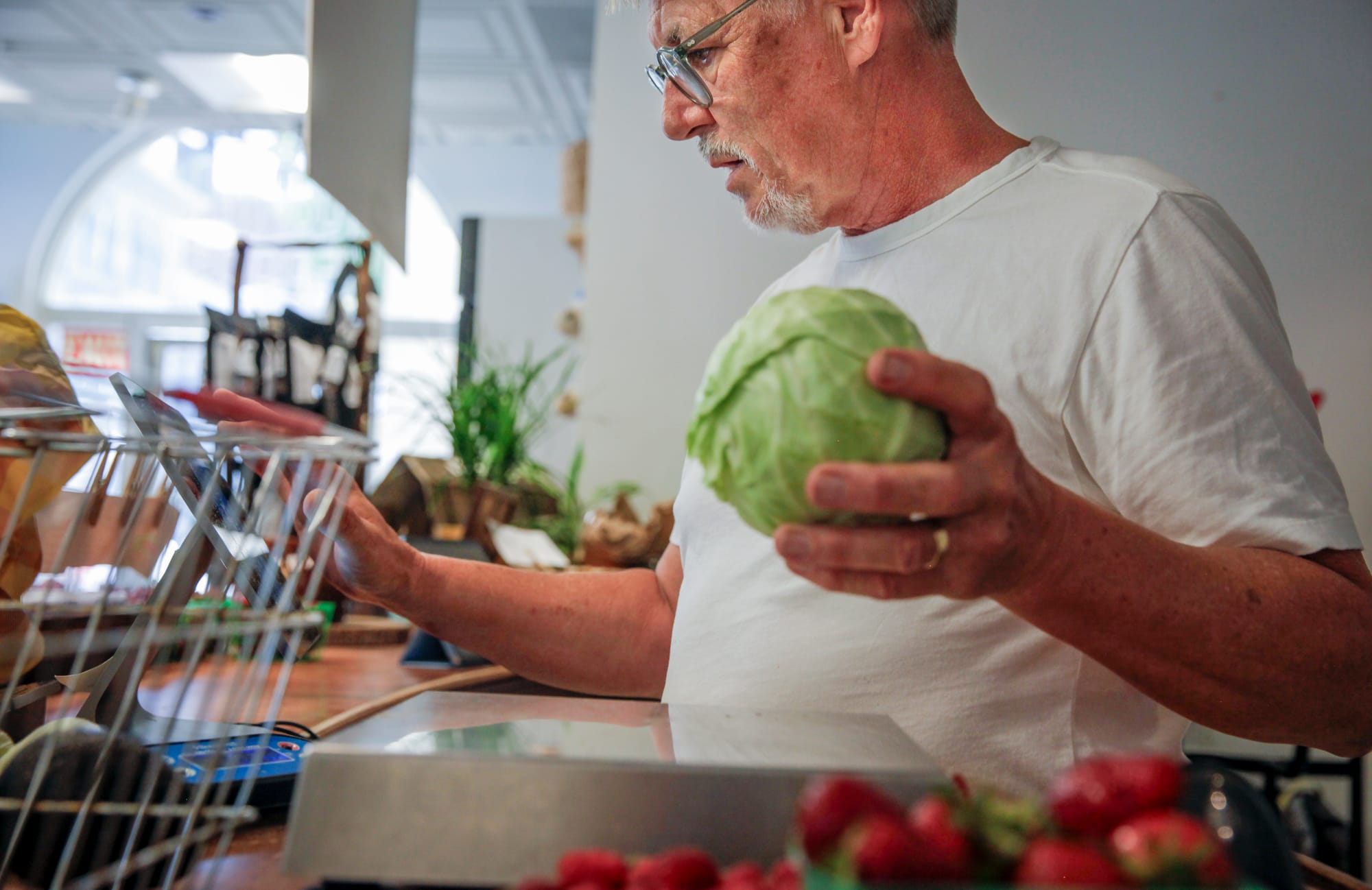
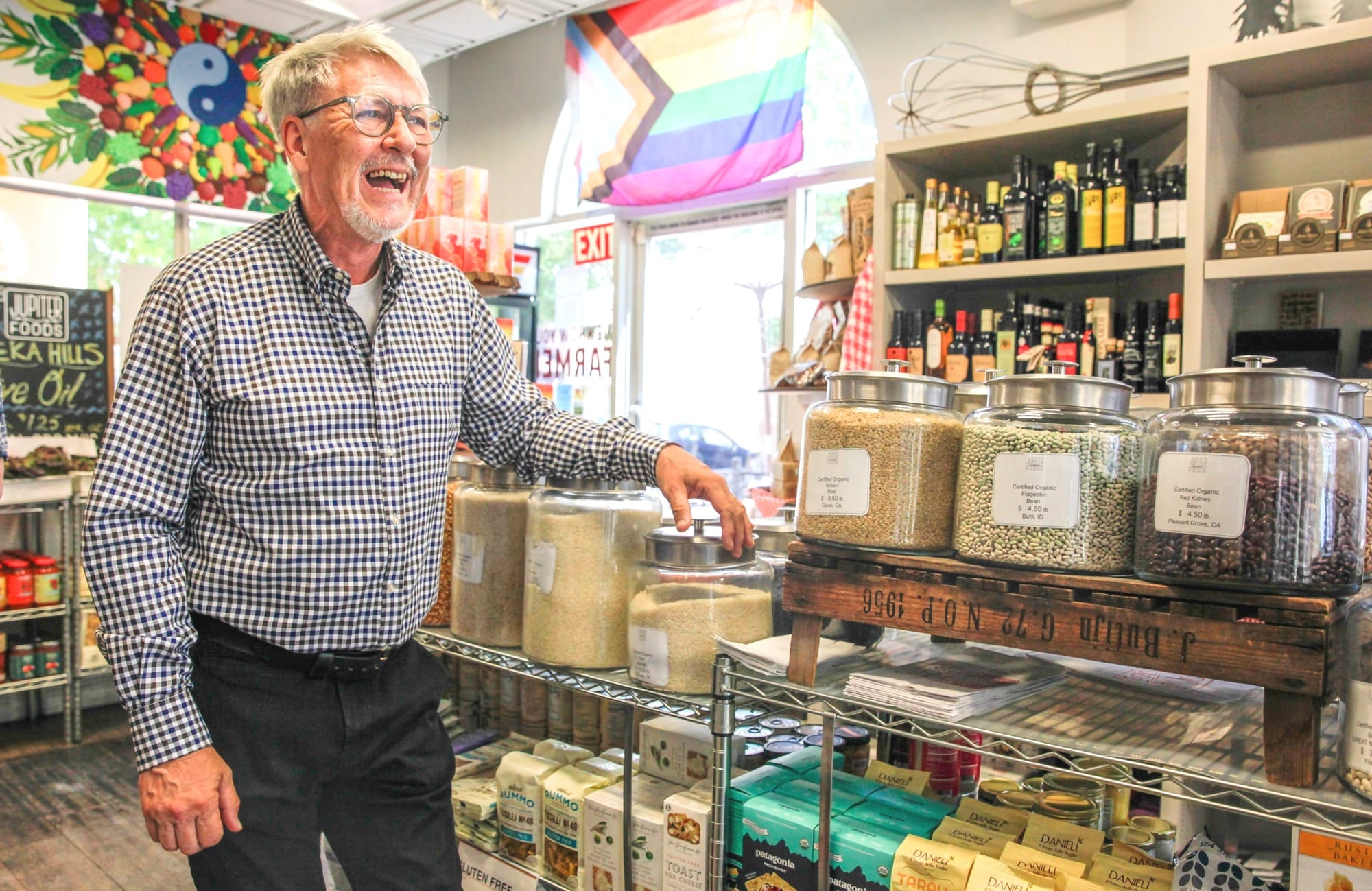
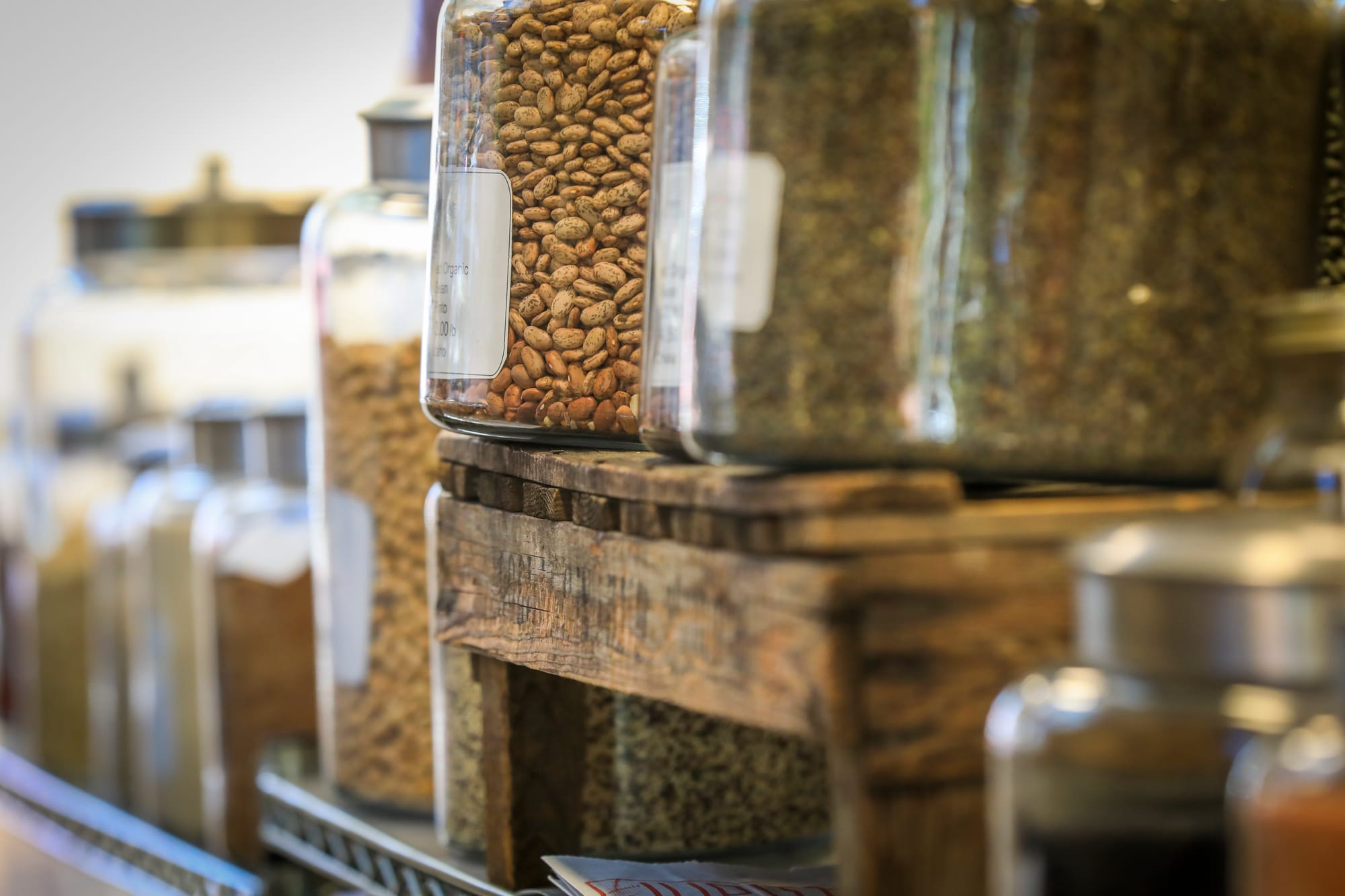
(Left) Bulk beans for sale at Jupiter Foods. (Right) Bleakney-Formby at the register. (Friday, July 31, 2026. CRISSY PASCUAL/PETALUMA VOICE ©2026)
What is the “European model” of grocery shopping?
The first thing that comes to mind is the kind of produce that we are selling. It's not something that's been grown or designed for long-term storage. Varieties that we have aren't things that are traditionally something that will go through a chain of distribution. I mean, there's many days throughout the week the produce that's on our table was in the ground that morning, was picked that morning. We've got to be hyper-focused on those simple products, and the proof is in the product itself.
So the European model is exactly what I go for. That's how their distribution works: it comes out of the field and it goes on the table. That’s our chain.
Speaking of seasonal food, what are you looking forward to in the next month or so?
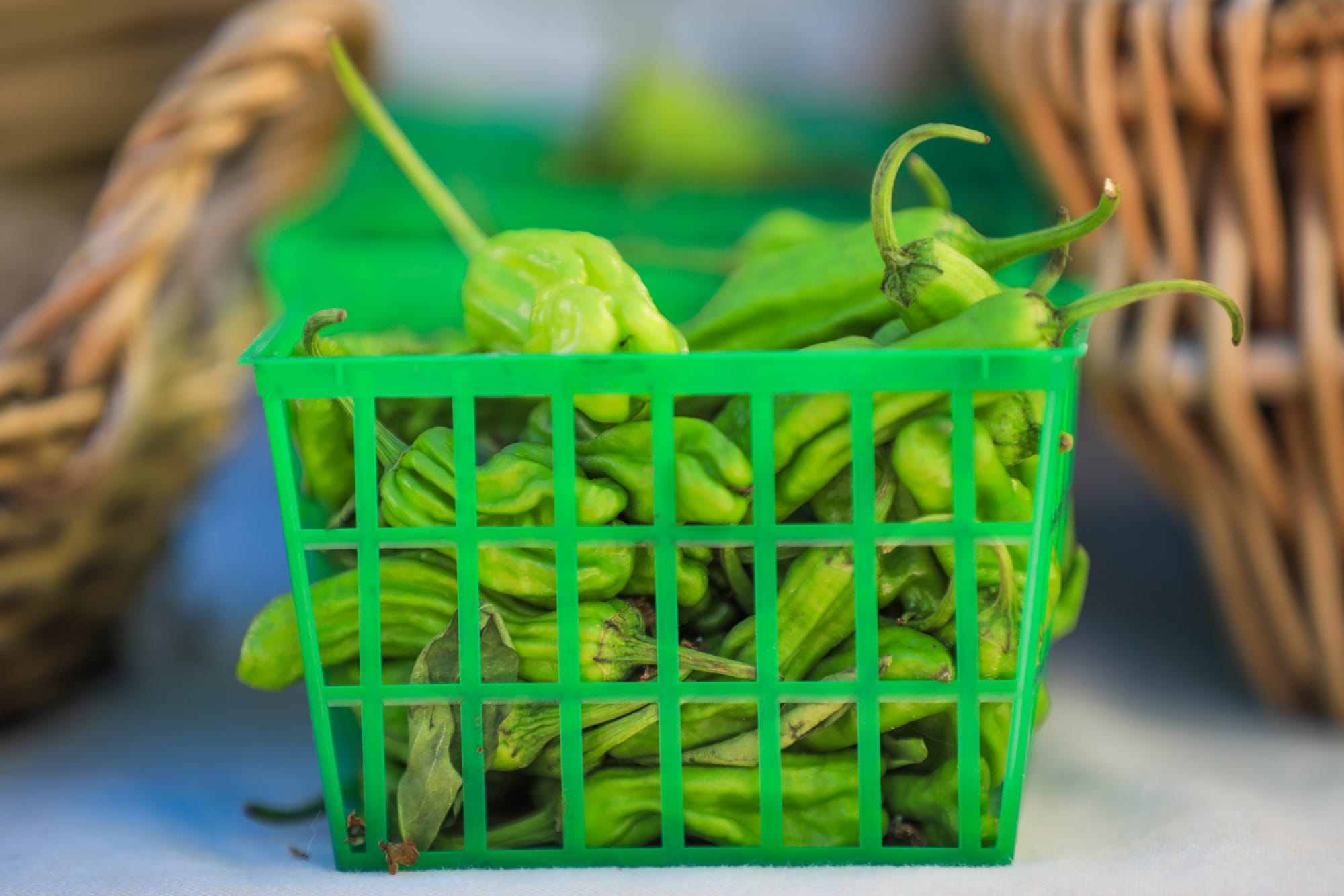
There's a dish that uses Jimmy Nardello peppers, torpedo onions, and Romano beans, and with that combination, you can make anything with the protein as the anchor, and then that's the side dish. It's a recipe – or a technique more than a recipe – that I learned from chefs in Napa that I was working with. It’s a staple coming in around September, an old Italian peasant food, really.
But it's a preparation of just quick-sautéing those things in a certain order after the protein is finished. I prefer a pork chop with fat that renders off. Use that to blister the peppers, and then fry the onions, and then add the Romano beans at the end, which then loosens everything up on the bottom of the pan, and you mix that in. It doesn't make a sauce. It makes this little coating. It's just so delicious, and it's the thing I make over and over and over again for the four to six weeks that it’s in season.
The peppers come first, and then the torpedo onions start showing, and then the romano beans are the final. Get them while they’re good, because it doesn’t take many weeks for romano beans to go from good to woody or starchy.
What’s something that people who know you through Jupiter Foods may not know about you?
I’m a self-taught knitter, and I think I've been at it 10 years now. I started by spinning yarn, and I needed something to do with spun yarn, so I taught myself to knit. Then that turned into a passion to make people socks, and so I made a bunch of socks, and I figured out that sweaters weren't so hard because it was just a big time commitment. And I make scarves. I’m inspired by the local fibershed as much as I am the local foodshed. The number of people that are doing fiber in this community is pretty vast, and it's a nice little community too. They're wonderful people, I like them very much.
My great-grandmother had a reputation for being a big fiber person. She crocheted mostly, and did other things, but her goal was to always make something and then give it away. I find that I feel the same way about that. While I’m knitting something, it’ll occur to me somebody who might want it, or I’ll start thinking about them, and the finished product usually ends up in their lap.
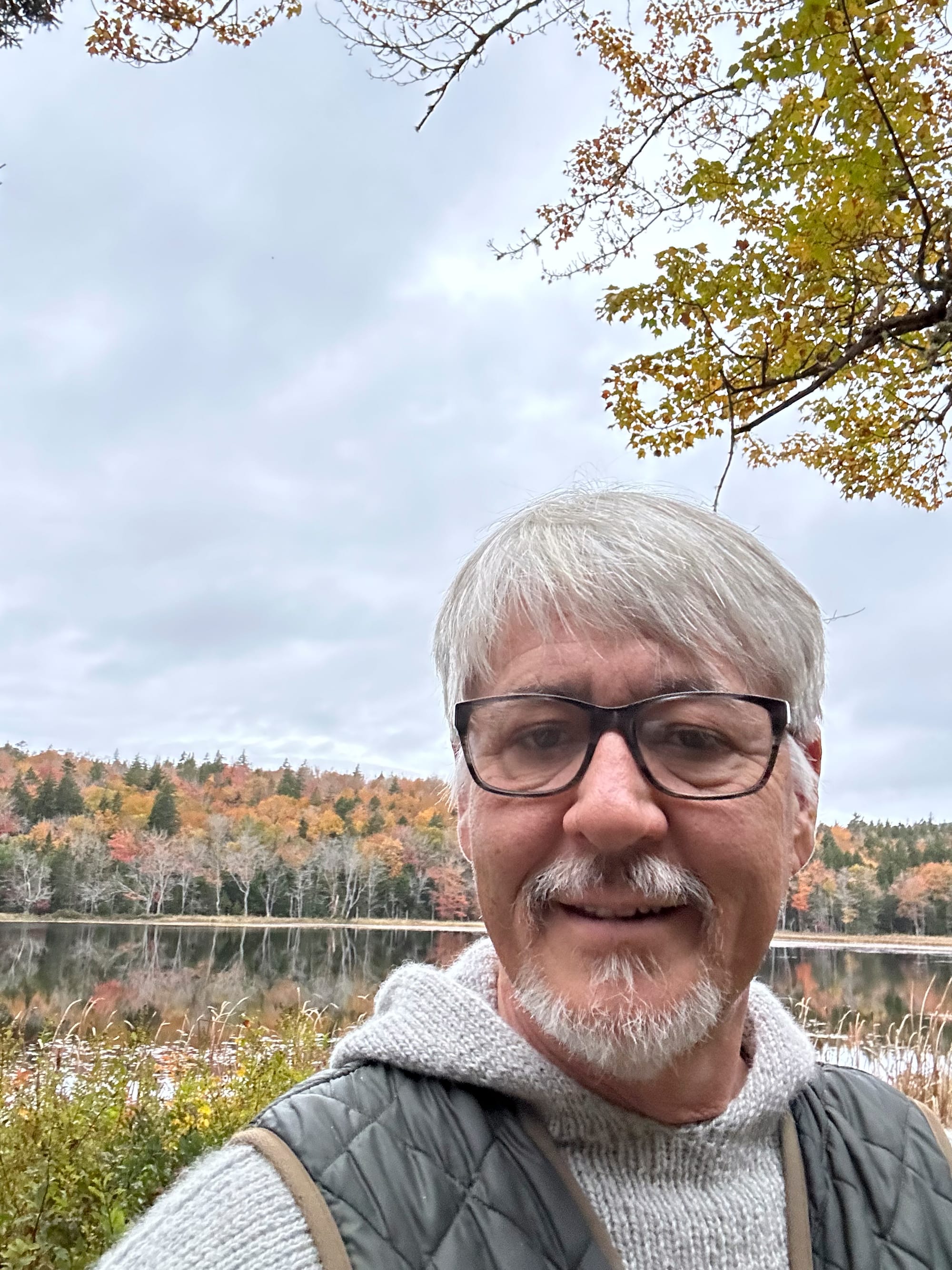
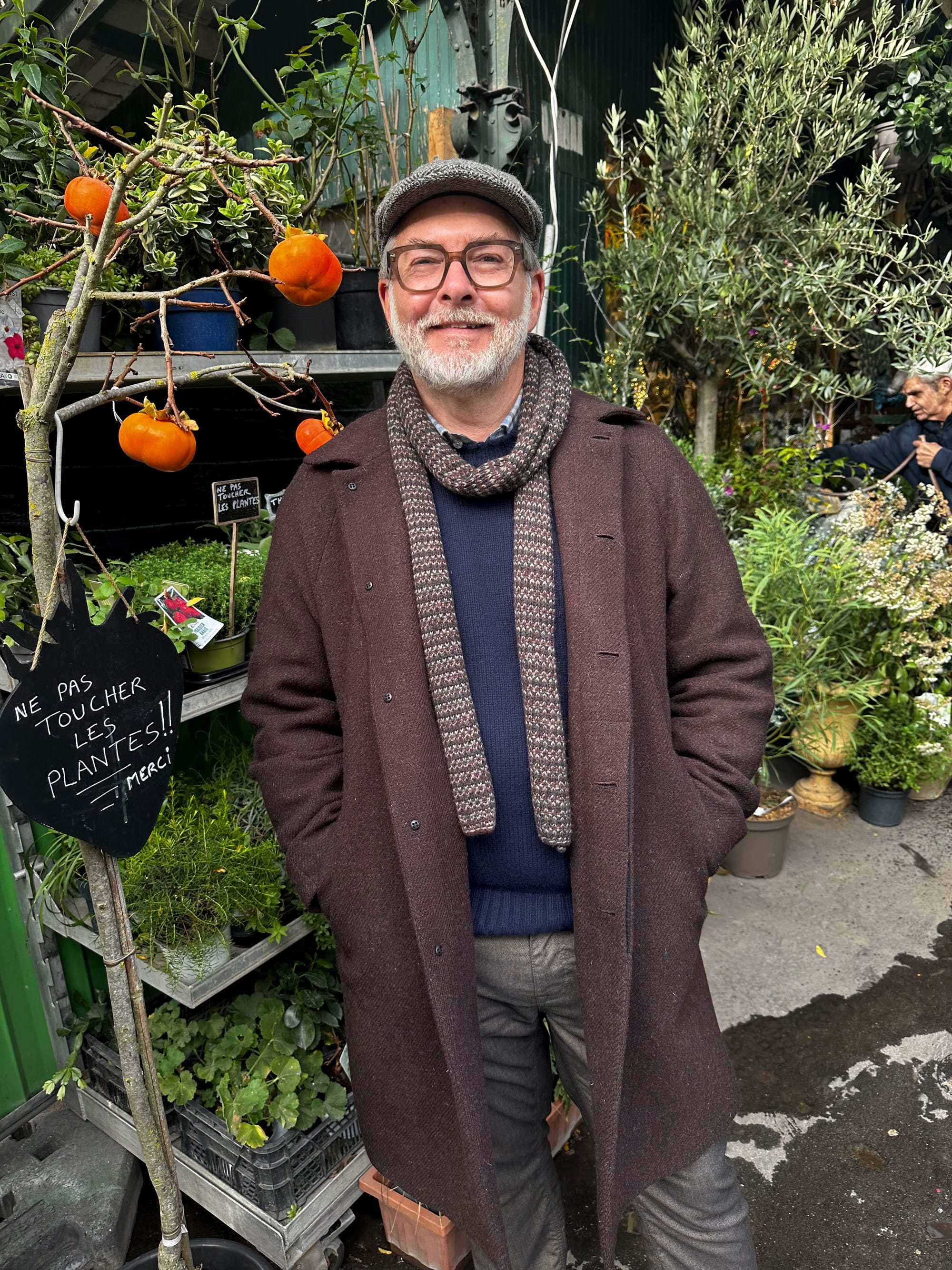
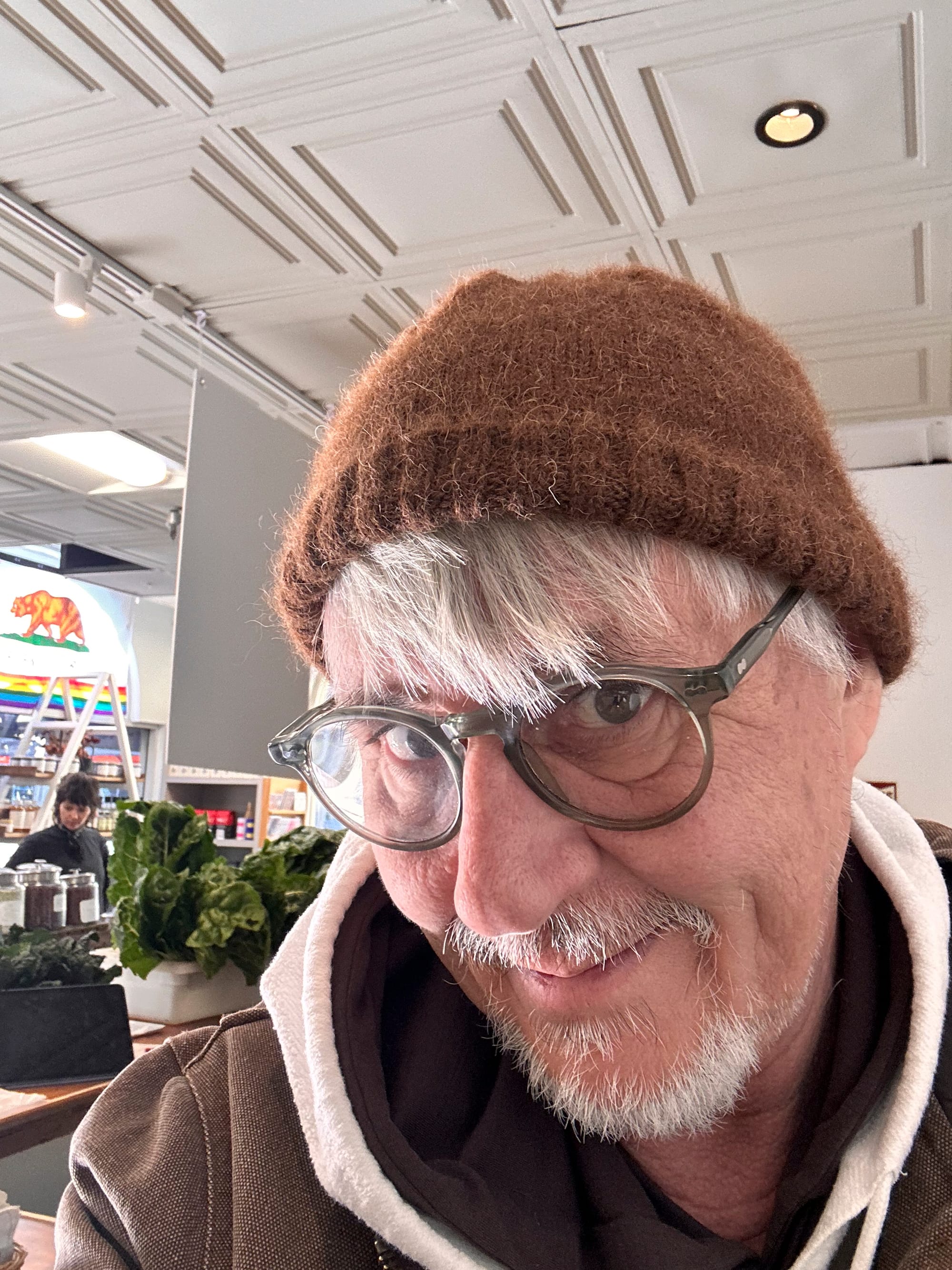
Bleakney-Formby wears items he hand-knit (left to right): a hoodie sweater, a scarf, and a cashmere beanie. (Courtesy of Dan Bleakney-Formby)
Jupiter Foods is located at 100 Petaluma Blvd. N.
Bleakney-Formby writes a weekly newsletter with recipes, community notes, information about seasonal produce availability and upcoming events, and essays on "whatever it is that I'm thinking about while I'm driving all over the Bay Area, picking up produce," he said.
Sign up and learn more at https://jupiterpetaluma.com.
This conversation has been lightly edited for clarity and readability.