Historic Dunham School finds magic in unique ag program
'Not just chickens and cows,' says Principal Katie Kidder
Just down the road from the historic Washoe House on the rural outskirts of northwest Petaluma sits a public elementary school with a rich past and an increasingly bright future.
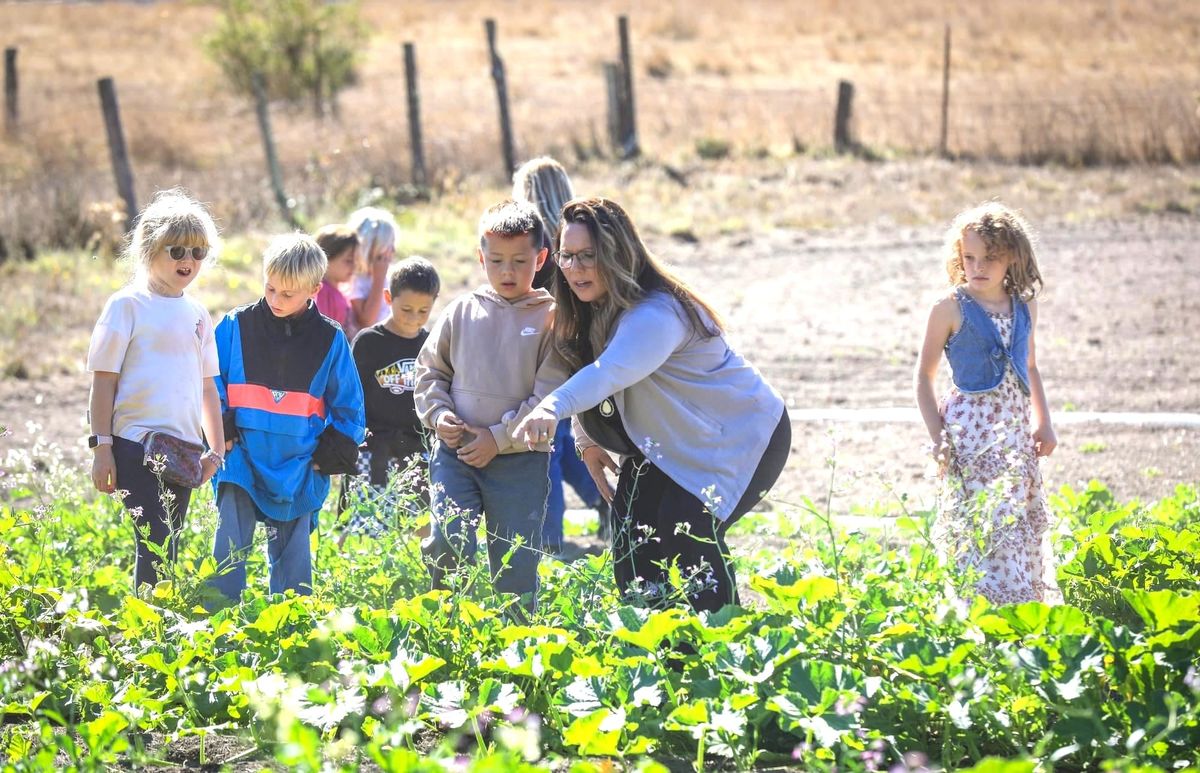
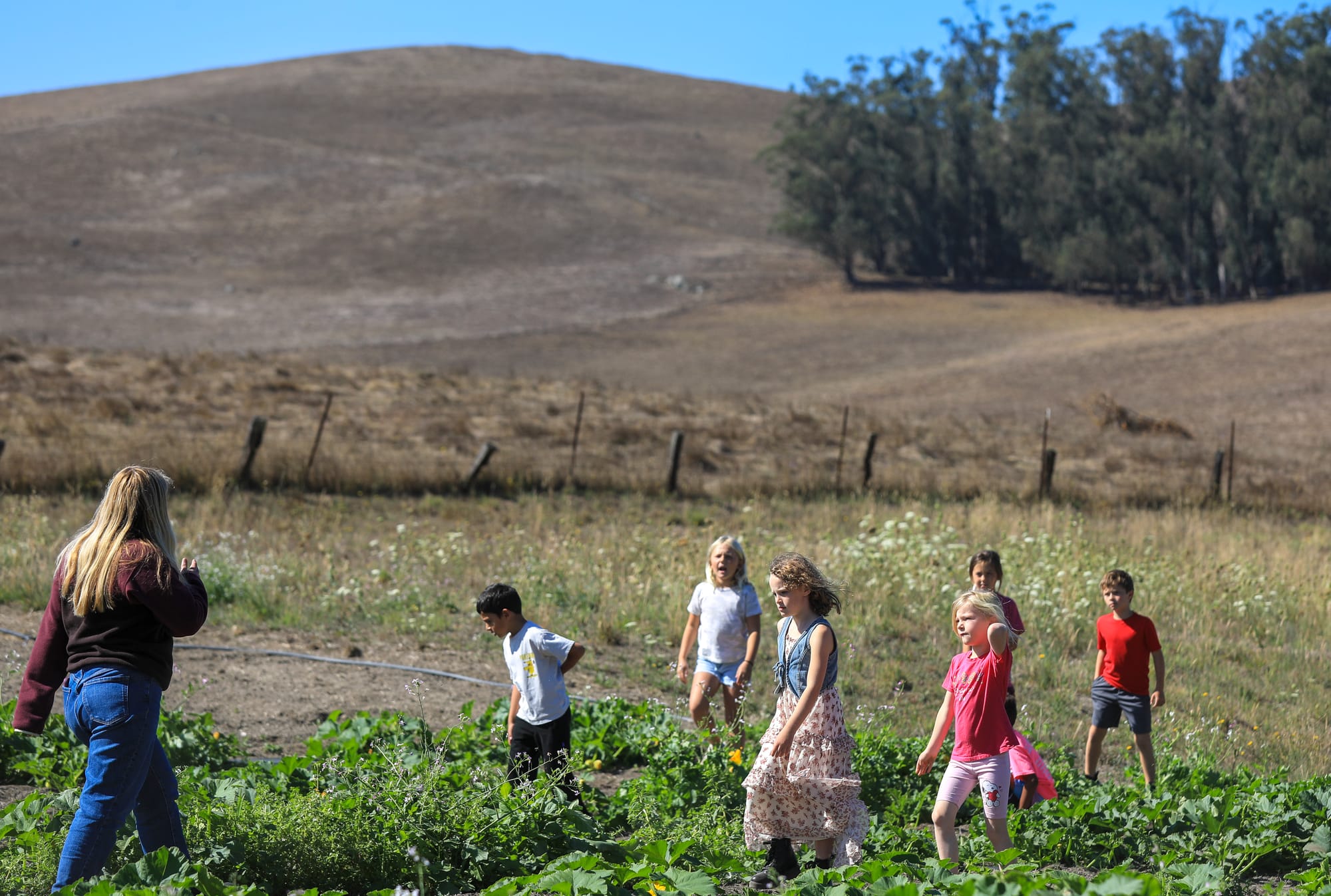
On a recent Monday morning, a class of second graders explored the small pumpkin patch behind the school, kicking up dust from the soft, loamy soil as they counted young pumpkins growing in each irrigated row. Come Halloween, there should be one pumpkin for each of the school’s 199 students spanning transitional kindergarten through sixth grade.
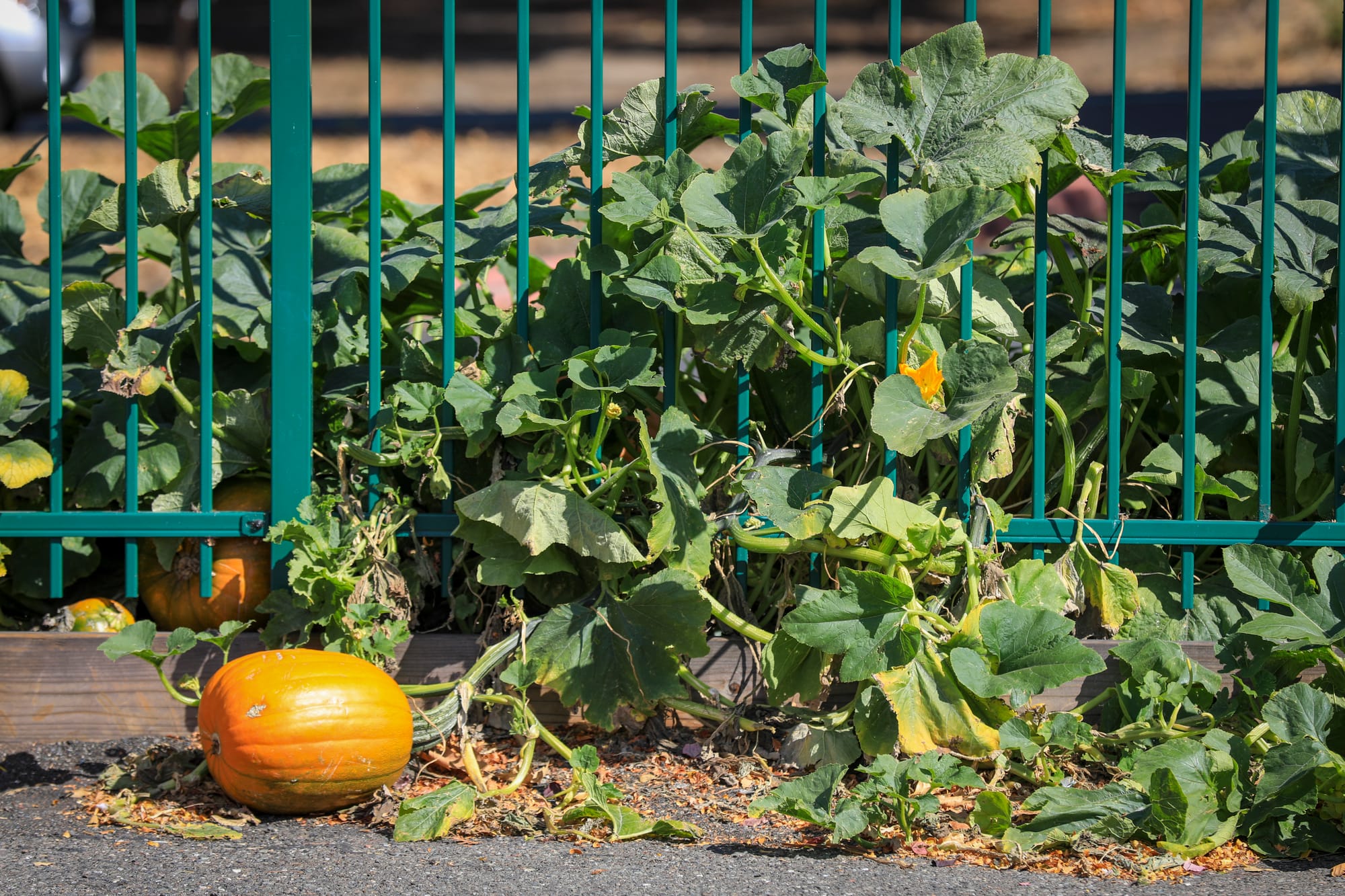
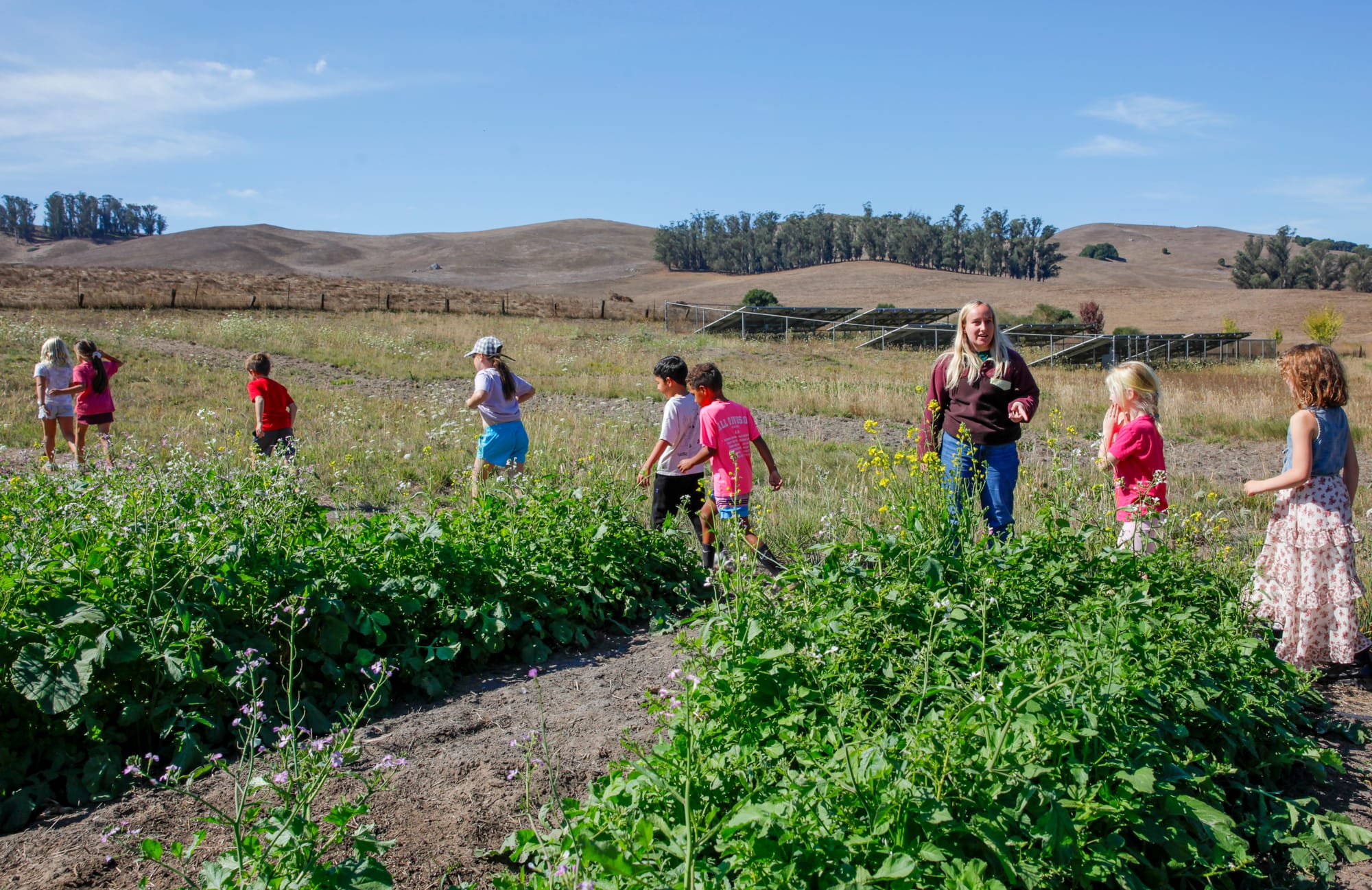
(Left photo) A volunteer pumpkin plant grows in a patch of grass just beyond the fence at Dunham Elementary. (Right photo) Second grade teacher Kelsey Vella instructs students to find and count pumpkins. (Monday, Sept. 14, 2026. Photo by CRISSY PASCUAL/PETALUMA VOICE ©2026)
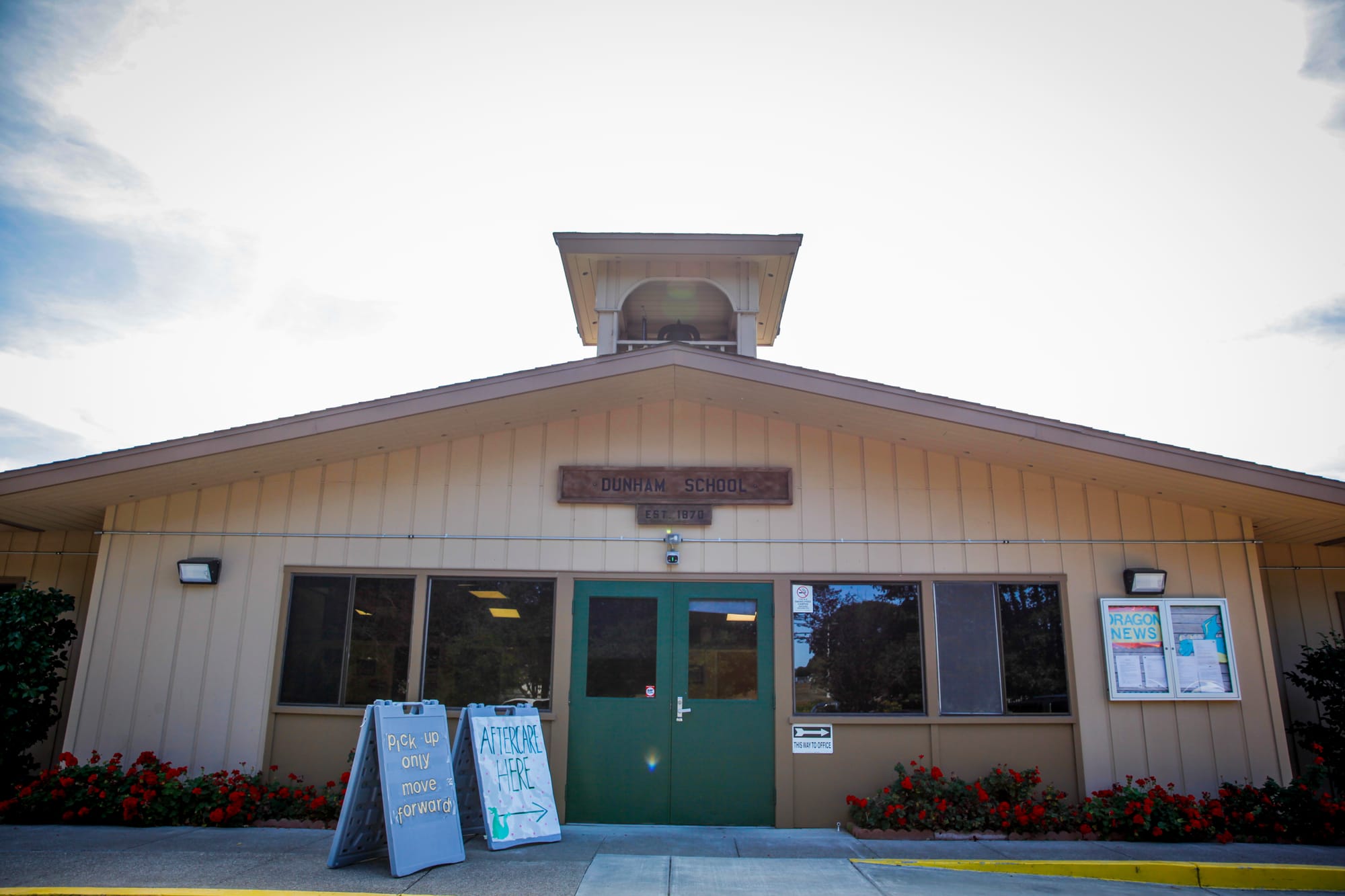
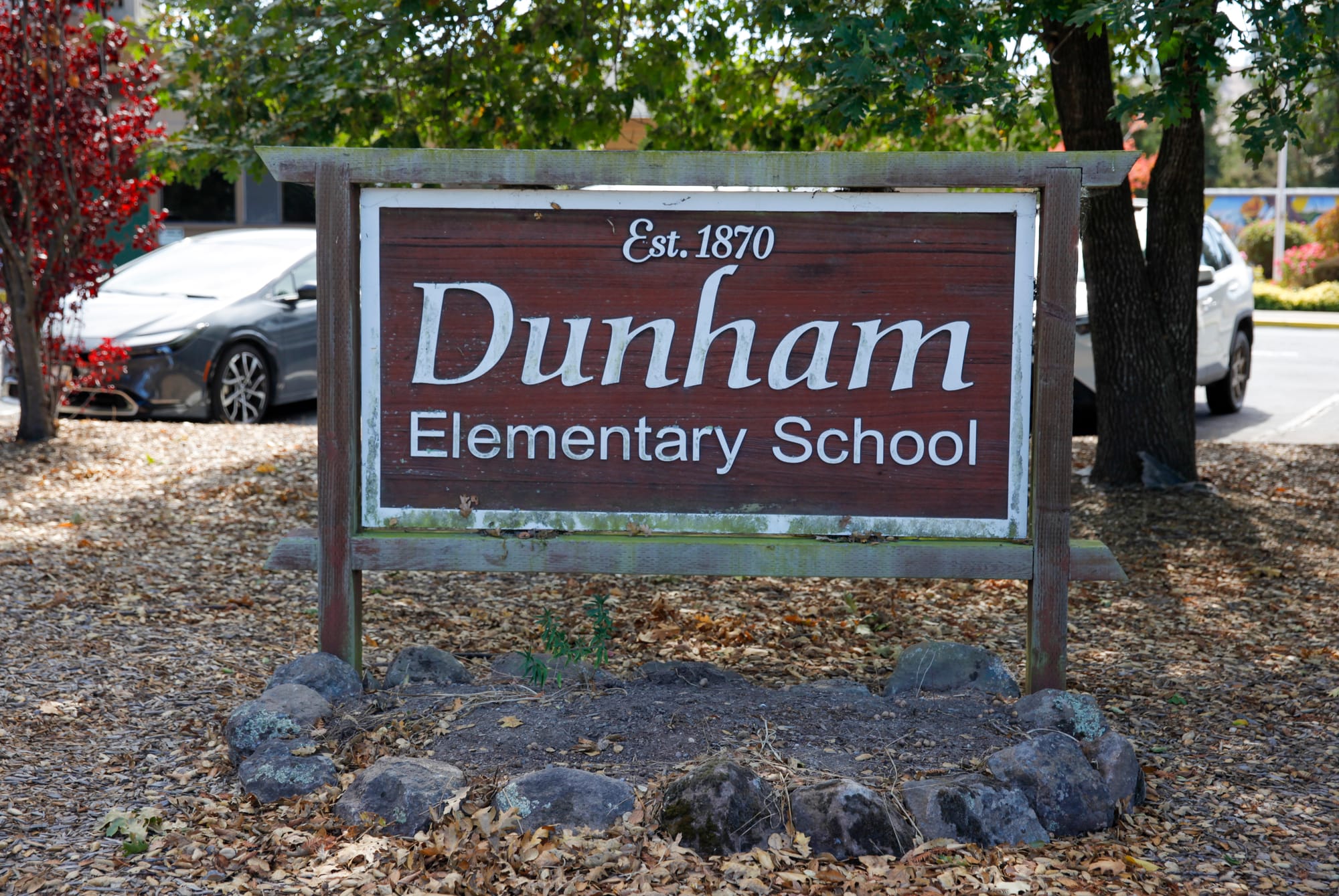
Dunham Elementary had a far smaller student body when it opened in 1870 as a one-room schoolhouse a few doors down on Roblar Road. A larger structure was constructed at the site in 1920 to accommodate growing enrollment among the local farming community, and in 1976, Dunham moved to its current campus, set against the same working landscape of rolling, grass-covered hills.
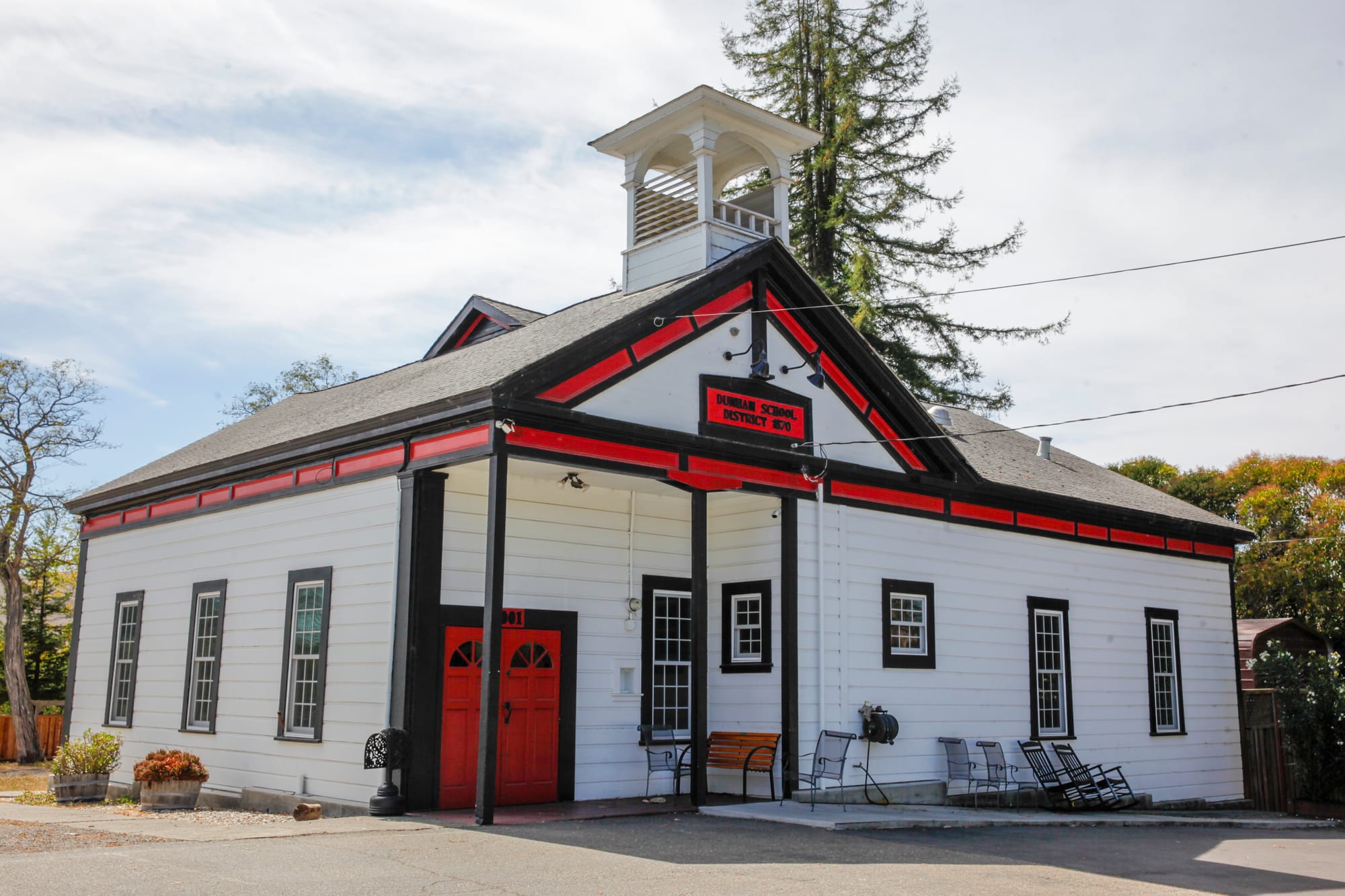
Another half-century later, the school has survived – and thrived – amidst massive ongoing change to nearby Petaluma and Cotati, and to the ranches and farms whose families have long sent their kids to Dunham.
Thanks in part to Dunham's renewed embrace of this community through its evolving agricultural education program, the county’s first and only at the elementary level, administrators are excited about what lies ahead for the 156-year-old school.
“We call it the magic of Dunham,” said Ani Larson, superintendent of the single-campus school district since 2022. “I've been in quite a few different districts, and there is a magic about this place.”
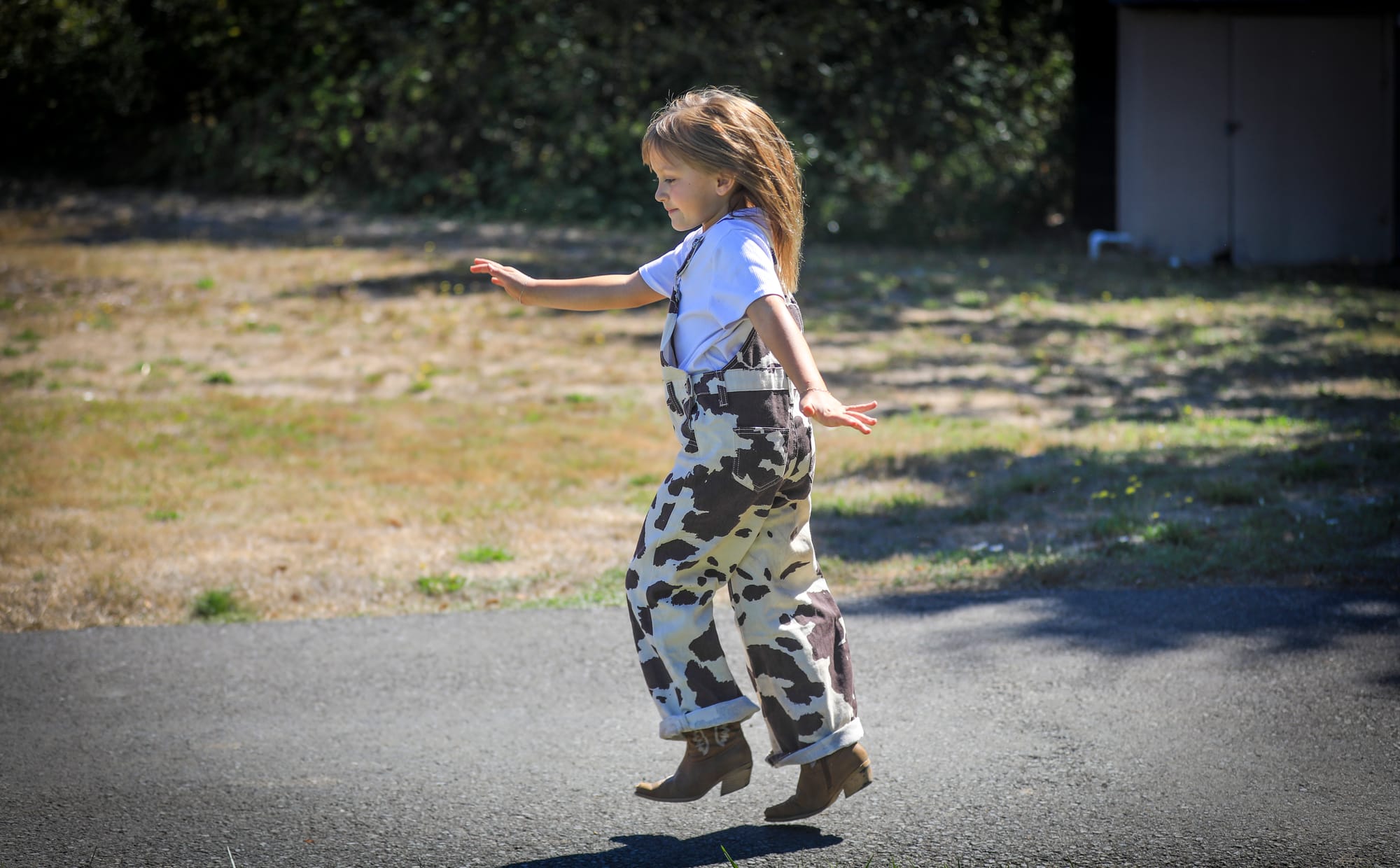
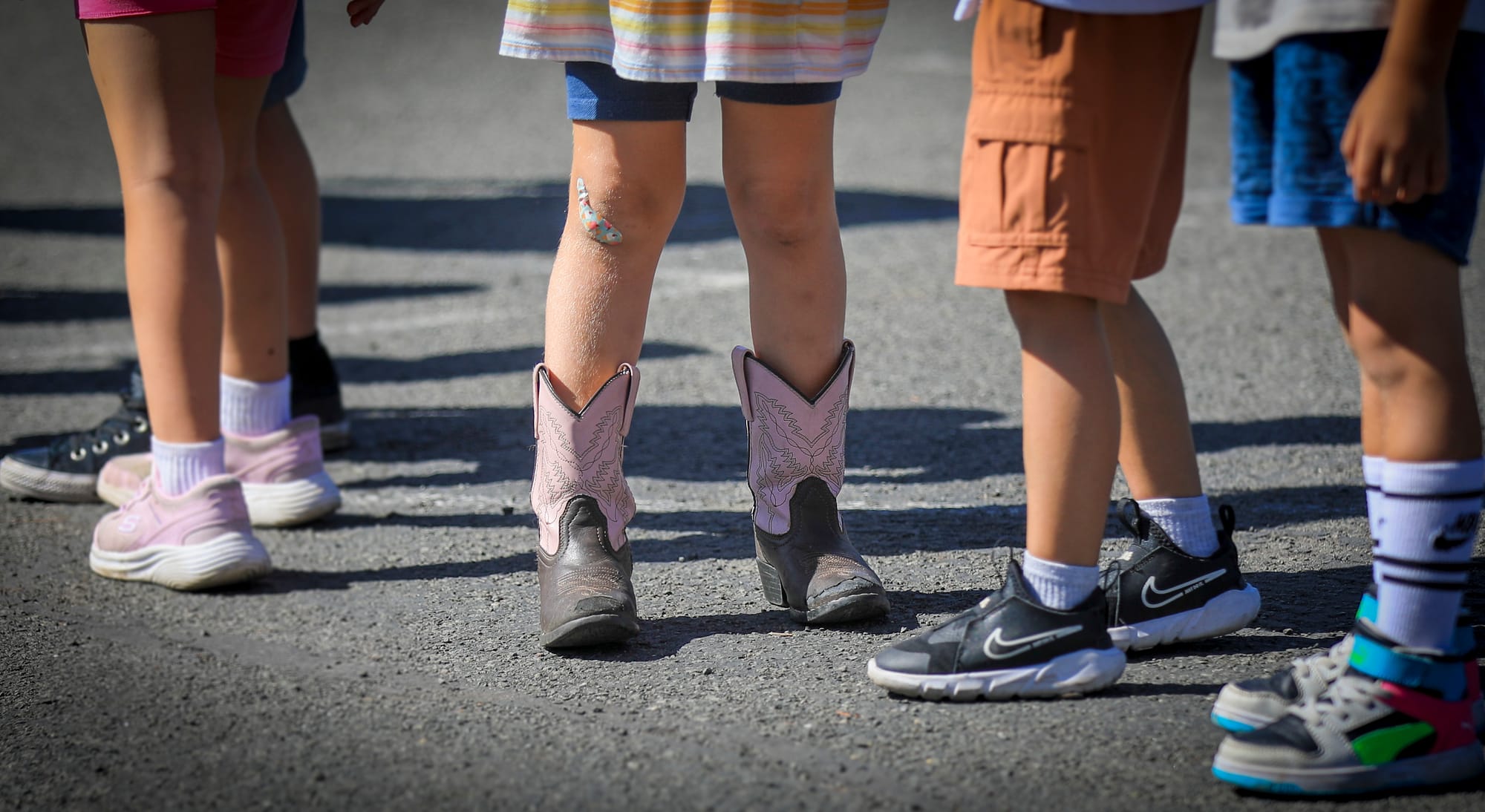
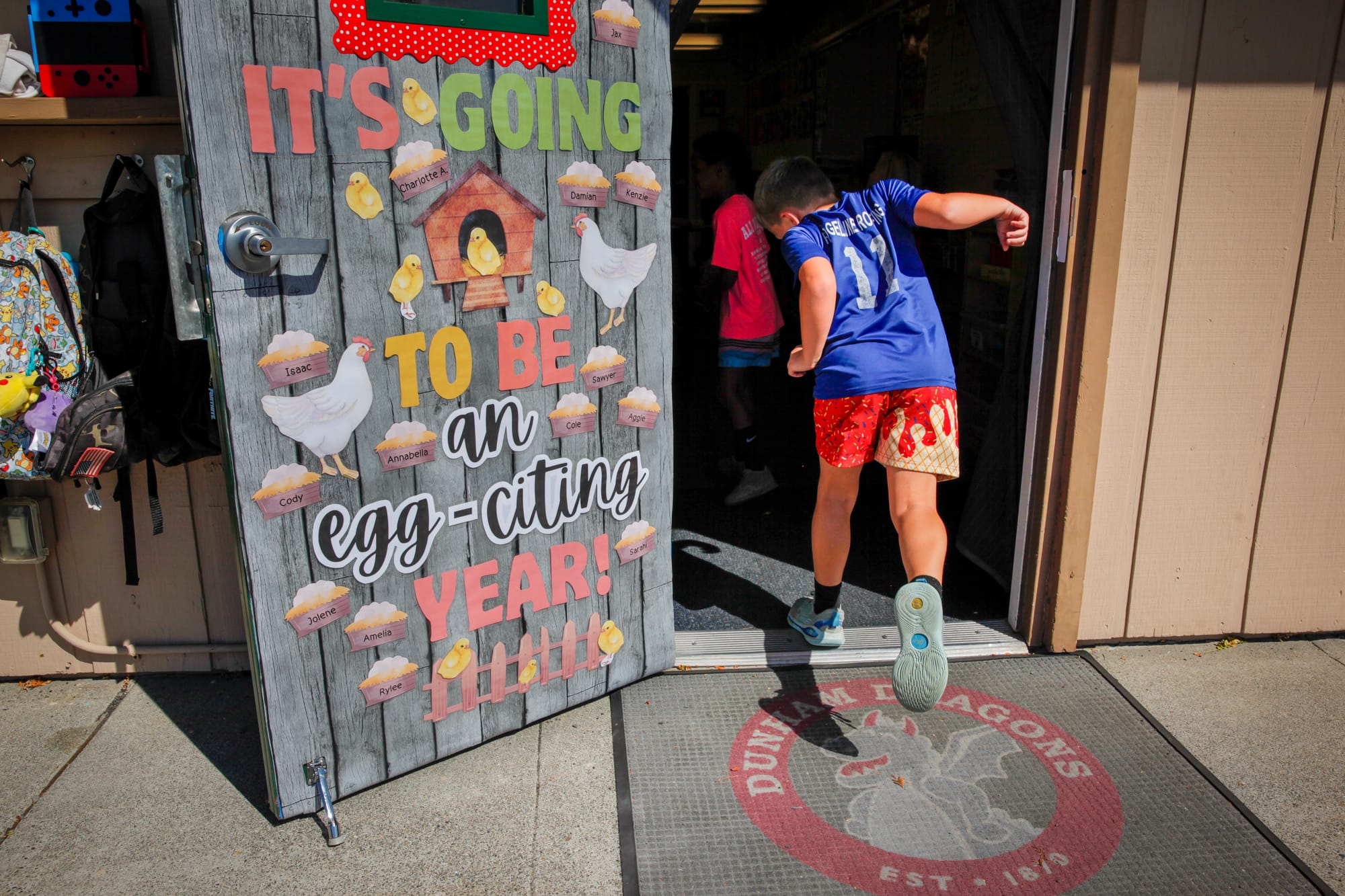
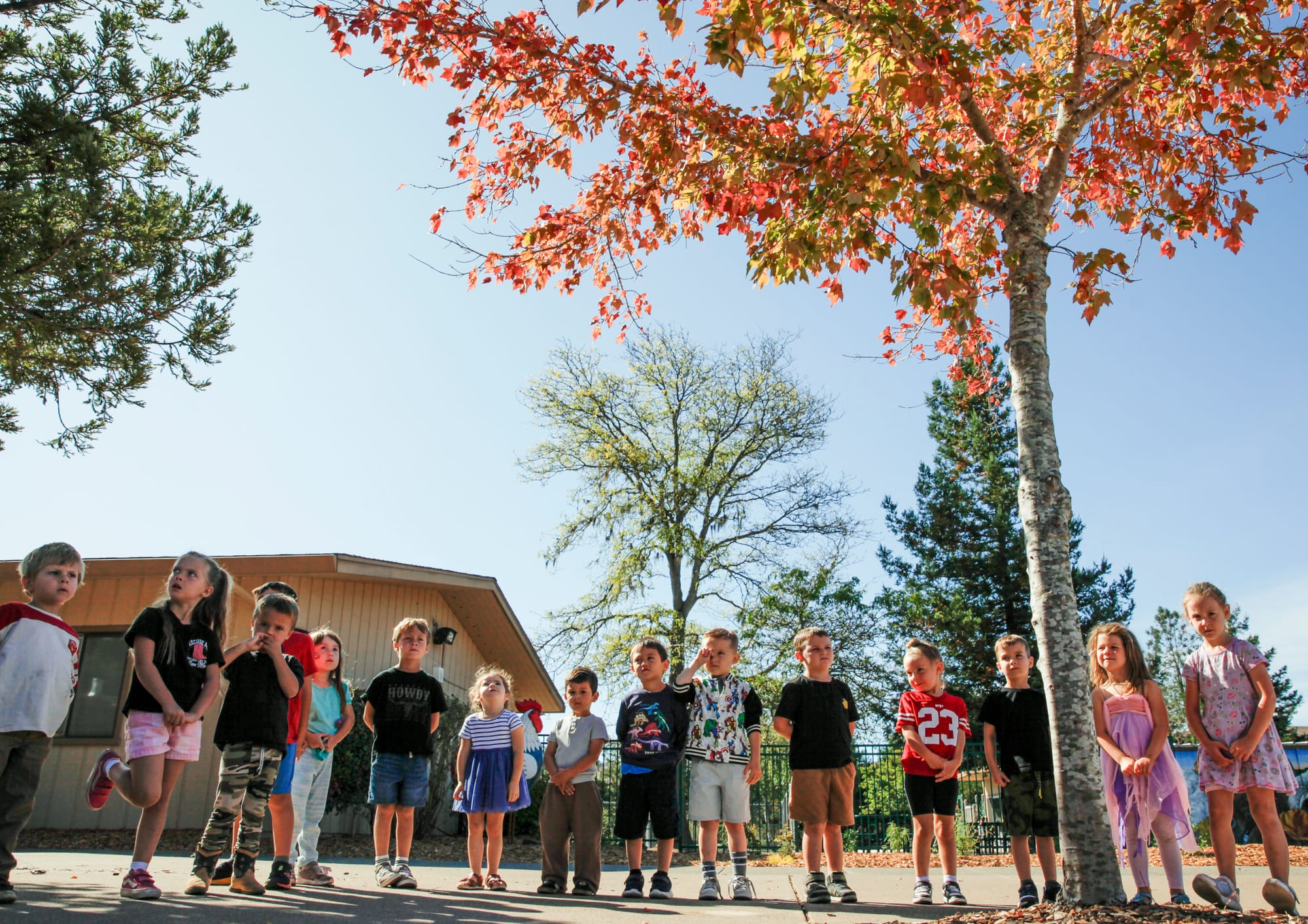
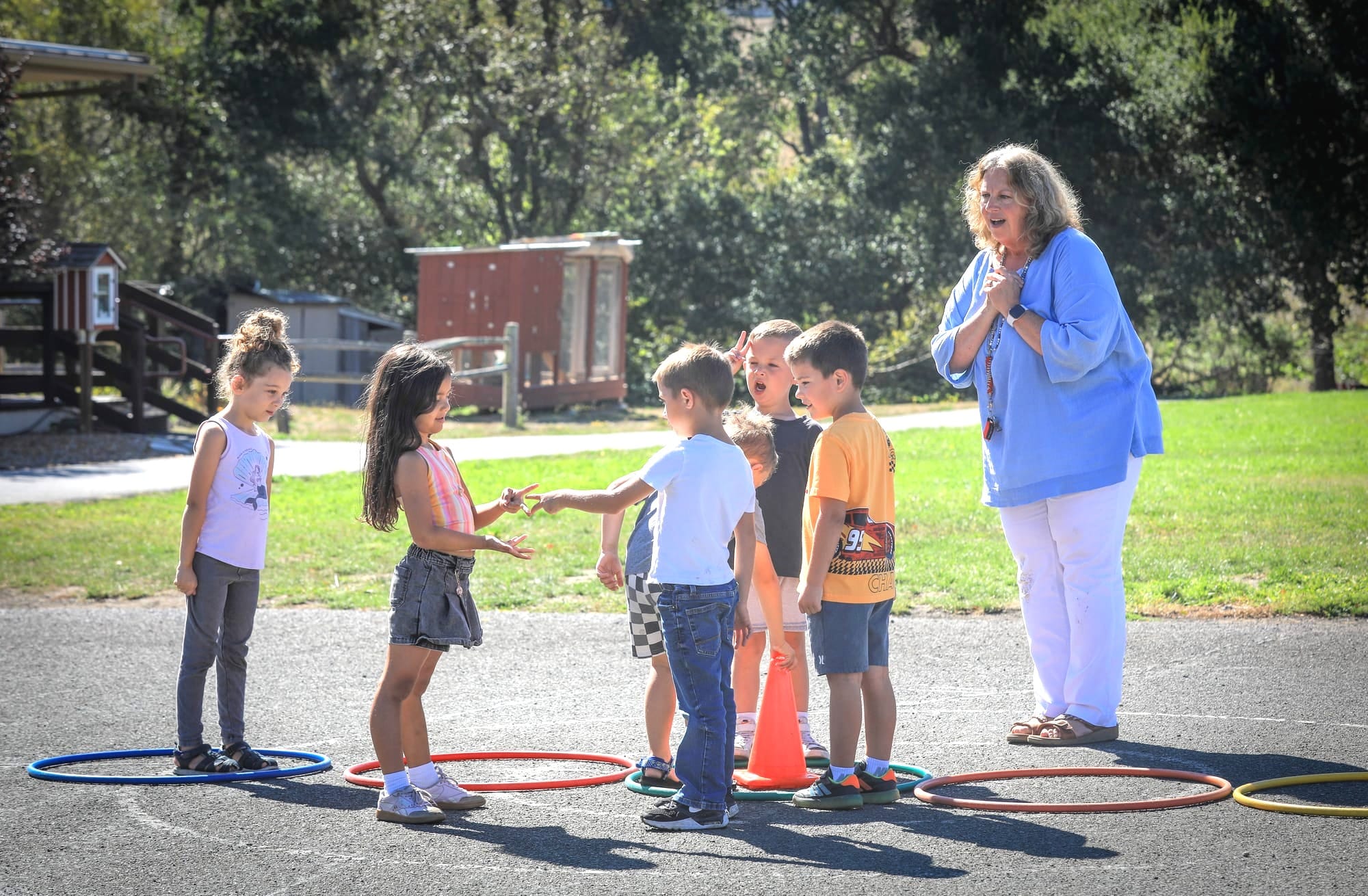
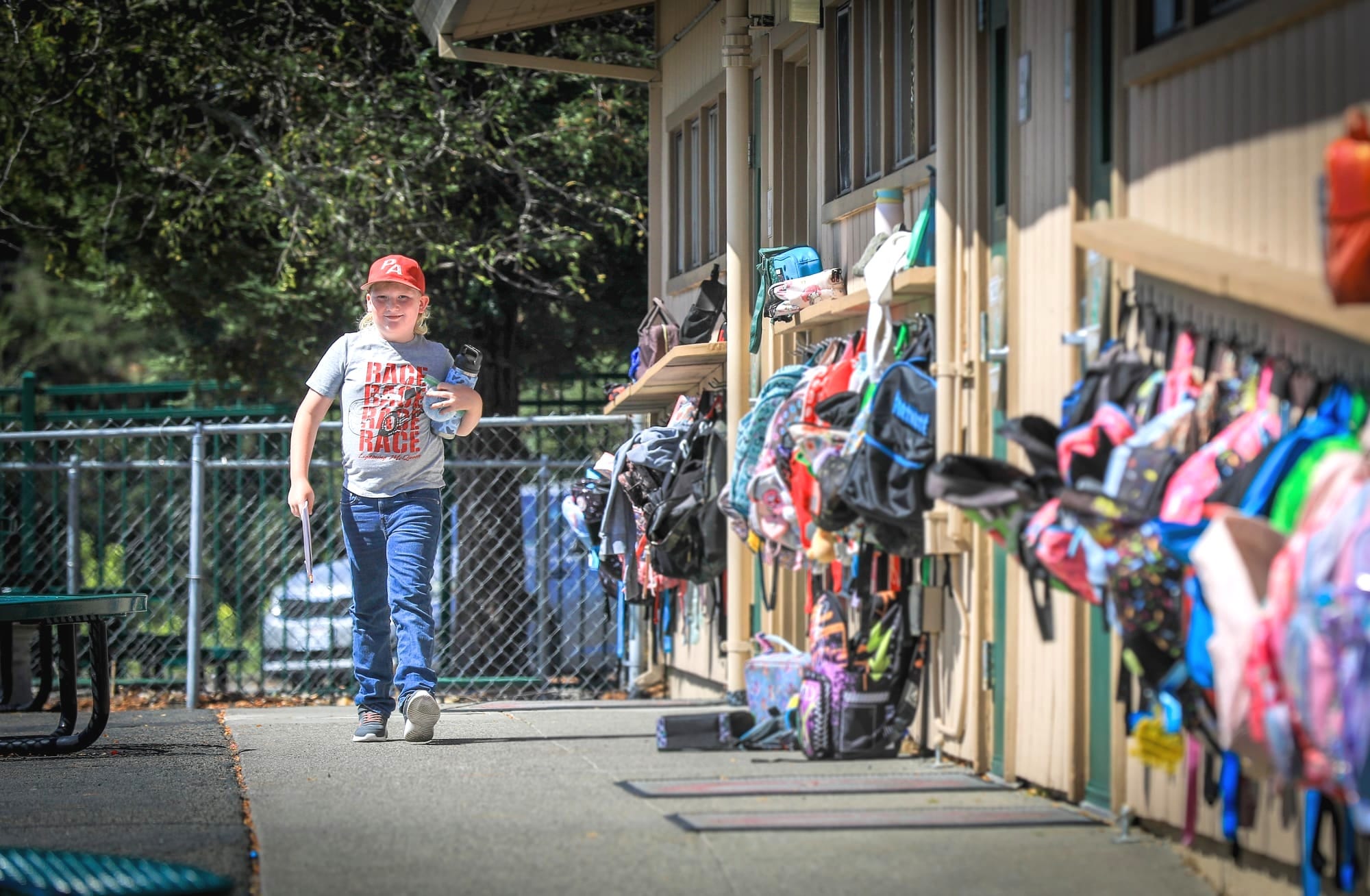
(Left photo) Kindergartners play games on the playground at Dunham Elementary. (Right photo) Second graders head back to their classroom after visiting the pumpkin patch. (Monday, Sept. 14, 2026. Photo by CRISSY PASCUAL/PETALUMA VOICE ©2026)
Its outlook wasn’t always so rosy. Between 2014 and 2022, including the tumult of the COVID years, attendance at Dunham fell from a high of 201 to a low of 147.
Around the time Larson arrived, there was even talk of potential consolidation or unification with other rural school districts, she said.
“They had a couple years of really low attendance, and the talk all over the county was that the numbers were just not happening for a lot of school districts, enrollment was dropping, so they had just started the beginnings of asking questions to the county office about what consolidation would look like,” Larson said.
Today those talks are well behind them. Enrollment is not only back to nearly 200 students, but climbing just as steadily as it once fell.
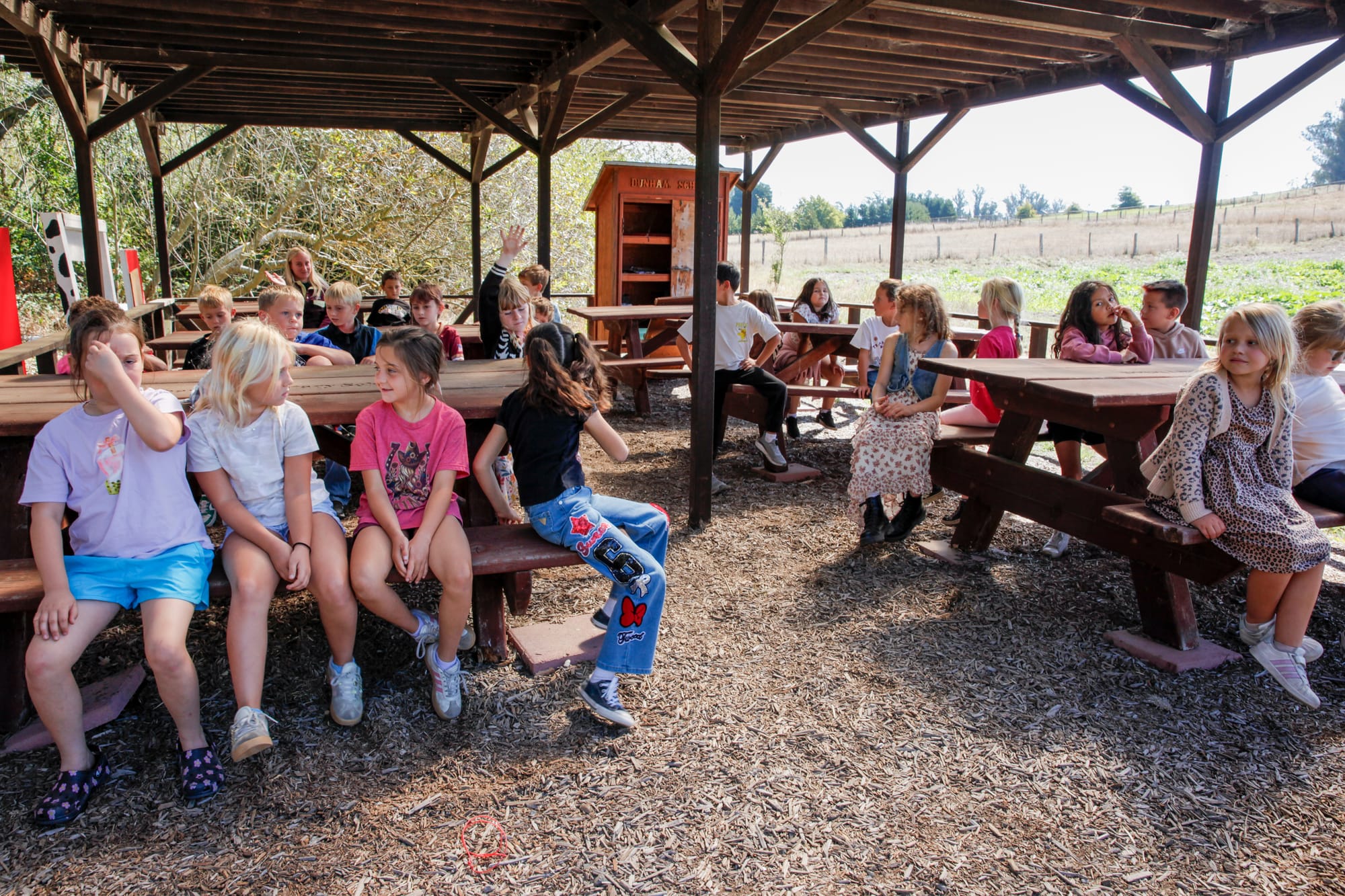
County’s only elementary-level ag program
Larson and Principal Katie Kidder give some of the credit for this recovery to the school’s agricultural program, which debuted in 2022 and continues to expand.
Today, Dunham’s Garden and Ag Program includes age-appropriate lessons for each grade. The youngest students learn care and observation of plants and animals; second graders study how living things depend on each other; and fifth graders learn about sustainability and how humans impact Earth systems.
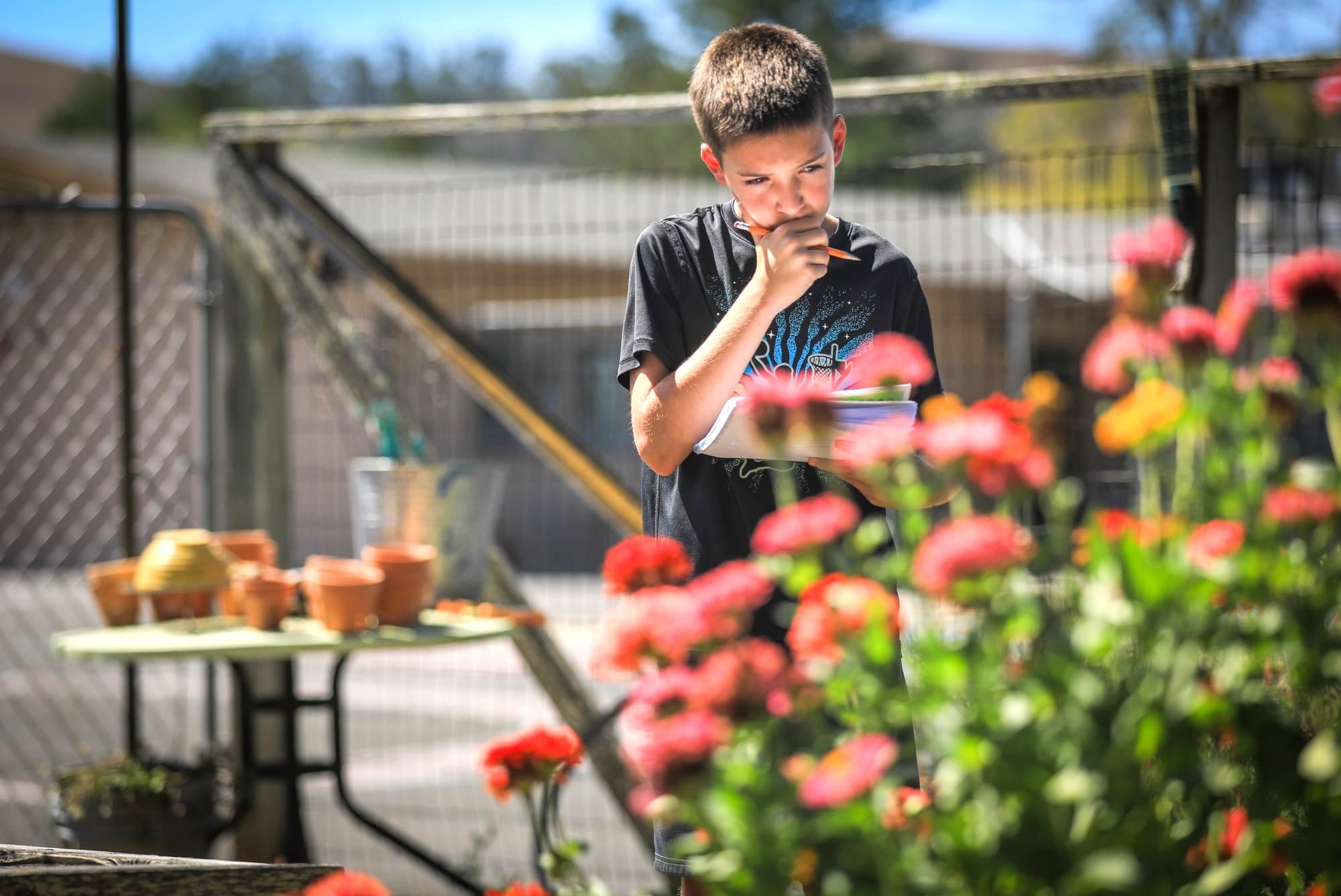
A dedicated and credentialed ag teacher, Melissa Steele – funded by $30,000 from the Dunham School Parent Teacher Organization – visits campus for four hours each Thursday and Friday to lead the lessons. Classroom teachers provide additional support.
Part of the program’s intent, Larson said, is to prepare students for more rigorous agricultural education at Petaluma Junior High, Analy High School, and elsewhere.
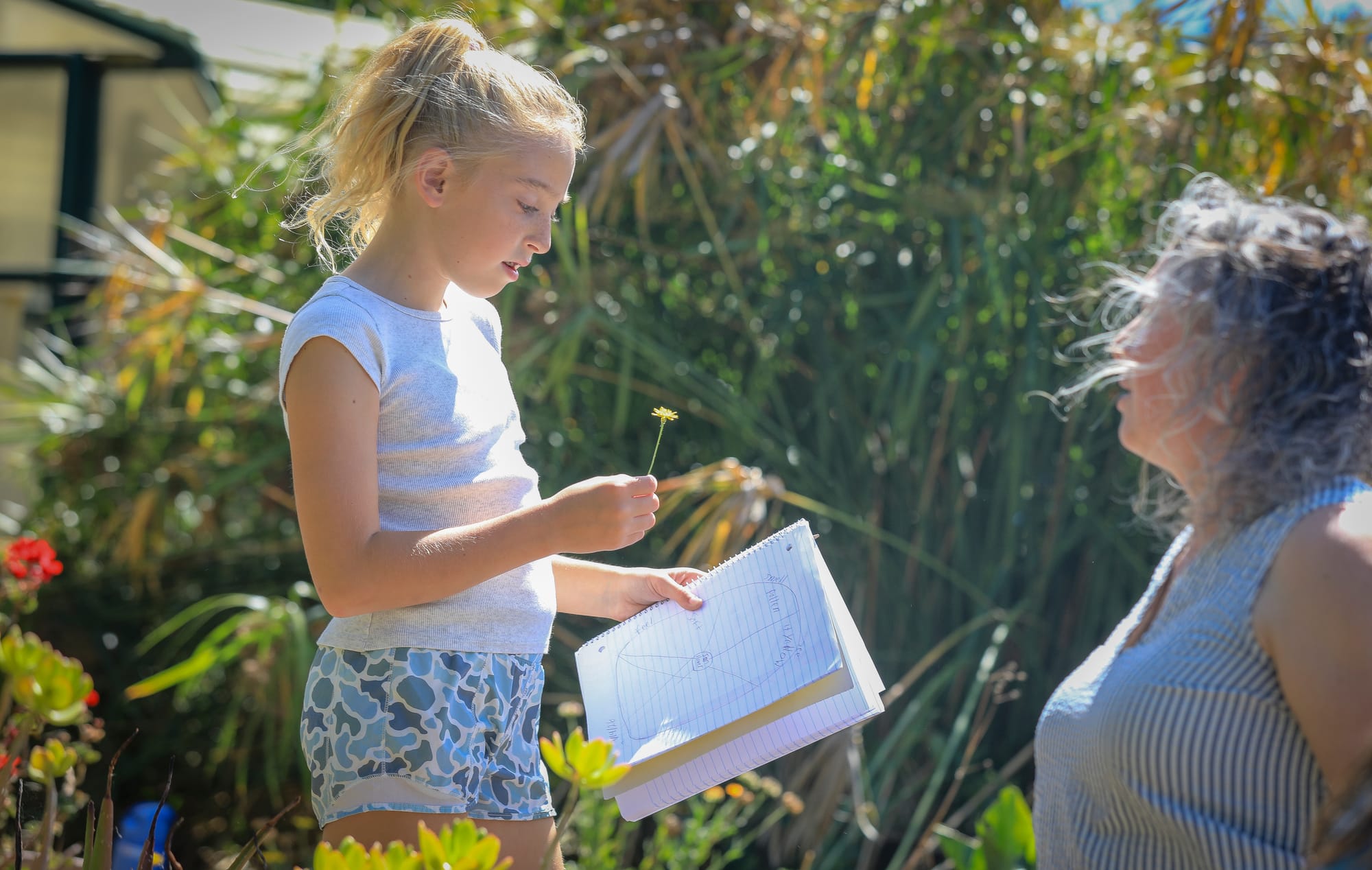
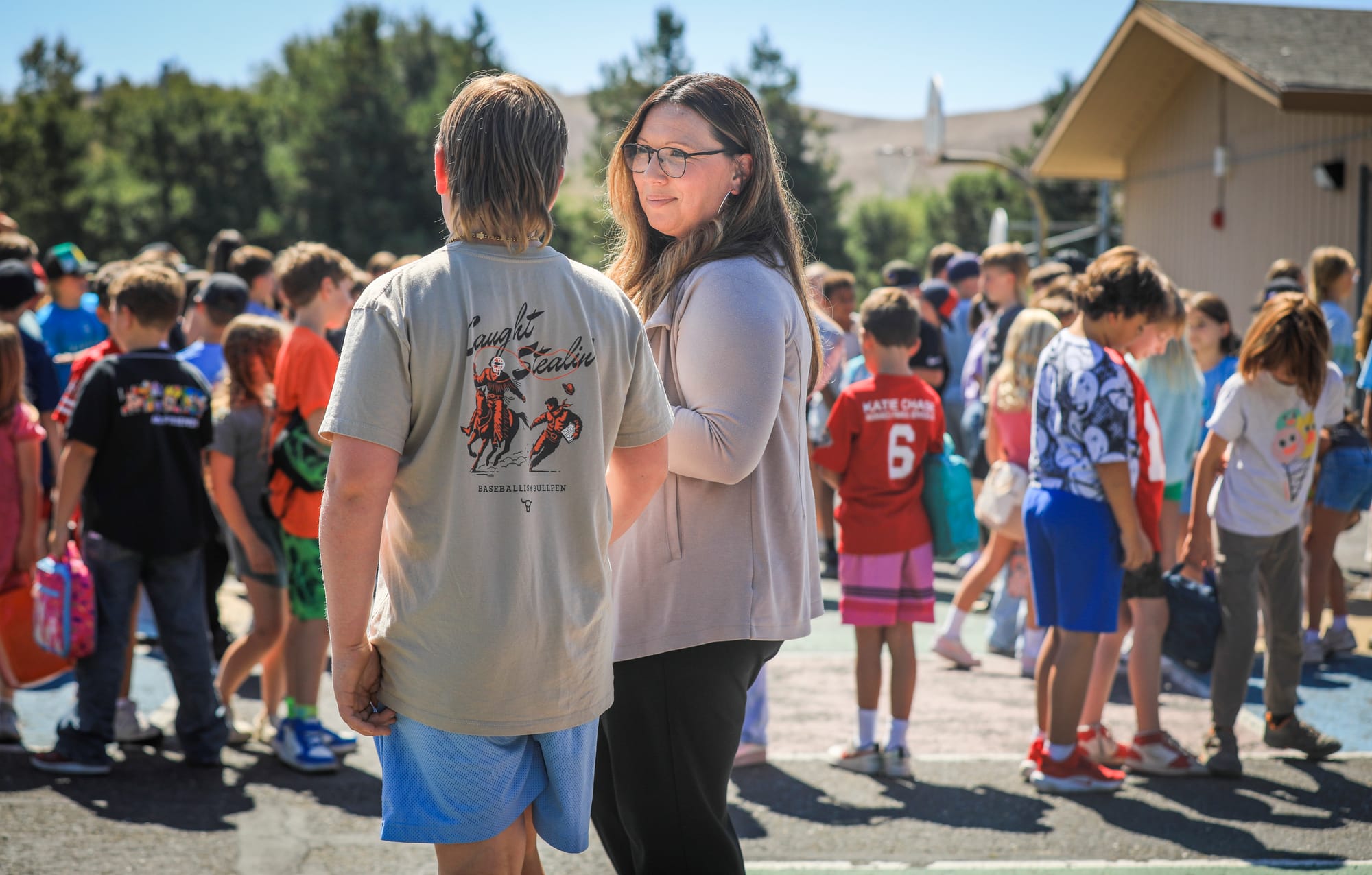
But beyond that, Kidder stressed, the program has broader goals related to a concept she calls agricultural literacy. “The idea with our ag education is putting out there to our families the idea that ag is not just chickens and cows,” she said. “It's our entire environment. It's flowers. It's soil. It's climate. When students understand the environment around them, they can become stewards of it as they move forward.”
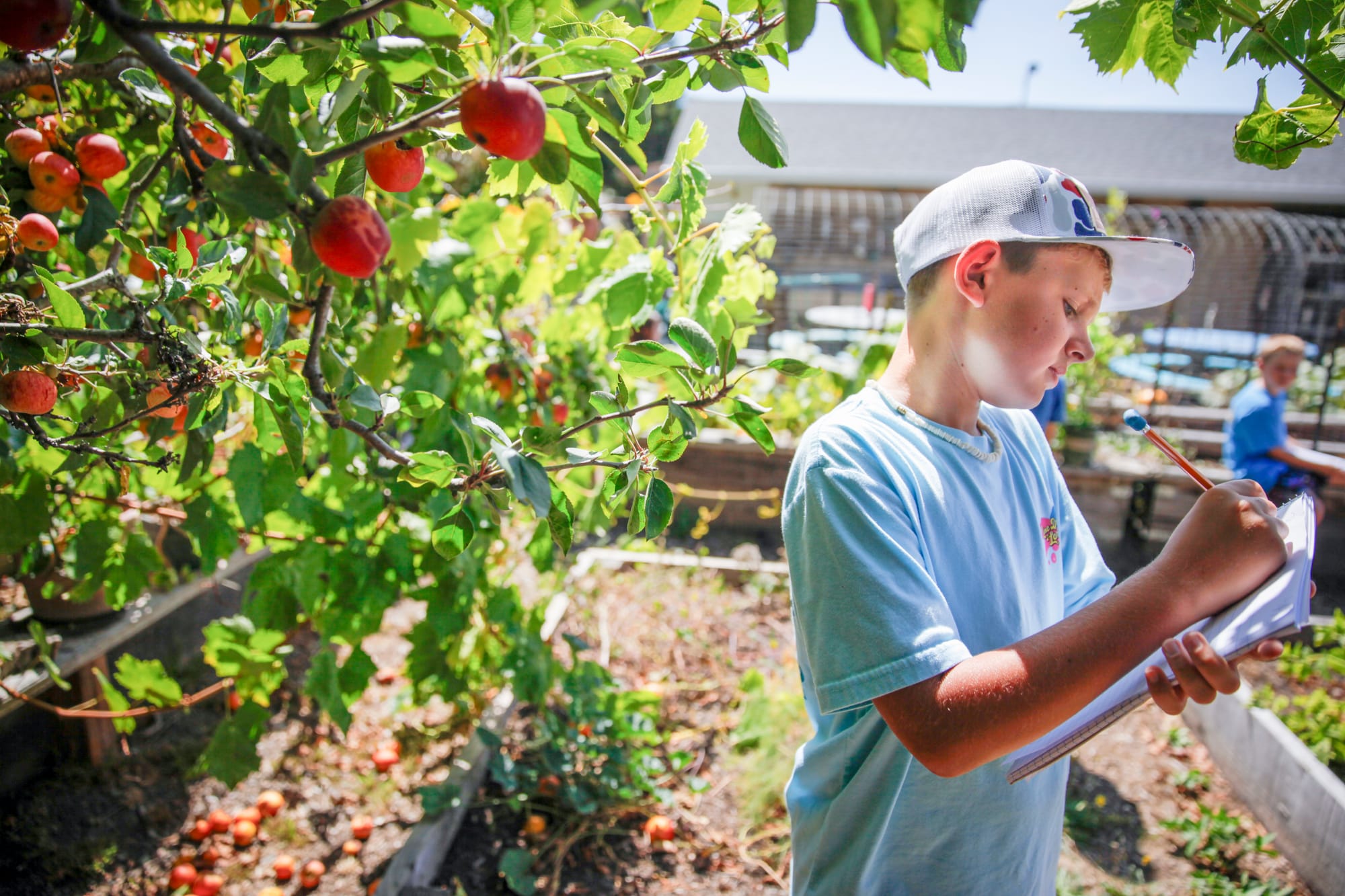
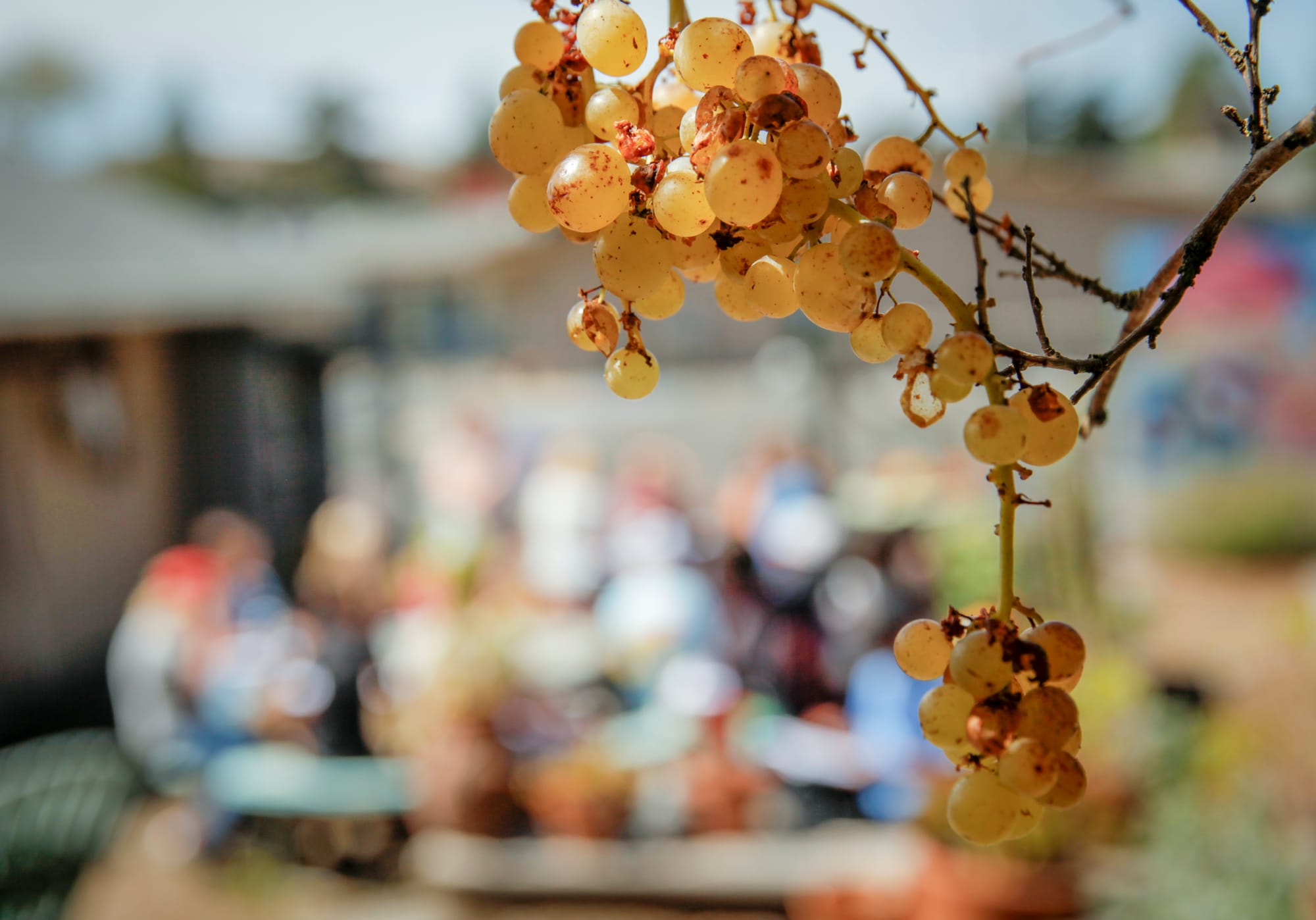
Hands-on learning occurs not only at the pumpkin patch but also via Dunham’s resident chickens, aptly named Breakfast, Lunch, and Dinner for the eggs they provide; its vegetable garden and fruit trees, including apples pressed on-site into juice and tomatoes diced into fresh salsa; and its on-site composting program, Larson and Kidder say.
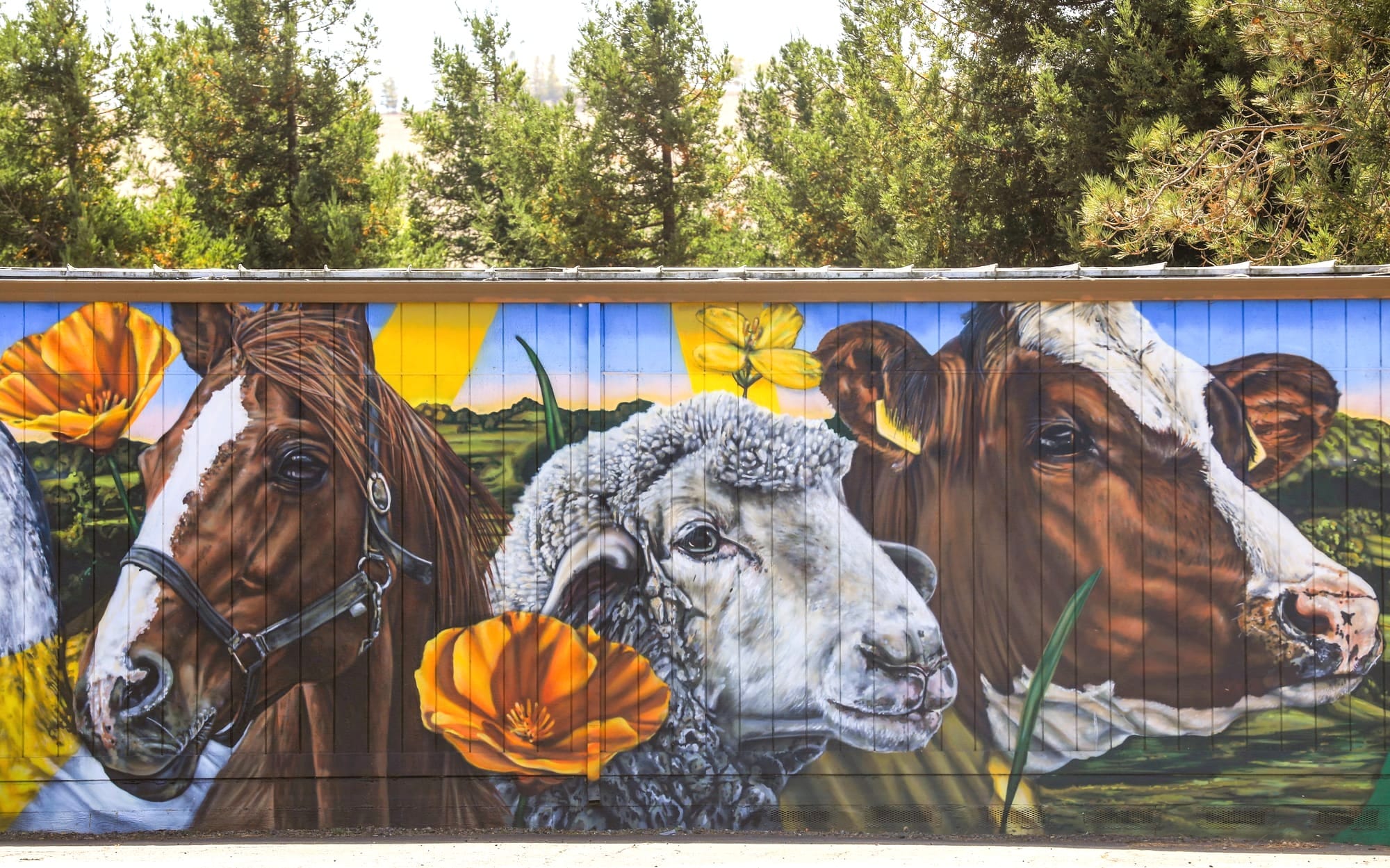
From the patch out back, students may even see cattle grazing on the neighboring Tunzi Ranch, where six generations of the Tunzi family have grown up working the land and attending the Dunham School.
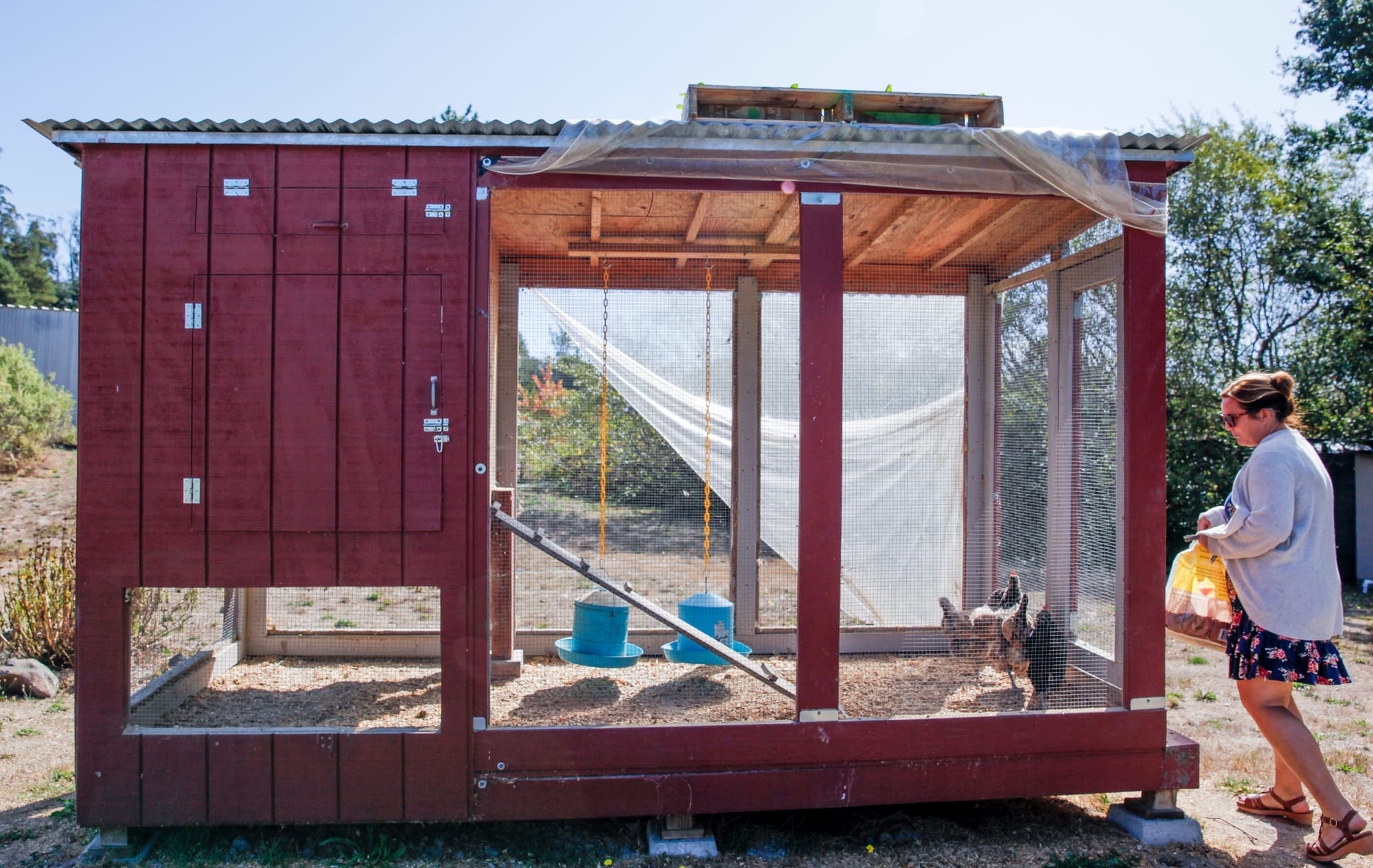
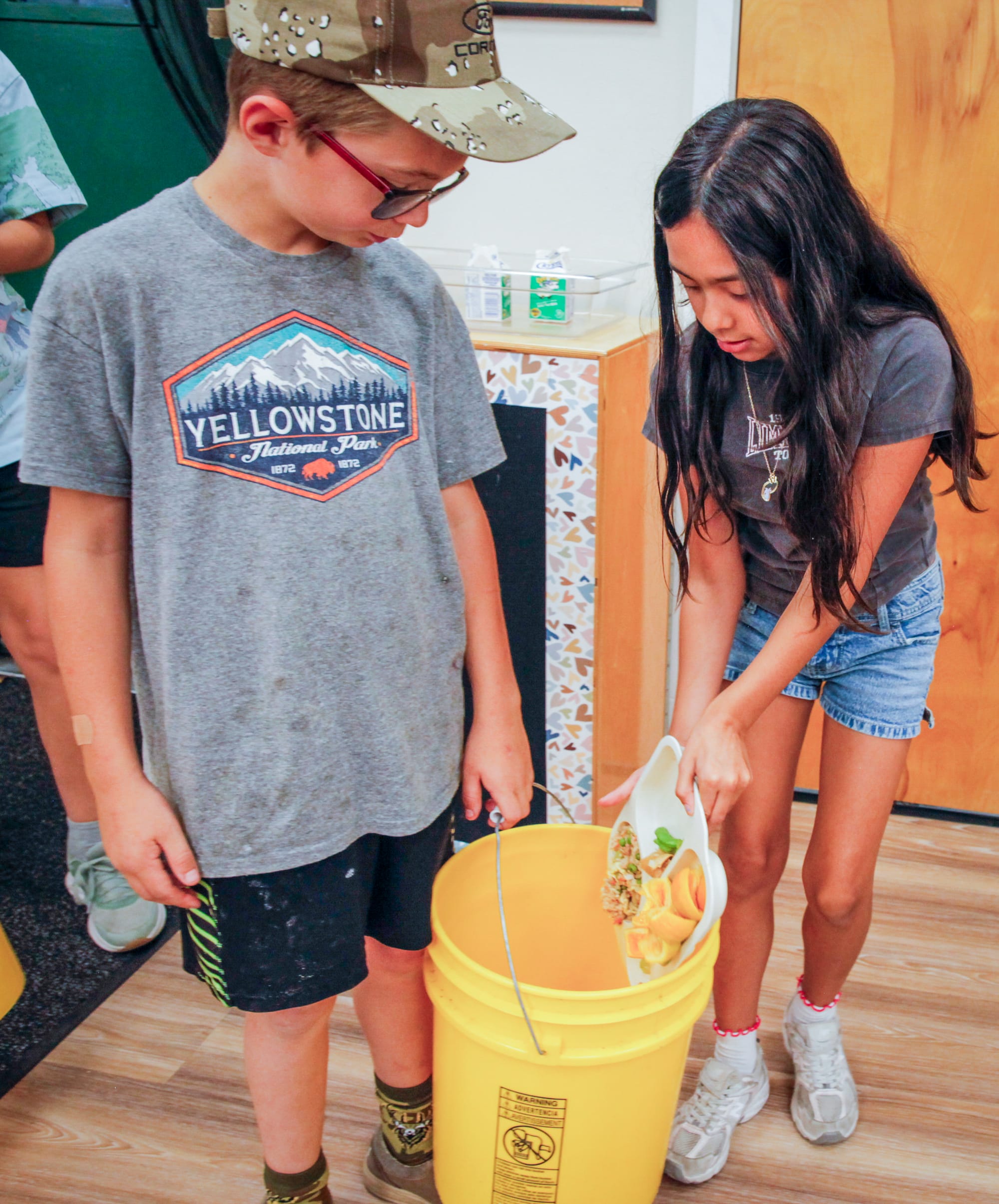
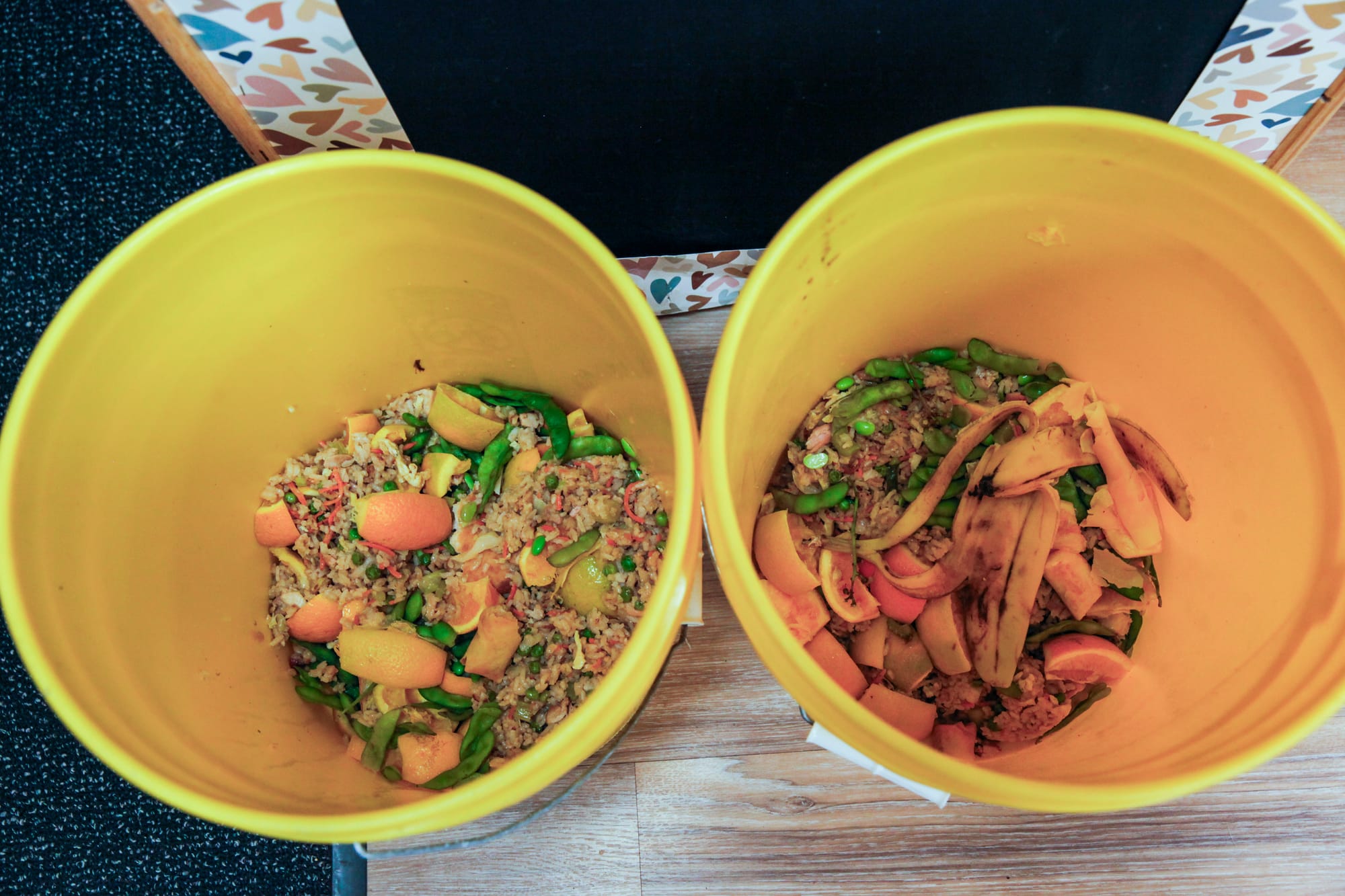
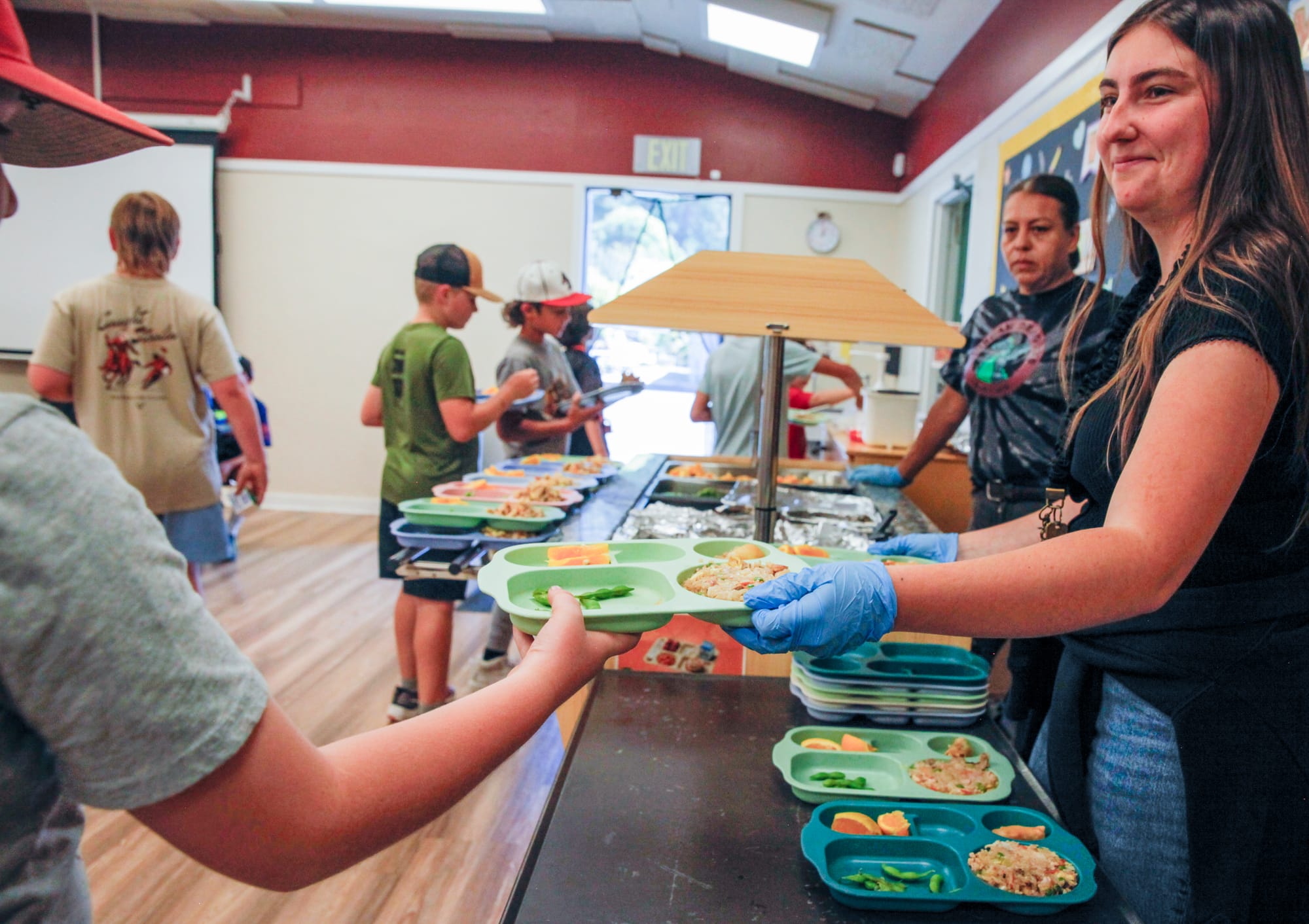
Dunham Elementary has an active compost program and recently switched lunch providers to one that does not use single-use plastics. (Monday, Sept. 14, 2026. Photo by CRISSY PASCUAL/PETALUMA VOICE ©2026)
Enrollment on the rise
In recent years, the ag program and Dunham’s entire milieu have proven attractive to many young families, both nearby and farther afield. Growing enrollment since 2022 comes despite the fact that just 18 of this year’s students live in Dunham’s seven-square-mile rural district off Stony Point Road.
Instead, Dunham currently draws the vast majority of students from neighboring school districts in Petaluma, Cotati, Santa Rosa, and Rohnert Park.
Larson and Kidder see that as a sign they’re on the right track, drawing families from other districts who are seeking a school with fewer students or a deeper connection to the region’s agricultural surroundings.
Dunham is also the county’s only school with membership in the Sonoma County Farm Bureau.
“It’s a drive out here,” said Kidder, who before becoming principal in May 2026 had already been at Dunham for more than 15 years as a teacher and parent. “So we always just say that everybody that comes out here, they’re willing to make the drive.”
Maureen Highland, executive director of the nonprofit Petaluma Educational Foundation, which provides grants to local schools including Dunham, said its unique offerings speak to the diversity of schooling options in and around town.
“Petaluma has an amazing selection of educational opportunities with the various schools that we have in the community,” Highland said. “You can find something that speaks to your student and your family and what they're looking for in their education.”
More growth ahead
Momentum continues to build at Dunham. It was just named Petauma’s fifth, and smallest, Blue Zones Project Approved elementary school for promoting healthy habits.
Together with their faculty and staff, Larson and Kidder have big plans for the months and years ahead. They’d like to plant olive trees out by the pumpkins so that students can harvest the fruit and press it into oil. They hope to launch a farmstand to share the school’s produce with the wider community. They’re exploring a potential partnership with Santa Rosa Junior College’s Shone Farm, a productive teaching facility in Forestville. They even have their eyes on a potential new gym and cafeteria.
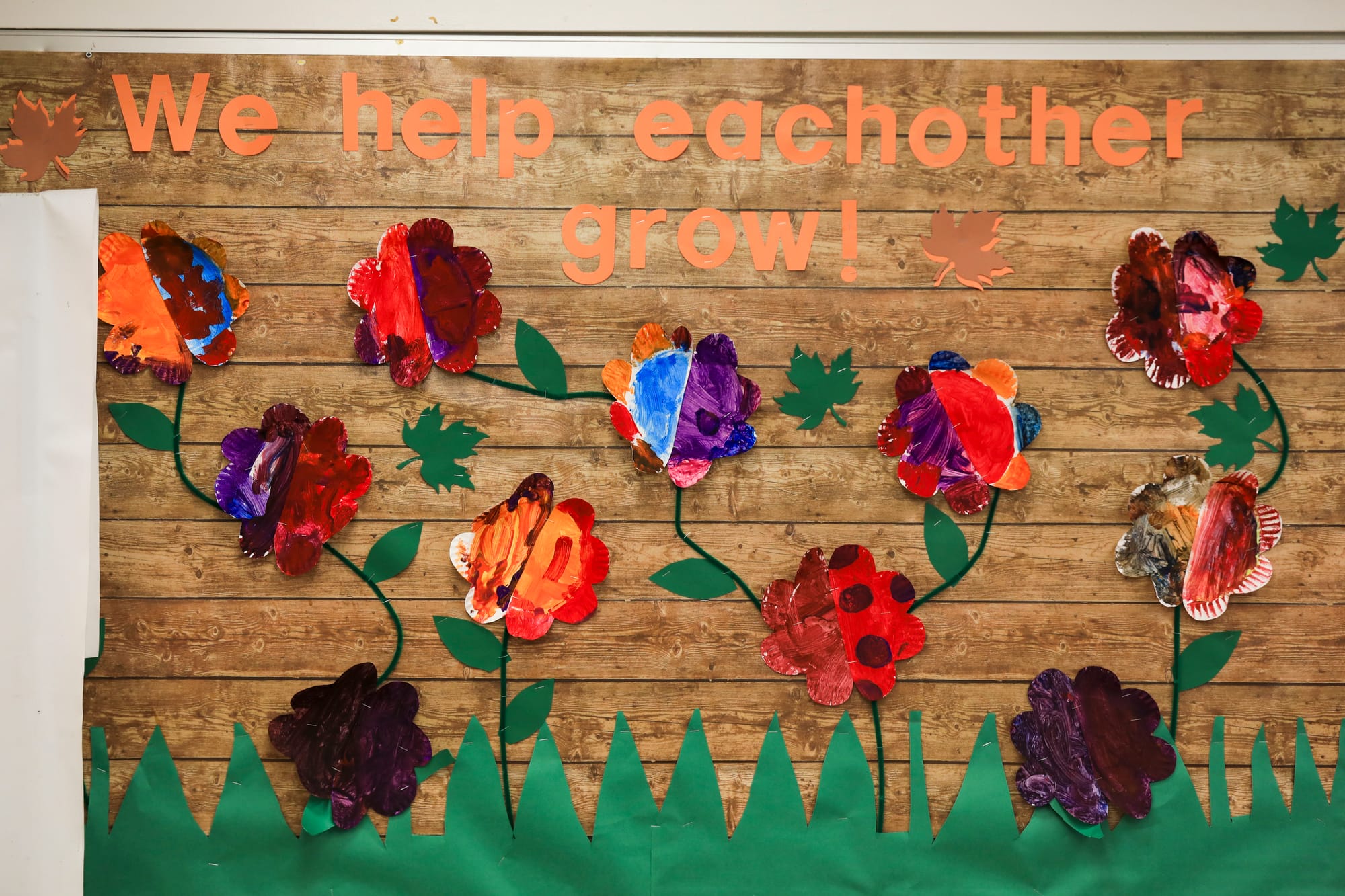
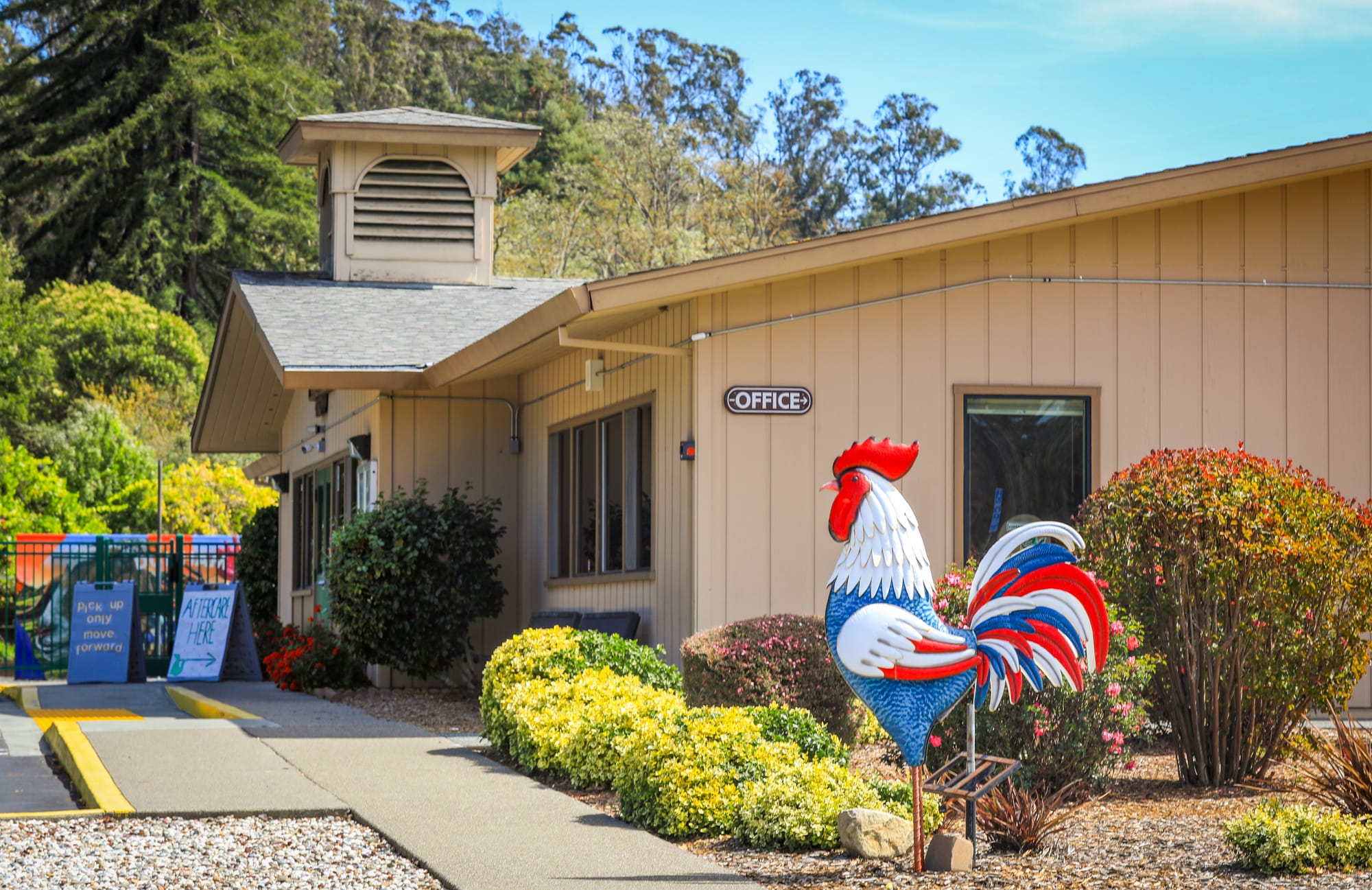
(Left photo) A billboard inside the lunch room. (Right photo) A chicken statue stands guard outside Dunham Elementary. (Monday, Sept. 14, 2026. Photo by CRISSY PASCUAL/PETALUMA VOICE ©2026)
As the school prepares for the future, it remains firmly rooted in the past. Larson says she doesn’t want enrollment to grow too fast or too far, ideally staying well below 250 students in order to preserve what she considers a more intimate and personal character – perhaps inherited from that one-room schoolhouse long ago.
As an overt nod to its history, the school still displays and uses daily a bell from the original 1870 building, mounted to the roof above the multi-purpose room in a prominent position that is visible from the road. At 8 a.m. every morning, sixth graders ring it three times from inside the building with a long, wooden hook.
Until quite recently, this 156-year-old antique represented the entirety of the school’s bell system. Now Dunham rings a modern digital bell between classes. Progress marches on.
Nate Seltenrich is an editor and reporter at Petaluma Voice. He can be reached at nseltenrich@petalumavoice.org.
Do you like our work? Support us with a tip.