Mayoral candidate Kevin McDonnell
"And this is why you really have to be committed to doing the work for the people. All of the work, not just the one issue, maybe, that pushes your button."
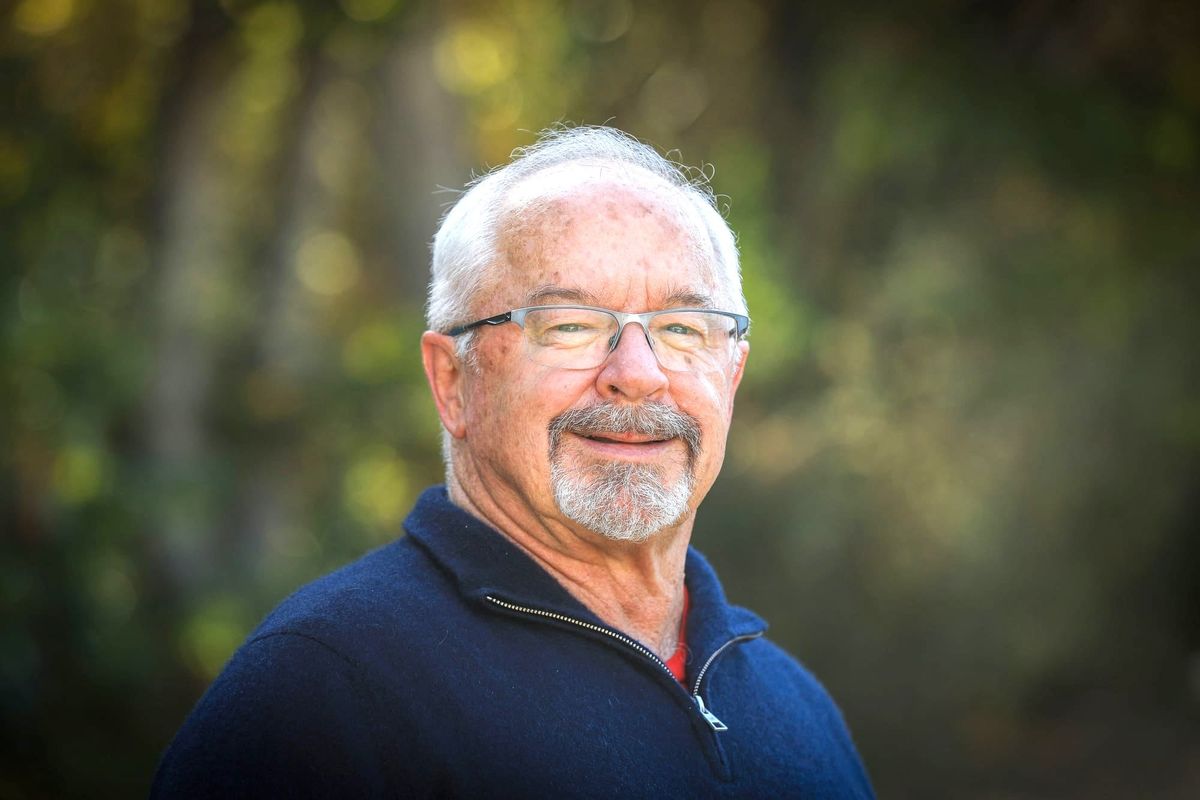
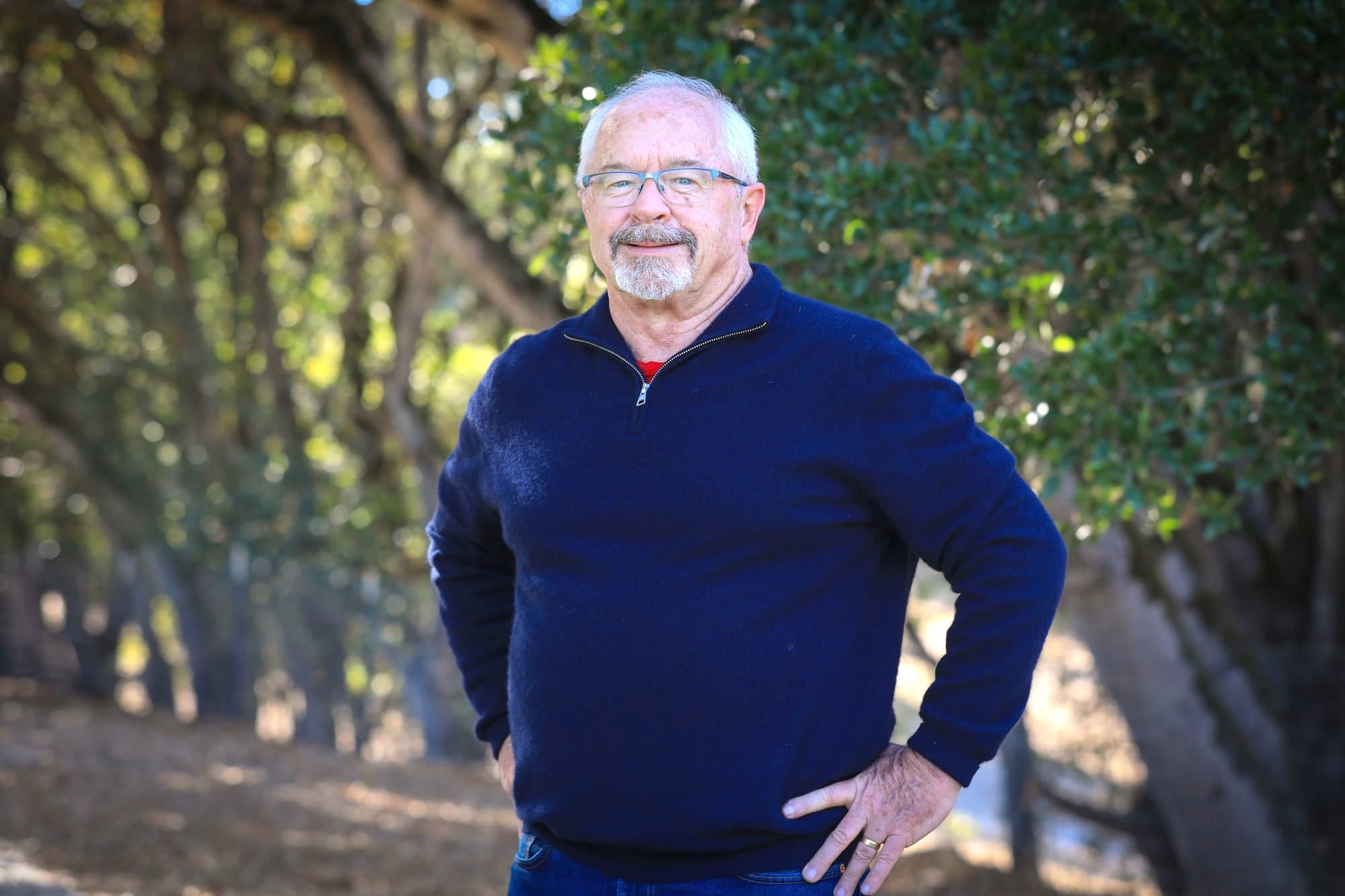
This is an interview with mayoral candidate Kevin McDonnell that took place in person on Wednesday, Oct. 7.
Unlike district-based elections for City Council, the mayoral election is for a citywide post. Candidates (and voters) can reside anywhere in Petaluma.
Petaluma Voice reached out to each of the three mayoral candidates for a one-on-one interview. Those who agreed to the interview and a follow-up photo session were asked the same set of 19 questions, plus one open-answer question, and one or two personal questions, all of which they heard for the first time during the interview. The questions had time limits, requiring answers in a maximum of one to three minutes.
For each candidate, we are publishing their answers in full. Responses have been lightly edited for readability.
As part of the interview process, each candidate was asked to fill out a questionnaire, also lightly edited for readability.
Questionnaire
Name: Kevin McDonnell
Age: 69
Career
Civil Engineer, municipal projects - mostly retired
How long have you lived in Petaluma?
I have lived in the same house since 1989, I have lived in Petaluma since 1985.
Related current and past experience?
I have been on the City Park and Recreation Committee, the Planning Commission, the Pedestrian and Bicycle Committee, the Public Arts Committee, the Sonoma County Mental Health Oversight Board, the Continuum of Care Board (on Homelessness), the Sonoma County Agricultural Preservation and Open Space District Advisory Board, the North Bay Recycled Water Association Board, The Remote Access Network Board (a tech oversight board for law enforcement), Golden Gate Transit Bus Passenger Advisory Board.
Would you care to describe your immediate family? Spouse, kids?
My wife and I have raised four children here in Petaluma. I now have two and a half grandkids.
Contact information
My contact info for the campaign is kmcdonnell4mayor@gmail.com.
https://mcdonnell4petaluma.com
Why do you think you're qualified to represent the residents of Petaluma on the city council?
Great question. Why am I qualified? I'm qualified from a long life of being involved in Petaluma, every aspect of it. When you raise kids here and you get involved in everything, it gives you a certain credibility. I've worked in all corners of the city on all different types of things.
Plus my professional background, being a civil engineer, really helps me look at the municipal world. I was at a municipal agency where I learned a lot of how a municipal agency works and how the government works. And I've worked in front of boards before. But I've just gotten a lot done in town.
You have a minute left if you want to say anything else.
Well you know, I think when you first get into mayor, maybe you've got some skills, but as you sit up there and realize how you have to bring forth all the comments from all the public and from all the council and make sure they're all heard. That's a skill that's been learned just over the four years. I thought I was skilled when I came in, but I think I've learned a lot during these past four years.
What do you believe are the biggest issues facing our city and how do you intend to address them?
Well, there's a lot of issues that are facing our city. I mean, first and foremost, we have to remain financially solvent. You know, we talk about resilience in all aspects, whether it's climate change or other things, but financially – financial resilience is important. So that would be top. And financial resilience comes from good spending control at the city and good economic development.
And why I say two things hand in hand is one we're finding that – like all the public – the inflation is really driving costs up. So with the same amount of revenue we get less done each year. The way to keep the same services, to keep the same number of police and fire, etc., is to have growth in our business sector.
Housing is not turning over, so property tax is not coming in, sales taxes are all projected to be flat. So we have to recruit and retain businesses, and that's what will sustain all the services we count on in the city.
But if you want to know other things that I'm really concerned about, right now HR1, the Big Beautiful Bill, is a ticking time bomb regarding food security in our community and housing in our community. And this is all gonna come right after the election.
And even though the county is theoretically dealing with this, the impacts are to people in Petaluma. And one of the things I like to stay focused on is how much our nonprofits provide to our community, and the fact that this burden will fall on them and the city together. We need to have strong partnerships to address that particular part.
Beyond that there's the basics. We're known as not having invested enough in our infrastructure. Our streets are not where they should be. And even though we've five-fold increased (what we’ve spent on street improvements) over the last five years, it's still not enough. The people expect more in that way. And that's a big thing I need to focus on in the coming four years.
What can be done to support small businesses in town?
Small business is a key component of the city's economic plan, but it's also a key part of our charm. I mean all of our downtown is based on small businesses, and we have a lot of large businesses, and I worry about large businesses as well. I don't want to overlook that. But we need to be focusing on the downtown businesses, small businesses, even more broadly. We do that by having good relationships with the downtown business association, or other trade groups, and answering their questions.
I've been involved a lot with the Chamber of Commerce over the last year and they've got us leaning into business-friendly Petaluma. I think you'll see more and more changes. We have to make it easier for a business to open. We have to make it less hard to get a permit, or to get a permit signed off. Those are things I hear in the community when I talk to people. But small business is tenuous and anything the city can do to support them is important.
One of the ways is to keep a lot of people in our downtown. We certainly have a fun downtown. People in magazines all over rate it, tourism rates it. When I go out of town, people tell me they just love Petaluma, love coming here. It's like, yes – and we need them to stop here and drop some cash here to keep all our little businesses going. It's hard to be a small business anywhere and in this time, particularly, it's a challenge. So the city doing marketing work to make sure people are still coming to Petaluma, and the city doing work to make sure that we're not the obstacle for business success, those are things to keep our eye on.
How do you intend to uphold the city's agricultural roots and work with local farmers and agriculture supporting businesses?
Petaluma was built on the backs of agriculture and there's still quite a bit. Well this is an extremely hard time for agriculture. We see dairies going out of business. And we see others. But we also see a surge in a lot of farm-to-table-type folks. And we can put an effort into making sure that the young farmers, incubator farmers, things like that, do well. Now that's all pretty much outside the city limits. There is some potential inside, but inside the city limits is where all the support services for farm and ag things – the businesses that support the farms. We have to make sure that granaries stay in business and the creamery stays in business. And you know, when we talk to the creamery, they're talking about expanding here rather than losing this market. You know it's really important that they know that we're on their side, that their business is important to downtown. Having the relationship with those owners, that’s important. That's why I go everywhere and try to meet everybody because you can't really know all the issues unless you've been having chats with all sides of all issues.
How do you intend to collaborate with people with different ideas, political affiliations, class, race, and gender?
Yeah, that is the key question. And I think it's something that I've been particularly good at in the last four years. I'm out visiting with every group. I mean, we think of the big-ticket items that maybe have been in front of the council a lot, but they're not the only issues out there.
I've been visiting with Haitians who've lost their temporary protective status in town and what it means to them. With no status, you have no job. With no job, you have no house. What can the city do there? I listen really well and I'm able to connect with other groups who can provide help to these people.
I think another one is our race issues in town. Most folks will say that there isn't a race issue, but they just mean there isn't one affecting them. There is one affecting people and it needs to be highlighted. That's why I was so glad that the council took the ‘ICE Out’ ordinance and pushed it forward. Because, you know, certainly there's a lot of harm coming from overzealous ICE enforcement.
And Petaluma has lots of communities that need attention. Now, very often there'll be a big crowd in council chambers and they'll say, ‘You made a decision different than most of the people in the room wanted.’ And we'll have to say, see people in the room represent those who are opposed. Let's give credit that we listen to those who were for the idea, and others.
So being heard, being respected, doesn't mean that you automatically carry the day. Sometimes you can be listened to and respected and not get the outcome you wished for. That's hard for everybody because some decisions are binary. Most decisions are not binary. Most times you take that input from people and you're able to modify original proposals, you're able to reach out to other parties and resolve conflict.
What are your thoughts on the animal shelter services plan? And since you were on the council, would you have approached the shelter issue differently through the years.
Yeah, the animal shelter thing is certainly something that warrants a lot of attention. And I'm sorry for the way it went down. It was because there were problems that didn't get addressed quick enough. The whole story starts in an awful way with a terrible confrontation in 2018. The whole story starts before anybody who's at the city now was there. Before any council member. And it just hasn't been ship-shape since.
I love what we've done now by bringing in Sonoma (County) Humane. We now have a contractor who is a large nonprofit, with skills and with a solid board behind them. And we didn't have that at the end with North Bay Animal Services. It is gonna cost the city a lot more. I mean we were paying half a million and now we're gonna pay a million and a half. So with greater funding comes greater service. So that's good.
But you know, all of the things that we were trying to get the animal service to get better at were coachable improvements, we thought. But North Bay was not interested or capable in growing to be the organization that their contract called for. So we were on the path to dismiss them, when all the Lake County problems came to light. And when that happened, we immediately dismissed them. So we feel that we were very responsive to the grand jury, and to the actions that we saw at their other facilities. Alas, we don't have jurisdiction over their other facilities, so it's a little hard to poke our nose into that. But everything that we find, we're turning over to every larger authority, the county, the state, who can pursue those claims.
What is your stance on the future of the Petaluma fairgrounds?
The Petaluma fairgrounds is just coming into its own as a more robust public amenity. You know, we're starting to engage now with the public. We've retained someone who does the public engagement, to really hear the public voice. And as noted, you've seen this on Facebook, I'm saying the first thing we have to resolve is the Speedway. We either need to give them a long-term contract or figure out what else is going on. And that's what I mean by public engagement. I mean we could all just say we support it and move into it, but we have to figure out if that is the community's will. There has to be a way to hear the community. Some people find that awkward. They think that if they know the answer, you should move to that answer right away. But public process is key.
The rest of the fairgrounds will be fun to sort out. I mean we know we want a resilience center there for cooling and for disaster relief for people. We know we need to have an evacuation center for animals as well.
Just to follow up on that question, do you support the Speedway or not?
Yeah, I like it a lot, but it has to be the will of the people. Which puts me in a difficult position of not picking a team. Neither team likes me.
What is your stance on the condition of our roads?
Well, the conditions of our roads are evident by the data we're required to provide to regional government, which shows our ranking is very, very low. And we know that. If you've driven around town, it's bad. We're putting $15 million a year now into our roads, and when I started on the council it was only $3 million. But it's just not enough. We have to figure out how to drive more money towards fixing roads. And the question is, where do we take the money from? Is it new money? Like I was talking about the importance of economic development, more spending doesn't necessarily buy you more, because things cost more. So do we find new revenue or do we cut other departments to put money into here? And those are tough choices that the council has to wrestle with. Yeah, we should do more.
What is your stance on the issue of affordable housing in town?
Affordable housing pretty much doesn't exist in Petaluma. It's very, very difficult and it has negative consequences to not have affordability when working class families can't afford to live here, when families in general can't afford to live here. Our school population has gone down by 25% in the last 25 years. It changes the complexion of who we are as a town. And I don't want to live in a town that doesn't have kids in it. And so I work hard to try and create opportunities to build housing that is more affordable. You know, last year the city only built 100 new houses. The city only opened 100 new homes for people. Of that, nearly half were an affordable housing complex. Then there were the ADUs – accessory dwelling units – so only 30 new market rate houses were opened. We need to have houses that people can afford. More than ADUs. More than the capital-A (affordable) subsidized housing. We need to do more.
What is your stance on parking issues in the city?
Good question about parking. You know, obviously downtown parking is somewhat congested. Shopping center parking is not congested, but we want people downtown. Parking is a sign of a thriving downtown. Street parking will always be tougher. But parking in the parking structures is always available. And the question is how do you want to fix it? If you want to fix it by building a new parking structure, show me how you're gonna fund it. Show me which building to tear down to put up a new building? These are hard questions. So when people say I hate parking, it's not that helpful. We all hate parking. What we need is collaboration on achieving new parking. Or, viewed a different way, what if we didn't drive that much? What if 5% of people didn't drive, didn't park downtown? What if we built bike lanes so that people could get downtown? Then you would have a parking space. Your traffic would be better.
What is your stance on Flock cameras and Automated License Plate Readers in general?
Yeah, Flock is coming on the market as a license plate reader technology. The data resides in the cloud. It's a very future-y tech thing, but it has law enforcement benefits, safety considerations for each of us. But it has privacy concerns. So the answer to just things like this is good regulation, enforceable regulation, lockdown regulation. So we need to know that data that's collected doesn't go somewhere else. We need to know that data that's collected is not misused. So good regulation. But we also have four cameras in Petaluma. Santa Rosa has 150 cameras in the city. I suggest that that's probably enough given our low crime rate, a little that we show has results, positive results, is probably the right number. Now let's get the regulations right. We might even consider regulating private Flock cameras.
We actually have, I think if you count all of them, I think there's eleven. But there's four city-funded Flock cameras, right?
Yeah.
And we don't know the full number because private cameras are not necessarily as easy to document to put in the statistics.
What is your stance on immigration and immigration enforcement operations?
Immigration is a national concern, a crisis, and immigration enforcement becomes more local. I would love to see improved immigration policy nationally. We've just avoided improving the regulations and we have global migration crises. So these are big issues that really need to be addressed. But locally what we know is that ICE has created problems in our county, and all of these immigration issues, they're civil infractions. There shouldn't be a gun involved in anything that's happening with ICE. If someone's in a jail and their immigration status is inappropriate and they have committed a crime, then they should be deported. But what we're seeing is violations in the civil world where that shouldn't be happening at all. And our police should not be involved because it's not criminal.
What do you know about ongoing concerns at mobile home parks?
The mobile home park residents are under real threat from capitalist park owners. The park owners want to exploit the opportunity to charge more in ground rent, but the park residents have a fixed asset, that they can't move off the land. So this is a vulnerable population. That and they're senior and most of them are of modest means, fixed incomes. So when new park owners come in and jack up the base rates for the park residents, that's a really terrible thing and the council has put in strong, strong ordinances to try and prevent it. We're working at a state level and a regional level to prevent this kind of predatory action.
What is your stance on data centers?
Data centers have no place in Petaluma, and frankly Sonoma County. I get that everybody's using AI now, and so in a way everybody who uses AI is complicit with data centers. But there's better places to have them and we have strong rules that prevent them in Petaluma and we're putting in place even stronger rules to prevent them in Petaluma. I see them going up all over the place in Nevada and in the Central Valley and all around the country. We can't say that they won't happen, but we can say they won't happen here.
What is your stance on the city's fight against climate change and what can you do as a mayor to help environmentally?
Yeah, climate has sort of fallen – been pushed off the radar, or at least pushed out of the fundable resource by the federal government. But in Petaluma I believe we should be continuing to take a leadership role in addressing climate. I love that we had the largest floating solar over our wastewater ponds. It provides all the electricity for the sewer plant right there from floating solar. I love that we're changing to an electric bus fleet, and that we're doing so many other things for our buildings and whatnot. And we're supporting organizations in town that are addressing this. The thing that bothers me is that climate problems are gonna come find us whether we act or not. So we should be acting. The El Niño this year is just one case in point. As the mayor, I can lead on getting that message out. I can lead on budget decisions that put money into solutions.
What is your stance on supporting safer school, bike, and pedestrian routes in town?
I'm a big fan of all kinds of safety, any kind of safety. So safe routes to school, that's a big one. Safe biking is also a big one. I love that we just won the Helen Putnam prize from the League of Cities because we did audits at every single school about what would make it safer for kids getting to and from school. I mean, that shows great commitment on the city's part. I love that part. Also, the climate thing we talked about earlier, it runs through less car trips, be it taking transit, be it taking a bike or walking or whatever. If we can get some people to change their behavior, not all, but some, because we put in a bike lane for people, let's find out if we can get people out of their cars. You know what I didn't get to say is that after eight years of trying to get SMART (Sonoma-Marin Area Rail Transit) to run into downtown, they finally got the last piece of SMART path funded into Petaluma. Brewsters to Lakeville. My 500 feet. That's eight years I've been chasing that.
What are your biggest concerns about the budget as it stands?
Well, a variety of important things. One of the things you worry about in the budget is expense, the other one is revenue. So let's start with revenue. It's predicted that our tax revenue will go down. It's predicted that nationally the economy is going to hit a downturn. And when that happens, you lose your revenue. So what services do you leave out? Already, we're predicting that into next year and then trying to figure out what the cuts will be. We know the dollar magnitude, but I ask at council meetings, ‘Well sure the dollars, what's the service we're cutting? What is the consequence the public sees? Or what is the deferred maintenance that we're going to have to pay more to fix in a future year?’ So we're trying to address these before the crisis. Also, I've talked to past city managers and past council members about how their economic crisis has played out for them, and decisions they might do different. One, they said, is to start with a good reserve, which we have, and an operating fund reserve, and don't tap into it because next year could be worse. So make the hard decisions sooner – rather than wait and push them off and use your reserves – because they're more painful in the future. So that's really a big part for me, is that our revenues have dropped and we'll have to do different things.
What are some past council accomplishments that you think were particularly well done?
There are a number. Just the fact that we've grown our budget and are delivering more for our community. But underlying why we have a better budget and more services now is that in 2020 I was on the council and we passed Measure U, the tax measure. Huge thanks to the public for supporting that. Because that put the money into the city to jumpstart the engine. We were failing and this put the fuel in to start it. Now, Measure U is some $15 million and the city's budget is $400 million. So it's obviously not everything, but it is a substantial jump. And when we put that money into staff and other things – when you have staff, they can get grants. They can bring in outside money. So Measure U, like I say, is a jump start. It brought in outside money and it's helped us grow and achieve well beyond what we thought. When we came our services were threadbare, now our parks look better than ever. We're ambitious and we're building things like a skate park and things that just wouldn't be visualized in times prior to Measure U. But there's just so many things that we work on. We passed the housing element, that's very pro-housing, it changed our rules so that we incentivize more affordable housing, and the whole council that did that. You know, in the past four years I really liked that the council has pulled together on so many issues to achieve, things that could be fractious. A lot of the hard work we found common ground on and we got things that we achieved. So there's a lot of good going on in Petaluma right now.
How do you intend to support local police and fire departments?
Police and fire are critical services in our city and right now is the best time ever for police and fire. We're fully staffed in police, and that hasn't been true for 25 years. We're opening another fire station, so we're going to be adding more firefighters. Now you know, I have to give credit where credit is due. The portion of the public safety building that contains the fire station, and the crew that we add there, those costs will come from a tax measure that was passed countywide. And for that measure, we said this is what we want to do. So now we have more EMT access to every corner of the city. It's gonna make us safer for sure, and we gotta maintain that funding level. One more thing is, we put the police at the new public safety building because the old building is an old mortuary and it needed over $5 million of repair work that we were going to budget into last year. And I said it makes no sense to put any more money into a building you don’t like. Put that into new and proper facilities. So yeah, I'm a big supporter of getting police and fire right.
You had a bankruptcy that you talked about on social media. Can you explain what happened with your bankruptcy, if the $150,000 was correct, and a general idea of what kind of creditors they were, and what you learned from that experience?
You're saying that social media reported on a bankruptcy that I had 21 years ago.
Yes, you responded to it on social media.
True, true. Yeah, well the first thing to say is that yes it did happen, and more or less the facts of it were all reported correctly. And it was obviously not a good thing and it was a tremendous low moment in my life to have to deal with that. But you know, we do have low moments, and we have to figure out how to build back our lives again and we have. And so there were lessons in there, you know, we became better at every part of our lives. But, yeah, things from 21 years ago that are brought out in the mayor's race, that's pretty much a low point in Petaluma politics.
Do you think there's any relevancy to the question?
So your question is whether my 21 years ago financial acumen is up to dealing with the city's budget at this time? Well, first of all, luckily it's not been an issue. And at the city we have lots of teams of accountants, auditors, all those people. So, Kevin advocates for a certain capital project or maybe one more cop on the street, but Kevin does not decide how the budget works, nor does he ever see the accounting side of things. So there is no relevance at all in this. And as in most things in the city, there's a huge transparency. Everything about the city budget is seen by everyone in the city. So, you know, yeah, there's no relevance to that at all.
This is an open-ended question on anything you think that I failed to ask or that you think the public and your voters need to know, something important that either wasn't raised in this interview or that you think is something you want to get across to your voters.
Well, yeah, we have covered a lot of ground in this interview. We've talked about how important it is for the city to stay in financial good shape. We've talked about how important affordable housing is here and improved roads are here. And, to stress again, we're doing great things on the climate front. Those are all important things.
What isn't seen at this time is what I do outside of council chambers, and I'm on several other boards. I've sat on the homelessness board for years, and we reduced homelessness from over 3,000 in the county when I started, to under 2,000 now. I worry that the coming financial restrictions from the feds and state will reverse that trend, so I'm staying on top of that hugely.
We brought in grants that most cities our size haven't brought in. There's an encampment resolution fund that's $8 million to $10 million that just Petaluma, only Petaluma got in the North Bay, and it's really helped us with so much of that issue. I also sit on the mental health oversight board for the county. And in that one we've been able to put the cost of the Safe Team which Petaluma created with the help of PPSC (Petaluma People Services Center) and then franchised to Rohnert Park and franchised to Novato and franchised down to San Rafael. Everybody loved the program Petaluma put together. You've seen the team around, you see what good work they do – that cost comes out of county funds now because of our participation in things like Measure O, mental health oversight.
And we have also advocated strong on county Ag and Open Space to get money into things like the Petaluma River Park, and Friends of the Petaluma River, and I'm hoping that we do great things with the North Petaluma River Greenway project we're talking about, which would extend from Lynch Creek Trail all the way to Corona and beyond on the northern area of the river.
But there's so many moving pieces that I work on constantly. This is just the tip of things that we work on. We have access to liaison with other cities, we learn from what the other cities are doing, and we figure out what tricks we bring to Petaluma. So this is why it's a fairly consuming job to be a mayor or council member. And this is why you really have to be committed to doing the work for the people. All of the work, not just the one issue, maybe, that pushes your button. I'm that mayor who's had broad experience in the city and knows all about all kinds of things in the city. My children live here, my grandchildren live here, so that's three generations of Petalumans now. And we all want to continue to live here.
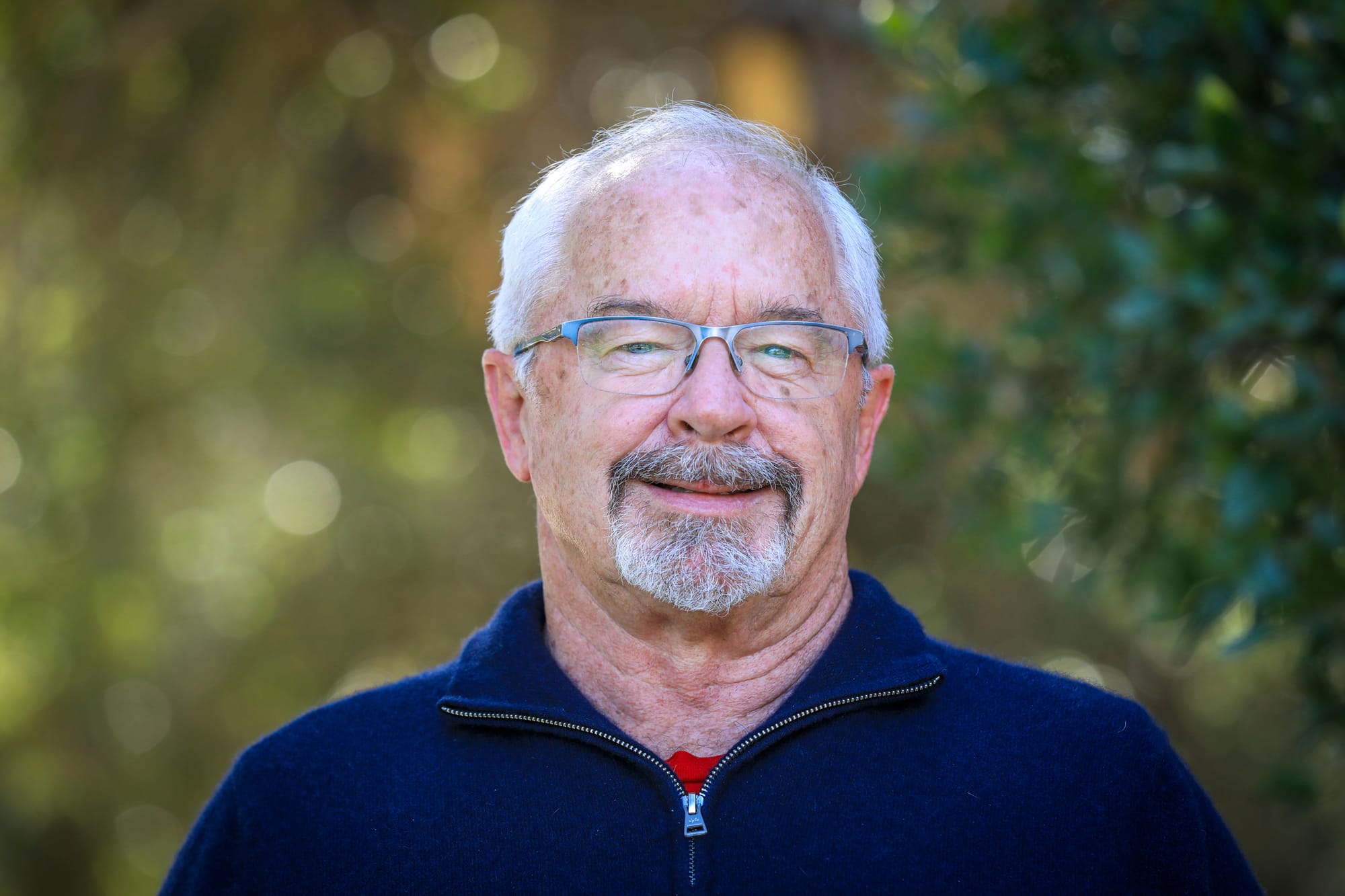
Tobias Young is an editor and reporter at Petaluma Voice. He can be reached at tyoung@petalumavoice.org.
Do you like our work? Support us with a tip.

