Petaluma Garden a Haven for Migrating Monarchs
Milkweed and other plants provide sustenance and breeding habitat
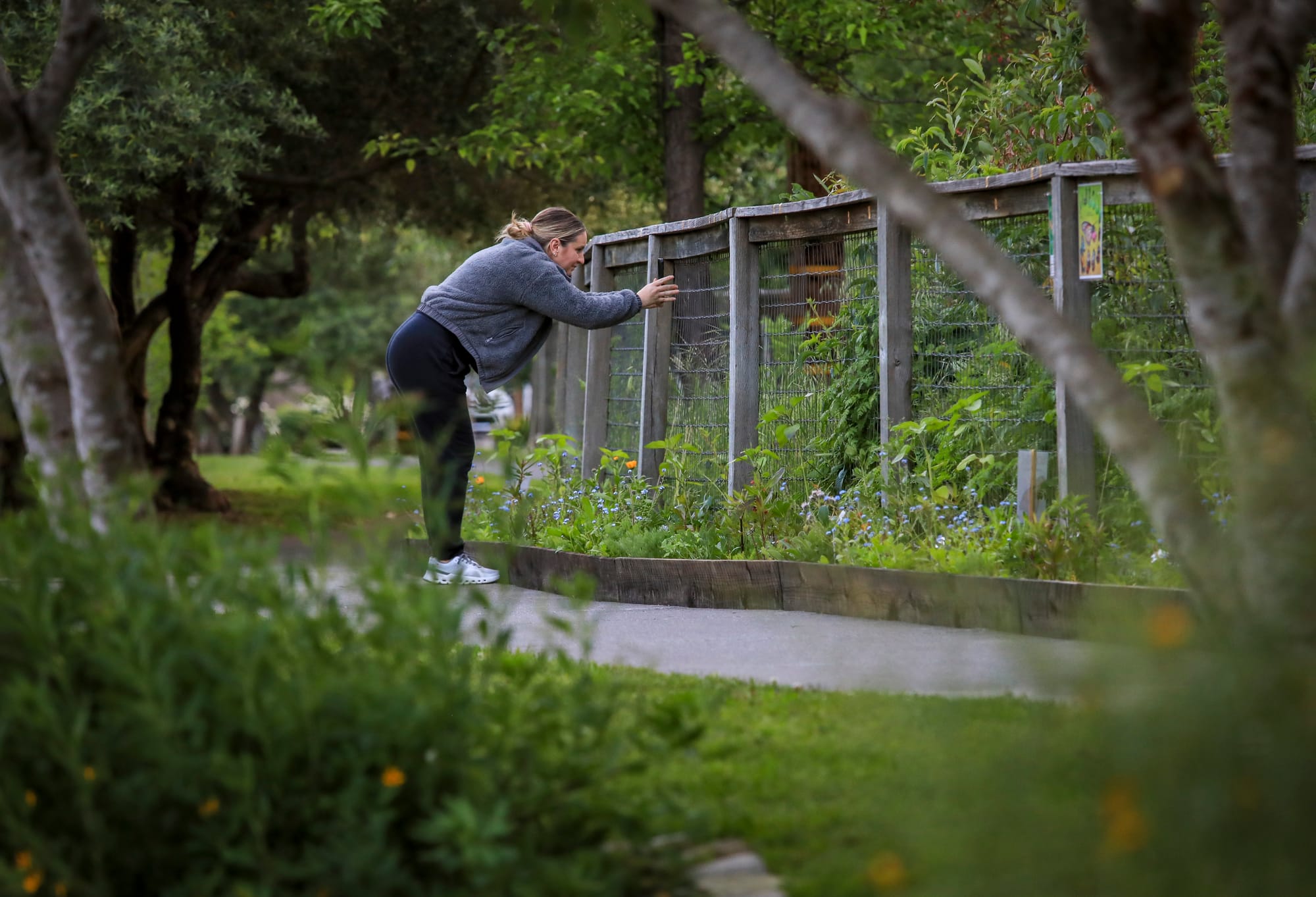
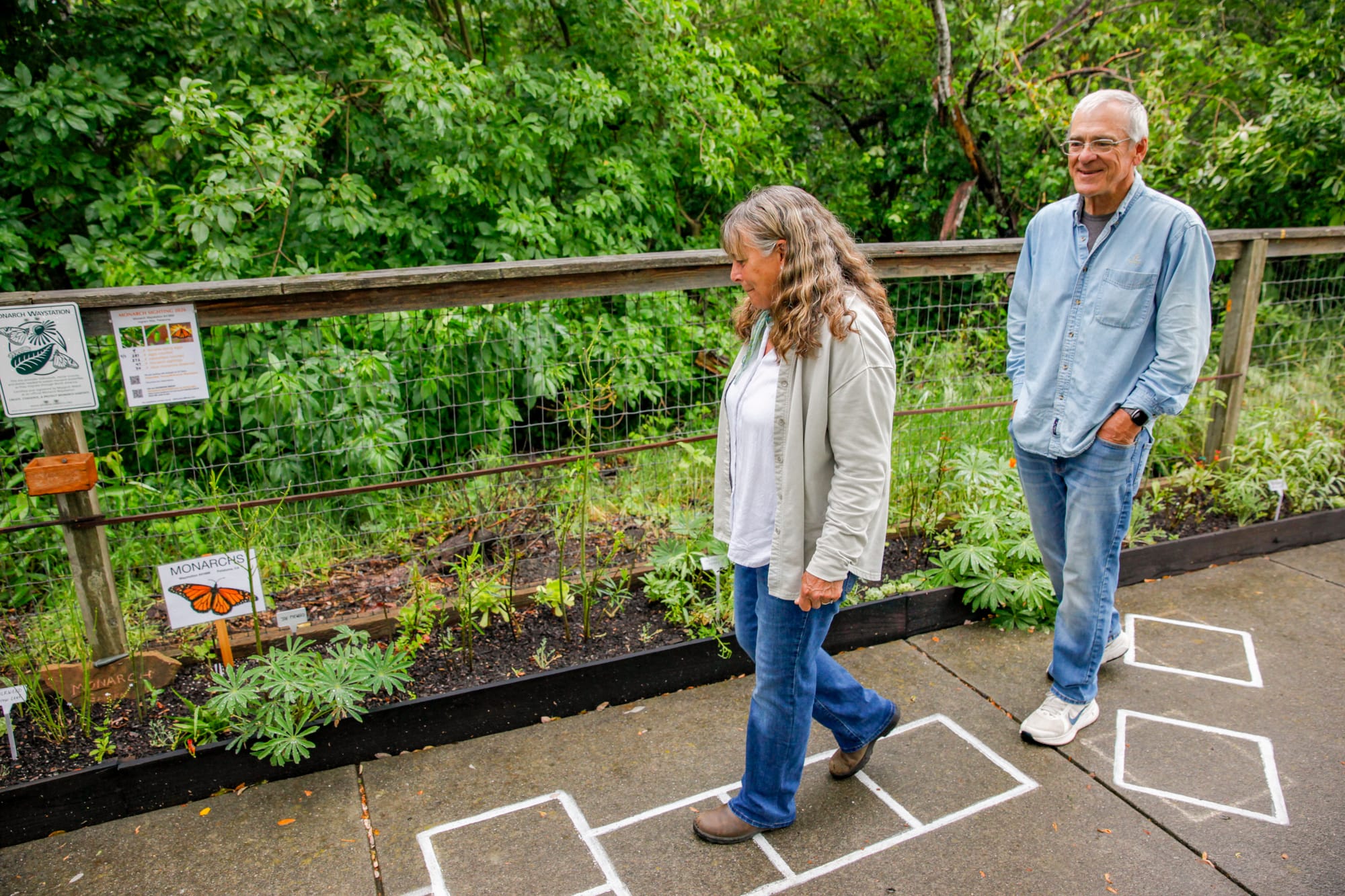
A few times a week, Suzanne Young drags a hose across the street from the east side home she shares with her fiancé, Pat McKeever, to water the habitat and learning space they’ve created to support the entire lifecycle of monarch butterflies, whose populations are rapidly declining.
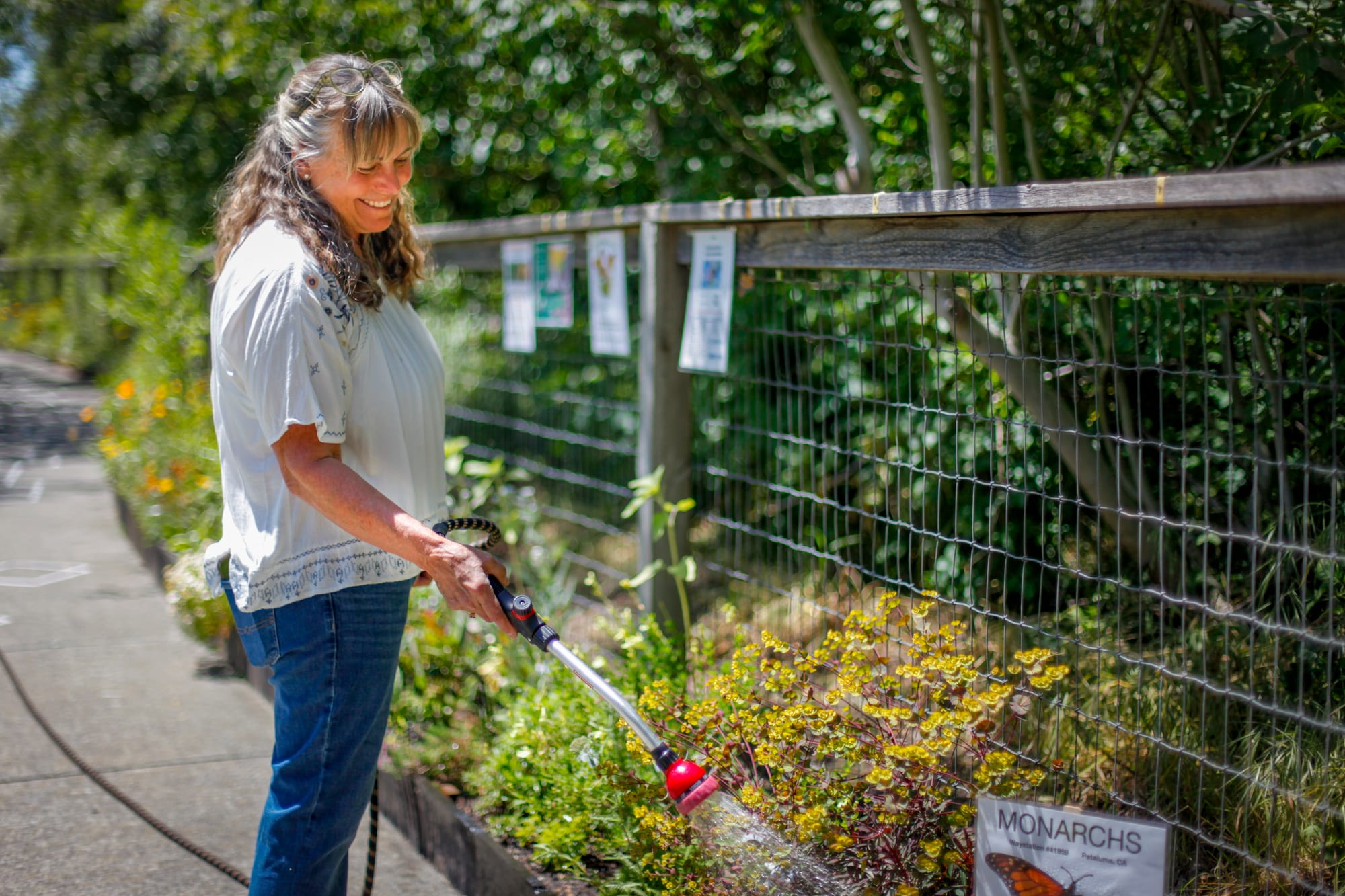
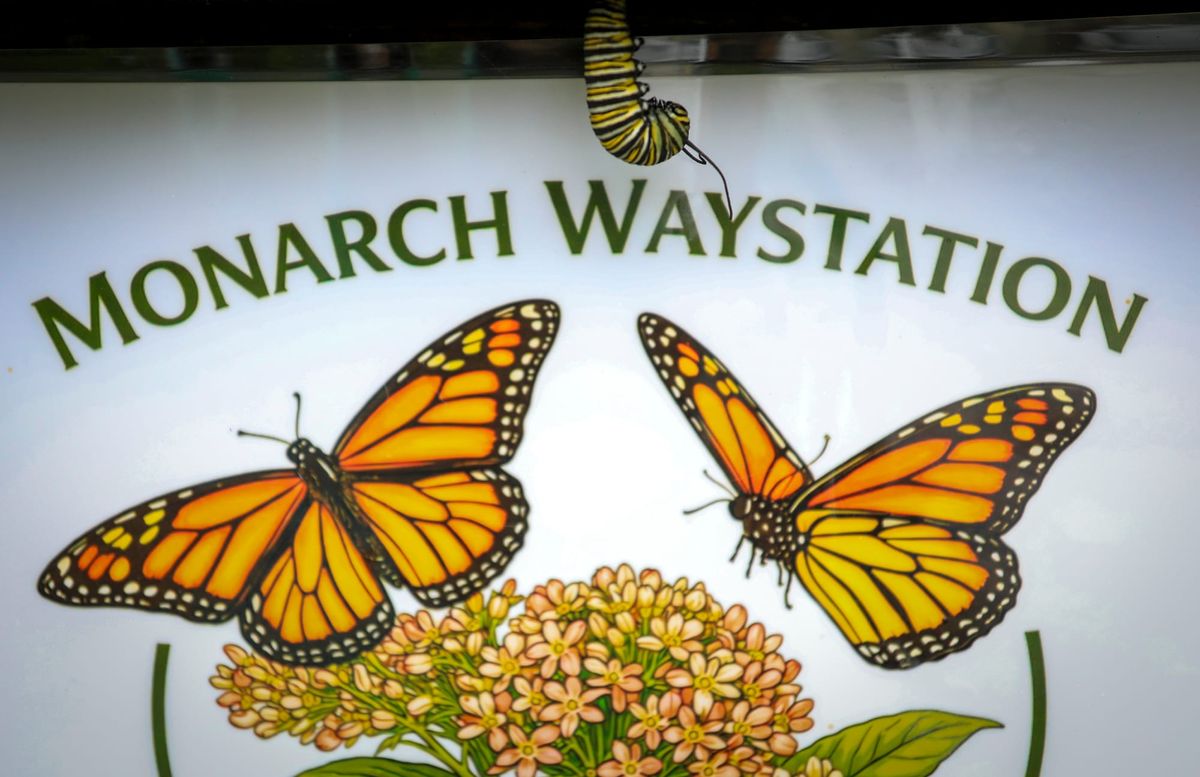
In the 175-foot-by-2-foot stretch of garden flourishing next to a walking path on Ingram Way near Sparrow Lane, both Young and McKeever planted over 100 milkweed and nectar-producing plants two years ago to create what’s known as a Monarch Waystation. Their garden appears on a map of official Waystations recognized by Monarch Watch, an education, conservation, and research program based at the University of Kansas.
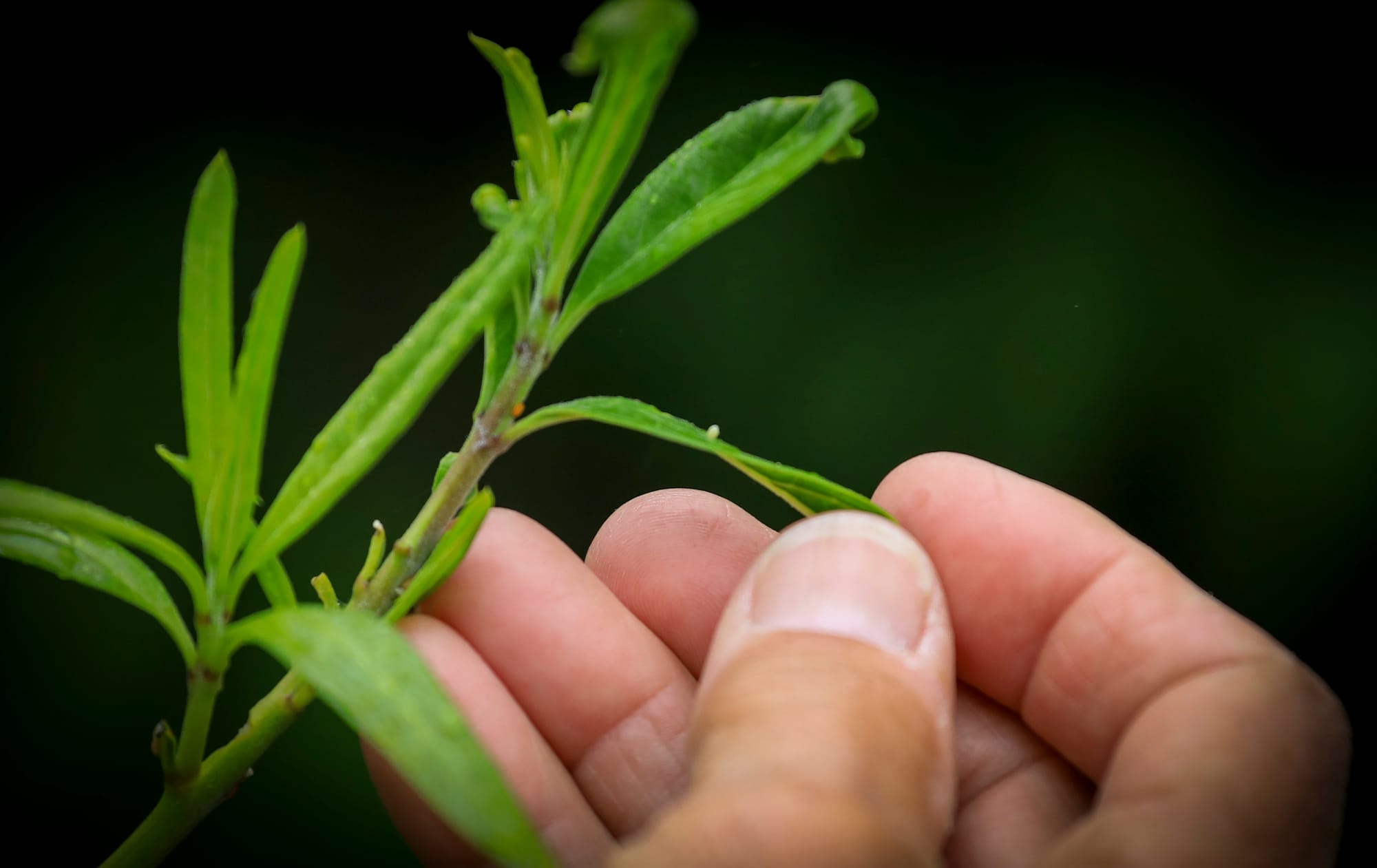
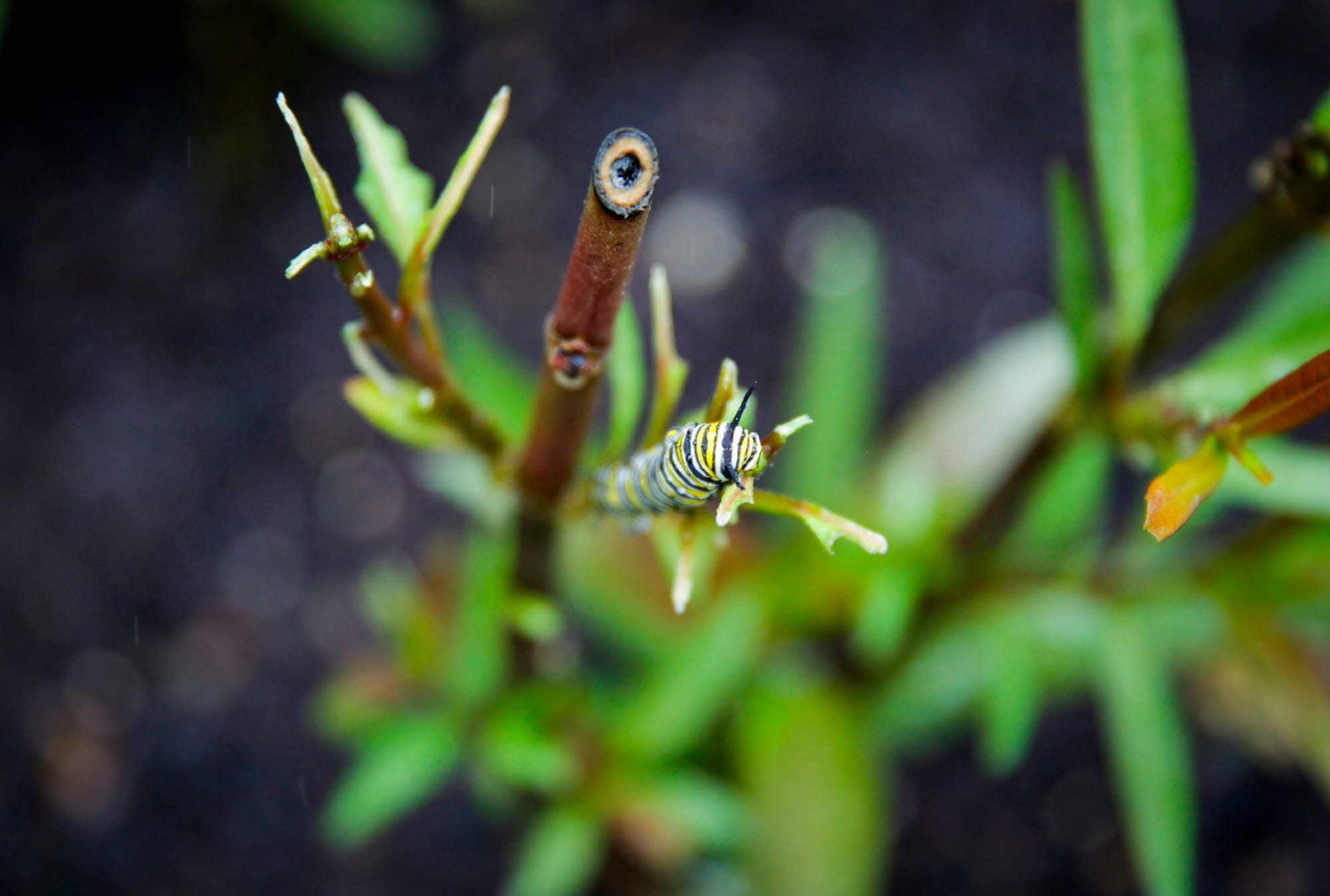
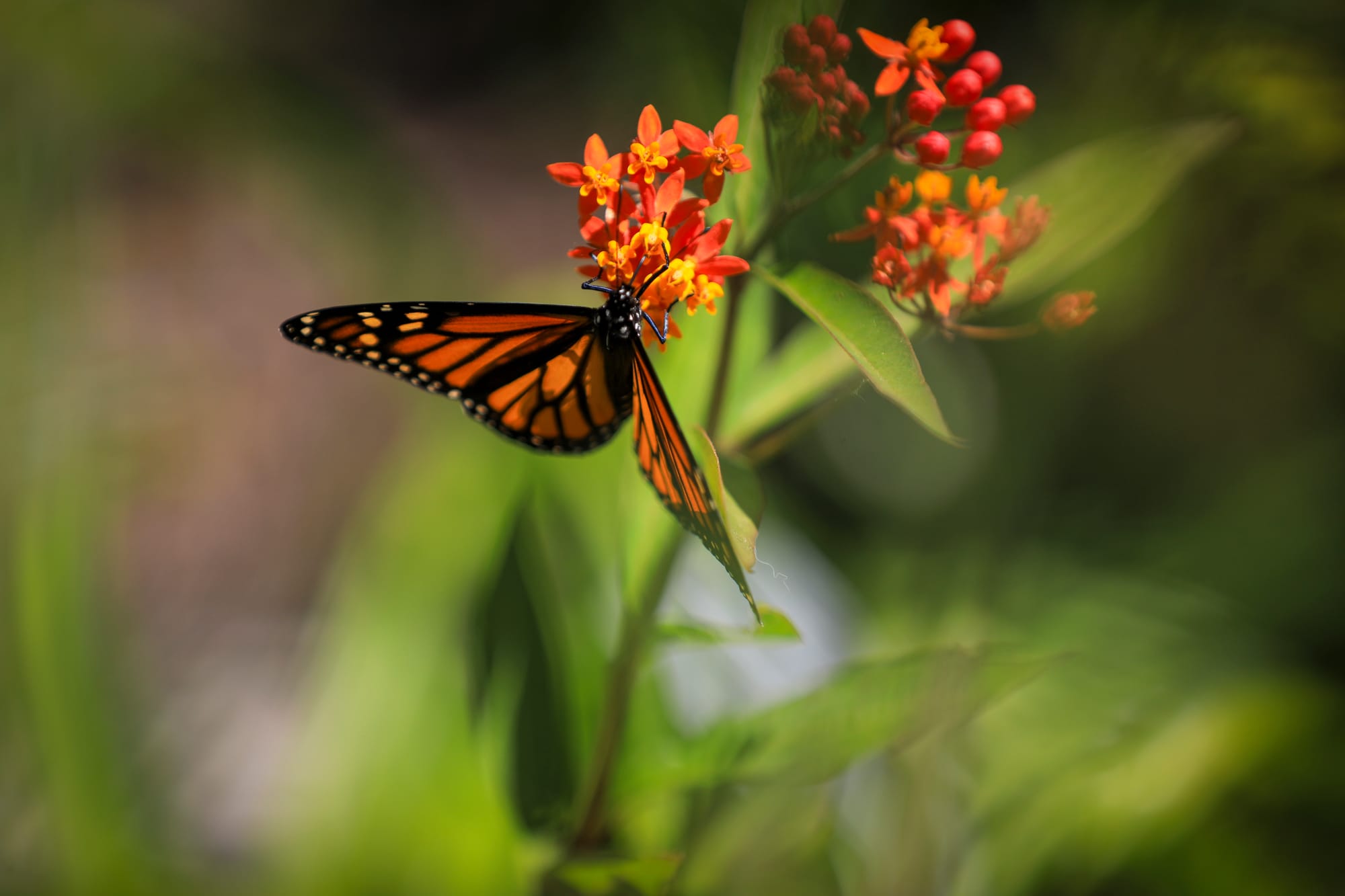
An egg rests on the leaf of a plant (left photo). A hungry caterpillar dines on milkweed (center photo). A recently emerged butterfly drinks nectar from a flower at the Monarch Waystation in east Petaluma (right photo). (CRISSY PASCUAL/PETALUMA VOICE ©2026)
Monarchs, from caterpillar to butterfly, “need three things,” McKeever explained. “They need the milkweed, they need nectar, and they need water. That’s it. And then they can do their thing and be on their way.”
This year alone, the pair have counted at least 568 eggs, 326 caterpillars, and 66 butterflies at the garden.
Theirs is one of more than 55,500 registered Waystations around the world meant to stem the species’ decline and to sustain its long-distance migration.
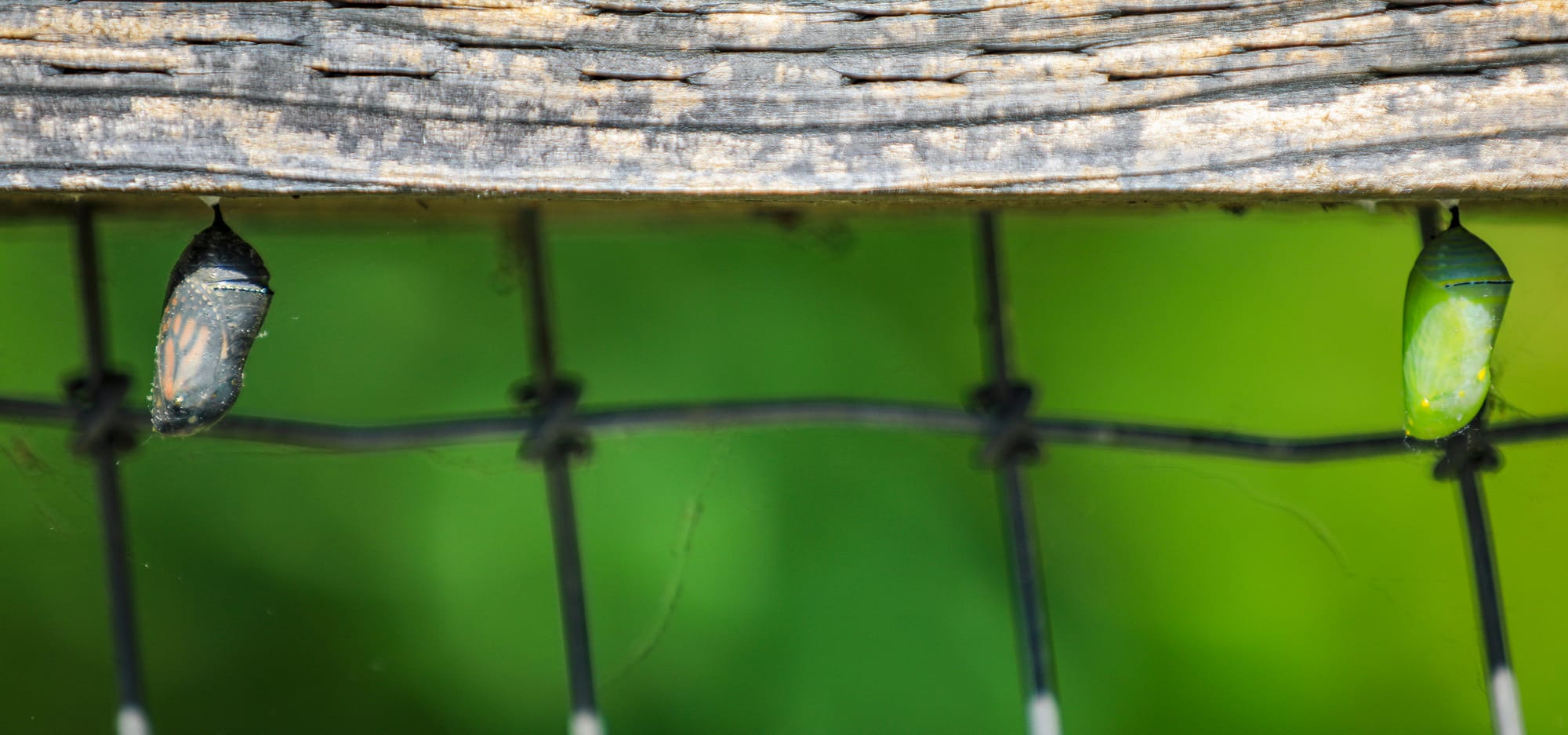
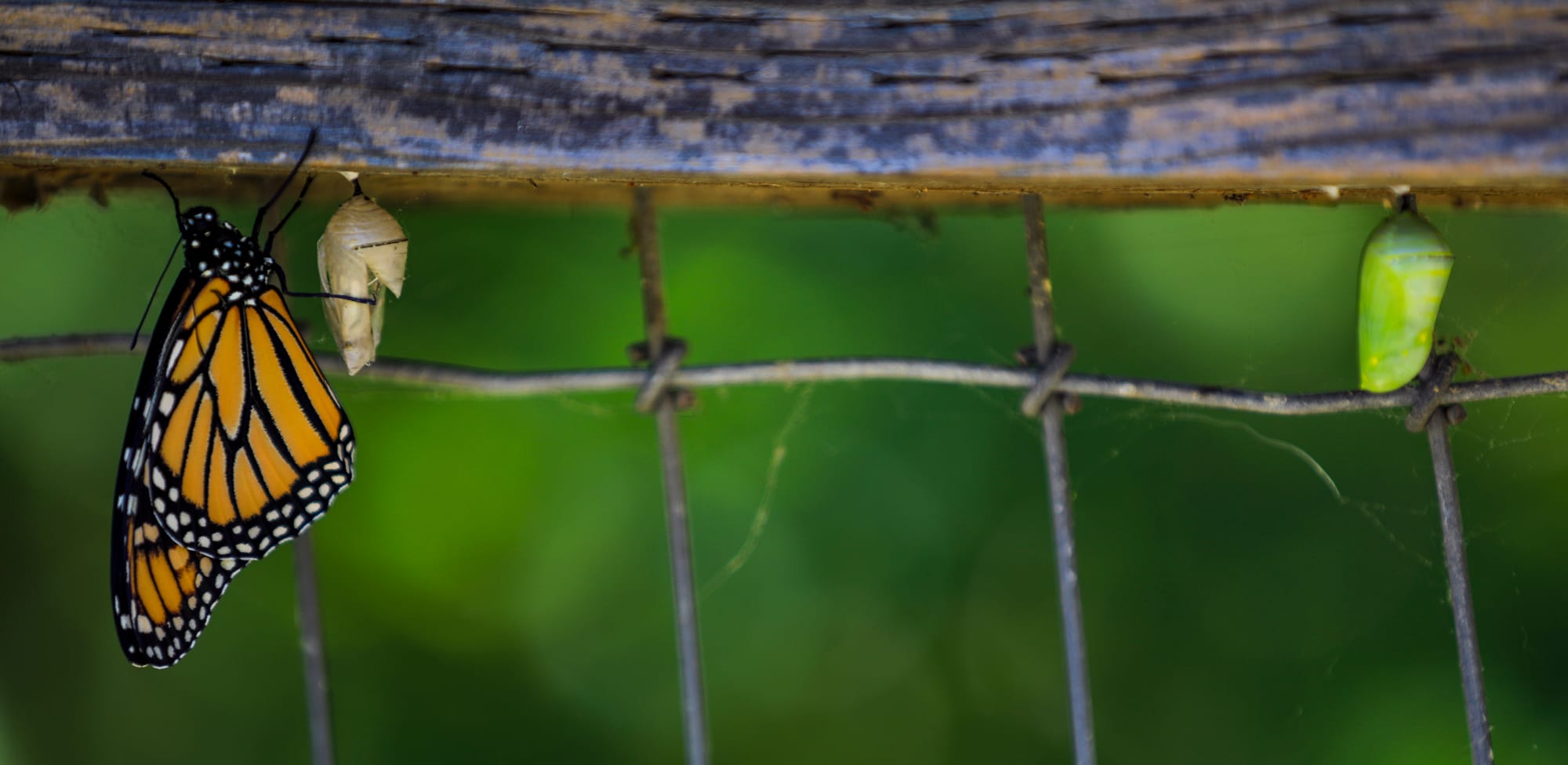
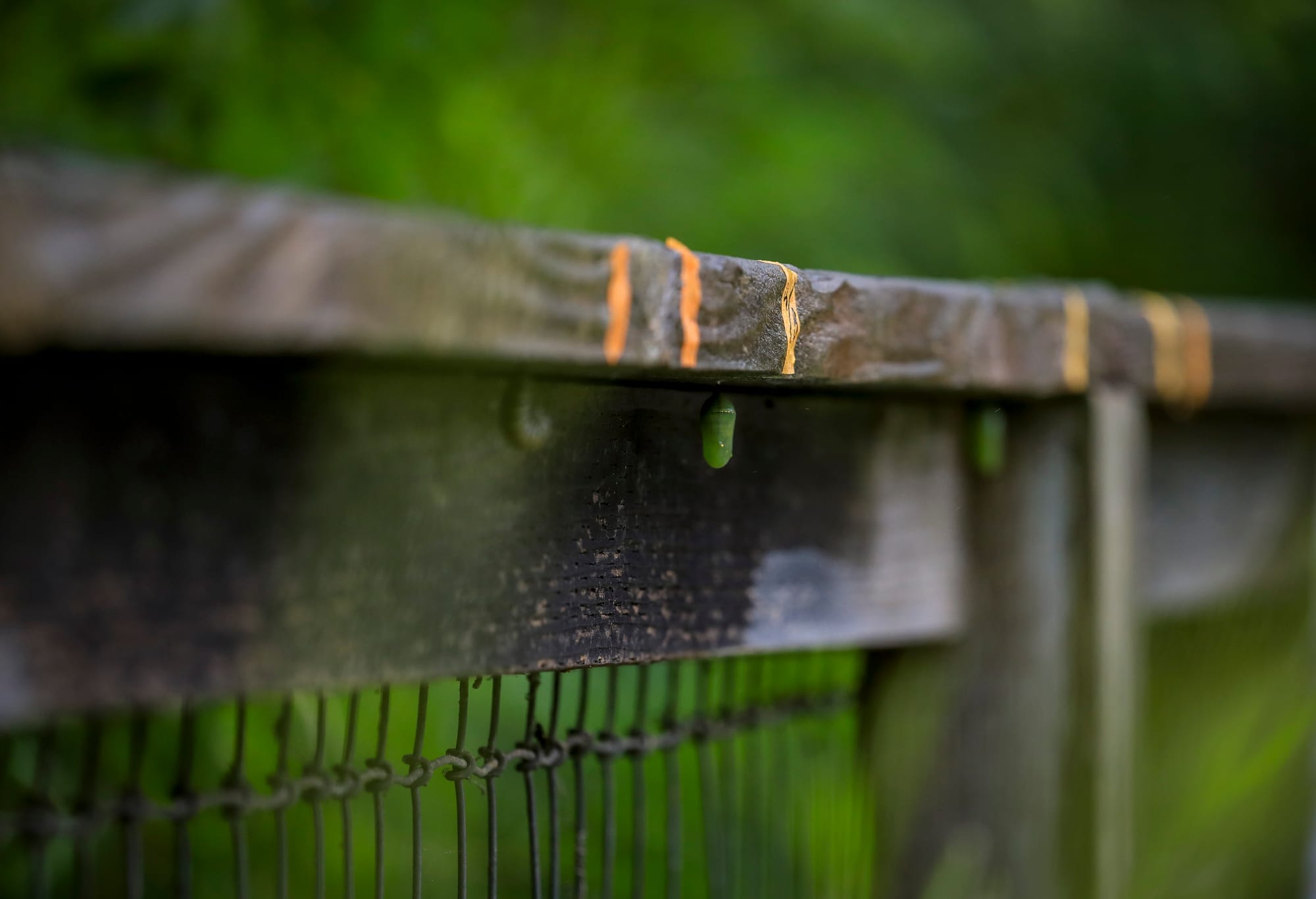
On a recent day at the east Petaluma Monarch Waystation, a chrysalis goes through its stages of development (left photo) and, minutes later, emerges a butterfly (right photo). (Thursday, April 30, 2026. CRISSY PASCUAL/PETALUMA VOICE ©2026). Watch a video of the newly emerged butterfly below.
The couple, who have a shared interest in gardening, butterflies, and photography, have become self-taught experts and garnered the attention of neighbors, kindergarten classes, and even monarch researchers.

According to the Xerces Society for Invertebrate Conservation, which leads a yearly count of western monarchs – those that breed west of the Rocky Mountains and predominately migrate to the California coast to overwinter from October through February – the 2025 count was 12,260. This was the third-lowest figure since counts began in 1997.

Western monarch populations have declined about 95% since the 1980s, according to the Xerces Society. Their better-studied counterparts, the eastern monarchs, have declined by about 80% since the 1990s.
The organization points to habitat loss, pesticides, and climate change as the main causes of their decline.
“The monarch butterfly, its story, its life cycle is pretty amazing,” McKeever said. “And the fact that the numbers are so low, we started feeling like we can do something about this.” It’s not just about fun for the couple: “We can make an impact on that.”
Young and McKeever’s endeavor all began 12 years ago by chance.
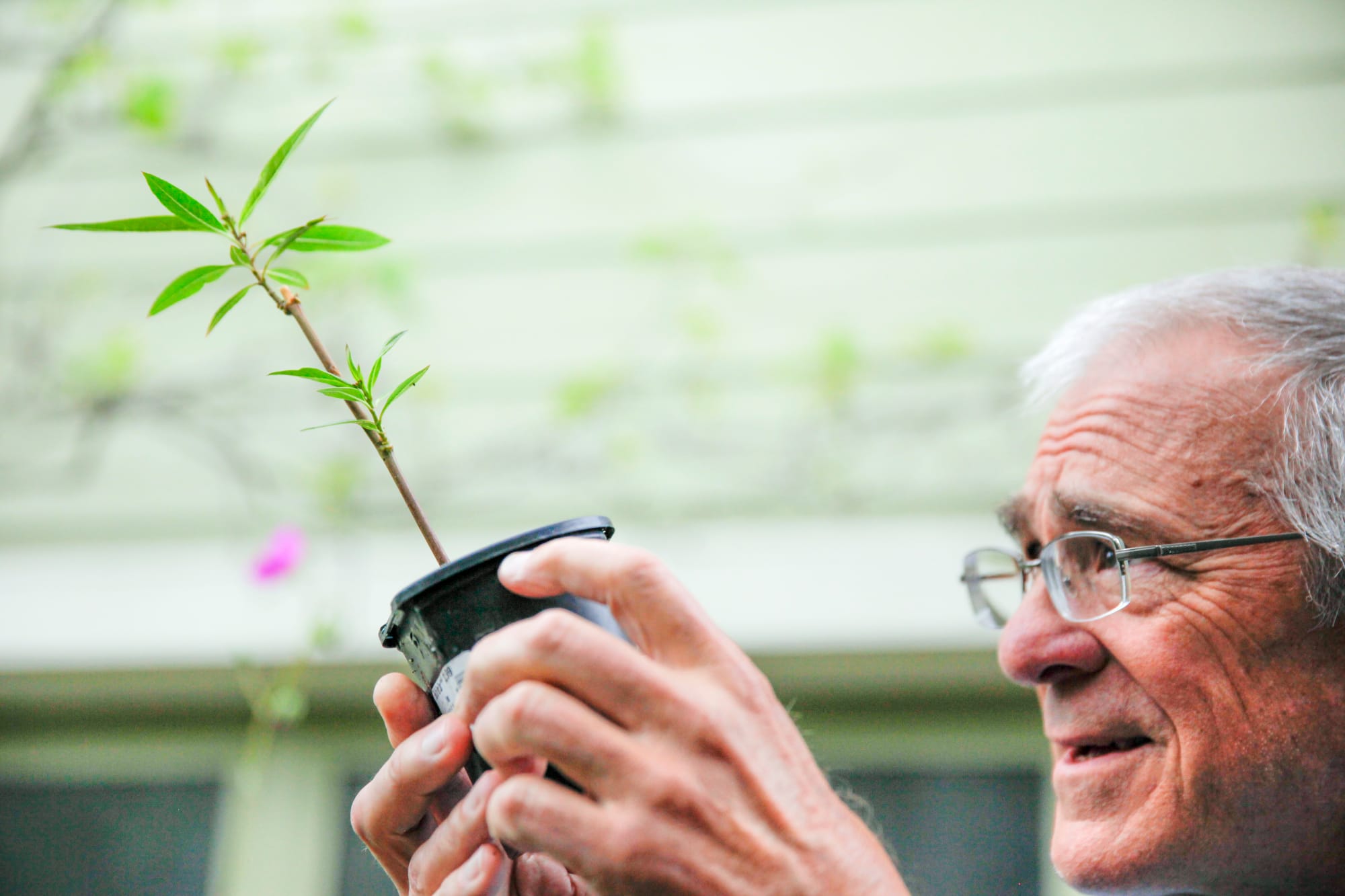
During a visit to Friedman’s Home Improvement, Young was tipped off by garden department employees to the presence of a monarch that had laid eggs on some milkweed plants for sale. She searched for one of those plants and took it home.

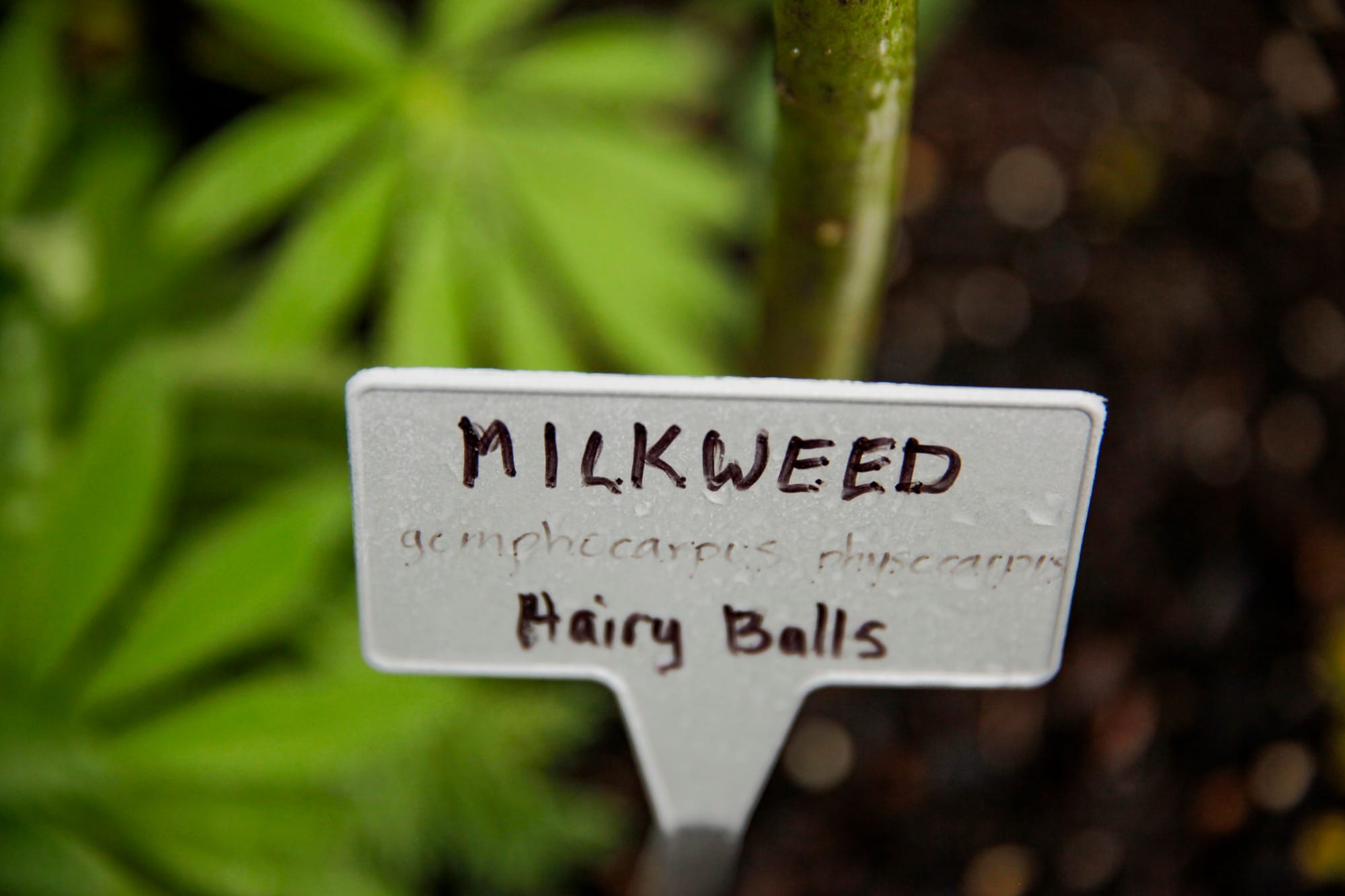
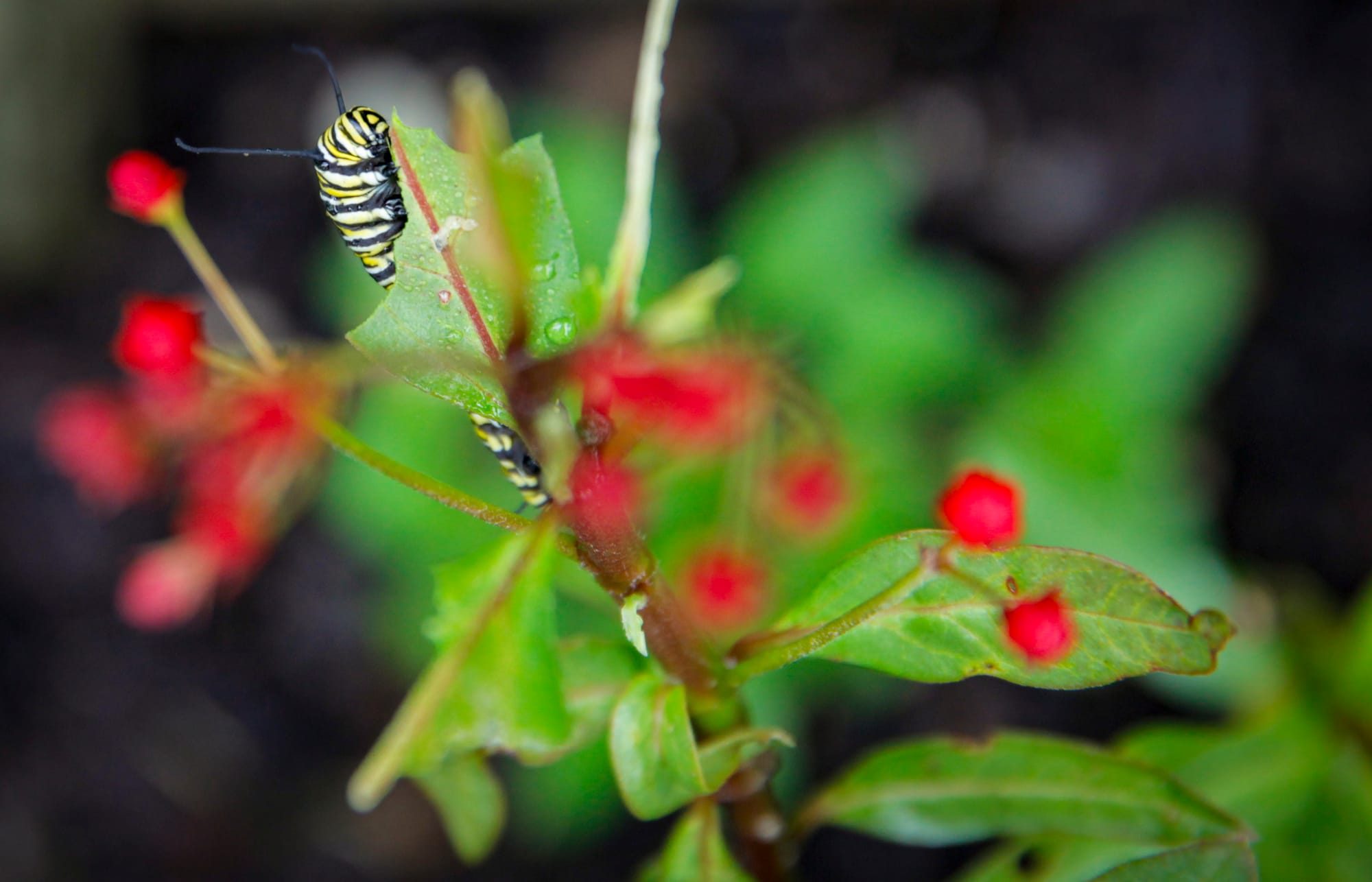
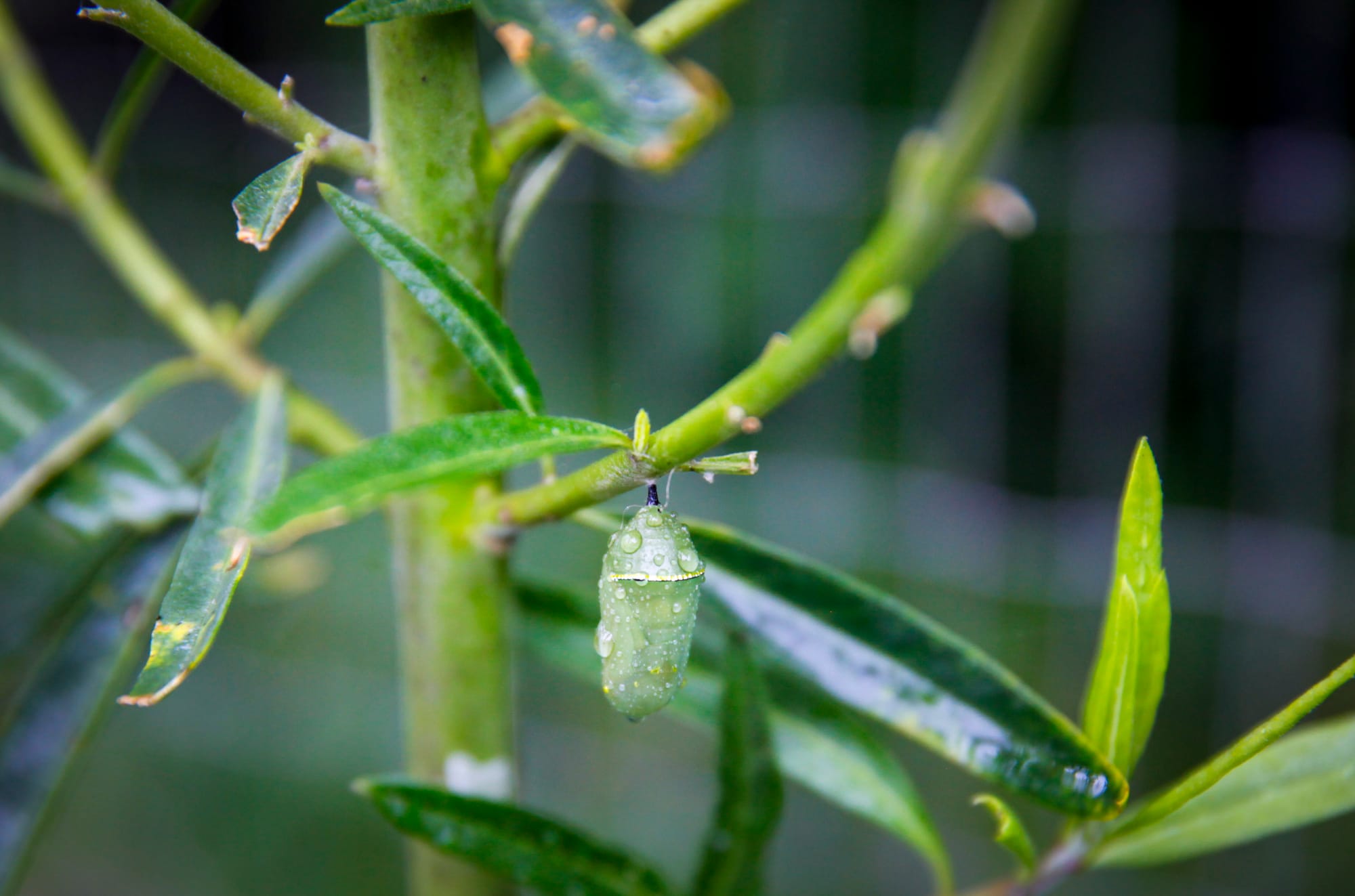
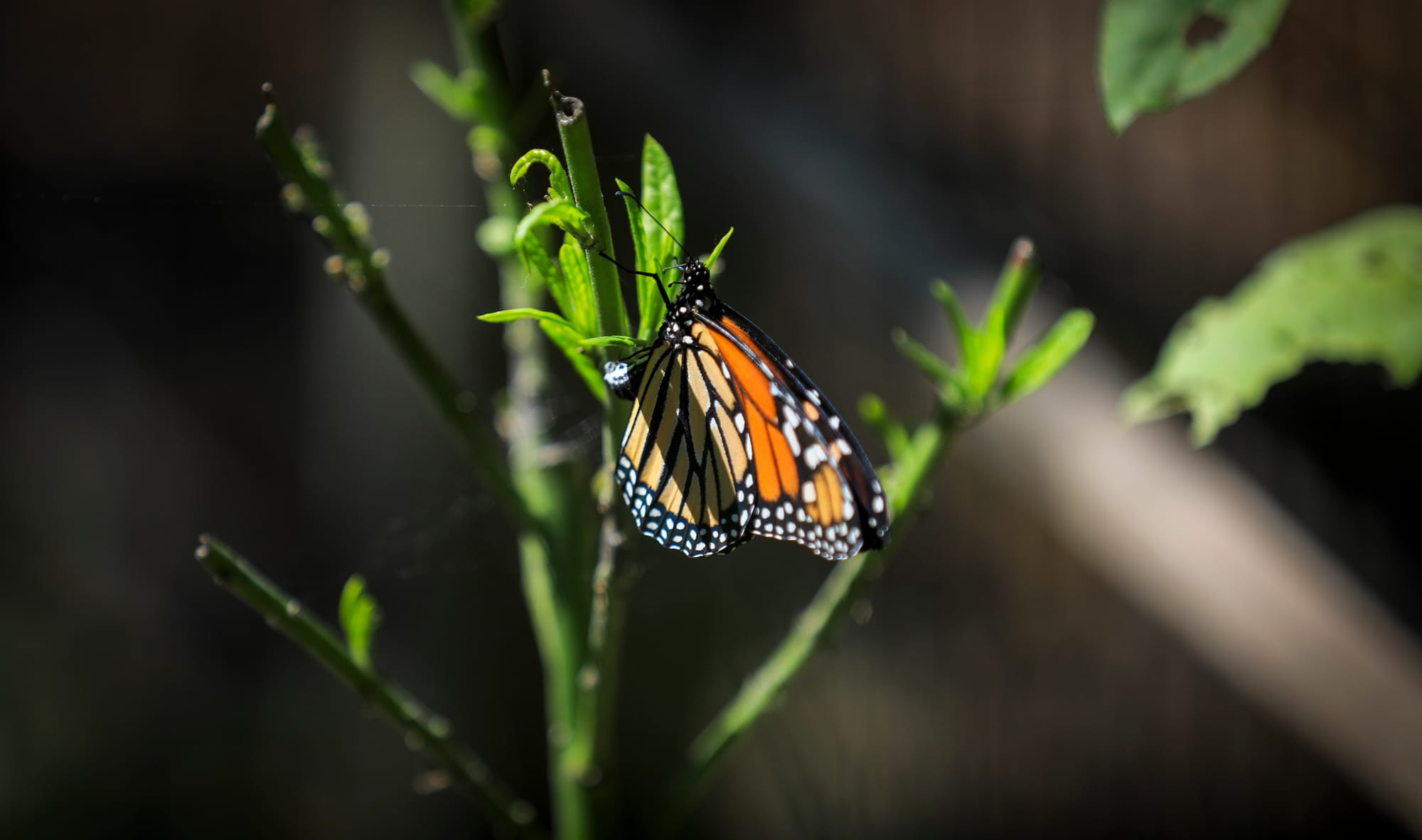
The avid gardener and artist soon saw caterpillars, then butterflies. Over the following years she continued to plant milkweed in her backyard, while propagating the plants, sharing with neighbors, and watching “hundreds” of butterflies flock to their neighborhood, she said.
The couple have done much of the work on their own. Young estimates it takes her about one hour to water the entire garden, and she has asked the city for irrigation support. It’s unable to help for the time being, she said, yet she remains hopeful about working with the city in some capacity in the future.
Regardless, she’s found support in a GoFundMe campaign that’s since raised over $3,800 as of May 3, for gardening supplies, soil, and ongoing maintenance. And several classes from the nearby Loma Vista Immersion Academy elementary school have taken field trips.
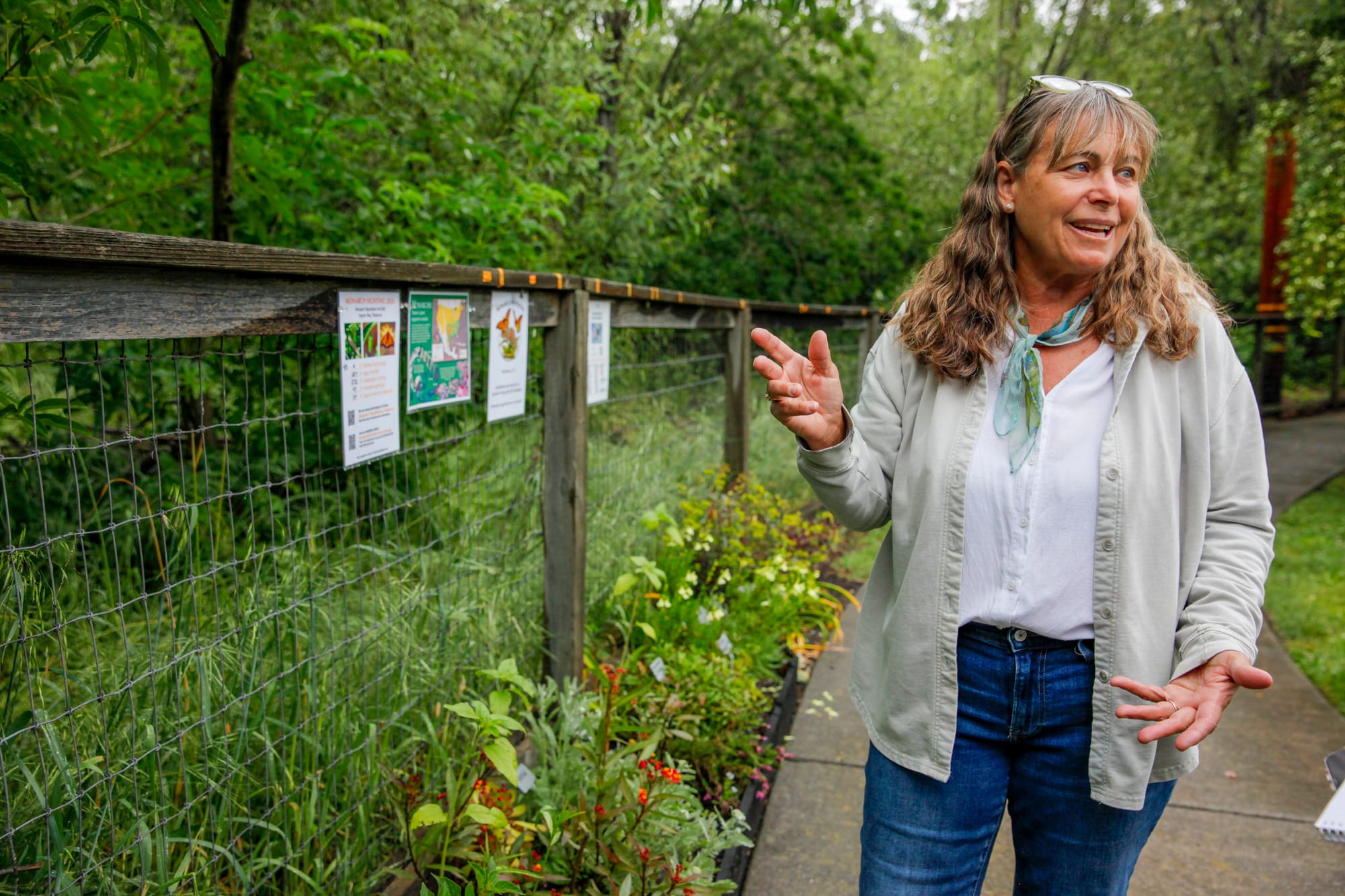
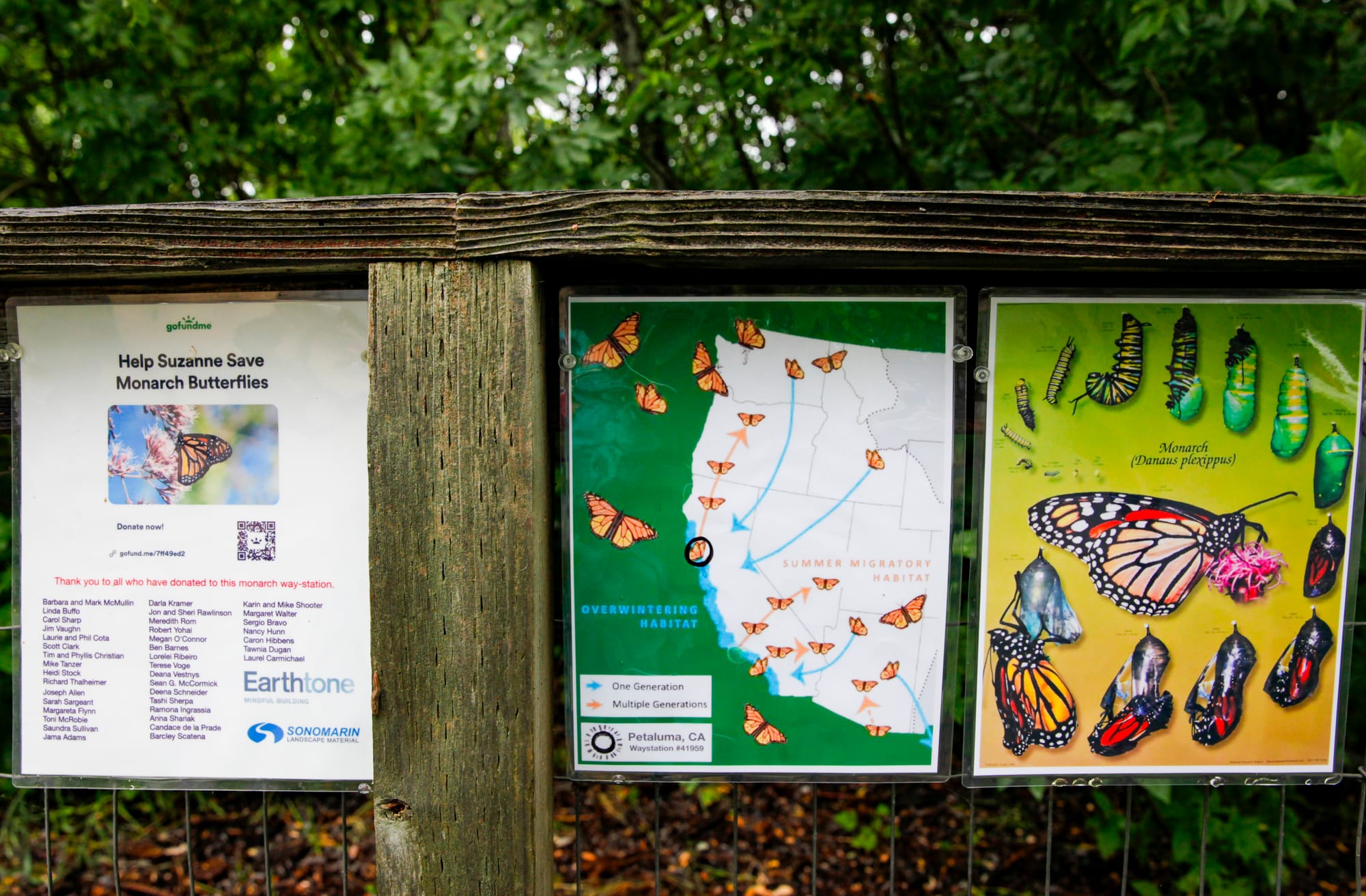
Young and McKeever are hoping to connect with butterfly researchers at larger institutions. By chance they met Laci Gerhart, an associate professor of teaching in Evolution and Ecology at UC Davis who was visiting a friend in town and happened to walk past the Waystation. She, too, has a love of monarchs in both her profession and personal life and is working to connect the couple to other researchers.
The duo have monitored so many monarchs, they think their data could prove valuable.
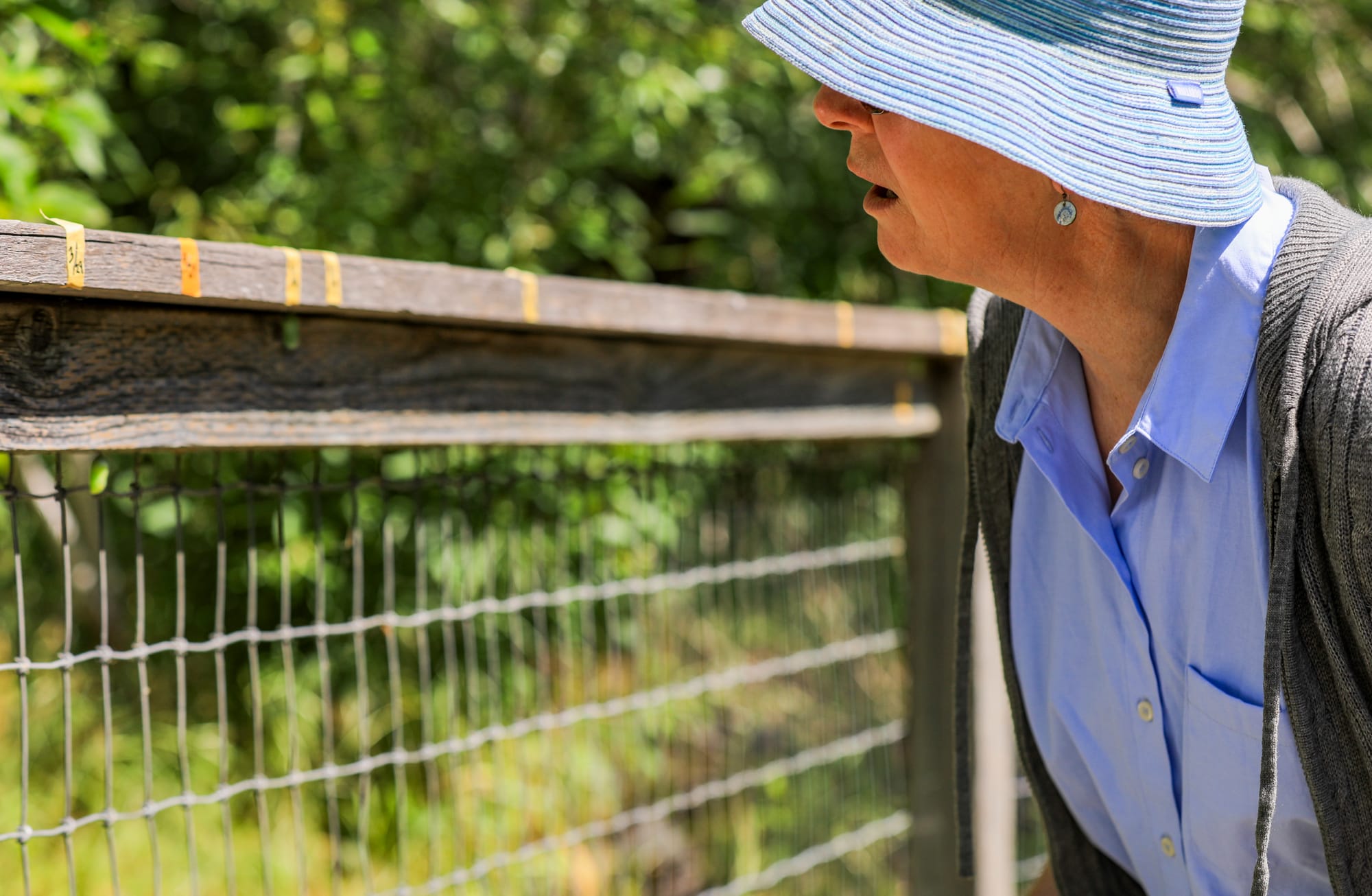
“My husband gets down on his hands and knees and counts eggs and counts caterpillars,” Young said with a laugh. On one of the fences hangs a sign showing daily egg, caterpillar, and monarch sightings, and orange tape to mark chrysalis locations. McKeever maintains a spreadsheet and daily log with all the data.
When McKeever retires from work at the end of this year, he plans to spend “every waking moment with Suzanne here,” he said. Maybe, he wonders, this work will have ripple effects on local wildlife management, science, or education.
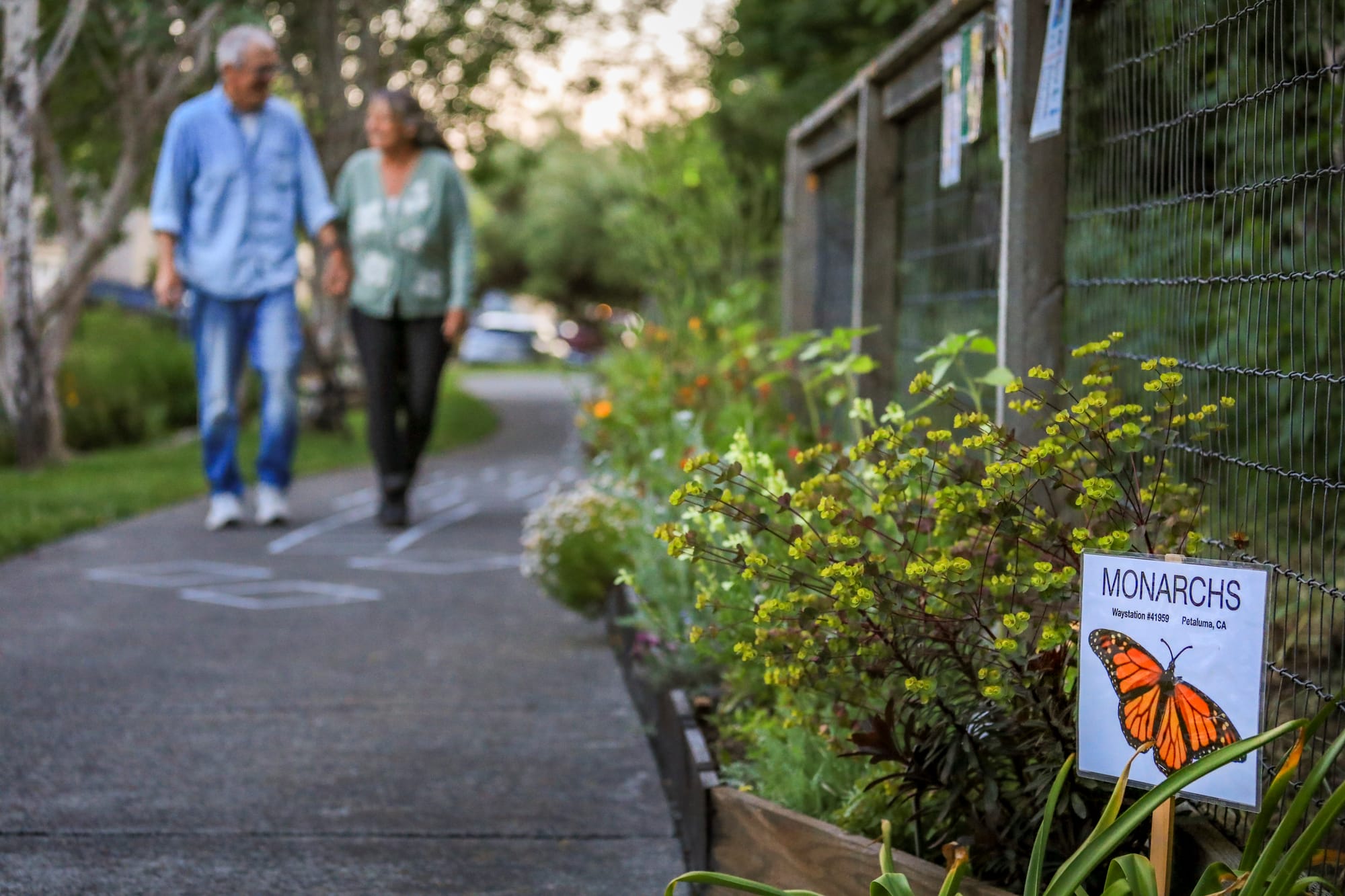
For information on how to create a Monarch Waystation, to learn more about Young and McKeever’s garden, and to support their work, visit the “Monarch Butterflies in Petaluma, CA” Facebook group, their GoFundMe page, or MonarchWatch.org.