Rising costs, cuts to food benefits: how are locals responding?
About 400 new families a month are signing up for local food bank
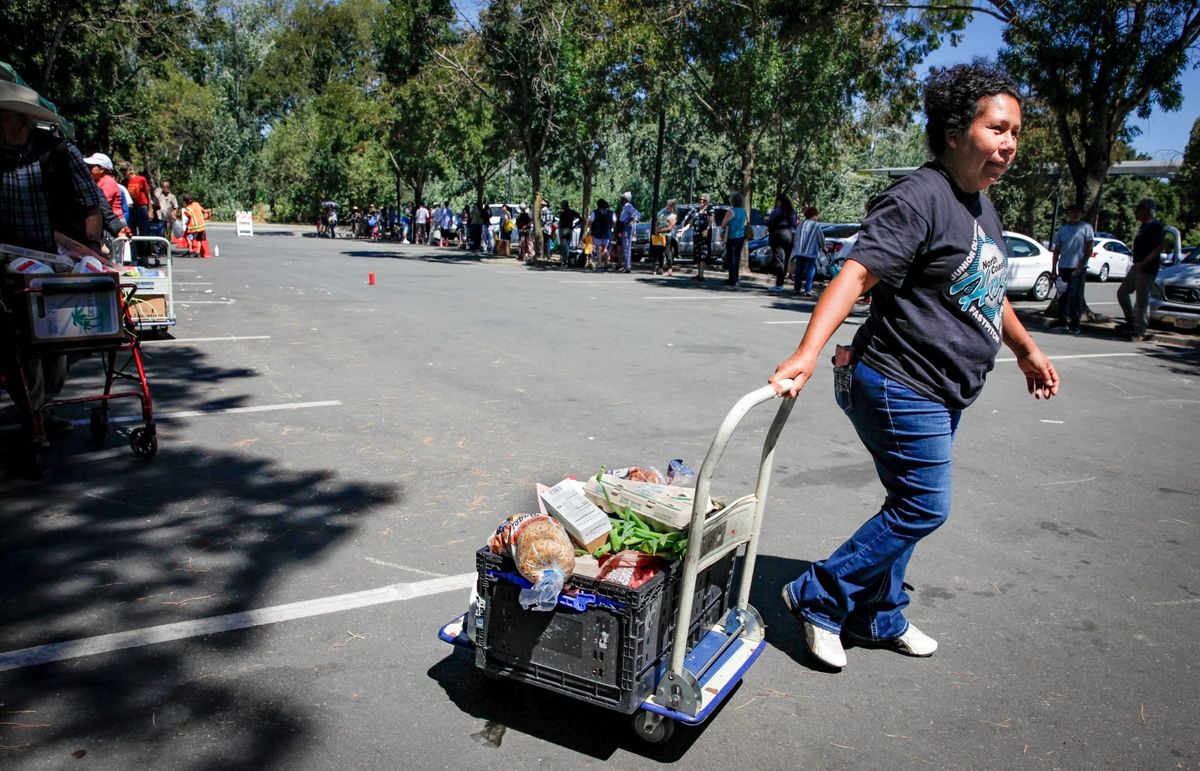
As Patrick Galleguillos walked away from a Redwood Empire Food Bank distribution in Petaluma, he expressed his gratitude out loud.
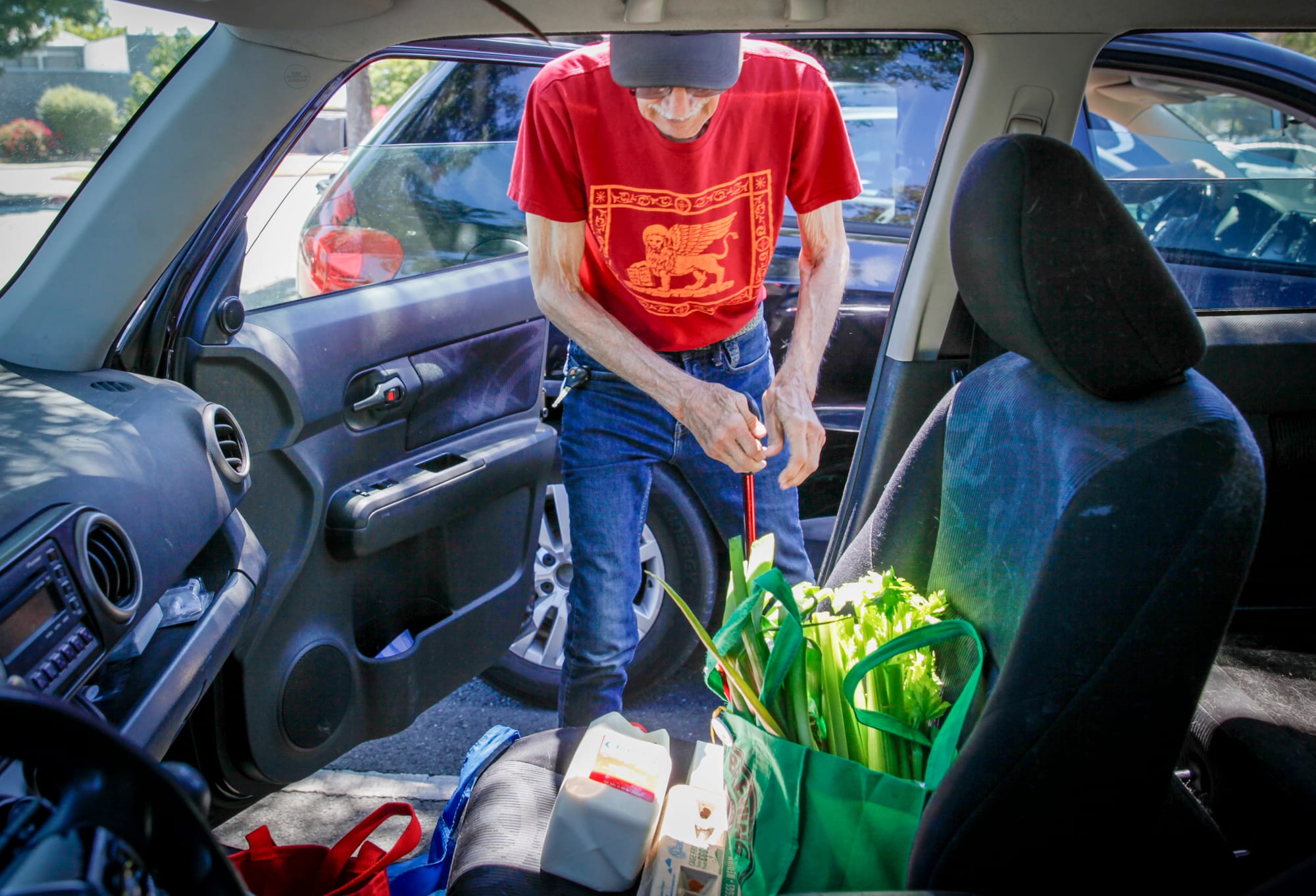
“Thank you Redwood Empire Food Bank! Thank you volunteers!” he yelled as he rolled a wagon filled with tomatoes, milk, apples, and other groceries to his car, where his dog, Cooper, sat behind an open window waiting for him.
The 79-year-old retired Alameda County teacher, who makes artistic collages in his free time, lives on a fixed income. He started visiting the food bank in May.
“I’m here to get some good food to keep me healthy," he said. "I’m trying to put on weight, and this assists me in doing so.” After a career at Pacific Bell followed by 16 years as a teacher, he has turned to a food bank for the first time in his life.
“I was always able to take care of myself. And now, it’s just a little bit more difficult to do and this helps me immensely,” he said.
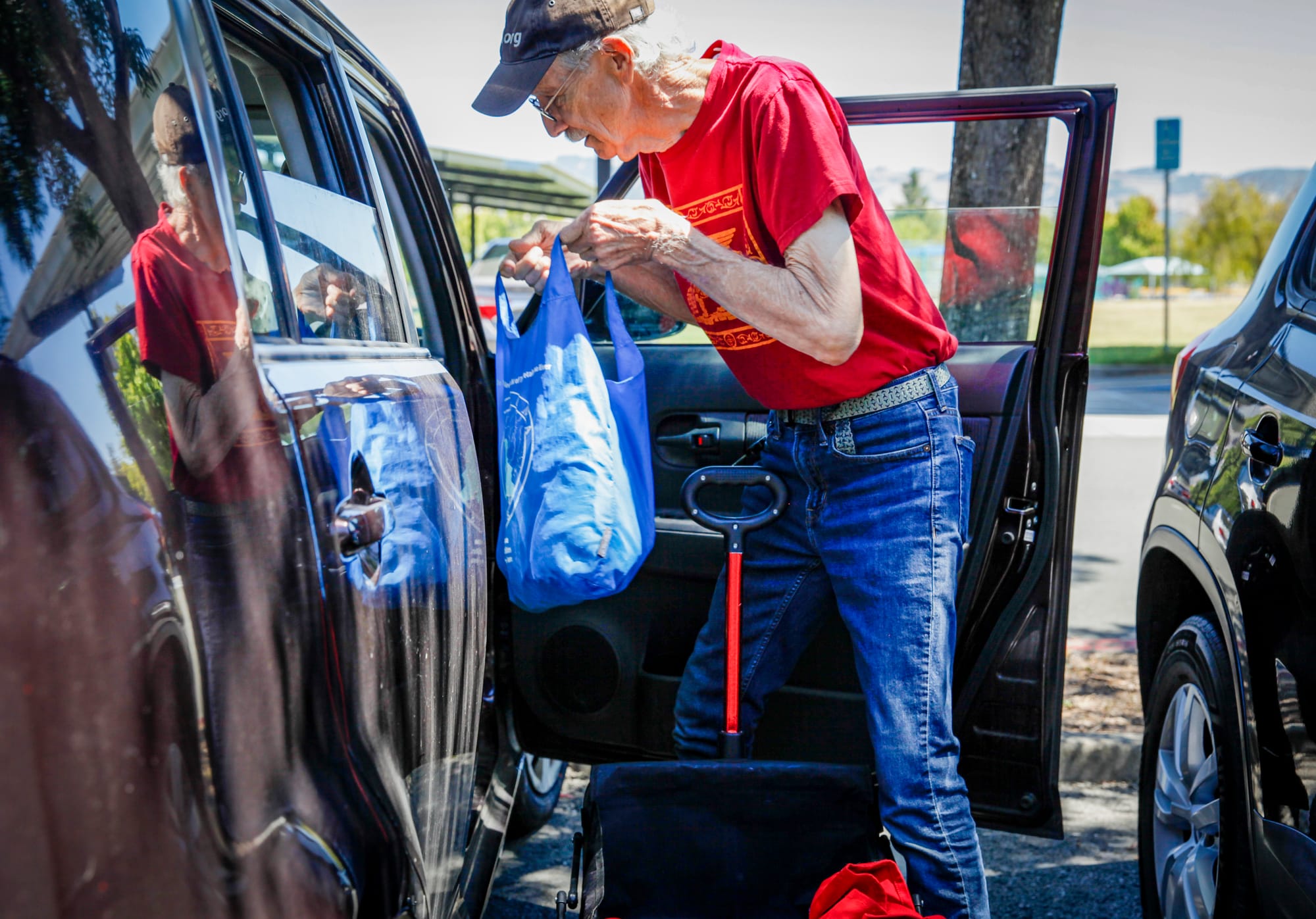
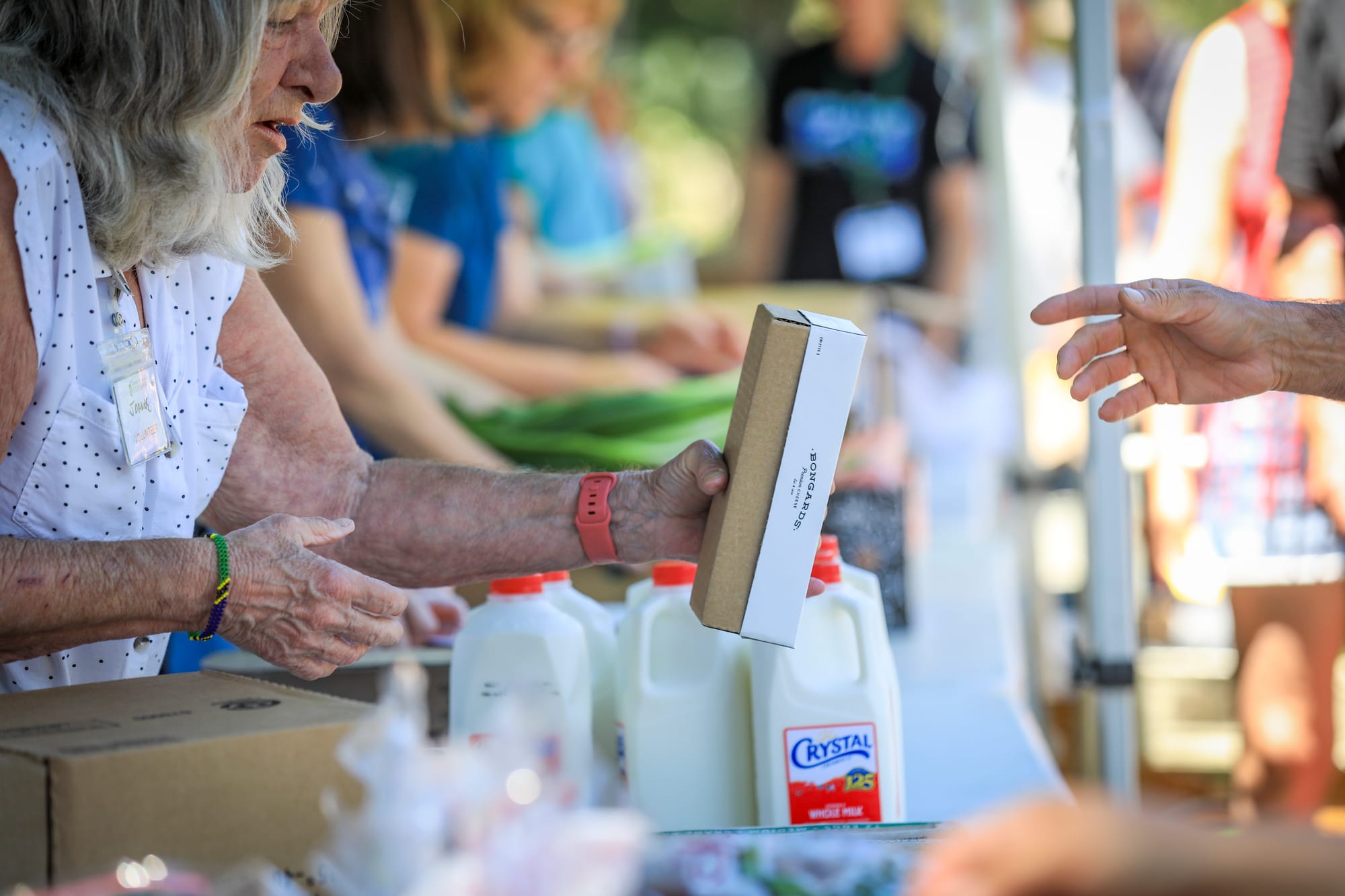
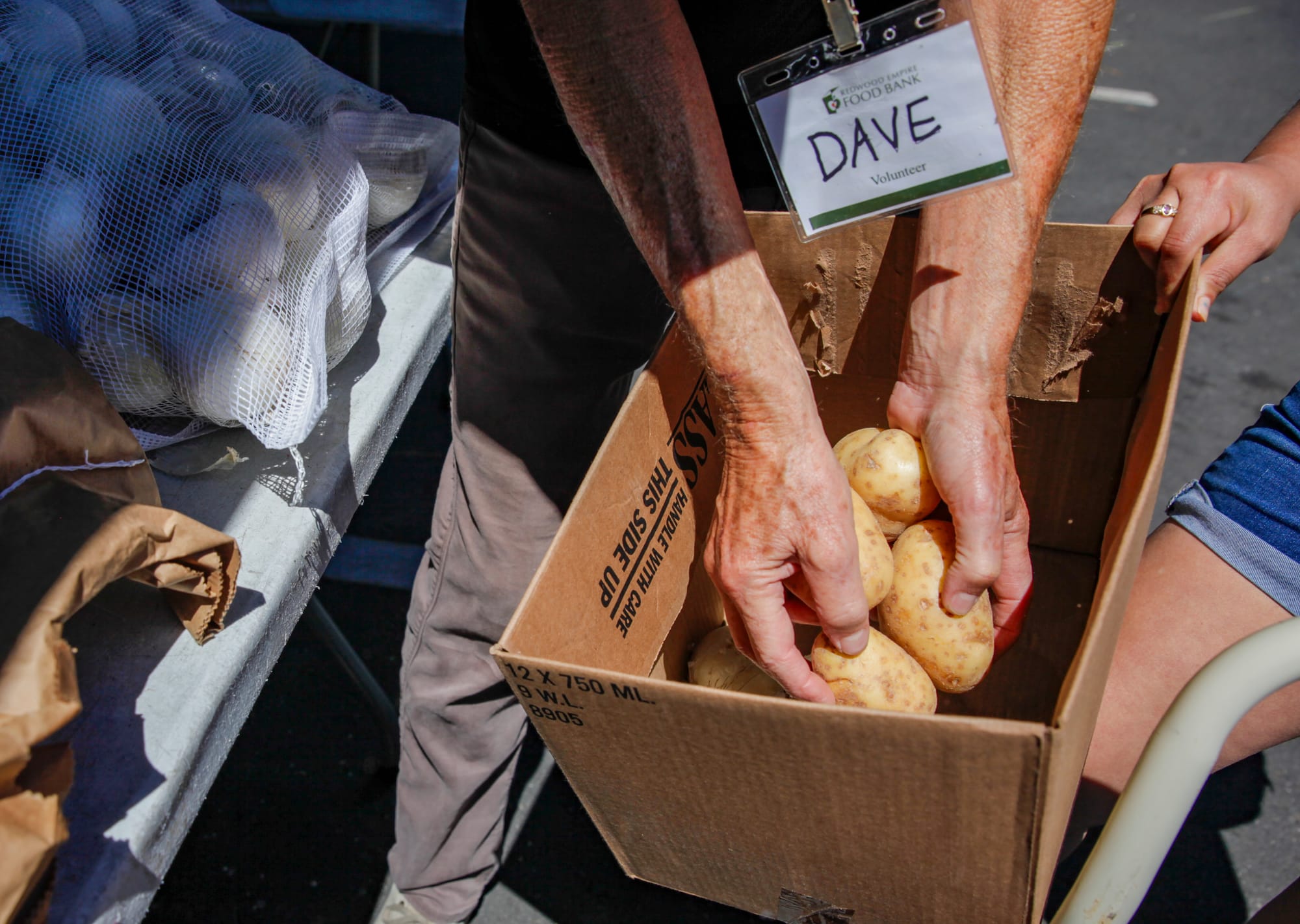
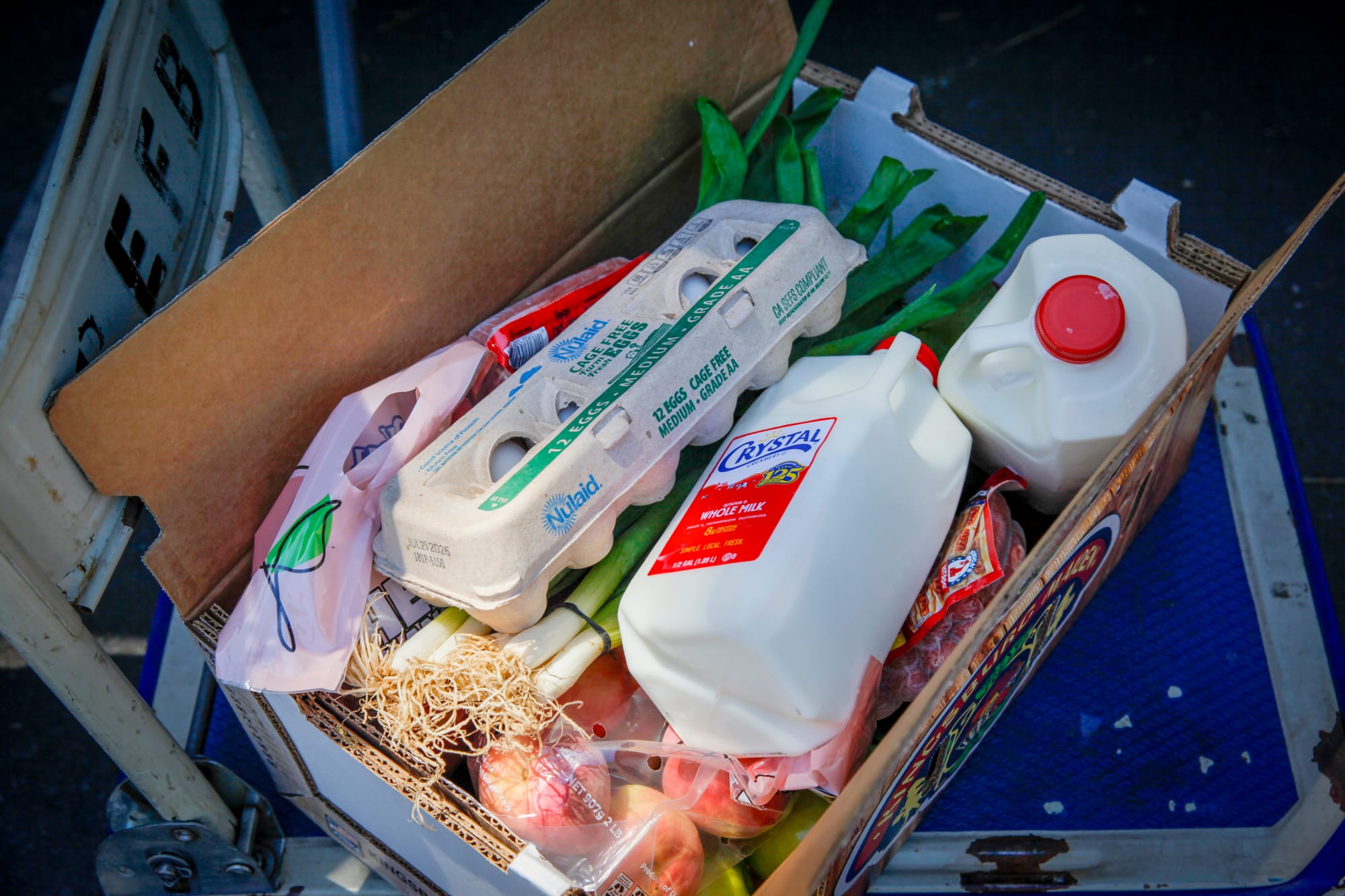
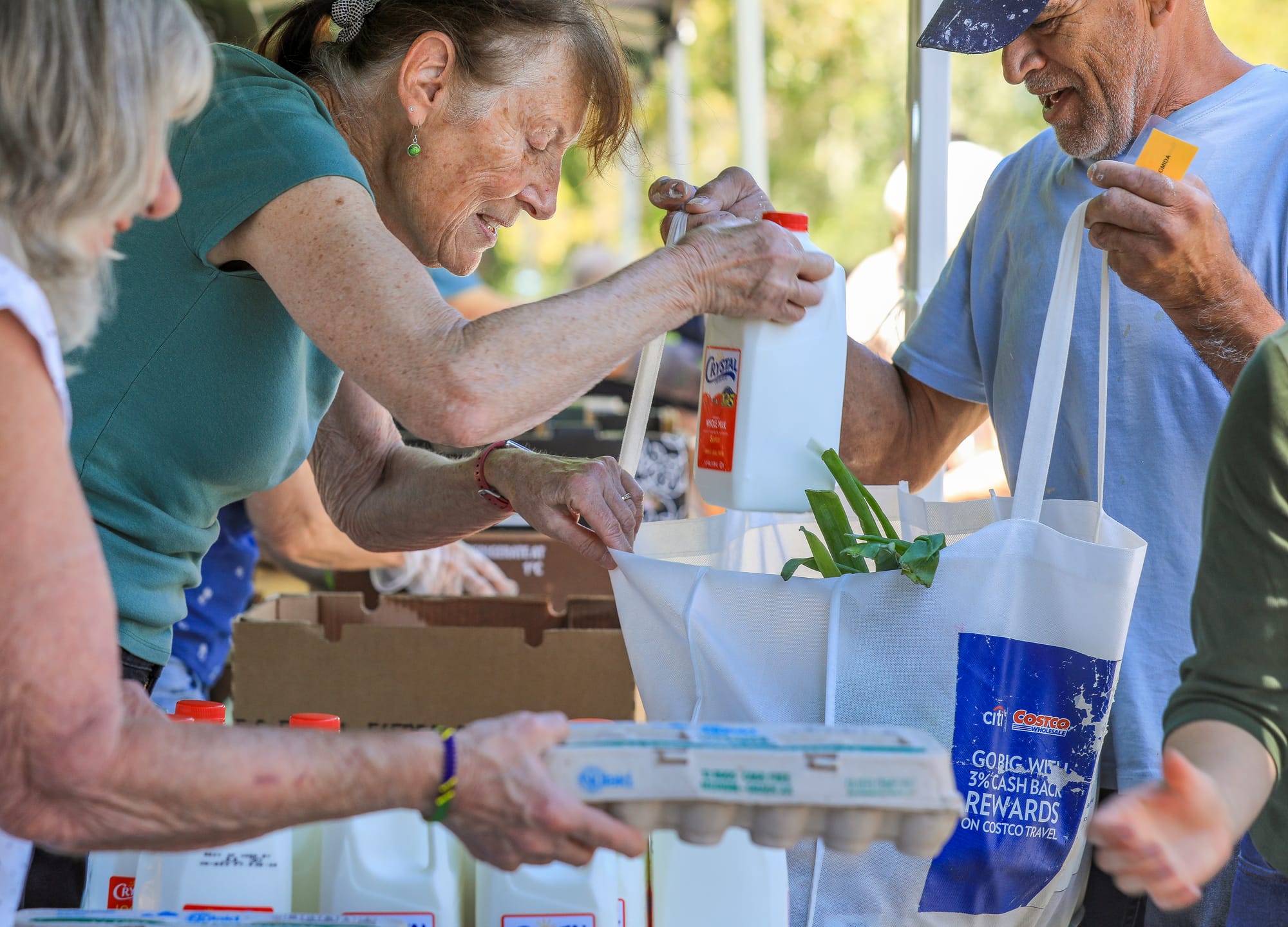
(Left photo) Joanne Buckley hands out dairy products at the Redwood Empire Food Bank distribution site at Lucchesi Park on Thursday, July 16, 2026. (Photos by CRISSY PASCUAL/PETALUMA VOICE ©2026)
Many Petalumans have felt the pain of rising food costs in recent years. Some, like Galleguillos, have turned to the food bank to fill their pantries.
Others are looking for help from government agencies, at a time when federal food aid is becoming increasingly hard to get. Recent changes to federal programs mean fewer people are qualifying for aid and those that do are meeting heavier work requirements and more red tape.
A county estimate from April points to about 4,700 people across the county possibly losing their eligibility for food benefits. Countywide, participants receive an average of $309 in food benefits per month.
Over the last several months, the Redwood Empire Food Bank has seen an increase in demand. CEO and President Allison Goodwin told Petaluma Voice that the organization doesn’t ask people why they register, so they can’t prove this increase is due to recent eligibility changes.
Reporting requirement changes
After the federal government passed H.R. 1, also known as the "One Big Beautiful Bill Act," in July 2025, major changes to food benefits started in April and continued in June. The bill added more eligibility requirements and increased state and county administrative costs. (It also included changes to Medicare and Medi-Cal, which we’ll address in future reporting.)
In April, “lawfully present immigrants” including asylum seekers, refugees, and victims of trafficking, were no longer eligible for food benefits. In Sonoma County, an estimated 760 people lost eligibility.
As of June 1, the most significant changes to the state’s iteration of the food benefits program, CalFresh, are work and “community engagement” requirements for “able-bodied adults without dependents.”
The new work requirement rules for the so-called able-bodied adults apply to people ages 18 to 64 who have no documented disability nor a dependent under 14 years old, according to the California Department of Social Services.
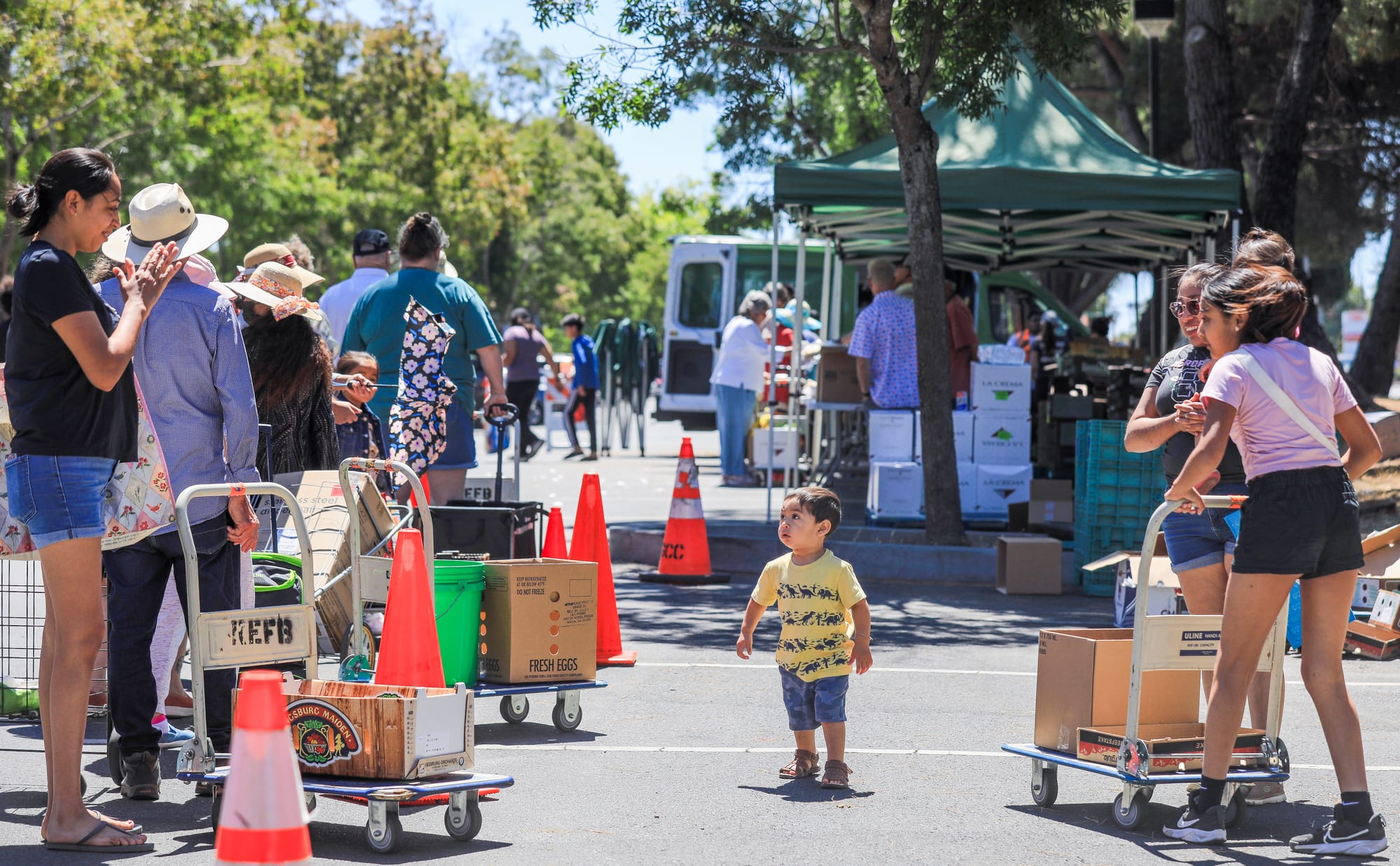
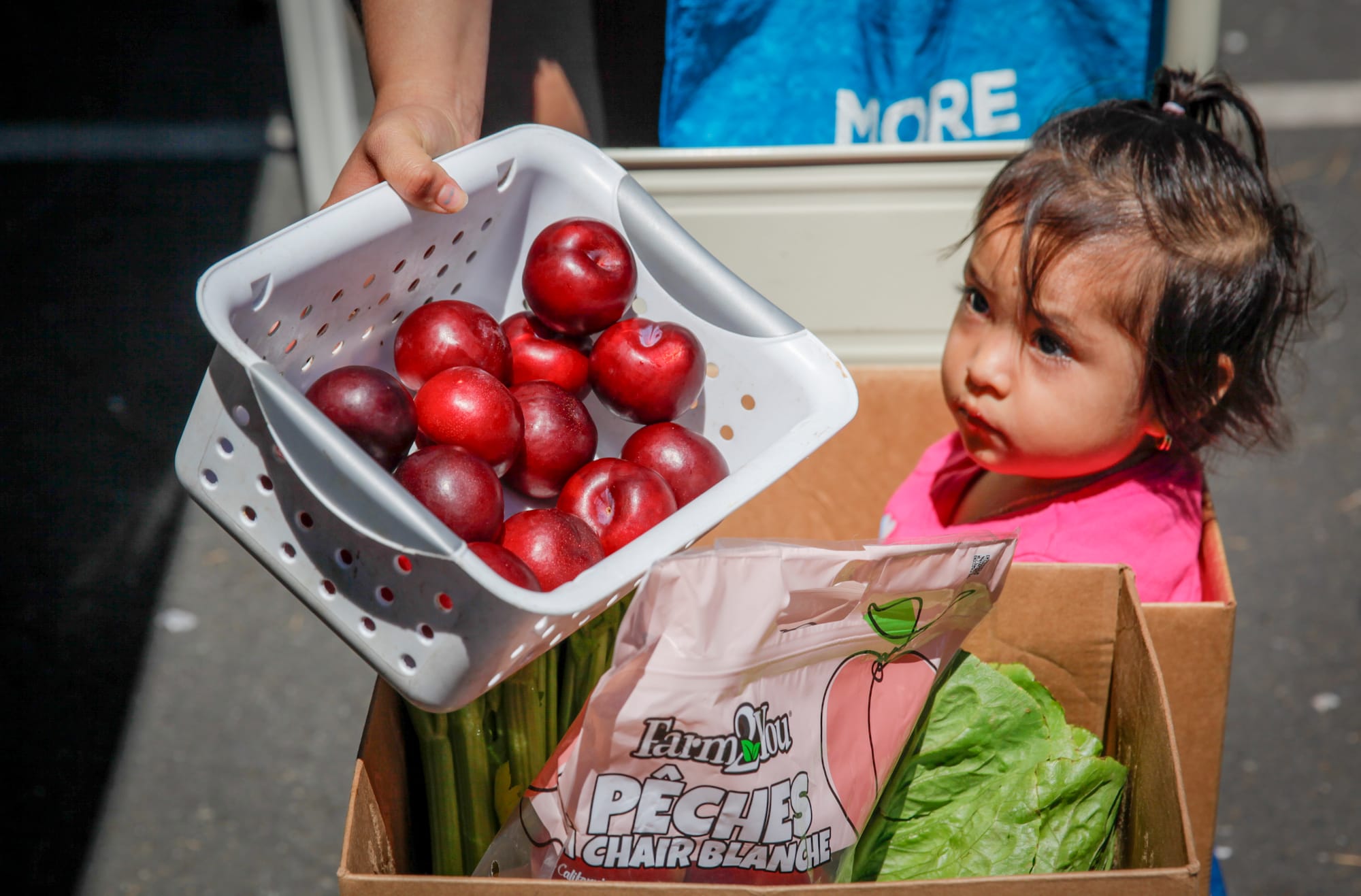
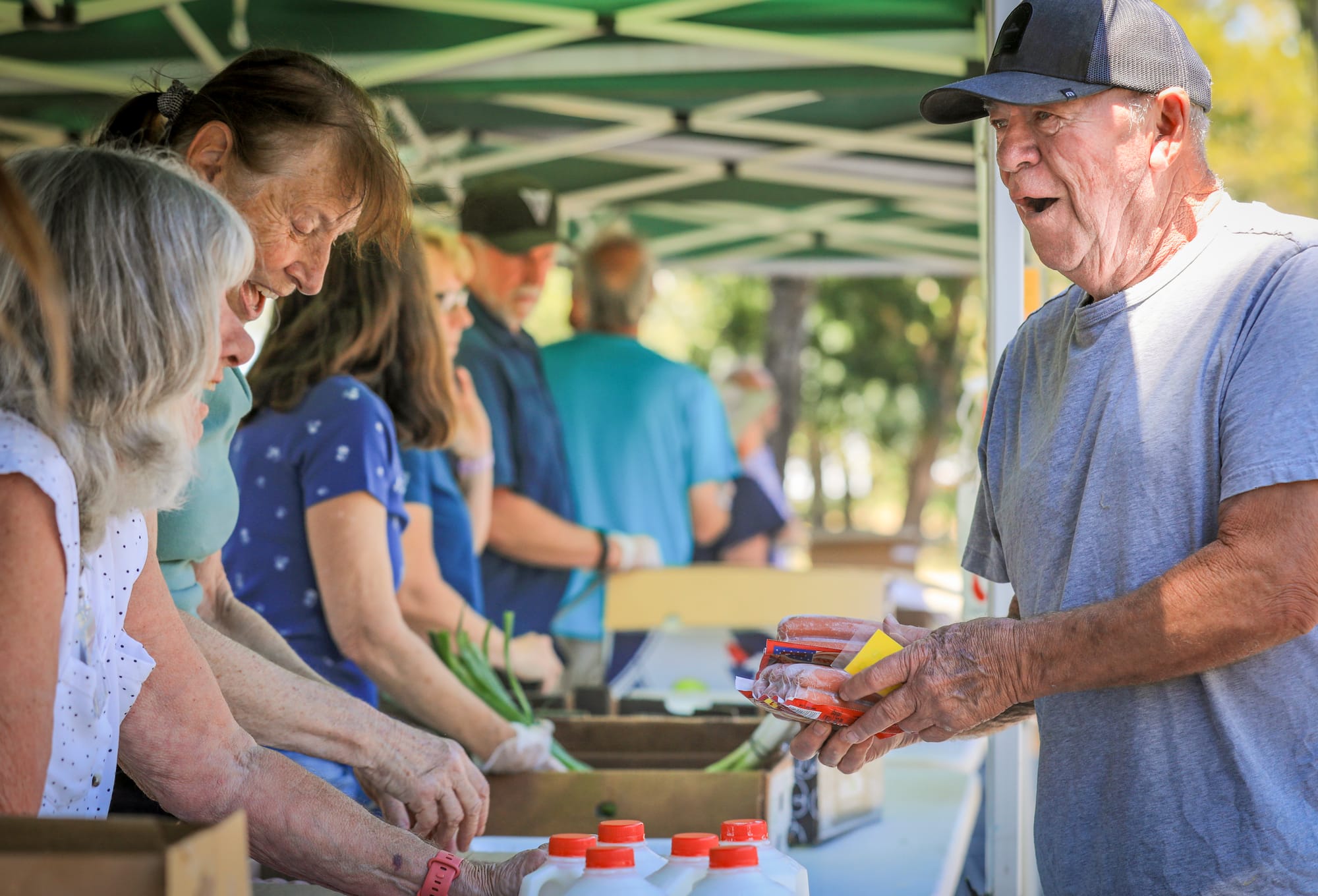
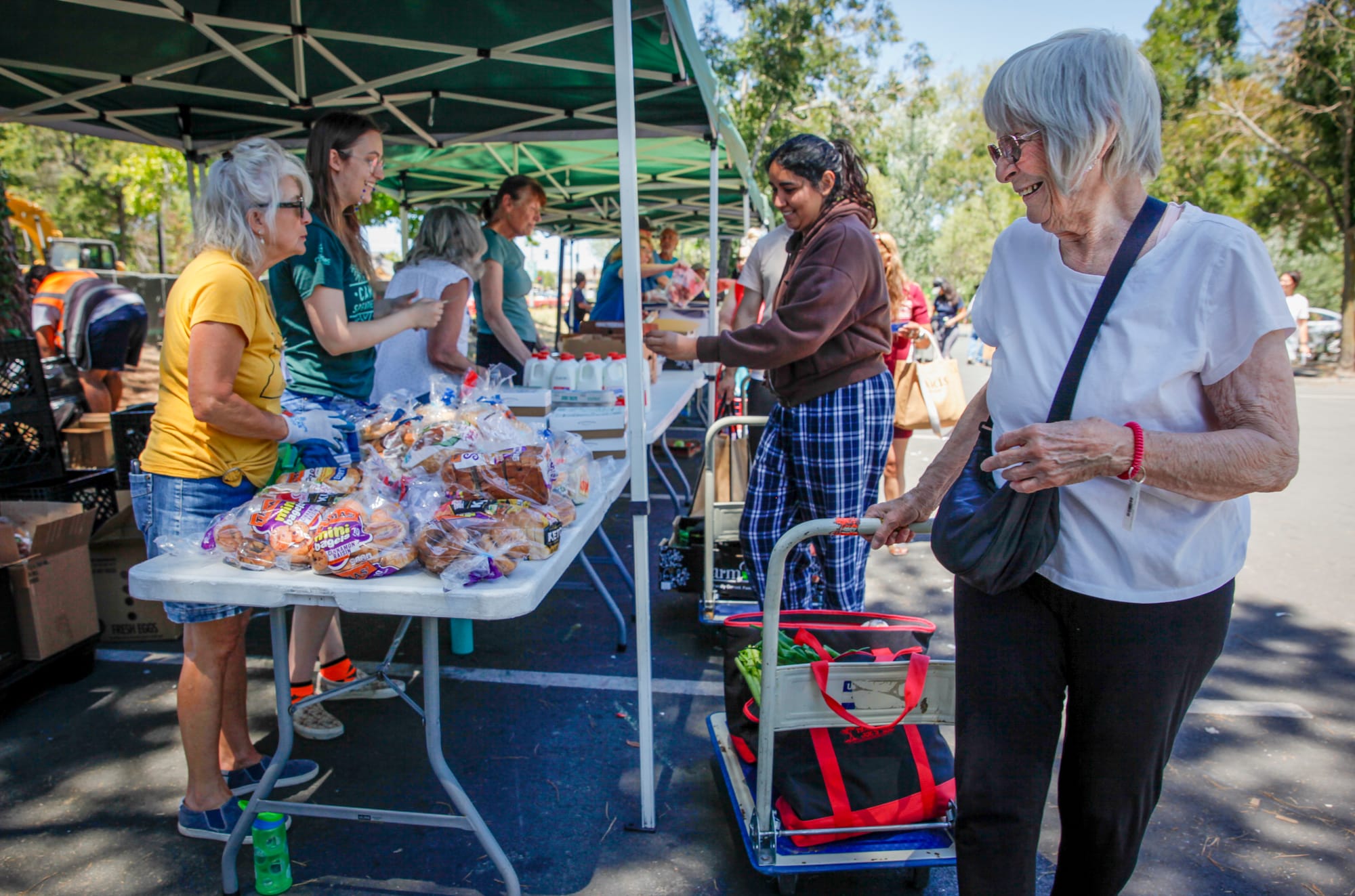
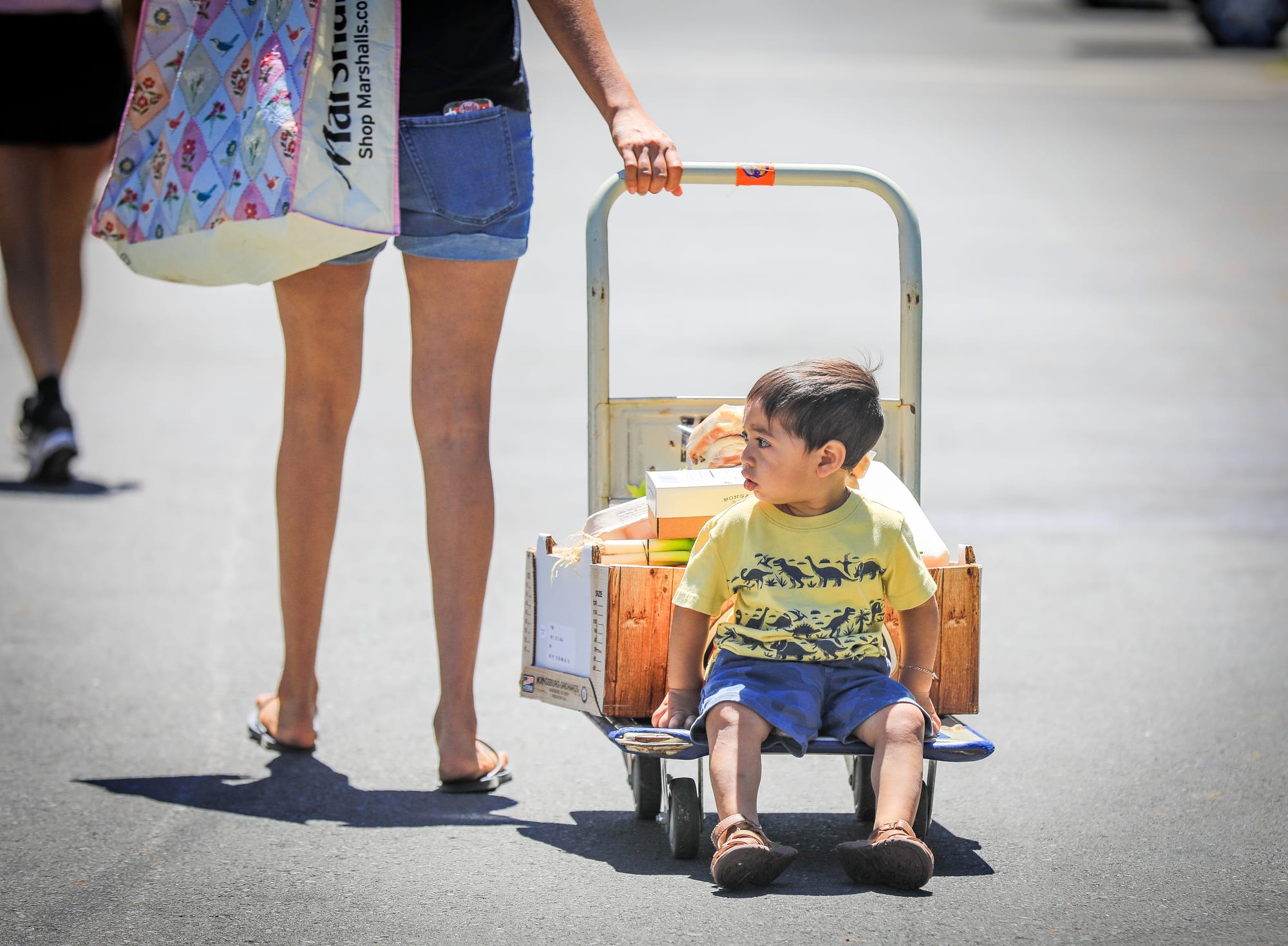
(Left photo) Daphne Yeh, 1, gets wheeled in a cart in the Redwood Empire Food Bank distribution line as her mom picks up food. (Right photo) Richard Henley chats with volunteers as he picks up food. (Thursday, July 16, 2026. Photos by CRISSY PASCUAL/PETALUMA VOICE ©2026)

The bill expanded the number of people who must meet the new rules. Previously, people 55 and over were excluded. Now that age limit is 64. Parents with a child under 18 were also excluded. That age was dropped to 14. People experiencing homelessness, veterans, and people in foster care on their 18th birthday are also no longer excluded from the requirements.
These requirements include having a job, volunteering, or enrolling in school or a job training program averaging about 20 hours a week.
If people do not meet those requirements, they are only eligible for three months of benefits every three years, though there are some exceptions. In April, the county estimated about 30 percent of enrollees – or about 12,990 – would be subject to work requirements, of which about 3,900 could lose their benefits.
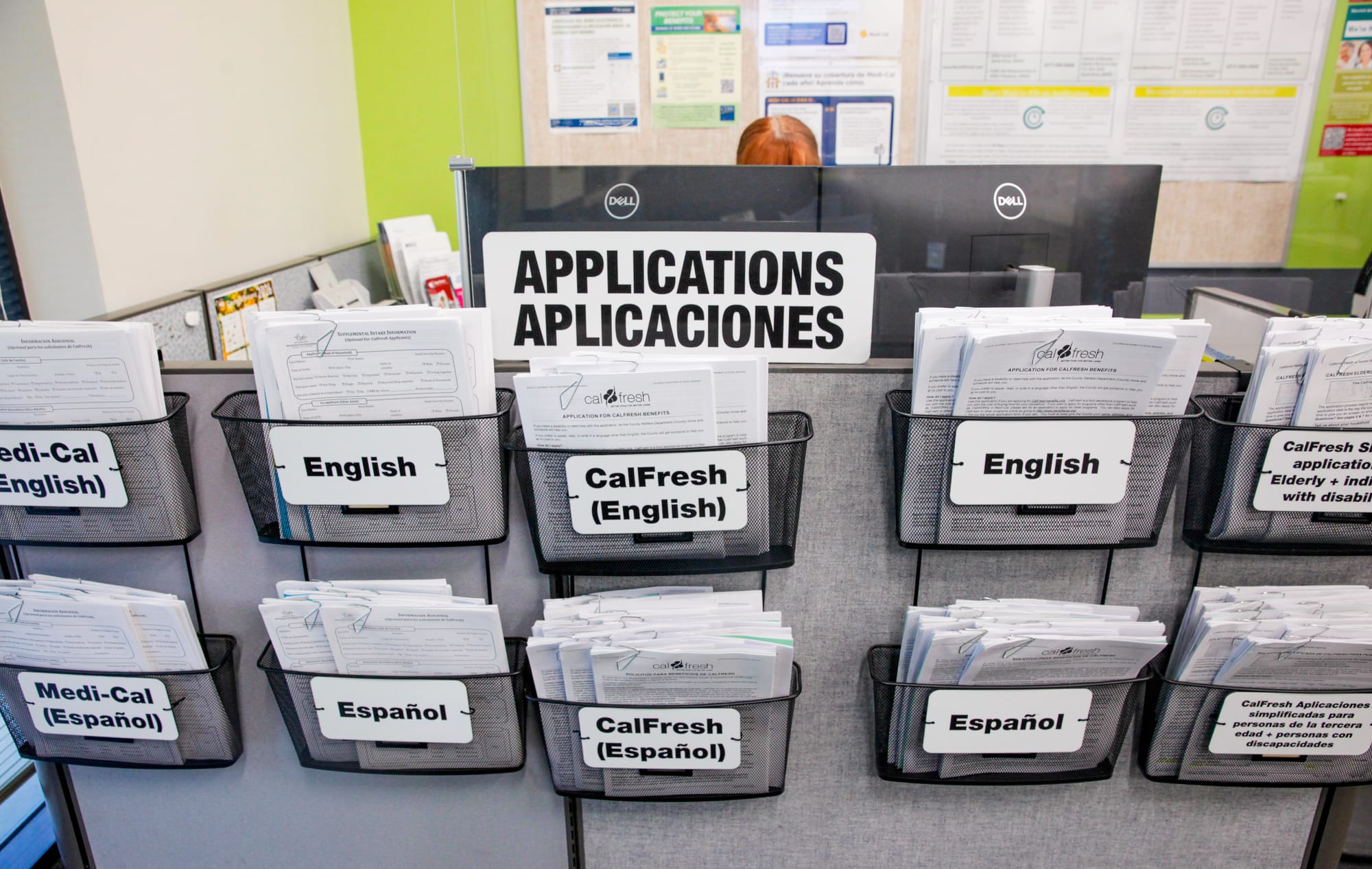
As of August, it’s still too early to tell whether there’s been major changes to the number of people receiving food benefits through CalFresh. The county delays reporting figures for three months to account for adequate application processing time, according to Katie Grieves, division director within the Economic Assistance Division in the Sonoma County Human Services Department.
In Sonoma County, “CalFresh enrollment has stayed largely stable over the last year," she told Petaluma Voice. "It peaked in July 2025 and has come down slightly, although it still sits at a higher enrollment than in January 2025."
In January 2025, CalFresh enrollment in Petaluma and Penngrove was 3,745 and 201, respectively. It increased in July 2025, with 4,010 people enrolled in Petaluma and 255 in Penngrove. In March 2026, Petaluma saw a slight dip to 3,980, and Penngrove had an increase to 261 recipients.
As far as the June requirement changes, “We expect to see the first impacts of those changes in September,” she said.
Increases in demand for food
More people visited Redwood Empire Food Bank – which operates from Sonoma County to the Oregon border – in March and April, with numbers flattening out in May, Goodwin said.
Unlike with CalFresh, “there aren’t a level of hoops to jump through,” she said. The food bank’s offerings can be a supplement to other programs, like free school lunches or CalFresh benefits, she said.
More people accessed the food bank in June, July, and August – following the new restrictions – though Goodwin said she can’t guarantee that the increase is tied to the bill’s impacts.
Nonetheless, 400 new families a month are signing up for food assistance, she said.
“July saw a 4% increase in participation, and so far in August we are trending toward another increase over July,” she said. “Similarly, our partners also saw an increase in participation in July over previous months.”
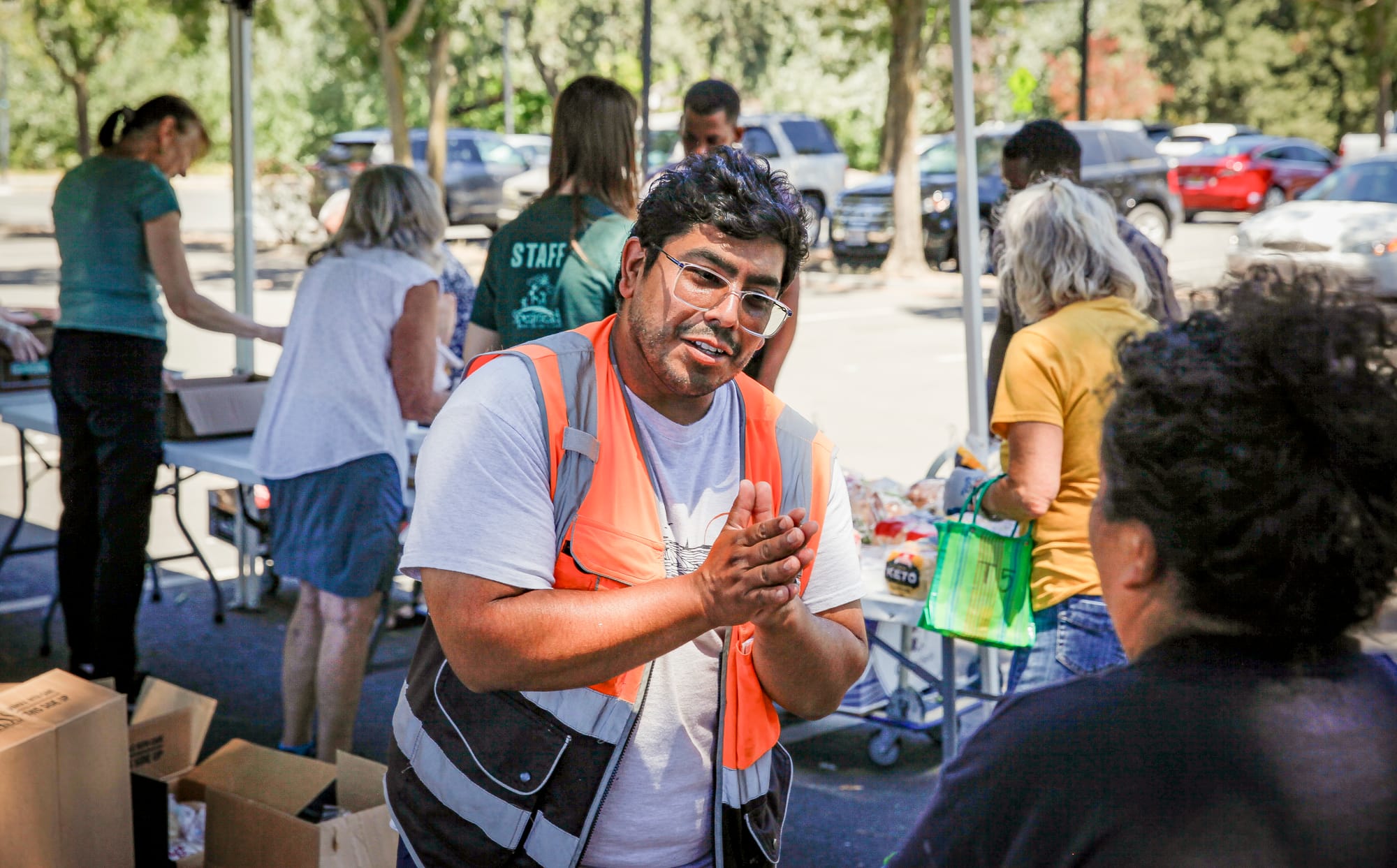
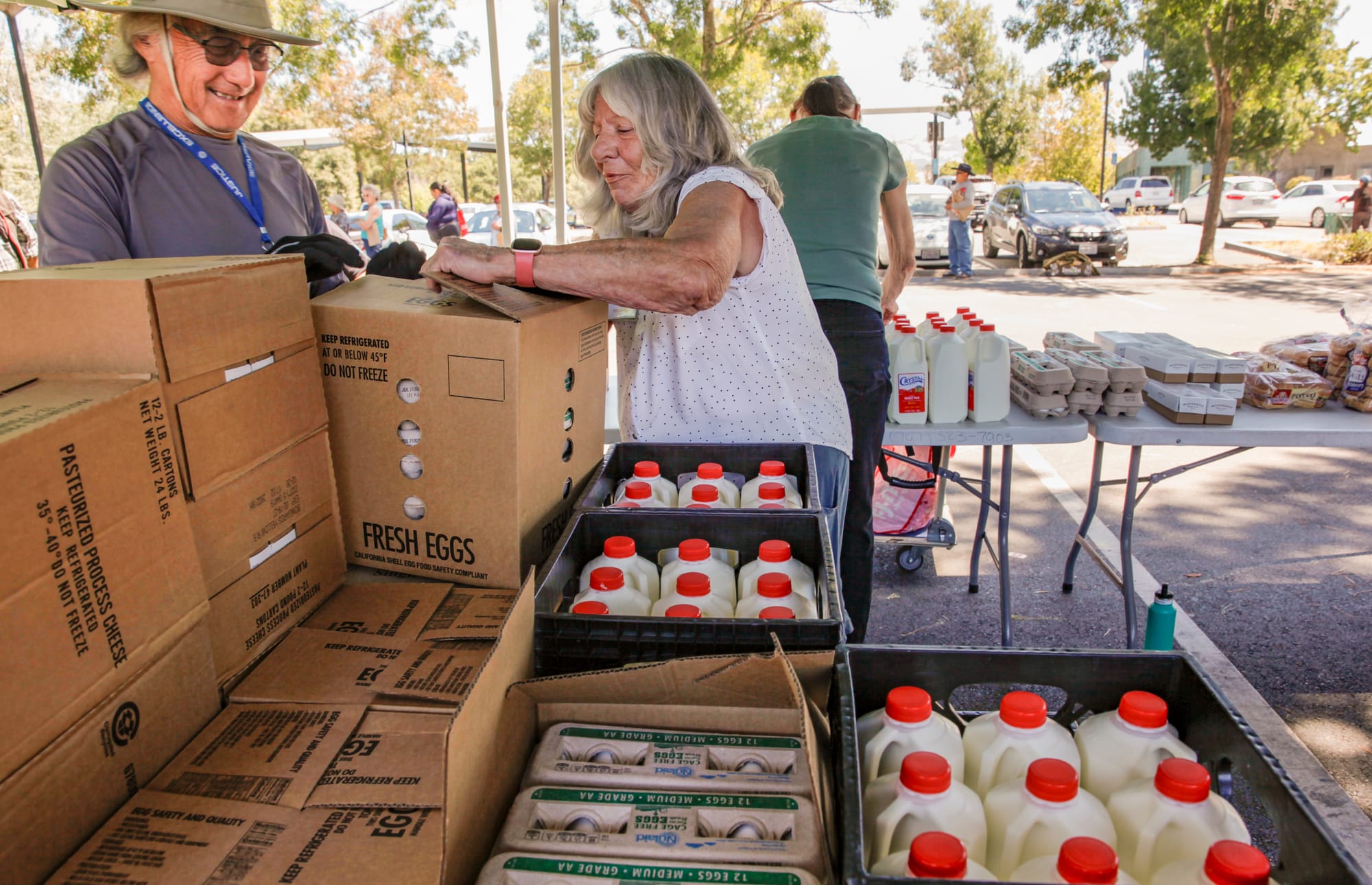
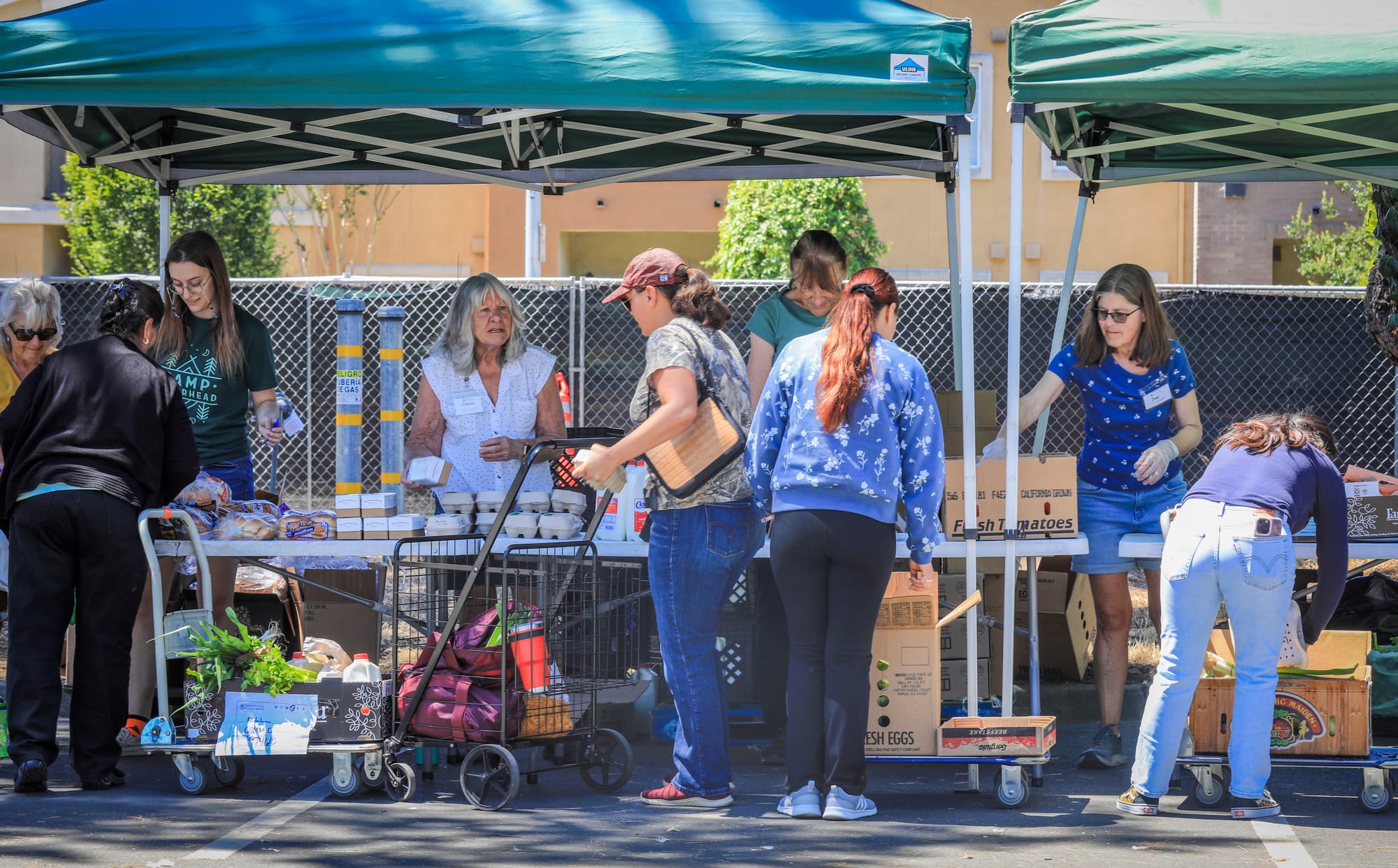
(Left photo) Program coordinator Miguel Corona talks with volunteer Karina Toledo, who is also a recipient at the Redwood Empire Food Bank distribution site at Lucchesi Park. (Right photo) Volunteers Winchell Quan and Joanne Buckley unpack dairy products. (Thursday, July 16, 2026. Photos by CRISSY PASCUAL/PETALUMA VOICE ©2026)
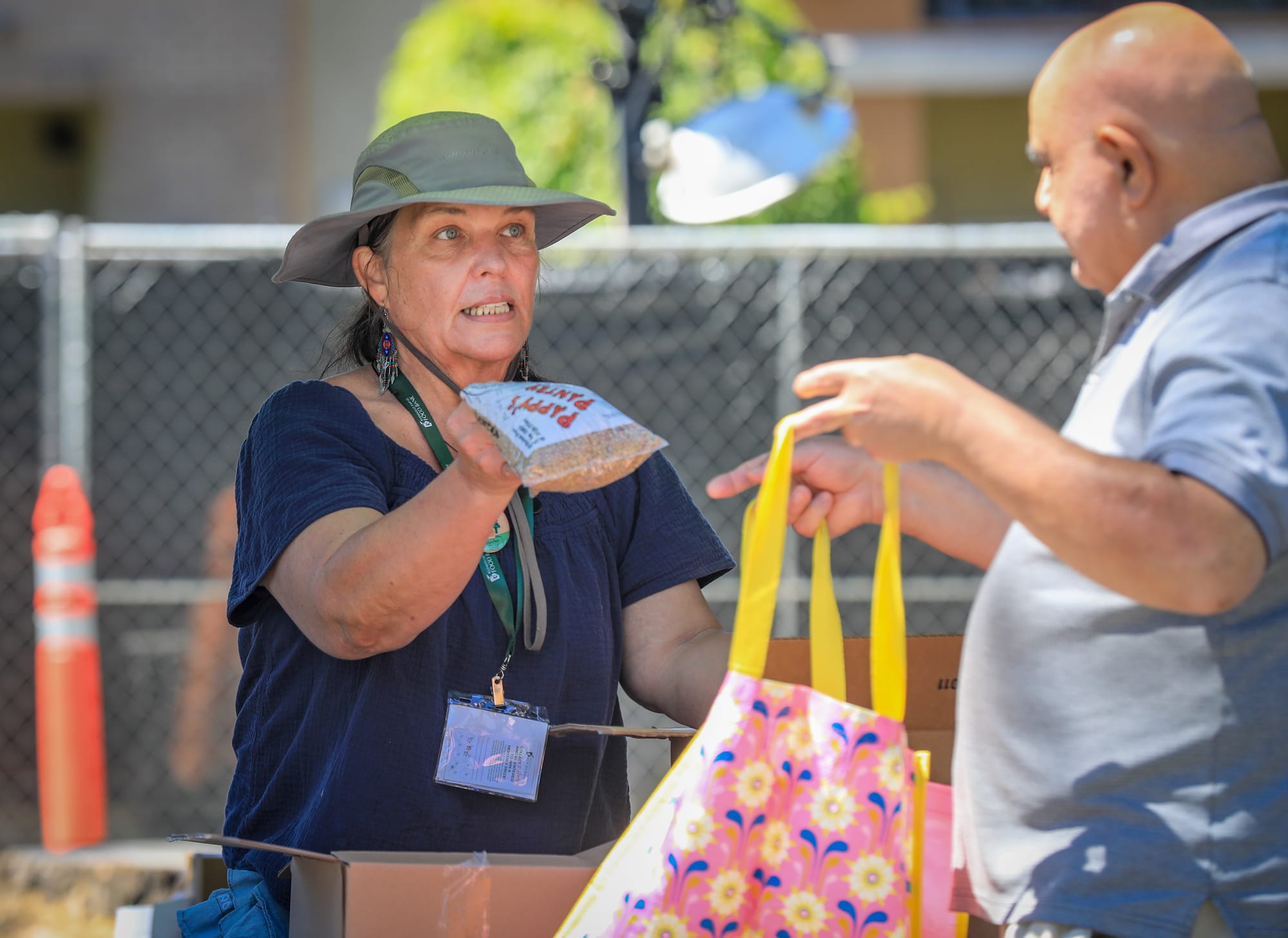
For the past three years, Redwood Empire Food Bank volunteer Marilyn Melbard, 57, of Petaluma, has been volunteering at the Petaluma Community Center distribution site. She decided to volunteer because she was “seeing the price of food and realizing that there’s got to be a lot of people who are in need, as well as myself,” she said.
In mid-July she told Petaluma Voice that over the previous few months she noticed more people coming.
The county is recruiting more staff to help meet the new CalFresh, Medi-Cal, and Medicare requirements, Greaves said.
“These new requirements create considerable additional steps for county workers to take in processing CalFresh applications and renewals,” she said.
CalFresh and Redwood Empire Food Bank are two of several resources available locally, with various organizations overlapping in their efforts to provide relief and stability.
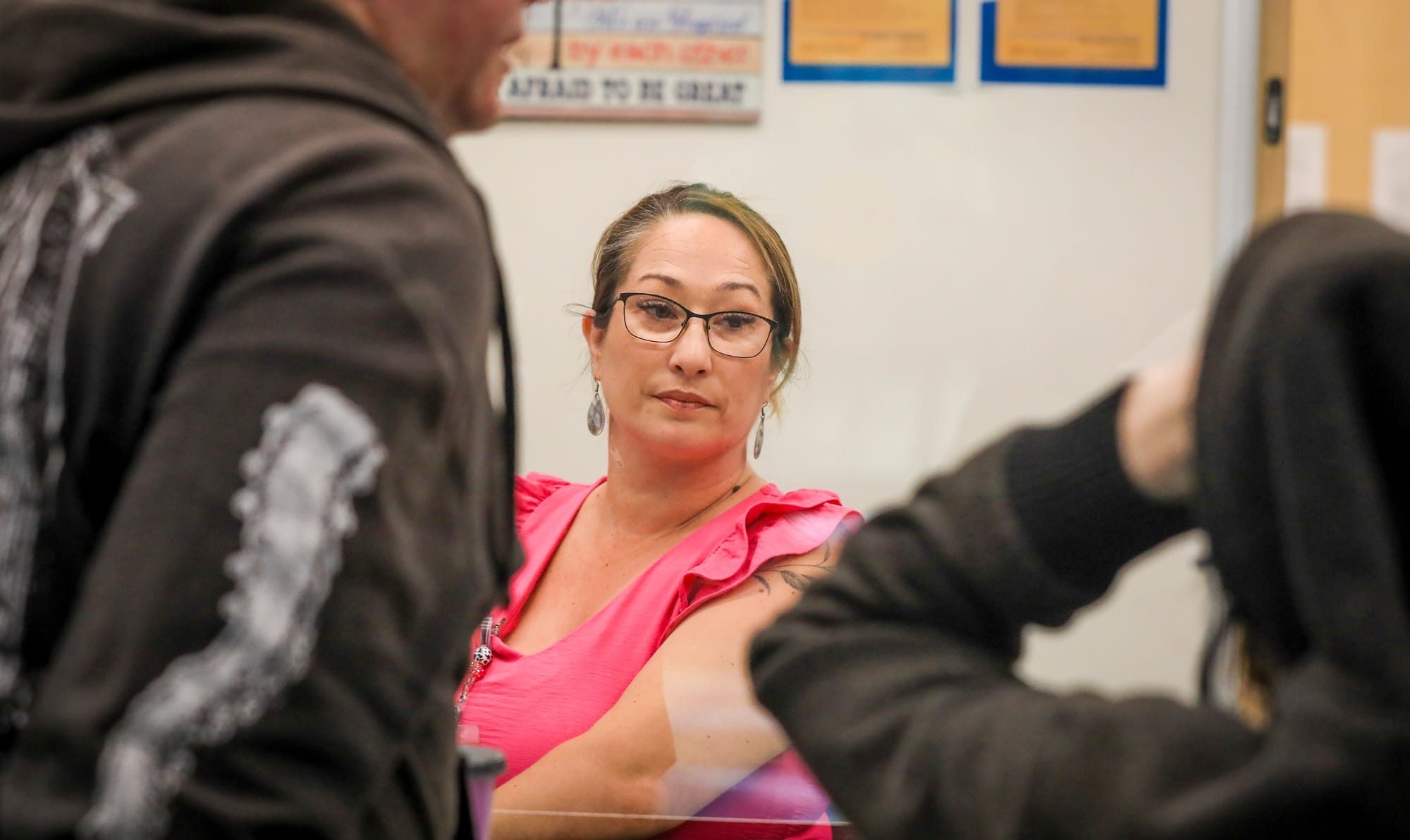
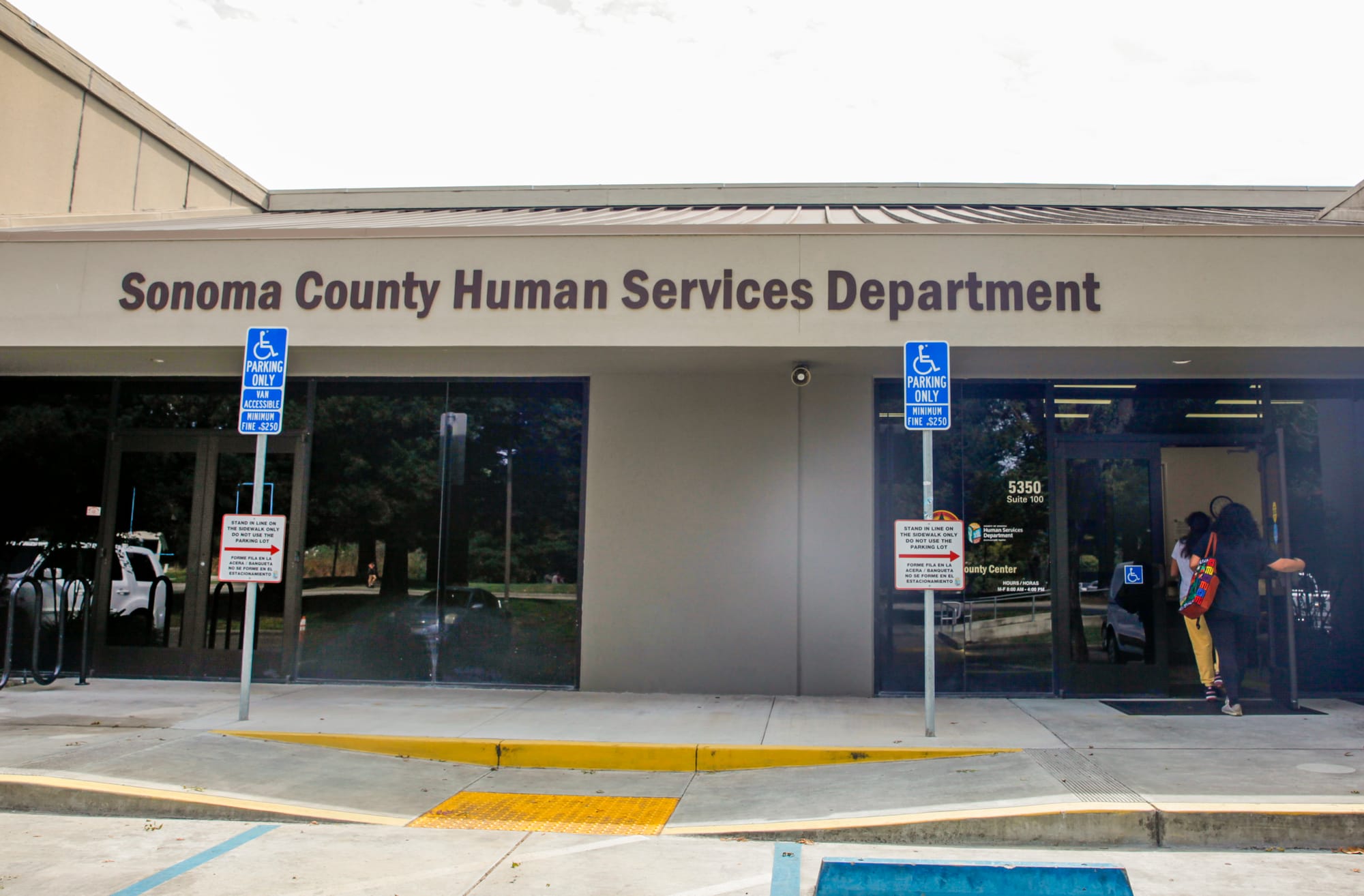
Maribel Bañuelos, a senior office assistant at the Sonoma County Human Services office, talks with clients. (Monday, August 17, 2026. Photo by CRISSY PASCUAL/PETALUMA VOICE ©2026)
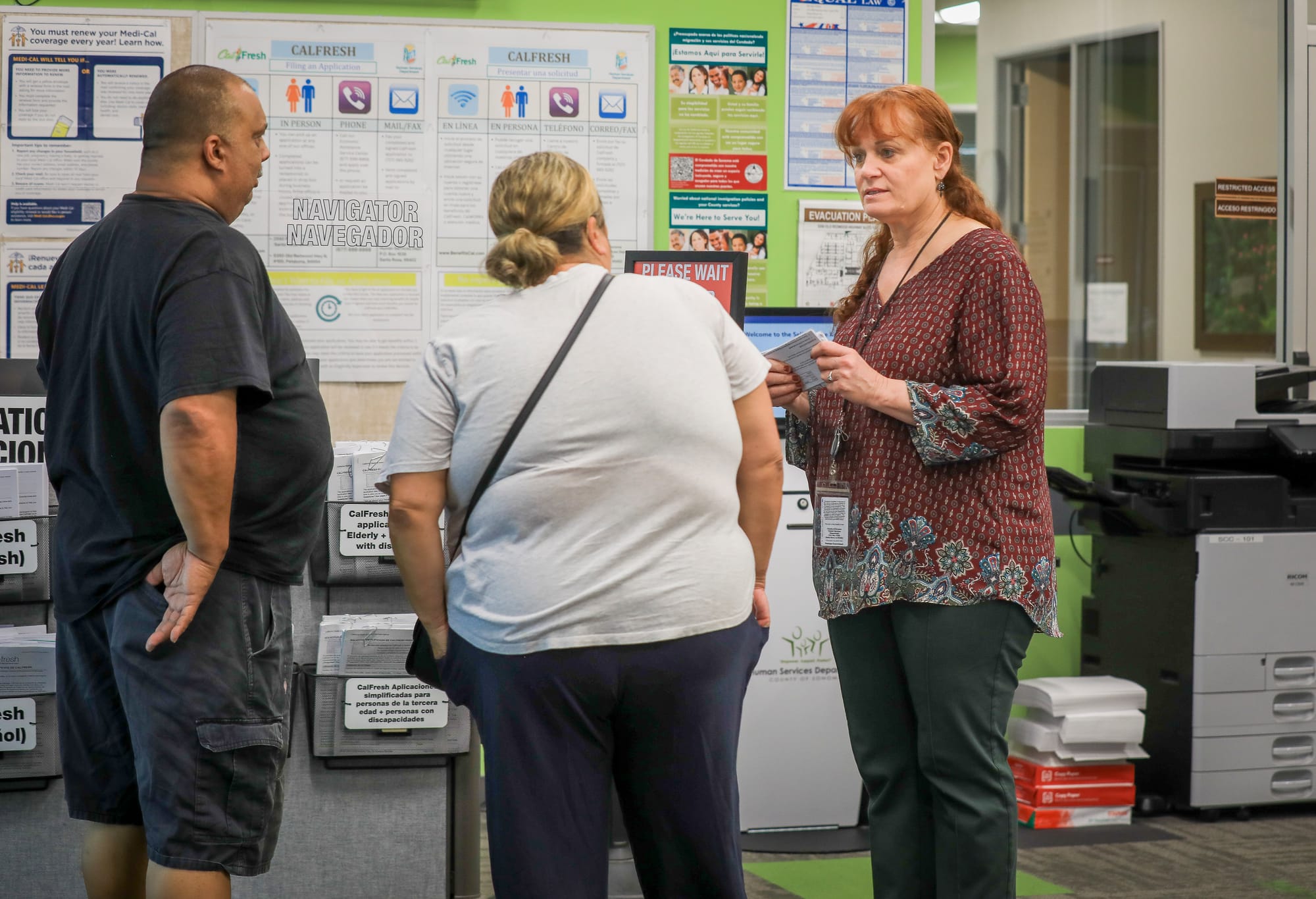
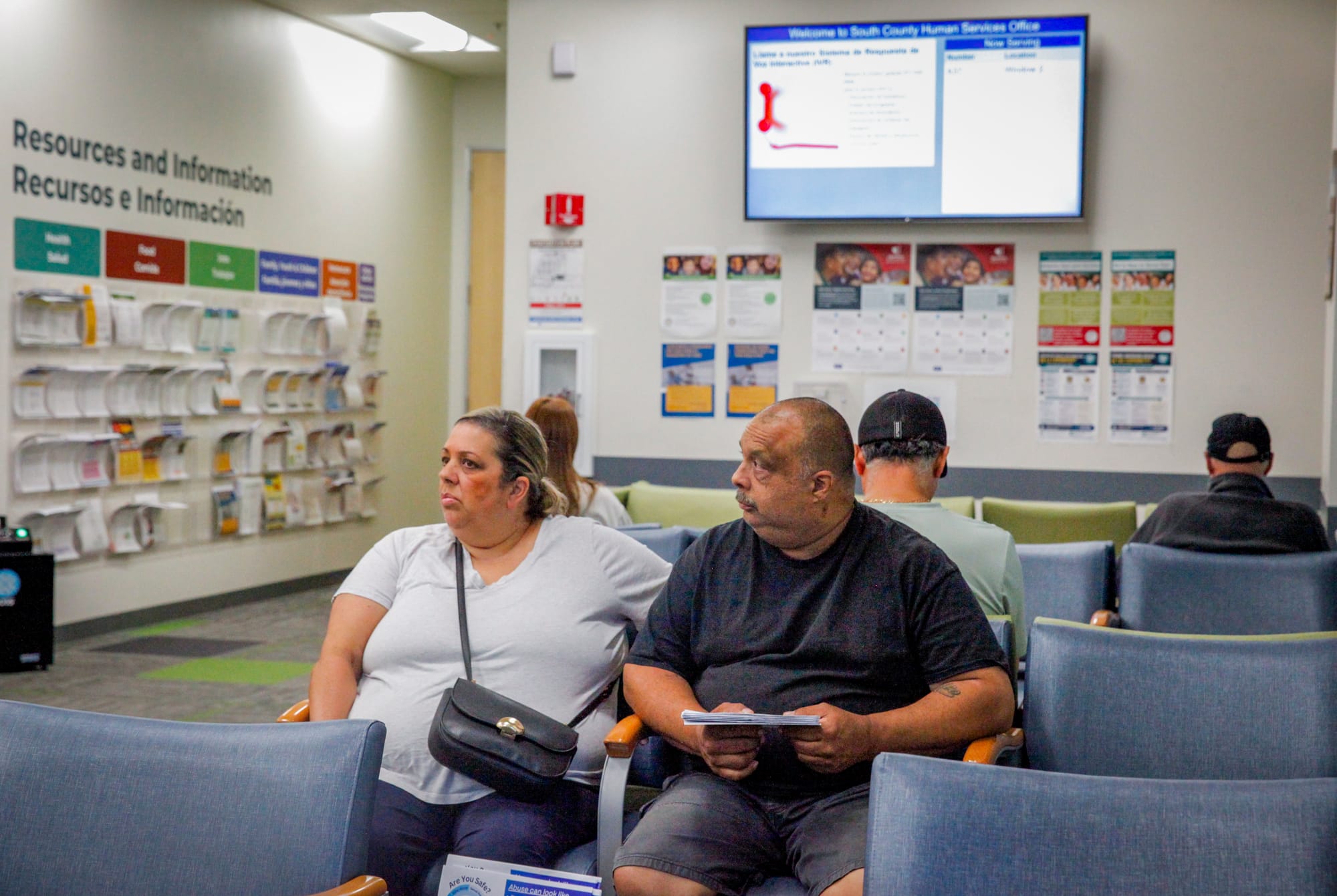
Changes to one player could have a “cascading effect” on others doing similar work, said Committee on the Shelterless CEO Chris Cabral. Twice a day, seven days a week, COTS provides hot meals to people in Petaluma, and is bracing for more changes to come with new Medicare and Medi-Cal requirements ushered in by H.R. 1, Cabral said.
“We’re all impacted in different ways, but we’re all also operating in the same ecosphere,” where they serve people experiencing poverty, housing instability, or homelessness, she said.
“For example, if Redwood Empire has a reduced ability to provide food, then there’s going to be more people coming to COTS to get food,” she said, adding that the organization gets resources from Redwood Empire Food Bank. “When the food need goes up, the demand on our kitchen goes way up. We can’t just make food out of thin air.”
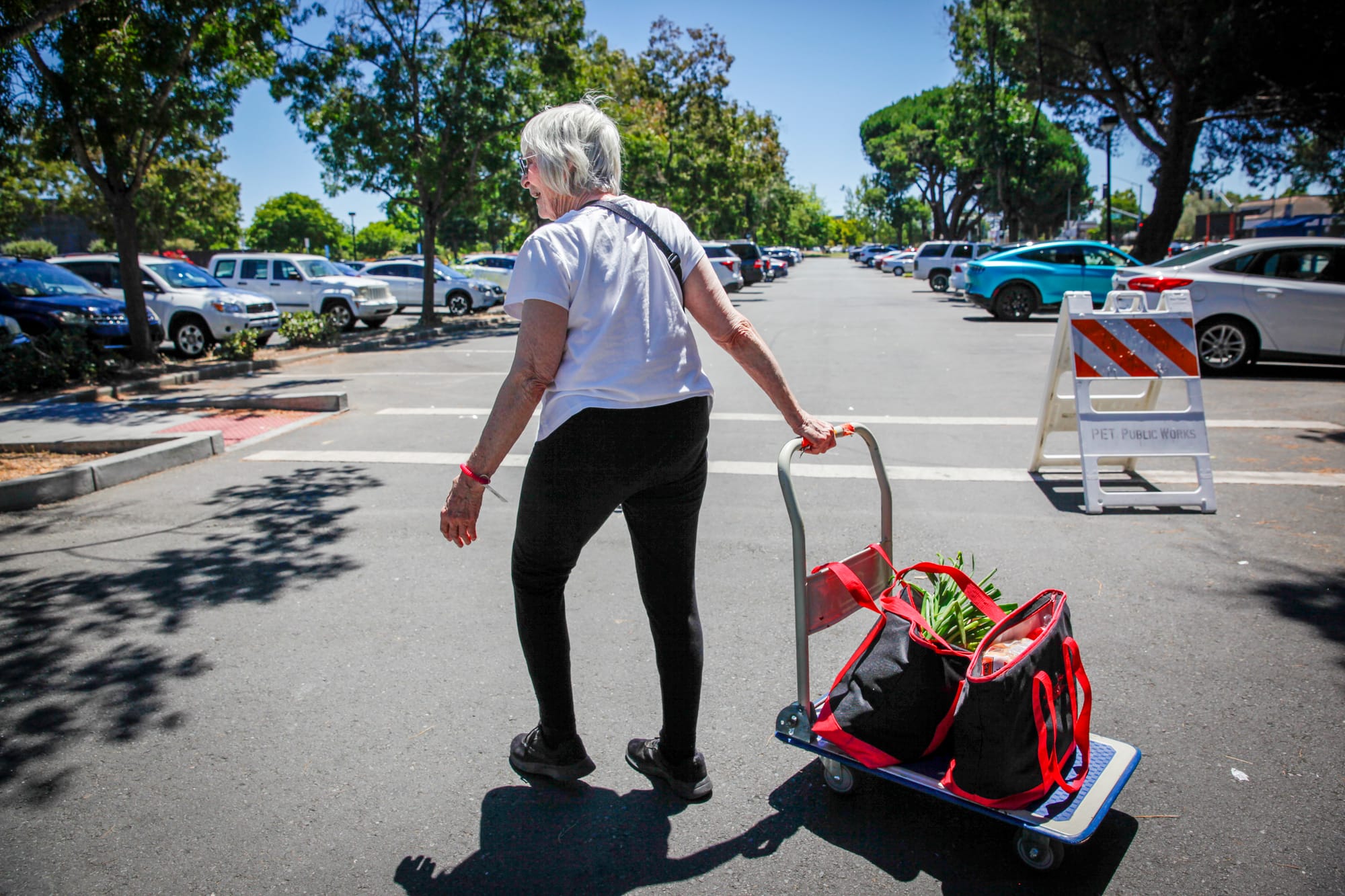

- Redwood Empire Food Bank and its partners have ten distribution sites listed on its website where people can receive food in Petaluma. For more information on how to get food, visit getfood.refb.org.
- For information on CalFresh, and including how to apply, visit benefitscal.com.
- The Sonoma County Human Services Department Petaluma office has more information on additional services. It is located at 5350 Old Redwood Highway #100.
Jennifer Sawhney is a reporter and co-founder of Petaluma Voice. She can be reached at jsawhney@petalumavoice.org.
Do you like our work? Support us with a tip.