Transit Service Scaled Back
Major changes to bus, paratransit, LumaGo services planned for August
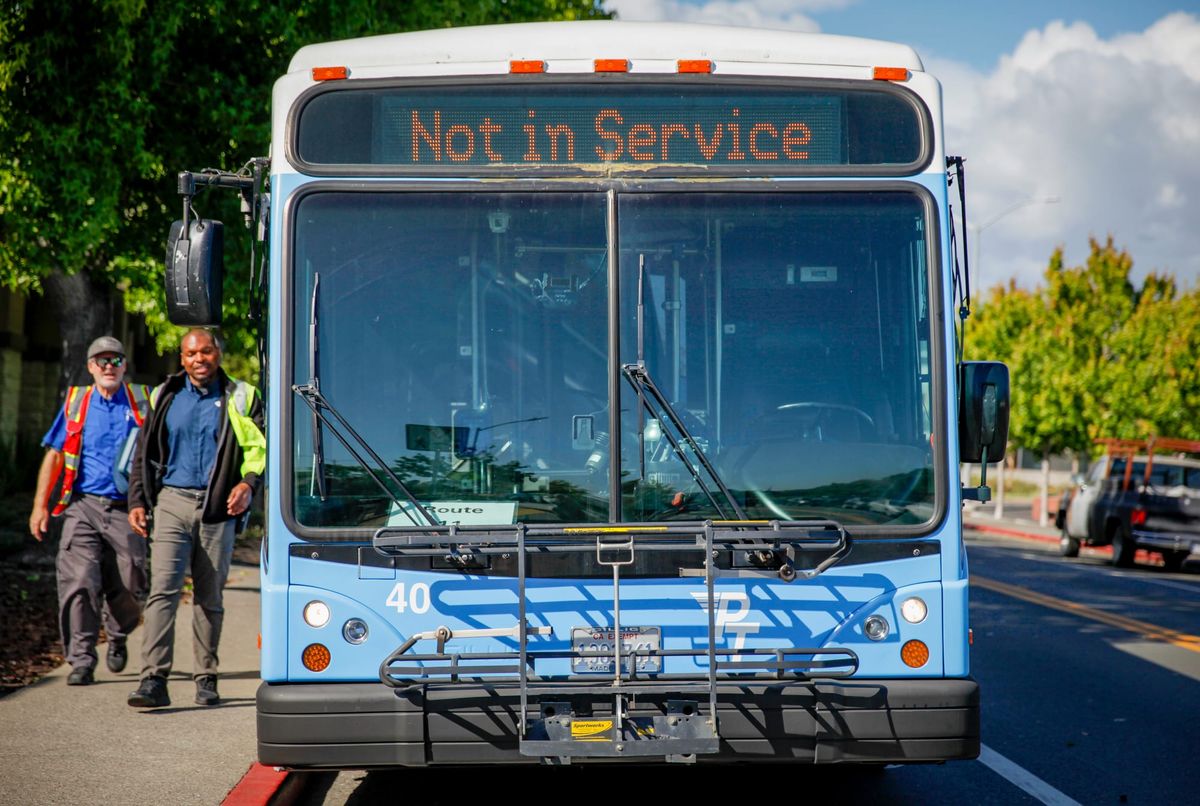
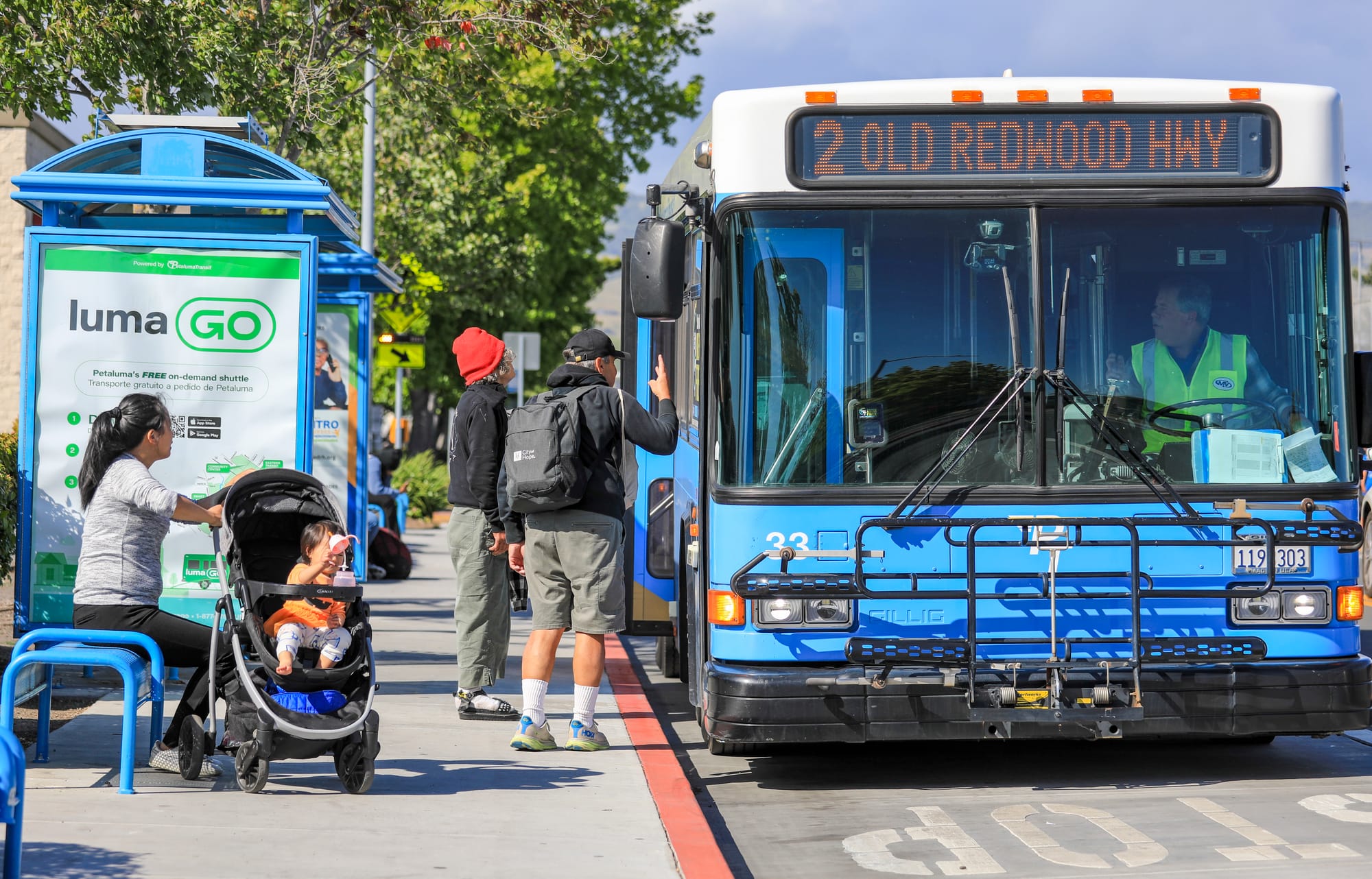
As the city rolls out major cuts to bus and on-demand transportation services, Petaluma transit users may find themselves with fewer options, and some transit contractors without a job.
The proposed cuts are slated to begin Aug. 10, said Maria Arce, interim transit manager for Petaluma Transit, who shared the information during the May 19 Transit Advisory Committee meeting.
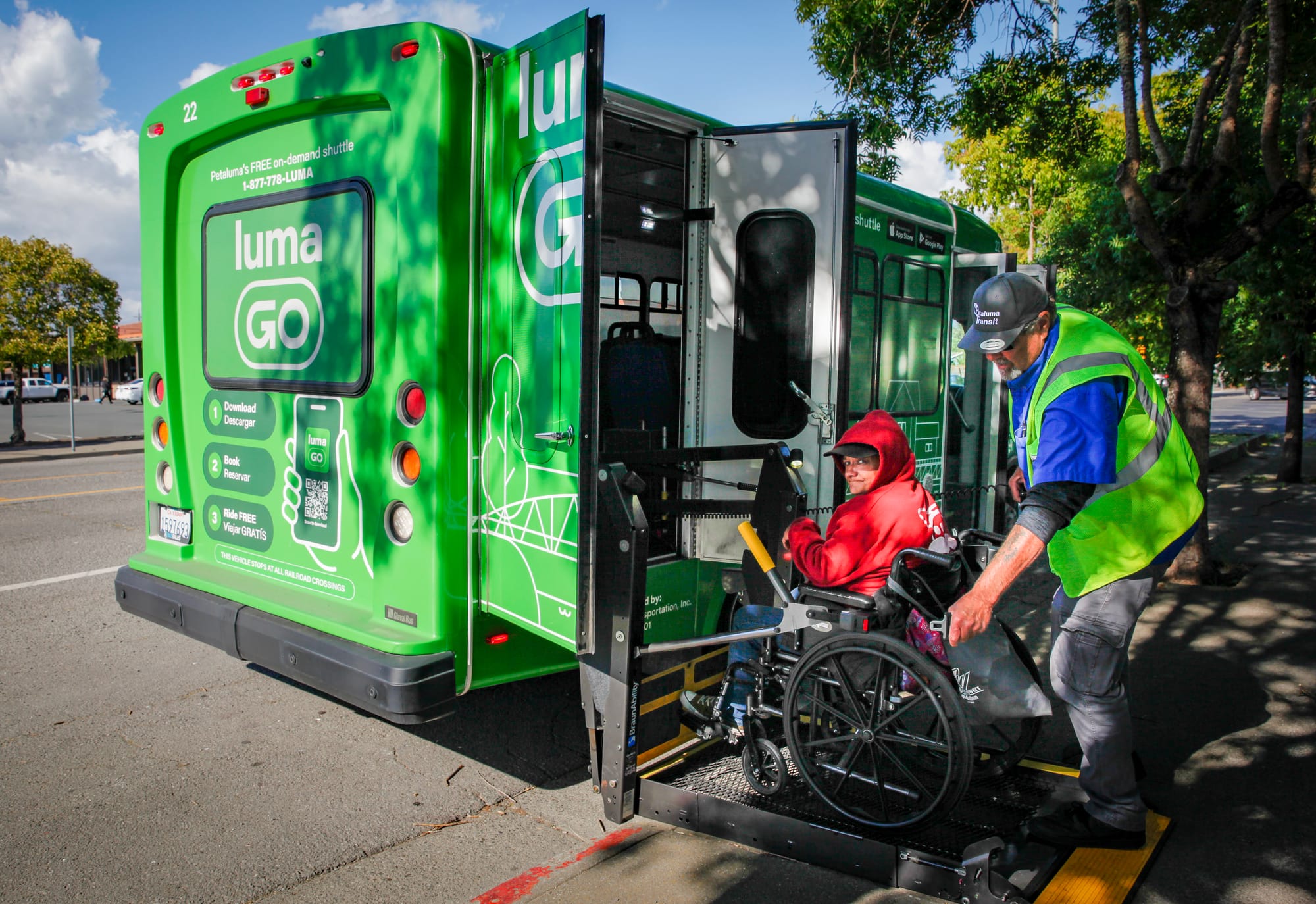
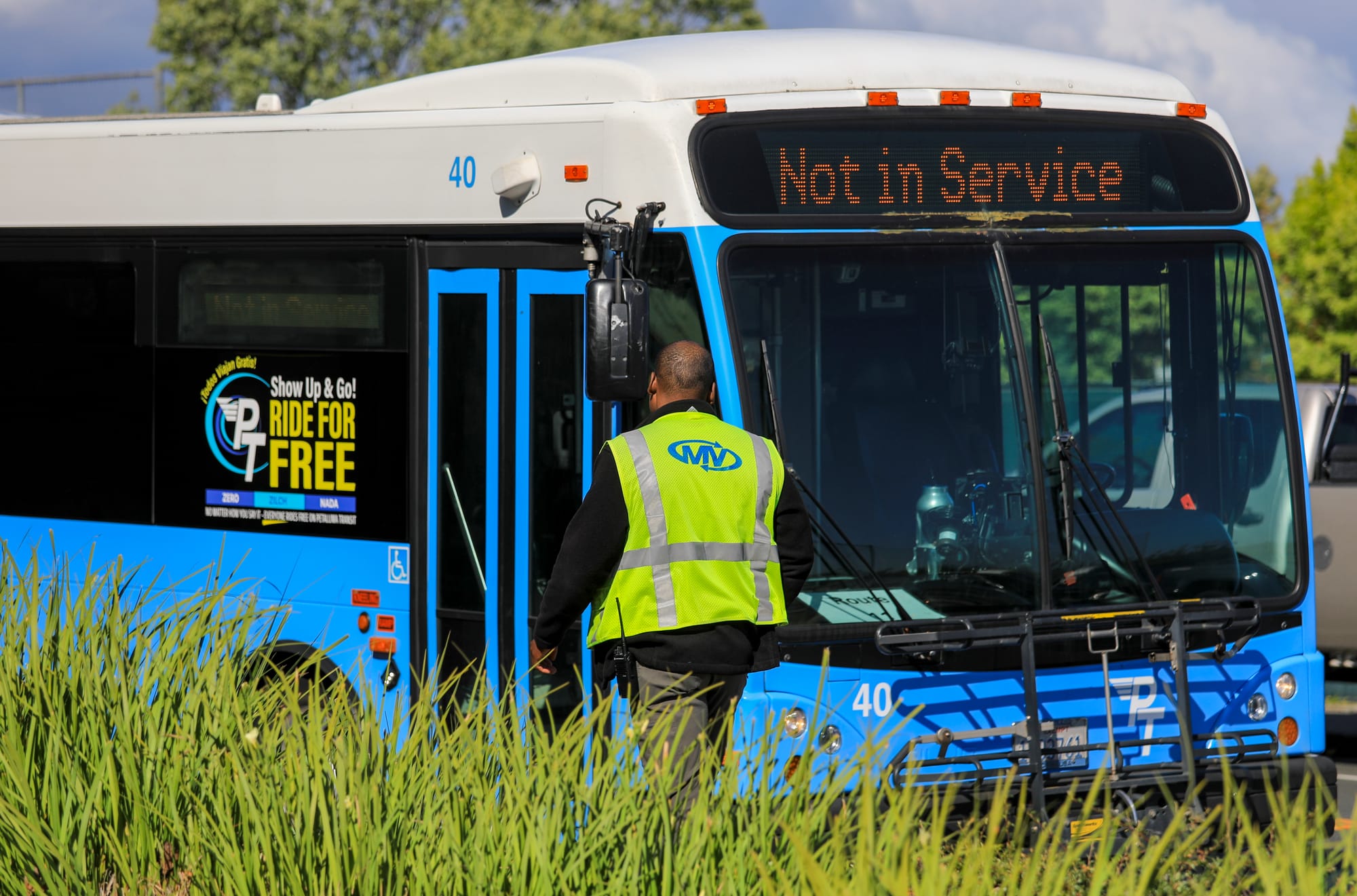
Major changes include: limiting fixed-route and paratransit service to weekdays until 6 p.m.; ending the LumaGo pilot project; not renewing a contract with United Cerebral Palsy of the North Bay for bus stop support; strengthening bus service on routes 2 and 11; and introducing a new on-demand transit service to counter the reductions. For the foreseeable future, all of the city’s transit services will remain fare-free.
Staff intend to increase their data collection and reporting through January 2027, with a goal of reintroducing a more sustainable level of service then, Arce said.
“This is going to be detrimental to our program, as the bus shelter contract offered valuable job training opportunities for many of the adults with disabilities that we serve," said Christina Isetta, interim chief executive officer of United Cerebral Palsy of the North Bay. Arce noted that the contract would end when existing grant funds covering the program run out.
The cuts are needed because funding sources have changed and transit reserves in the city budget need to be maintained at adequate levels, Arce said. Without service modifications, the transit budget would face a growing deficit.
She outlined several goals for the agency – make data-driven decisions, identify core ridership, protect the most vulnerable, create new connections – with a focus on building financial reserves. “We should have reserves,” Arce said, adding that “we’re set by the box of finances. If it’s not sustainable, it doesn’t really matter.”
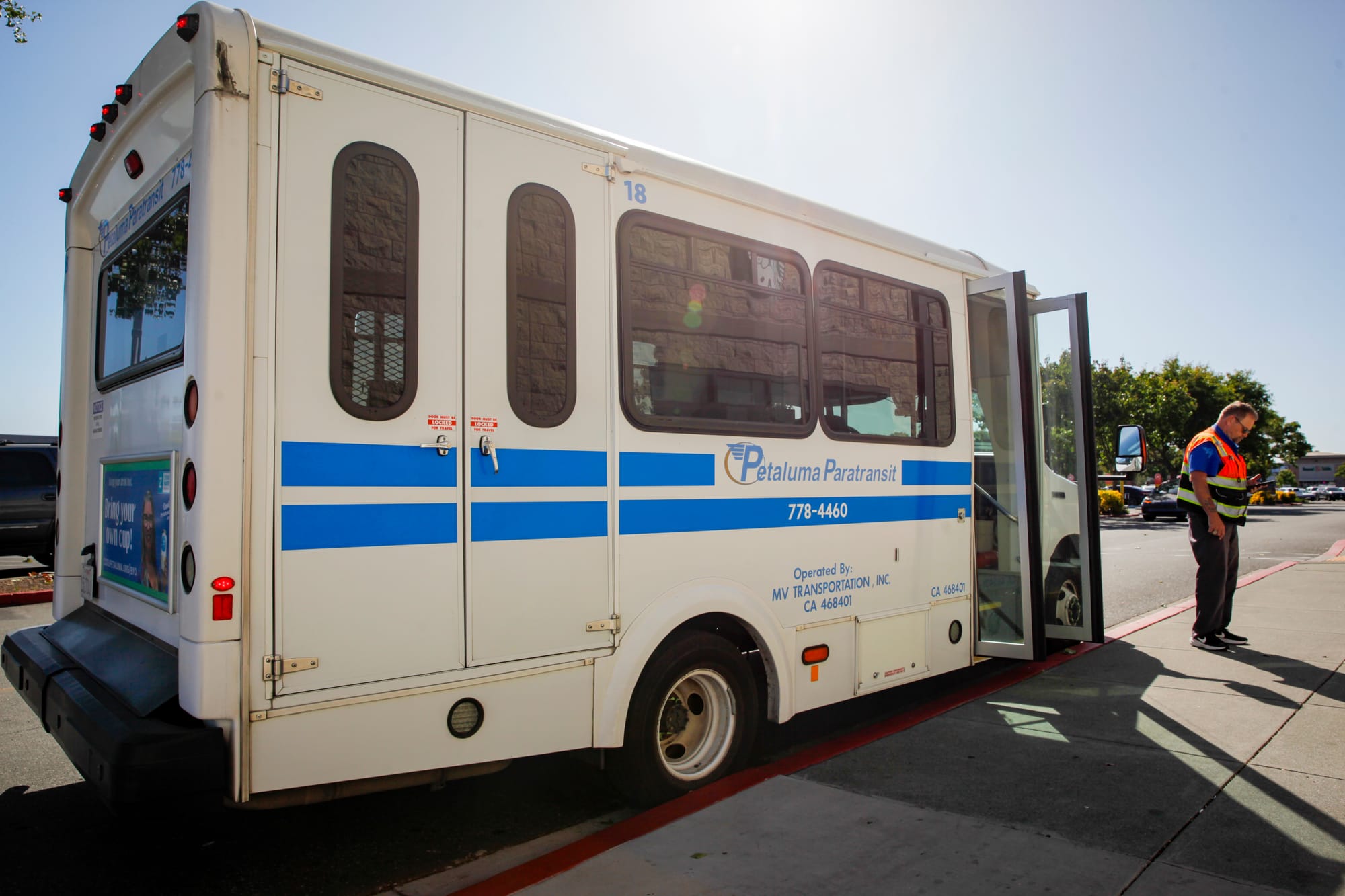
Based on recent ridership data, the cuts will impact about 39 weekend paratransit riders; an average of 1.2 weekday evening paratransit rides; and more than 330 weekend riders on fixed routes. Evening fixed-route service reductions will impact an average of 39 riders.
While the popular LumaGo program – in its current form – will end, microtransit can’t be cancelled entirely because it is grant-funded through June 2027 with a contractual obligation, Arce said.
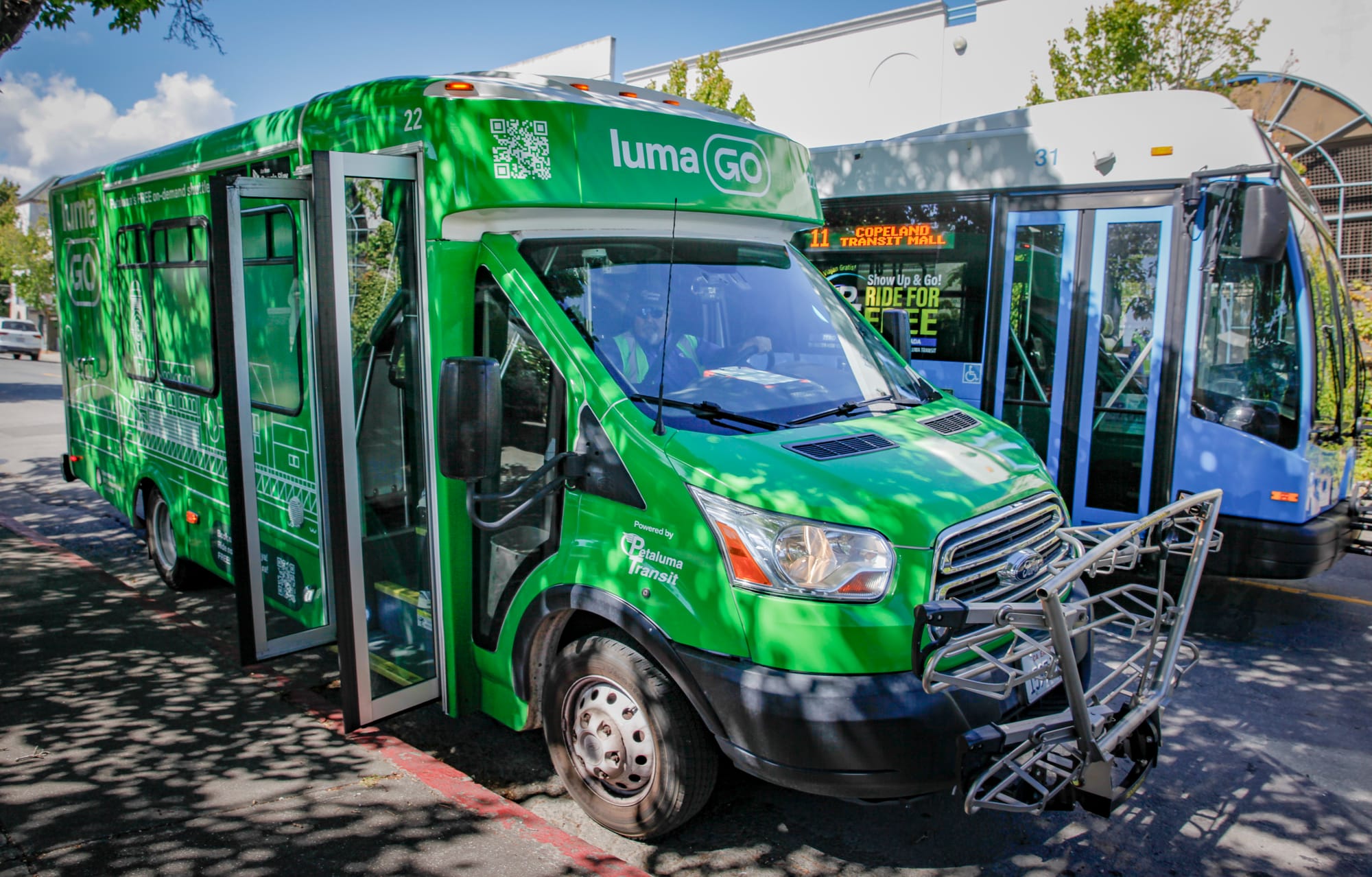
Instead, the city will offer a modified microtransit service on the weekends to serve those with senior and paratransit access, she said. Eligible riders will be able to pre-book the service on the weekends now that the regular paratransit service will end.
“It’s going to be a balancing act because we don’t want people to expect the same level of service with LumaGo. This is not a premiere service,” Arce said.
Wait times will be longer, but the new program will be a “safety net so we don’t leave the community without anything,” she said.
Arce noted that the agency doesn’t yet have enough data on its core riders. “We’re going to focus on the core,” she said. “The question is, what’s the core?” Through ongoing outreach efforts, the transit team aims to gather more information on local transit use that will inform future service adjustments.
Petaluma Transit is seeking rider feedback. To share comments about LumaGo and transit service reductions, visit https://transit.cityofpetaluma.net/contact-us or call 707-778-4460.
With the reductions starting in August, staff should have enough time to provide proper notice to riders and drivers, she said. But further cuts are also likely.
Arce said she intends to return to the Transit Advisory Committee regularly to review recent changes and present data “in an a-la-carte” fashion.