Interpreters Serve City Commission
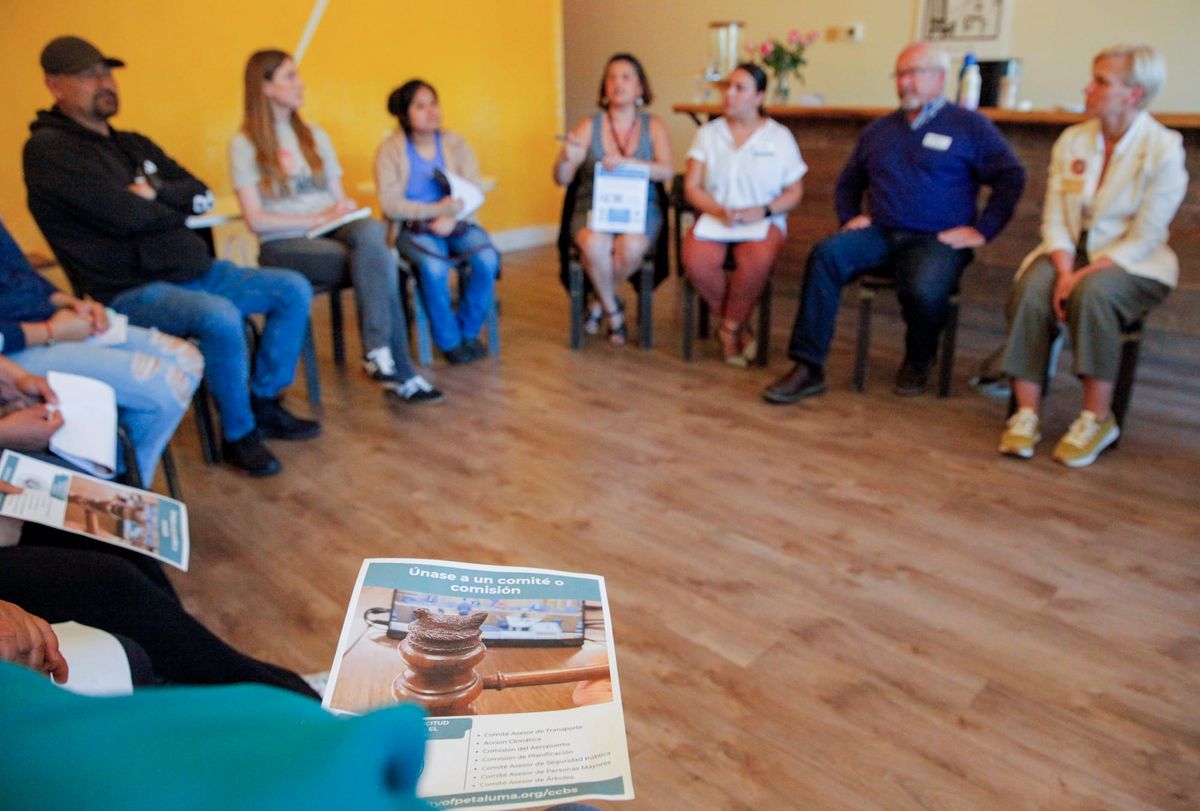
A team of live, human interpreters helps two Spanish-speaking Petaluma city commissioners get their voices heard even as the city has turned to an AI translation tool as a cost-cutting measure for city council meetings.
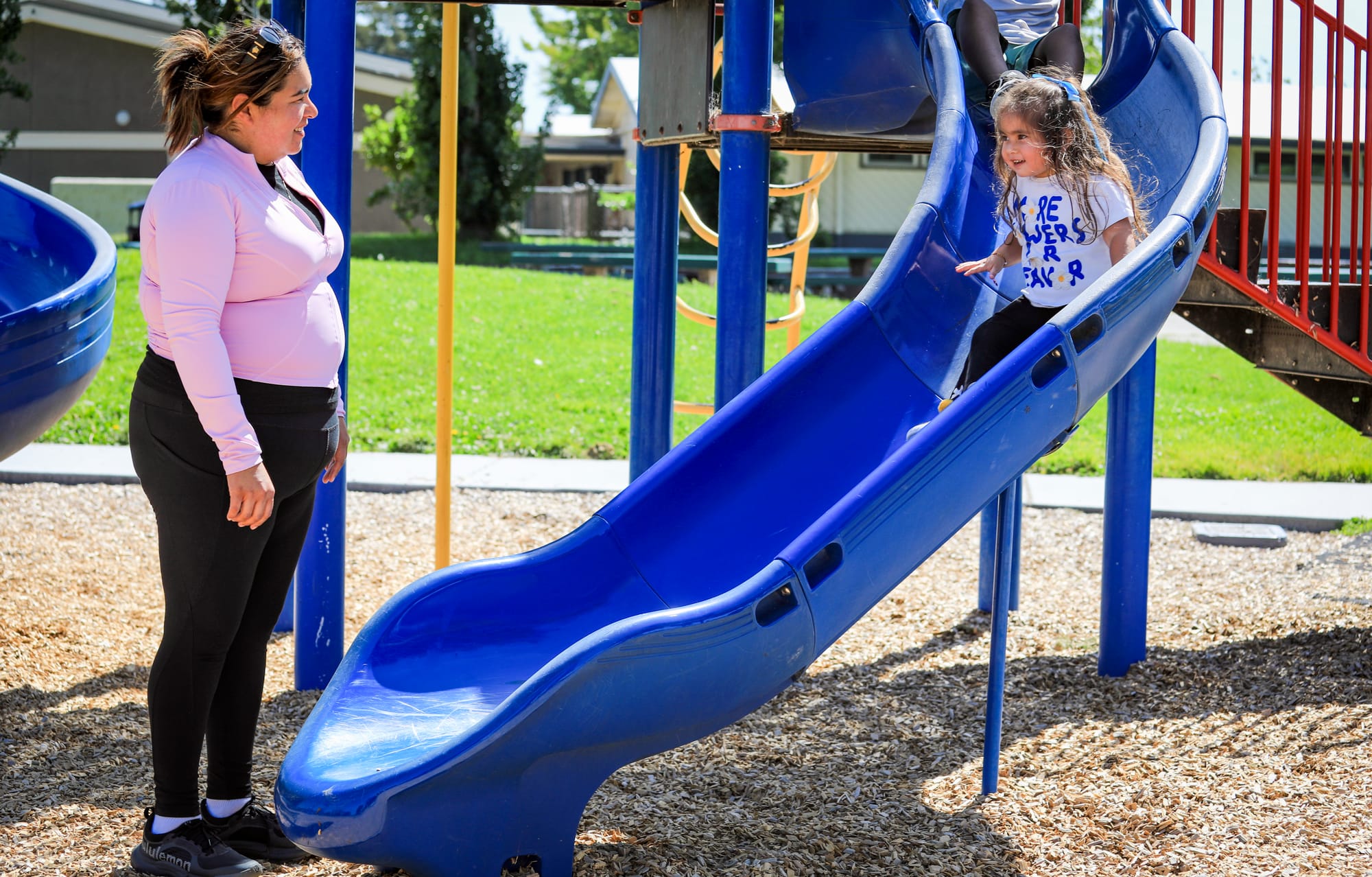
Recreation, Music, and Parks commissioners Brenda Garcia and José Alegre both want to show their children that their voice can impact the community they call home, even if they speak a different language from the majority, they said.
“The vision I have for my position is that we truly take seriously what is actually needed here in Petaluma,” Garcia said in Spanish. “And how to always involve the Latino community in what’s really happening here.” As of late, she’s concerned about the old playgrounds that children like her toddler play on, and how to share relevant park information in different languages to other multilingual residents, among other issues.
The commissioners advise city staff and council members on Petaluma’s parks and recreation facilities and cultural arts programs. At recent meetings they’ve heard a presentation for a proposed rainbow bridge pet commemoration project; an update on the Cavanagh swimming pool; and an update on the city’s playground replacement program.
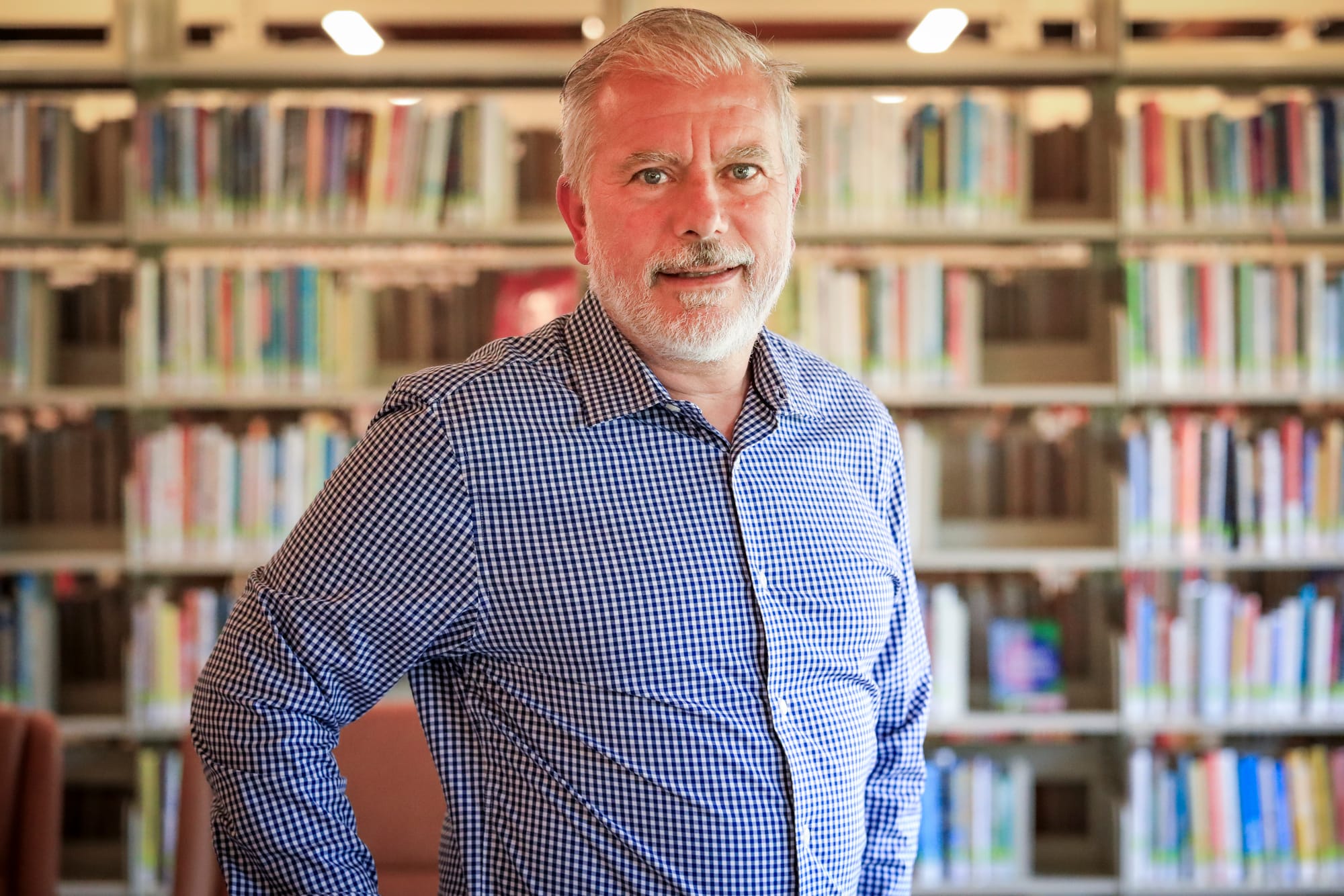
The live interpreting services are contracted through a Petaluma-based professional group called The Design Guild, said lead coordinator Martín Rivarola, who also co-owns MR Translation and Interpreting Services. For 21 years he has provided translation and interpreting across Sonoma County, including for the City of Petaluma since March 2020.
While the city now relies upon Wordly, an AI-powered translation program, at City Council meetings, said City Clerk Caitlin Corley, the Recreation, Music, and Parks Commission meetings still employ live interpreters to support the two Spanish-speaking commissioners.
“First and foremost, kudos to Petaluma for making this happen because it presents all kinds of challenges,” Rivarola said. “These commissioners are sworn in just like English-speaking commissioners, have to vote on certain things,” and understand what’s being discussed. “They represent the community, and what they do is very important.”
About 19% of the more than 24,000 households in Petaluma, or about 4,600, speak a language other than English, according to 2024 Census Bureau data. However, it’s unclear just how many people speak mostly Spanish at home.
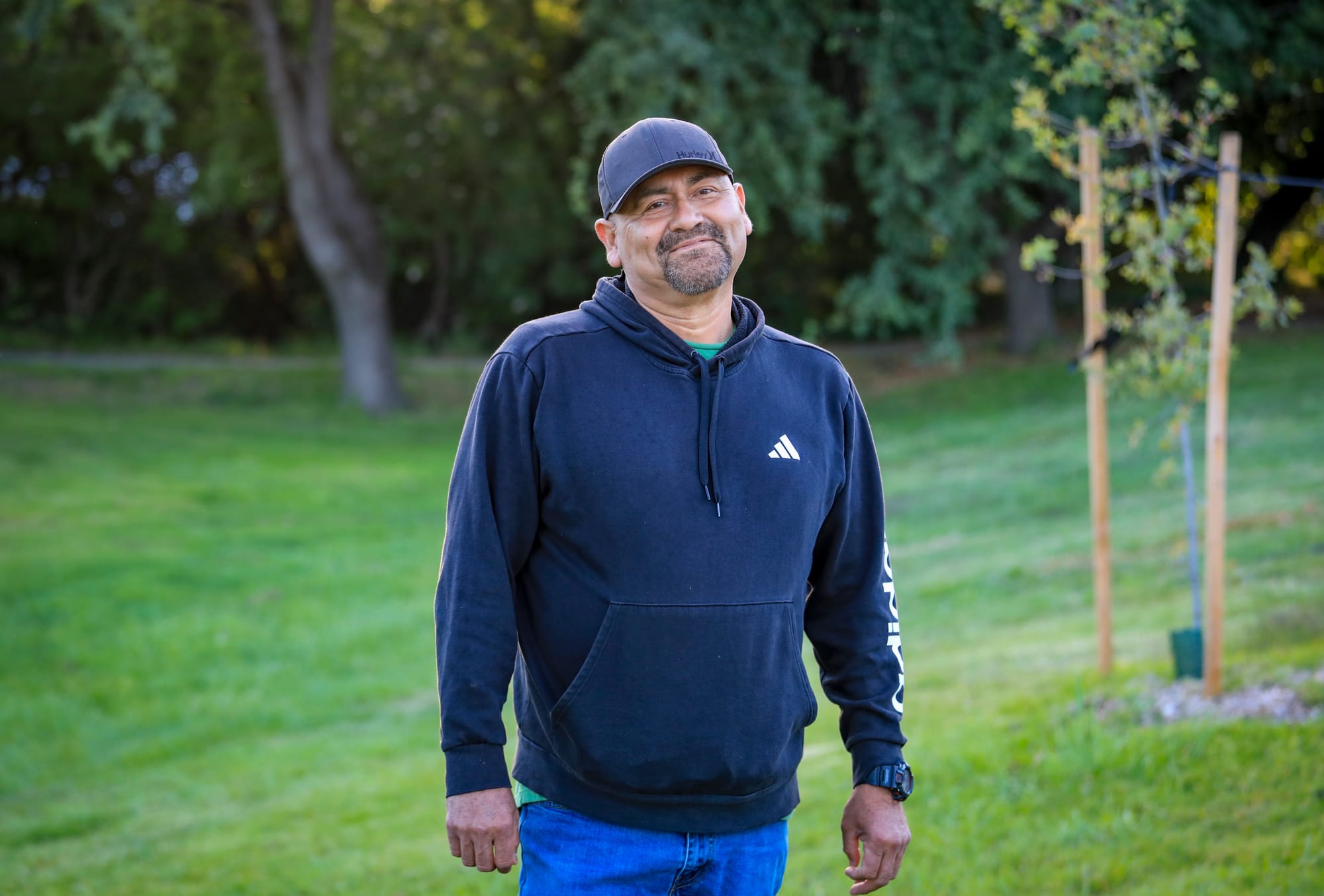
Commissioner Alegre, who grew up raising animals to eat and growing his own food, said that connection to the earth is something he carries to this day. He came to the U.S. in 2000 after a flood washed away his home – and livelihood – in Michoacán, Mexico, and has lived in Petaluma for the last four years, selling tamales with his wife and working in construction and landscaping.
“I love flowers” – red ones, white ones, yellow ones – “I love all types of flowers,” he said in Spanish. “It is truly lovely to care for plants, because they feel things too – they are alive. I simply cannot bear to watch a plant dying.” His love of agriculture and animals provoked him to apply for this commission, he added.
Typically, two individuals provide live interpreting at each meeting. “We take turns,” Rivarola said.
Interpreters primarily work remotely, communicating over Zoom, and the translated information gets shared by an earpiece – in both English and Spanish – to all the commissioners, Rivarola said.
The interpreters on Rivarola’s team hail from Mexico, Colombia, and Argentina, and include a few court-certified interpreters.
Seeing two monolingual Spanish speakers serving on the commission, “is a dynamic I haven’t seen … play out,” in this county, he said. Most of his clients come from the nonprofit and public sectors, such as First 5 Sonoma County and Petaluma City Schools, which he noted is also going through budget cuts.
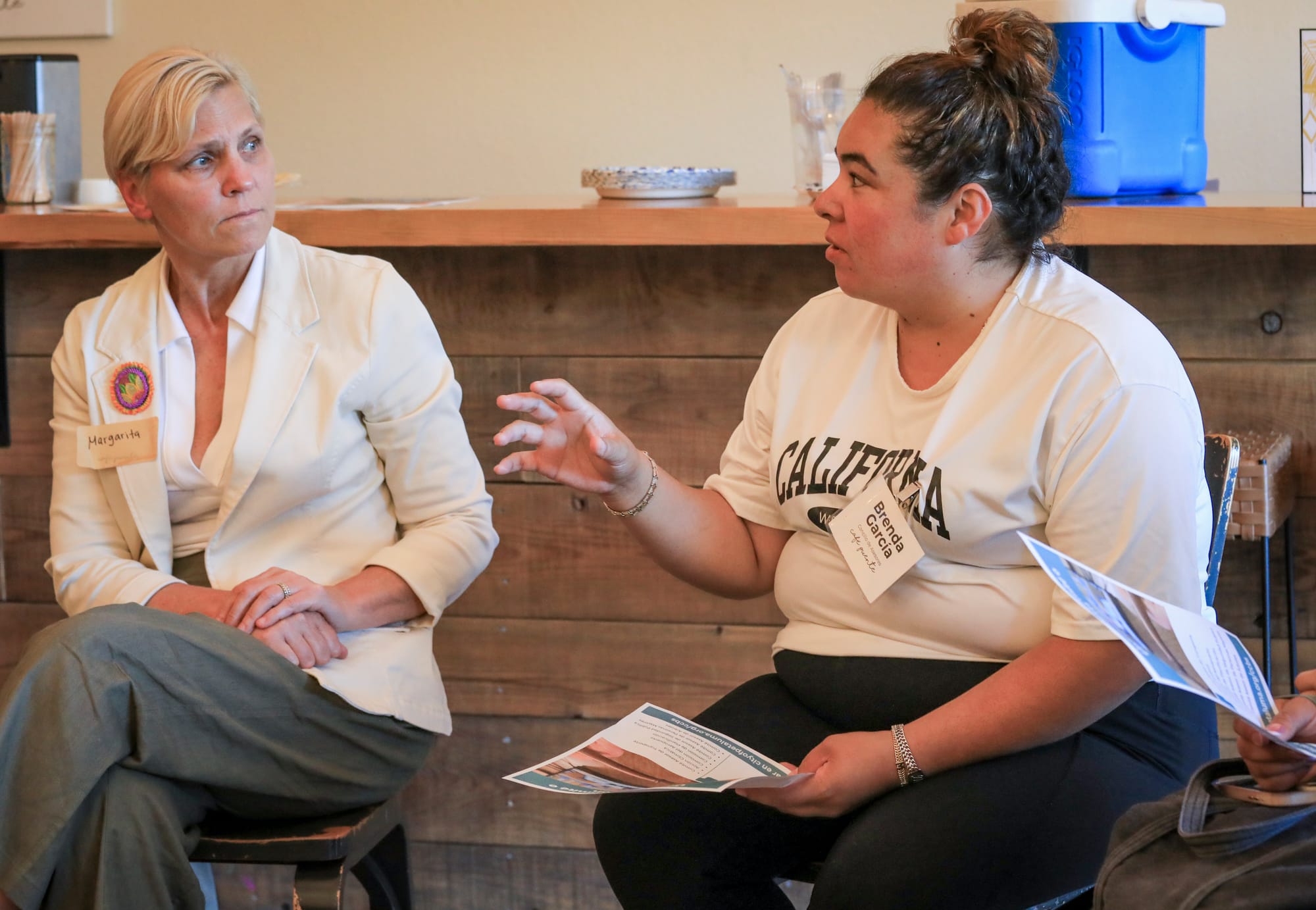
“Budget constraints are hitting us,” Rivarola said. “We’re one of the last cost allocations coming in and the first cost reductions that you can easily take out,” Rivarola said of the services he provides. It's an ebb and flow he's noted for a number of years.
Garcia and Alegre learned about openings on the commission last year through Café Puente, a nonprofit that supports the Latinx community of Petaluma. After a tough postpartum experience, Garcia turned to the cafe in 2024 to find a community. About a year later, the city shared information about the commission openings with the cafe, and that piqued her interest in getting more involved in the place she now calls home.
Garcia, who originally hails from Tecate, Mexico, and is raising a 3-year-old with her husband, remembers seeing an opening for the commission and wanting to apply “because this will remain with my daughter. The decisions I make — and the ideas I bring to the table — she will enjoy in the future. And that’s what encouraged me,” she said.
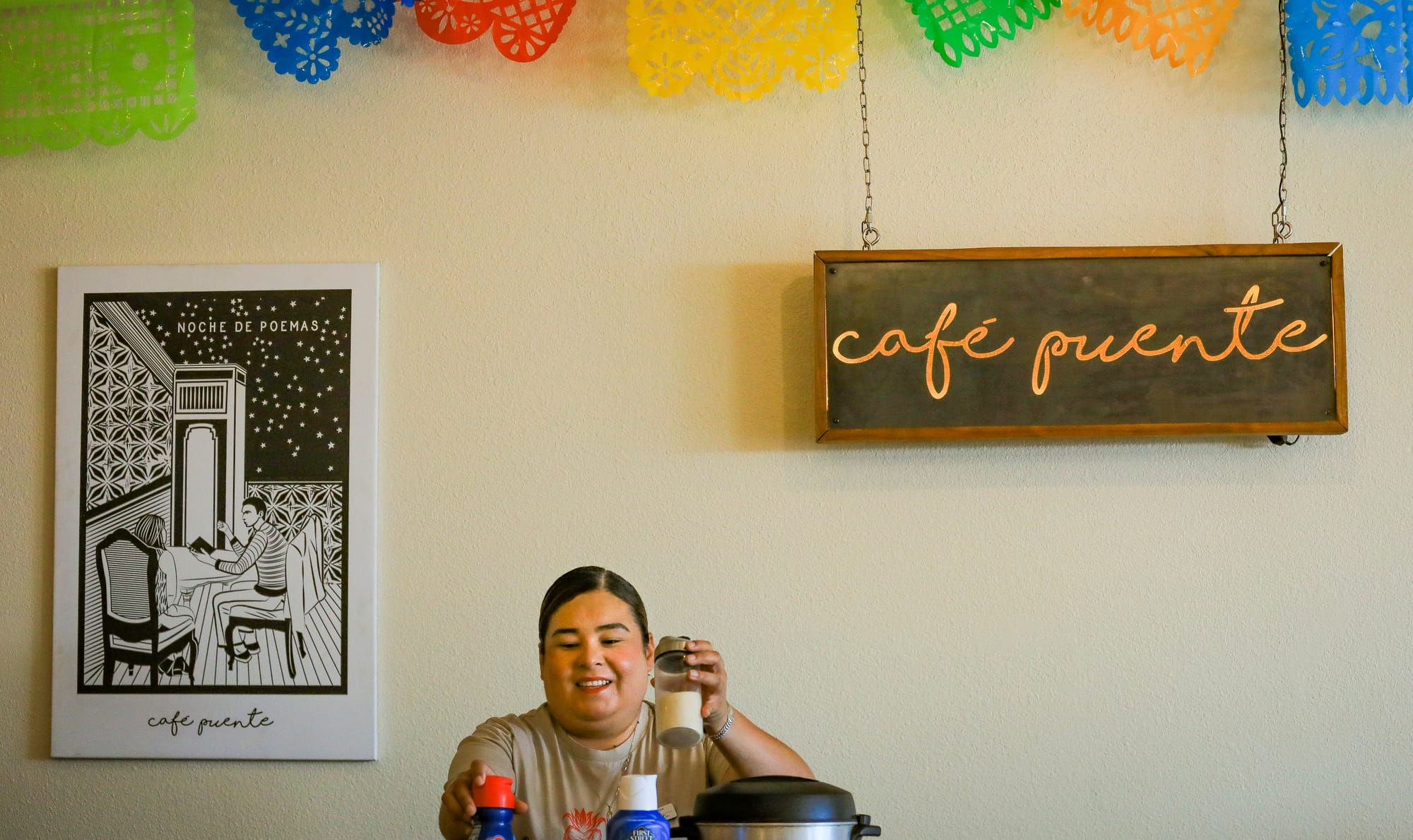
Similarly, Alegre – whose last name translates to “cheerful” – teaches his children to recycle and wants them to remember what he stood for, with caring for the world around us being one of his guiding principles.
Recently, dogs, trees, and whether or not to use fake grass on playing fields have been significant civic topics for him, he said.
“I want my kids to see that I worry about their futures. … That everything remains green, there’s water, that everything is functioning.” From one day to the next, he might be gone and “they are the ones who remain.” Life is beautiful, he said, but it can be turbulent.
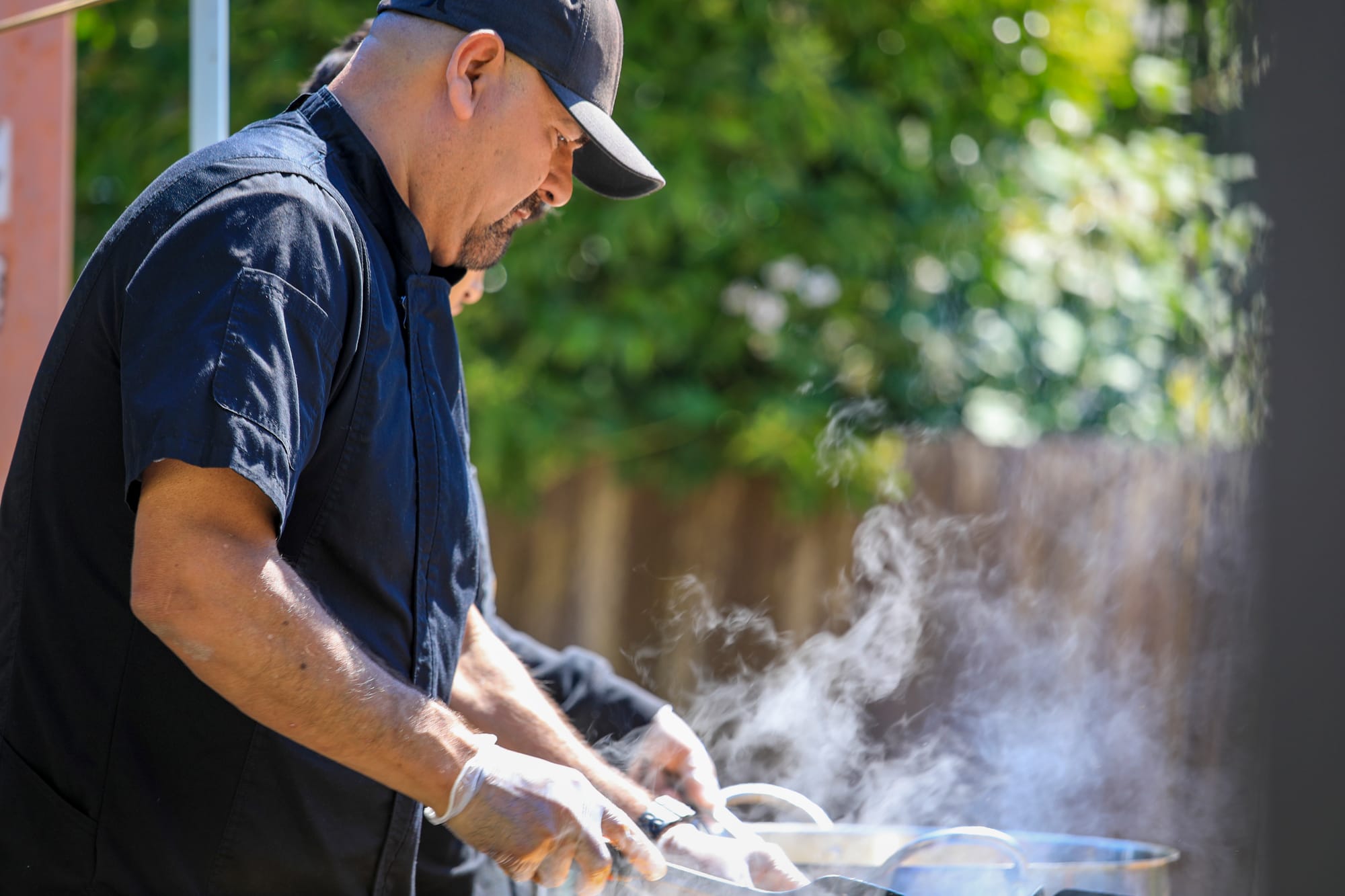
Previously, Rivarola and his team provided live interpreting for City Council meetings, and he said he and his team were recognized for their past work when the city switched to the new software last year.
Worldly “provides a live translation transcript for the public,” said Corley, the city clerk. “Via the link on the agenda or the QR code in the room, they can read along in their preferred language or have it read aloud to them.”
Corley said the city pays by hours of use. “Our initial contract with them was for 120 hours for $8,150,” she told Petaluma Voice. According to the proposed fiscal year 2026-27 budget, the new service “provides a budget savings for the city.” It’s unclear how much it has saved.
Even so, the live interpreters at the Recreation, Music, and Parks Commission meetings “are so helpful,” Corley said, noting the benefits of a human touch. “It’s a nice added level of support for our Spanish-speaking commissioners to have someone who they can communicate easily with and ask questions during the meeting.”
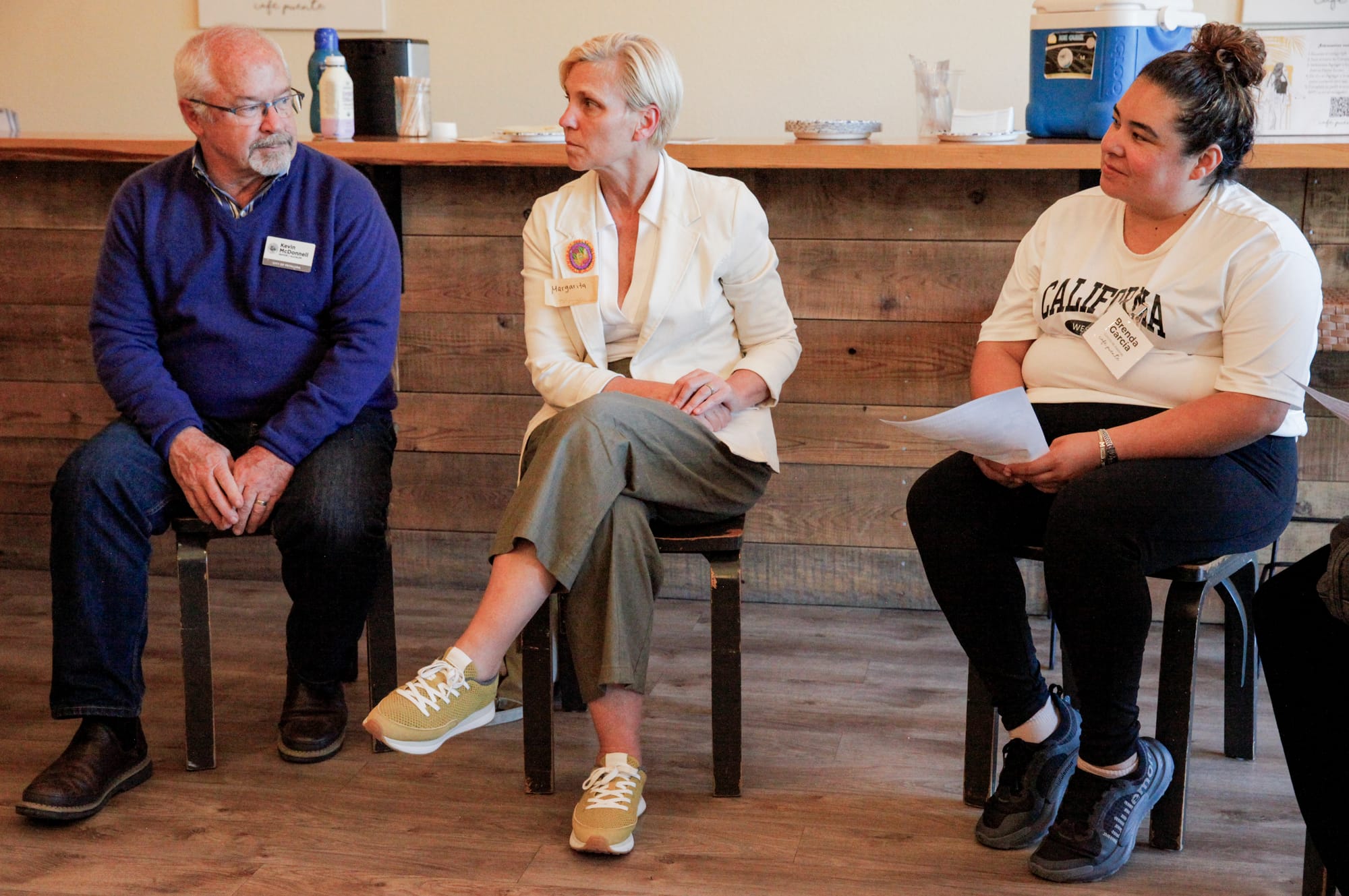
Rivarola was also instrumental in providing translations for the city on social media and its weekly community update. In 2021, he worked on a large project to effectively communicate with the city’s Latino residents – about 21% of the population, he said.
Having worked on the ground with community health workers, he said that an automated translation tool may be useful to translate words, but it doesn’t understand the context it’s operating in.
“I think it’s important, the idea of understanding your audience and therefore writing to your audience,” he said. “In a way, it’s a bigger topic than whether we are using AI or not.” He also called for more evaluation of the city’s community engagement and communication in Spanish, “to know what messages work, how people are interpreting us.”
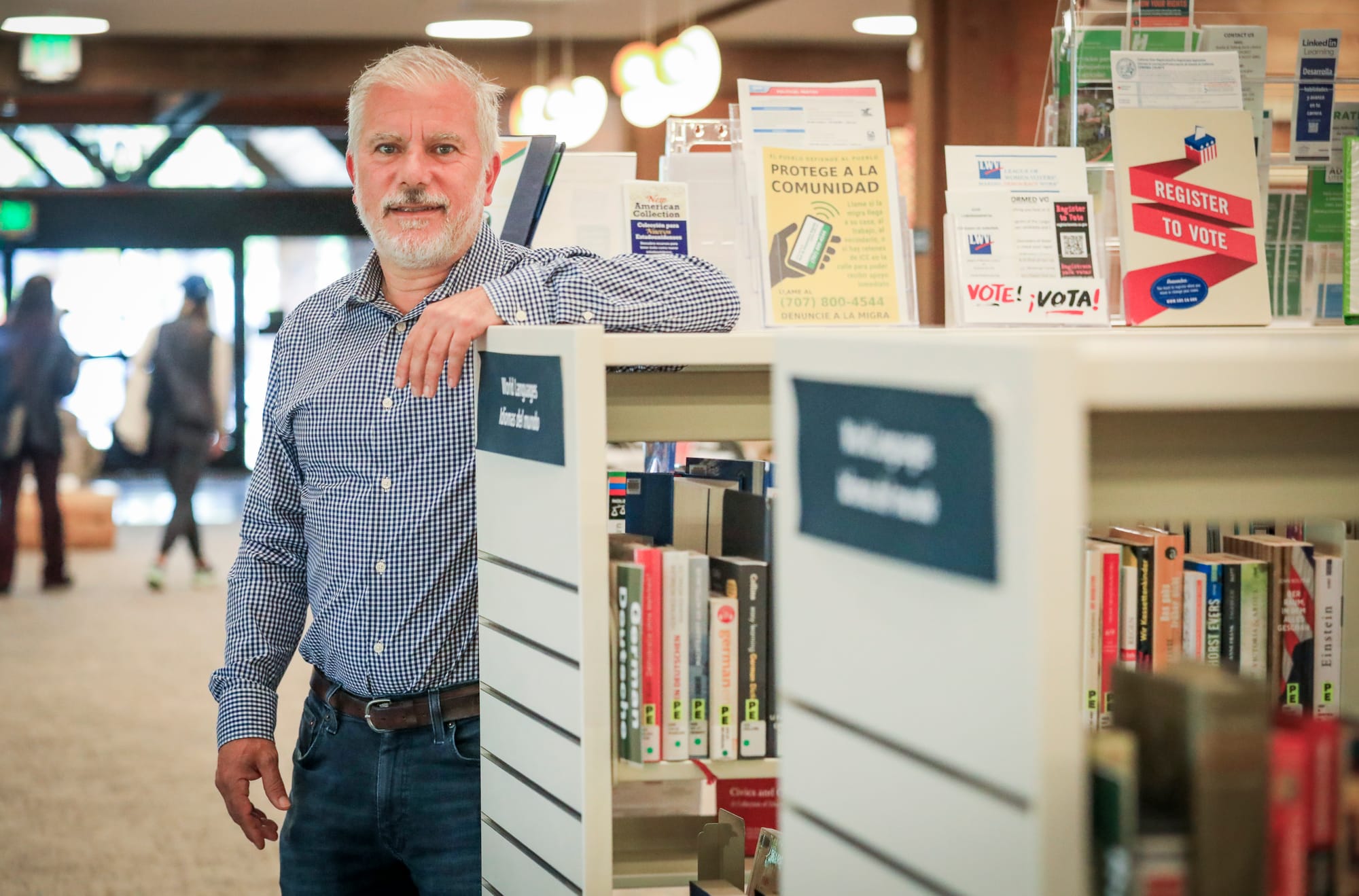
This dovetails with the work that the Spanish-speaking commissioners are doing, he said. They bring nuances from their individual perspectives to represent the community, just as an environmentalist, a senior citizen, or an architect on another commission might offer to the city.
Garcia said she is grateful for the opportunity, and has encouraged her community at Café Puente to share their voices.
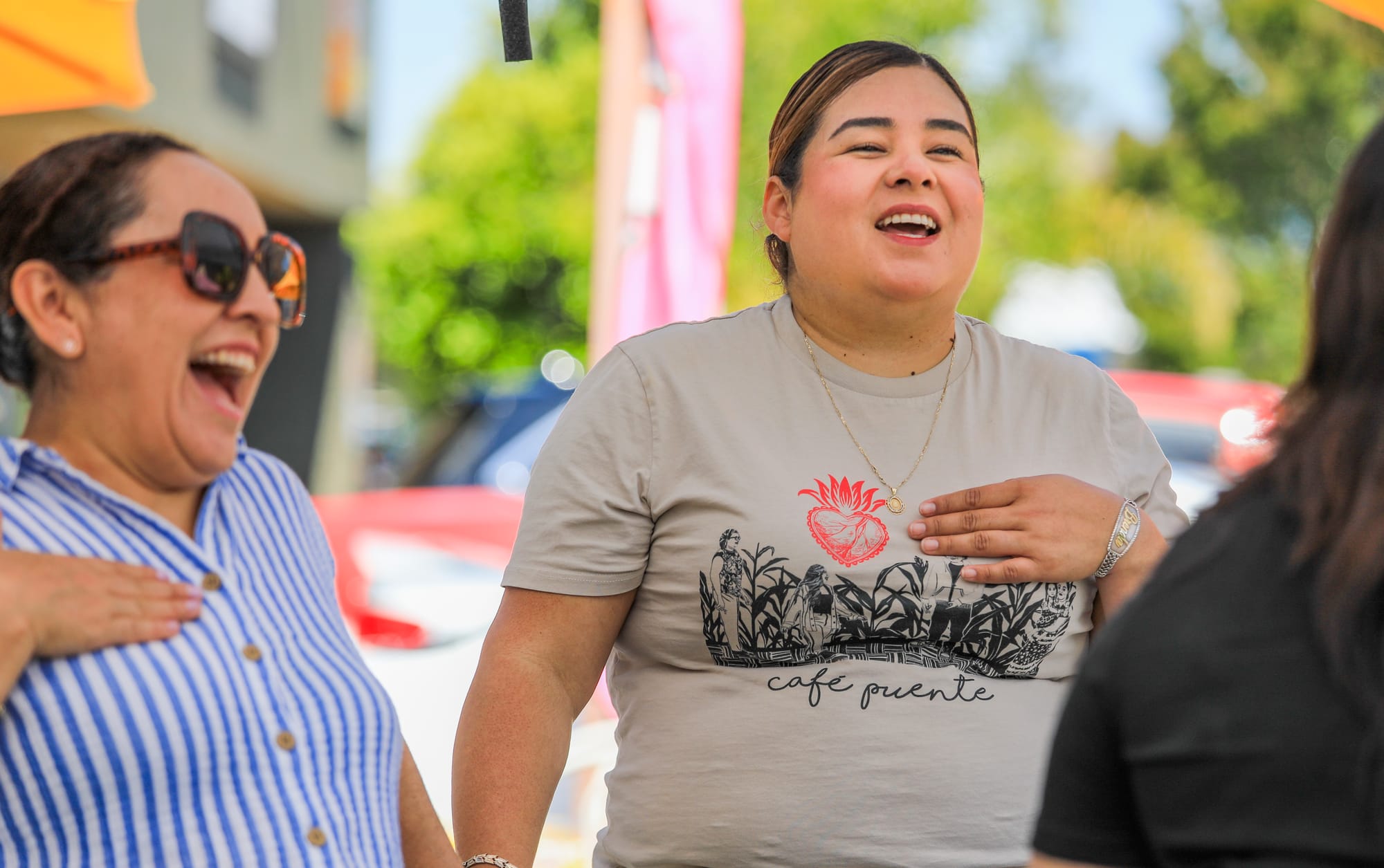
“I always tell them, ‘Don’t be afraid’ – that is, when an opportunity opens up for the city, don’t be afraid; they are trying to help us. They are trying to ensure that Latino people also share their opinions. So do not fear, the city is with us,” she said.
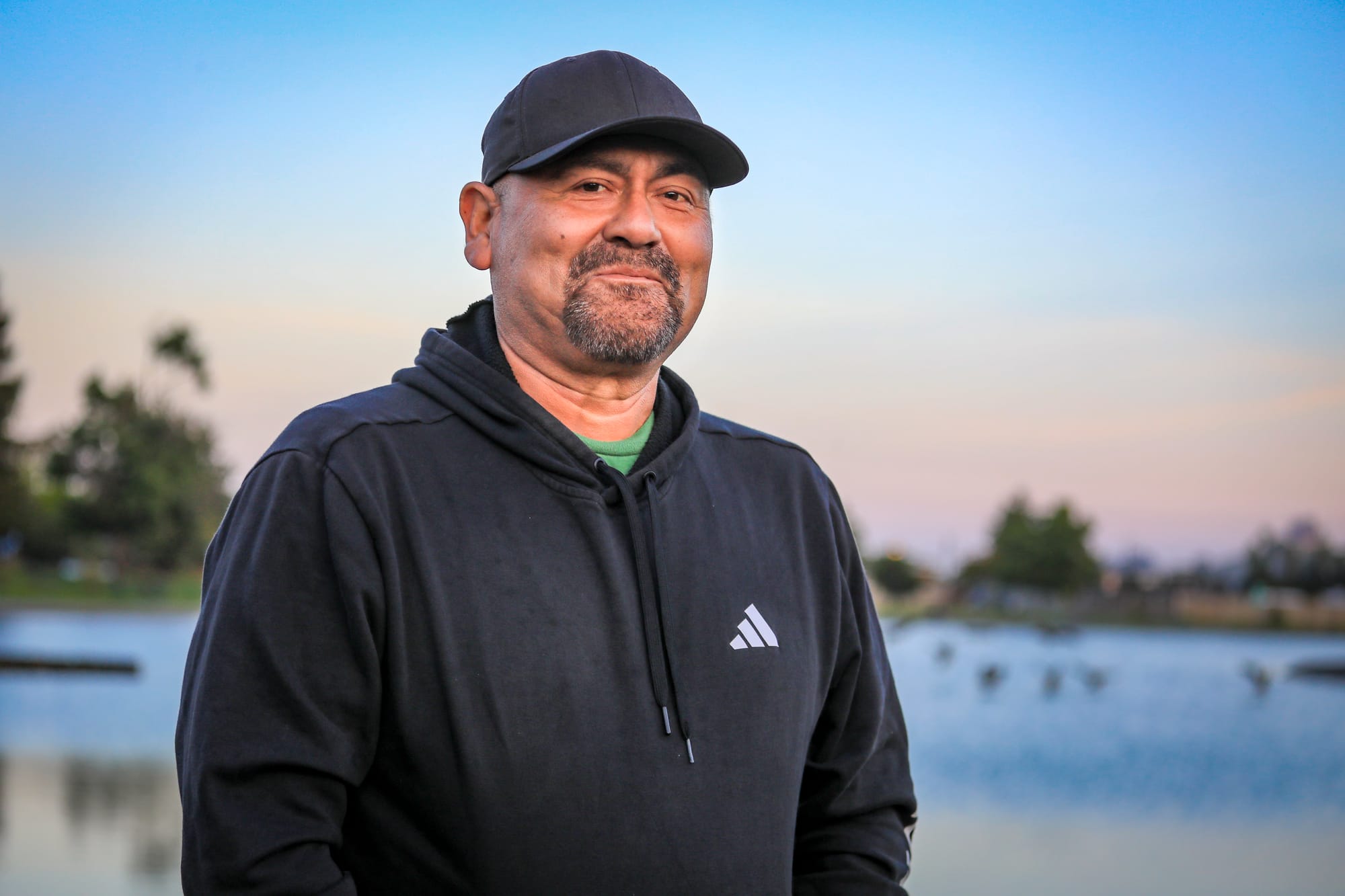
Similarly, Alegre sees this as an opportunity to be present.
“It’s good not to always live in the dark, shut away, as if to say: ‘I know nothing about life; I know nothing about the city; I know nothing about the town; I know nothing about people,’” he said. “Sometimes, it’s good to be in the know so you can get to where you want to go, do you know what I mean?”
Clarification 5/15/26 8:01 p.m.: The original story and headline used the word "translator" incorrectly. Both have been updated to reflect that interpreters work with live speech, while translators work with written words.
The Recreation, Music, and Parks Commission meets on the third Wednesday of the month at 6 p.m. at 11 English St., inside City Council Chambers.
For more information on this and other commissions, committees, and boards, visit https://cityofpetaluma.org/ccbs.