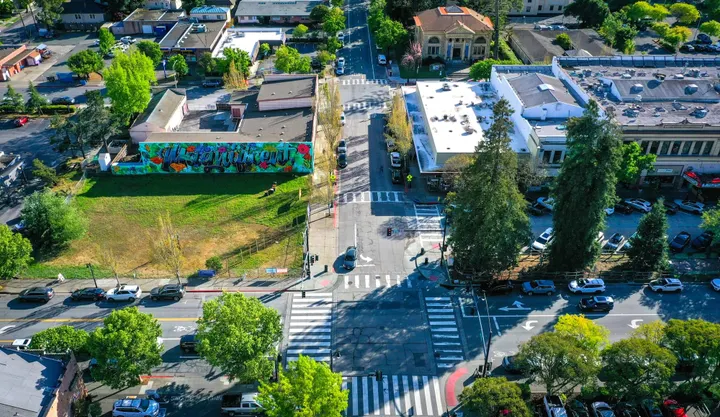
You're on camera, for better or worse
Flock cameras offer proven benefits in solving crime, yet questions linger on abuse risk and warrantless mass surveillance
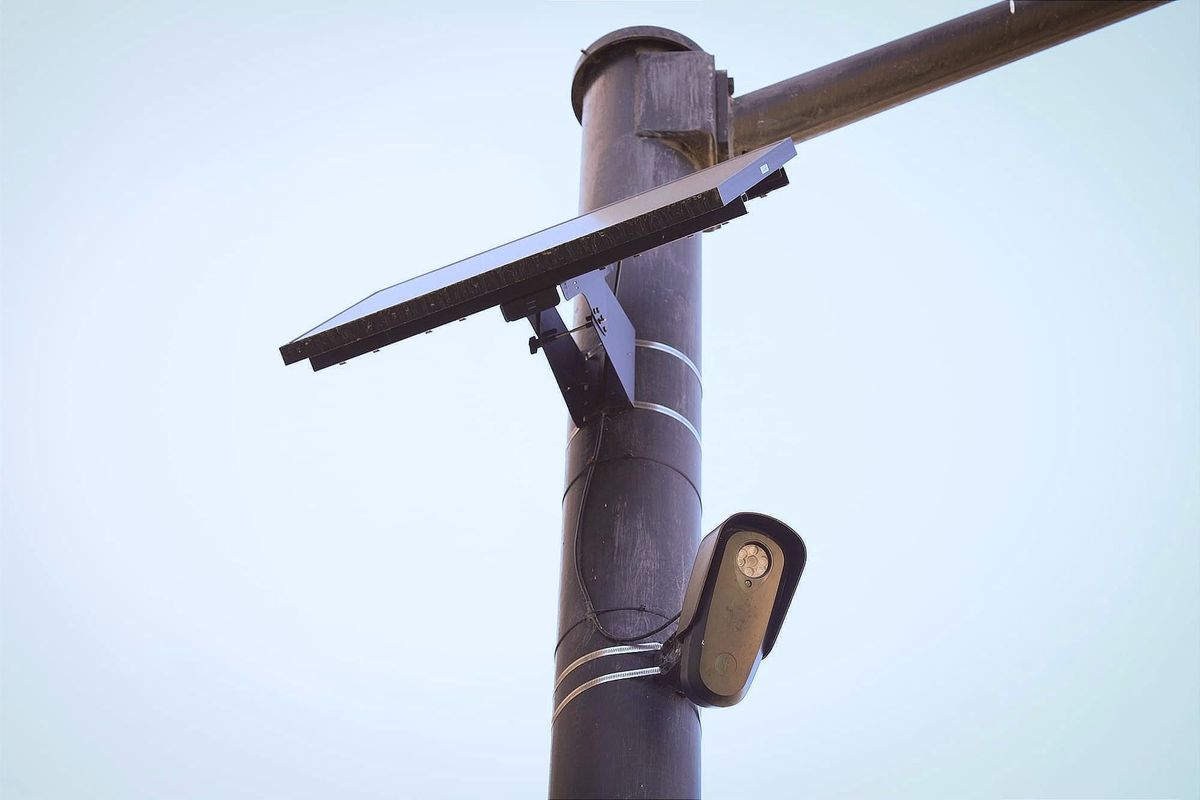
As a network of mass surveillance cameras spreads across the country, local critics point to data breaches and a misuse of information as they question if the technology benefits Petaluma and neighboring communities.
Automated license plate readers have exploded in popularity over the past decade. The industry’s biggest player, Flock, started as a neighborhood watch program and mushroomed into a company with an $8.4 million valuation and 120,000 cameras nationwide, including about 15 in and around Petaluma and 129 in Santa Rosa.
Law enforcement agencies tout the cameras’ benefits to public safety, saying they allow police to locate missing persons and solve crimes, and point to measures being installed to prevent their abuse.
Now some local residents are embracing crowd-sourced efforts to document camera locations, while trying to educate communities on potential and documented misuse.
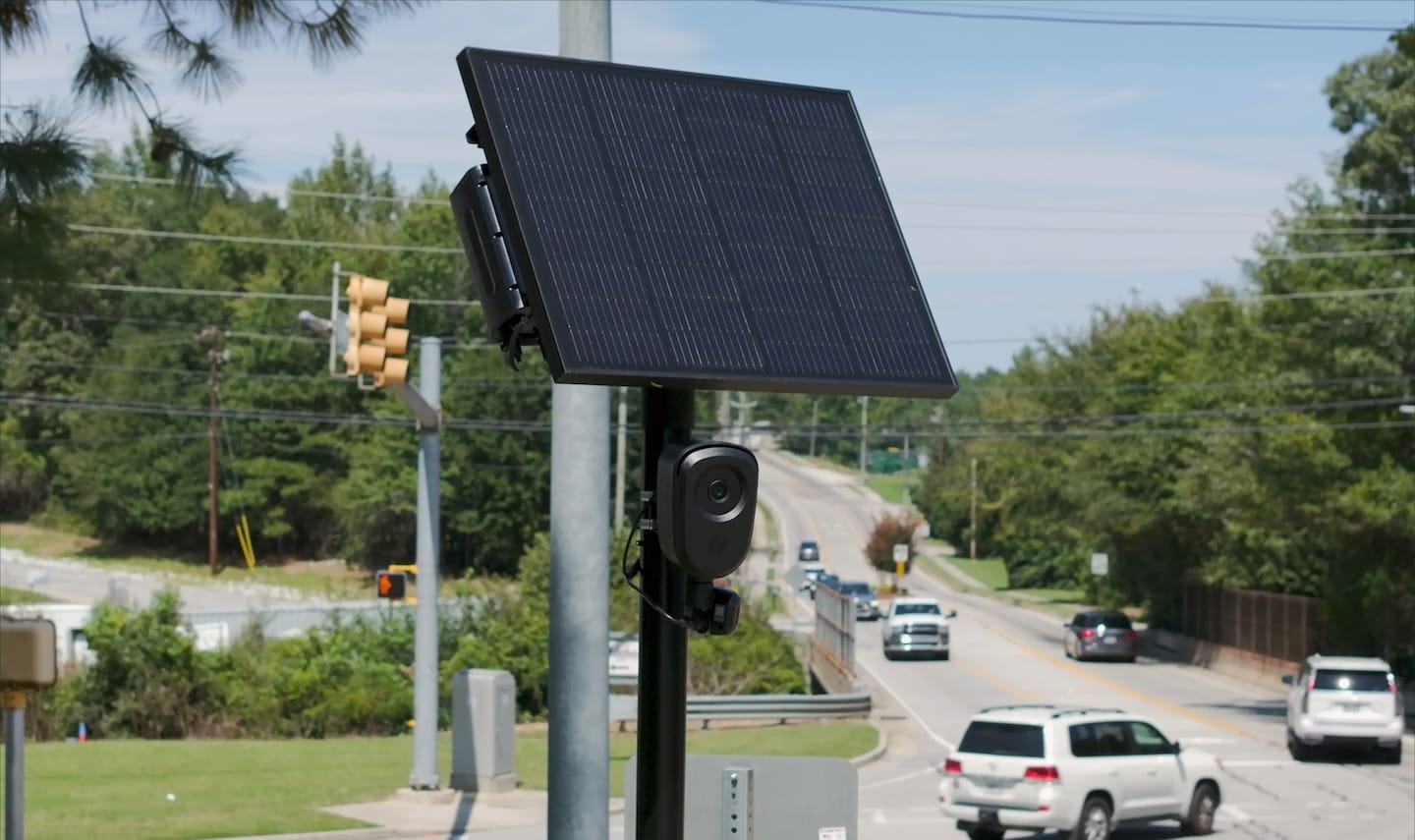
In Petaluma, a city contract signed with Flock in August 2025 remains in place, despite critics turning to the Public Safety Advisory Committee within the past year to voice concerns about it.
Automated license plate reader technology has been used for about two decades in Petaluma, initially for the more benign enforcement of parking rules. Exact numbers of cameras within the city and outlying area have proven difficult to confirm, because multiple agencies and jurisdictions oversee them and additional private cameras are included in the network.
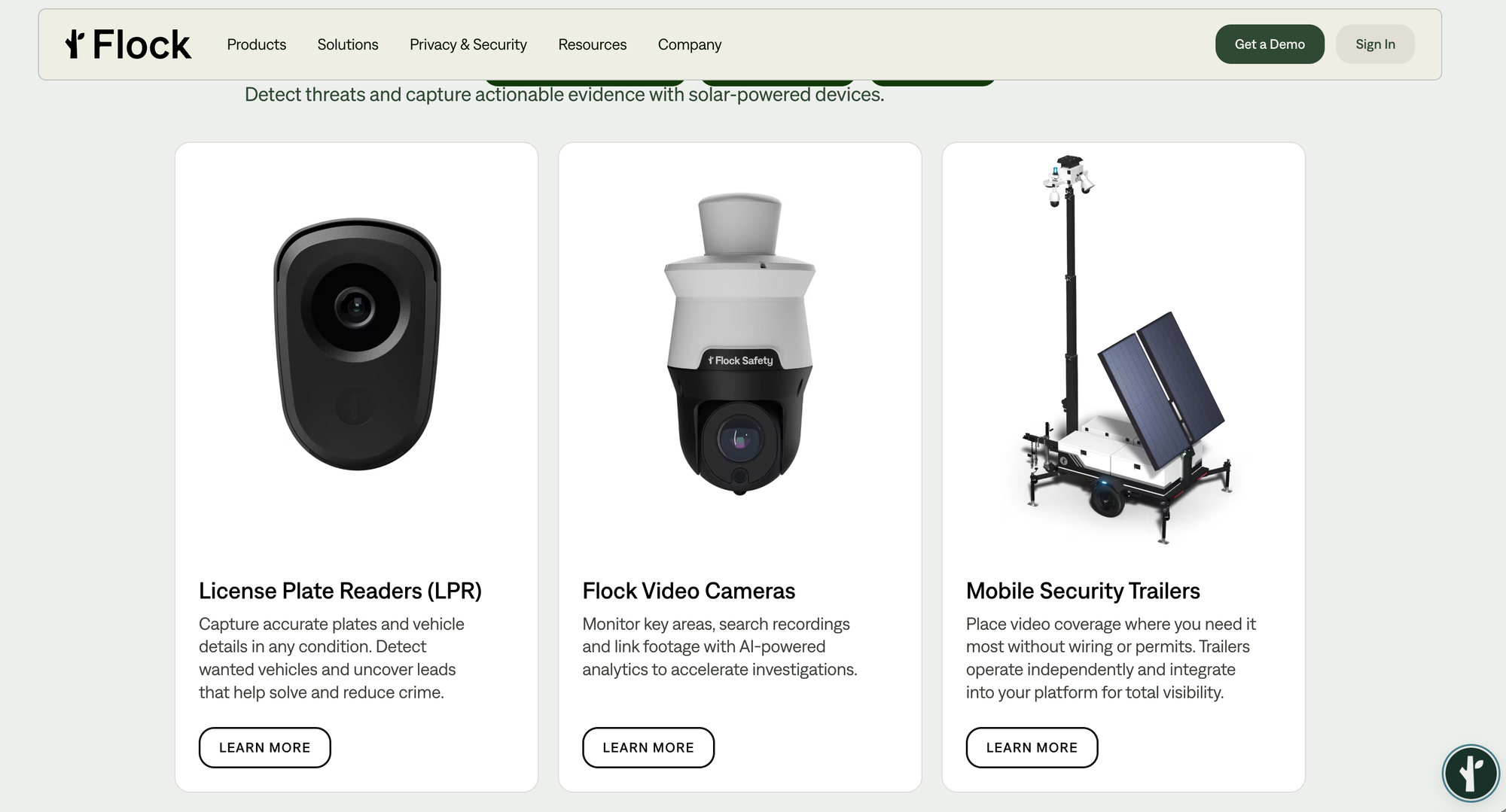
However, earlier this week, Petaluma’s police chief said the city operates a total of nine license plate readers. The city continues to use four license plate readers for parking enforcement (two on each parking enforcement vehicle to track both sides of the street), a dash camera on a patrol car used for drunken driving enforcement, and four Flock-branded cameras – run by the Georgia-based company that’s received the brunt of public pushback for its data-sharing practices and information breaches. This is two fewer than what was reported in October 2025 since two cameras on the city’s abandoned vehicle abatement vehicle became inoperable, according to the city’s police chief.
“I trust our local police. I don’t trust the company,” said Ellen Obstler, a citizen member of the city’s Public Safety Advisory Committee, which takes community input, advises the city council, and plays an essential role in the city’s hybrid model for civilian police oversight, transparency and accountability. The committee’s members include residents, a city council liaison, and a police liaison.
The topic was last addressed at a well-attended February meeting. The committee recommended the Petaluma City Council evaluate alternatives in a 4-2 vote. In a subsequent 3-3 vote, the committee failed to pass a recommendation to terminate or suspend the Flock contract.
Before voting against the Flock contract, the committee’s chair, Michael Miller, made it clear that a vote on Flock was not at all indicative of trust in the police. The police department has “done its due diligence” to listen to the community’s comments and develop a license plate reader policy, he commented at the meeting.
Miller urged the committee to “listen to the overwhelming majority of the public’s sentiment” and to consider whether Flock “is able to meet our city’s values and able to represent the community in the way it wants to be represented.”
Obstler’s concern with Flock “is the connections to data centers, AI super intelligence,” she said. “We feel like we’re losing control. Now there’s machines running our world and I feel like Flock fits into this dystopian thing,” as a sort of large-scale cultural shift. “It’s bigger than us.”
She says she understands the technology’s utility, but is nervous about its broader implications.
Flock skeptics point to a Washington Post investigation that documented at least 50 police officials abusing its cameras, using them to stalk women or spy on their wives, among other examples. An Associated Press story documented cases of the U.S. Border Patrol using the cameras for immigration enforcement, even in California, which bans sharing data with federal immigration authorities. Searches on Flock or other competing camera systems do not require a warrant. While Flock maintains it has no facial recognition abilities, searches and images can include people.
Its system differs from the closed-circuit cameras that are popular in Europe, which are generally searchable on an individual basis and require reviewing the footage manually. Using artificial intelligence, a search of Flock camera data can cover multiple cameras in multiple jurisdictions in real time.
Meanwhile, Petaluma police point to the public safety benefits of license plate readers, but with guardrails.
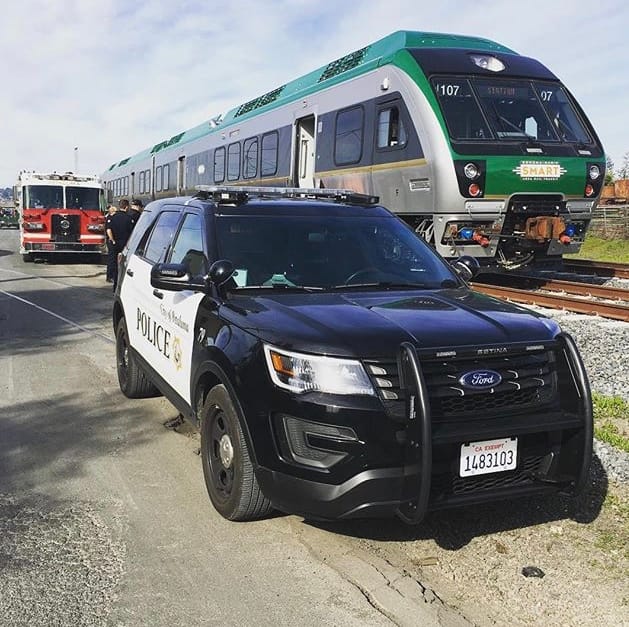
“Our support is not for Flock or any particular vendor — it is for the responsible use of a public safety tool that has served Petaluma for more than twenty years,” wrote Petaluma Police Chief Brian Miller in an email to Petaluma Voice. “Technology will continue to change, and our safeguards must evolve with it. Good policing requires us to protect both public safety and the public’s trust.”
Councilmember Karen Nau said Flock has proven a strong resource for solving crimes.
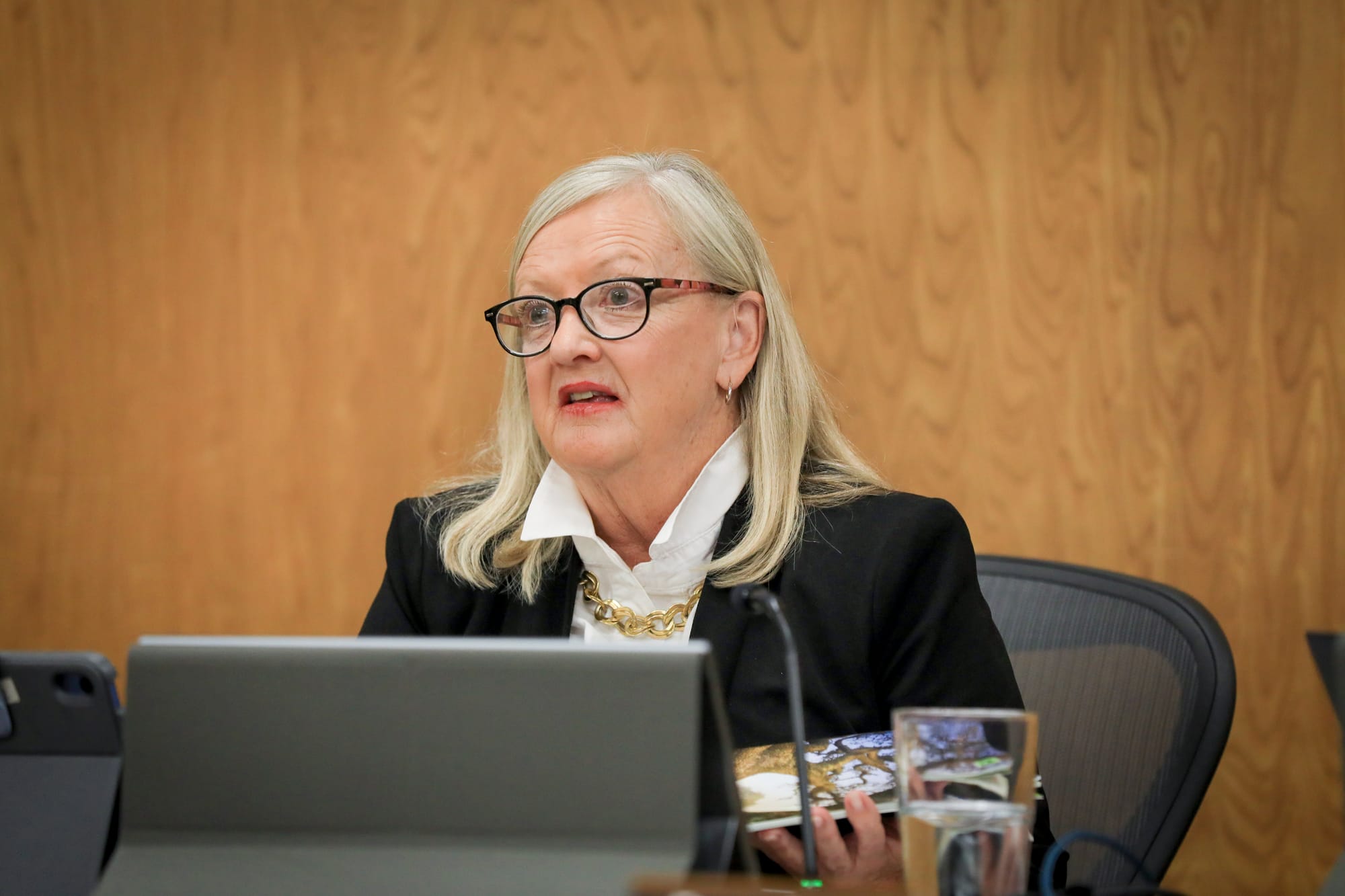
“I continue to support the technology because we know it has value and we’ve used it in the community,” said Nau, who serves as the council liaison on the public safety committee. In Petaluma alone, Nau said Flock has helped recover stolen vehicles, find missing people, and track down a hate crime suspect.
“Our police are really good about being responsible and not sharing the information with any other agency unless they are investigating a crime. It’s for public safety purposes,” she said.
The Sonoma County Board of Supervisors approved a grant for the sheriff’s office to begin using automated license plate reader technology in June 2023. Three months later, in September, the board unanimously voted to allow the Sonoma County Auto Theft Task Force to sign an agreement with Flock for 63 cameras placed “strategically” throughout the county at a cost of $427,000 over a two-year period, according to the agenda item. The task force is a coalition made up of the California Highway Patrol, Sonoma County Sheriff’s Office, District Attorney’s Office, Santa Rosa Police Department, and Sonoma County Law Enforcement Chief’s Association to investigate and prosecute vehicle theft.
Six of those Flock cameras were installed by the Sonoma County Auto Theft Task Force in and around Petaluma.
In addition to its 129 operational cameras, the Santa Rosa Police Department has contracted for four more, bringing the total to 133, according to a September meeting presentation.
Automated license plate readers in Petaluma detect license plates and the vehicle make, body style, color, and “unique identifiers,” but the Petaluma Police Department maintains the technology is not using facial recognition. The images then get converted into searchable data.
Only certain personnel – dispatchers, officers, sergeants, lieutenants, the deputy chief, and the chief of police – can access that data with password protection and, according to page 435 of the Petaluma Police Department manual, “may access (automated license plate reader) data only when there is a reasonable belief” that the data may be related to or useful for “a specific official law enforcement action or investigation.”
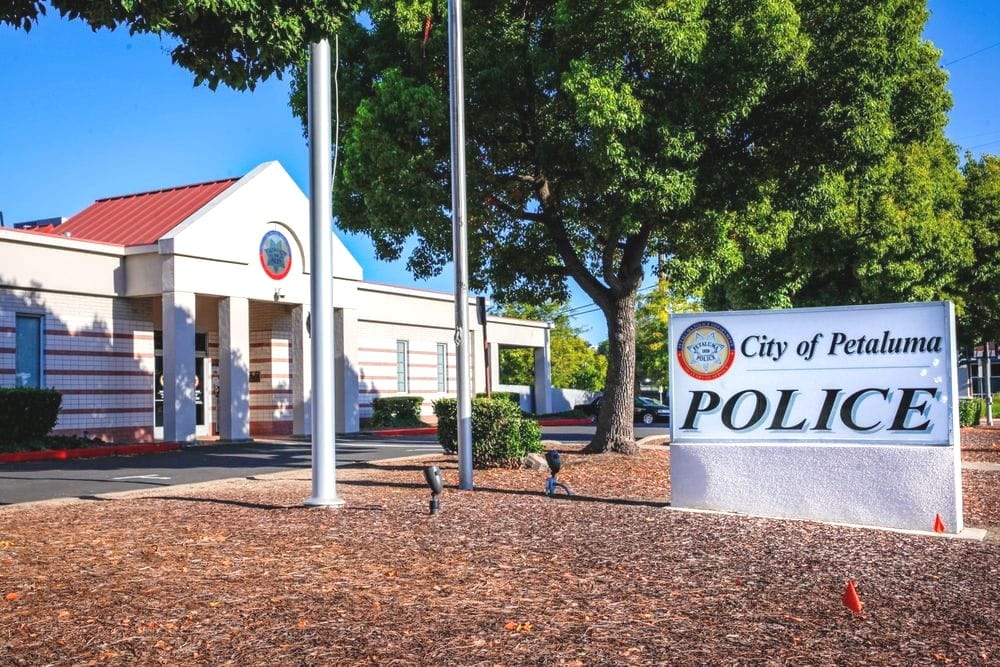
Other staff members may have limited access to the data, according to the manual, including parking enforcement officers and community service officers.
The police department installed four city-owned Flock cameras in October 2025 using Sonoma County Department of Emergency Management grant funds, according to the city’s informational site on automated license plate readers. That funding has since run out, and the city is spending about $12,000 a year to fund the contract, which covers “maintenance, replacement, connectivity, and secure system access,“ according to the city.
A brief history of cameras in Petaluma
In 2005, the City Council approved the use of the technology for parking enforcement, later reaffirming its usage in 2011 on two parking enforcement vehicles that are still being used. By 2016, the technology was added to patrol vehicles, which helped to locate stolen vehicles and missing people and aid in criminal investigations, but that system was difficult to maintain and the city soon transitioned to fixed license plate reader cameras.
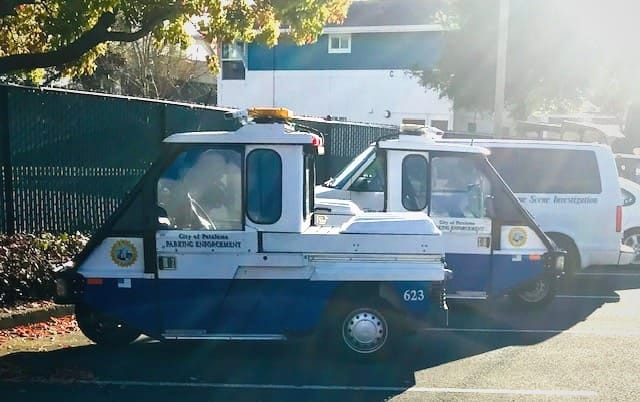
In 2022, police Lt. Nick McGowan, who is currently a deputy chief, said in a technology advisory committee meeting that the switch to automated readers reduced physical labor for parking enforcement officers, who were previously marking the tires of cars with chalk sticks.
In early 2025, police used the technology to locate a road rage vandalism suspect who reportedly slashed someone’s tires. This year, police arrested a person with a felony warrant and, in a separate incident, recovered several firearms, a stolen vehicle, and narcotics.
Just last month, local police used that technology in conjunction with other agencies to locate a missing man who reportedly had memory issues. He was found in Humboldt County, more than 150 miles from home.
Civil liberty concerns; Flock susceptible to hackers
The American Civil Liberties Union has tracked the capabilities of automated license plate readers since at least 2013. The nationwide organization has taken a hard stance against the cameras, stating that they infringe on civil liberties.
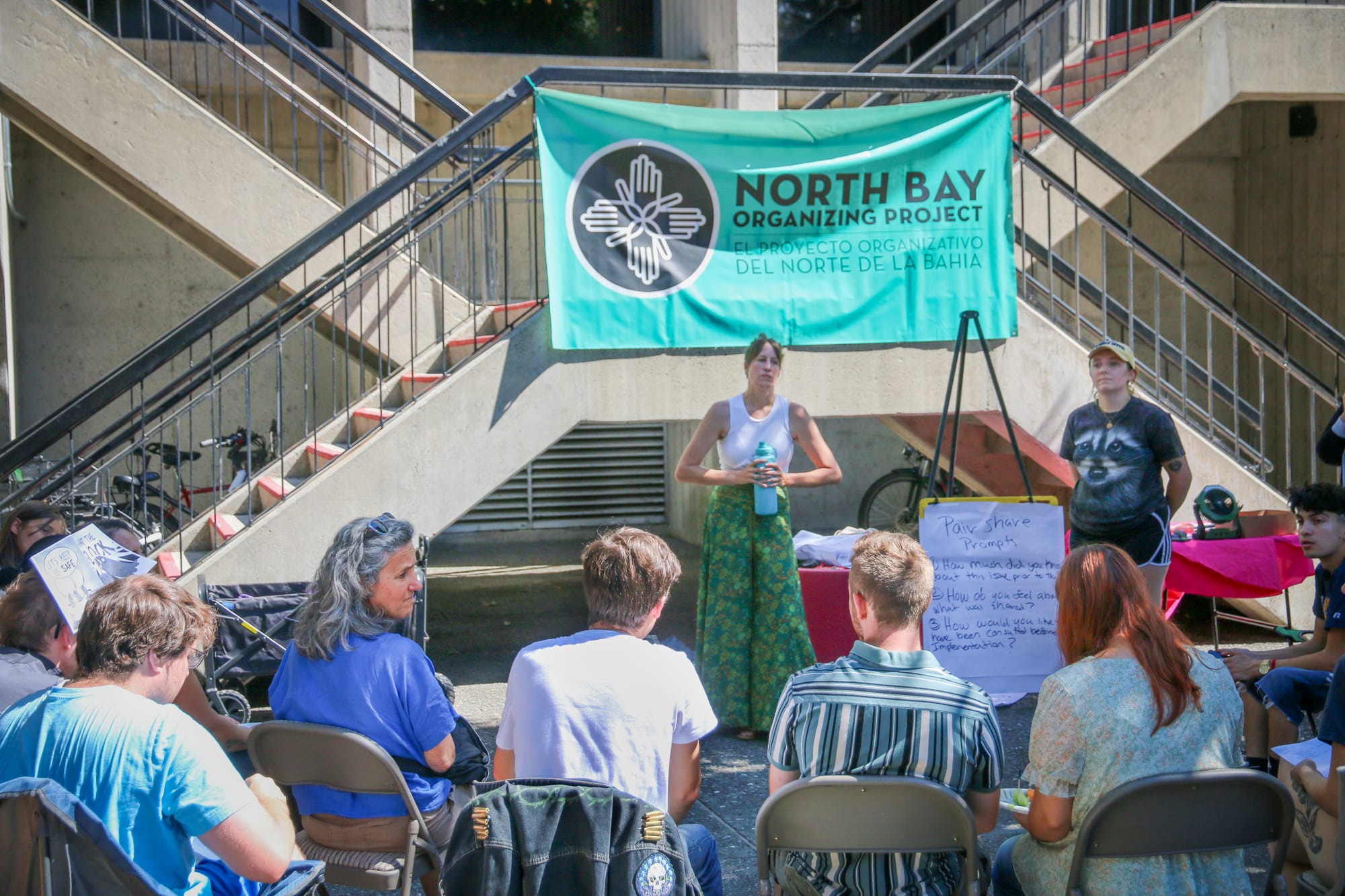
Locally, the North Bay Organizing Project, an organization centered on social, economic, racial, and environmental justice, has been hosting “teach-ins” to educate the community about license plate readers and mass surveillance, as well as convenings with local law enforcement.
Some opponents of the technology have begun turning to crowd-sourced websites. One, called DeFlock Maps, also feeds information into MyTownView, another platform used to track license plate readers. However, the user-submitted information may not always be accurate, according to the websites. MyTownView’s data shows Petaluma with a minimum of 15 cameras, and maybe more. These sources also do not distinguish between privately operated and city-owned cameras.
In addition to nationwide reports of police using the information illicitly, there have been other examples close to home. In San Jose, a police officer was fired for apparently using the data to help a cousin accused of domestic violence by an ex-partner.
In response to pushback, Stanford University cancelled its Flock contract and opted to work with Genetec instead, which tracks the same car license, make, and model data as Flock, but whose data can’t be accessed by third parties, according to the Stanford Daily. Genetec’s images also have watermarks and blockchain technology to minimize misuse.
California laws prohibit sharing license plate data outside the state. Yet El Cajon was repeatedly accused of sharing information with more than two dozen states, which have different laws around data sharing, and whose stances on immigration and reproductive rights differ greatly from California’s. In response, State Attorney General Rob Bonta filed a lawsuit in October against the San Diego County city to end that data sharing.
Petaluma cameras log 162,500 vehicles in 30 days
The city manager’s office OK’d the initial one-year Flock contract in August 2025, which is set to automatically renew. That contract is expected to continue for a three-year term, according to the February public safety meeting.
A Flock-run transparency dashboard states that data from the city’s four Flock cameras is stored for 30 days. Flock said it recently reduced its recommended number to seven days. However, data can also be downloaded and saved by law enforcement for future use. The Flock system in Petaluma has detected more than 162,500 unique vehicles in the most recent period, which included more than 380 searches.
The Petaluma data is included in two “hotlists” – digital databases of license plate numbers that trigger real-time alerts for applicable uses – one for the California Stolen Vehicle System, and the other for the National Center for Missing & Exploited Children Amber Alert system.
This information is solely owned by the Petaluma Police Department, though it is shared with 129 agencies in California, including the California Highway Patrol, California Department of Corrections, and California State Parks, according to the portal.
The data can only be used in-state, according to the portal, and is prohibited from being used by immigration enforcement, with the exception of valid court orders or subpoenas, in accordance with state law. It cannot be used for harassment or intimidation, personal use, or to identify people by race, sex, or religion.
Obstler, with the public safety committee, emphasized her full trust in our local police department.
“But as all the national press has underscored, there’s zero way to keep tracking data secure when it’s stored on an AI-powered national network,” she told Petaluma Voice. She later added, “I do recognize that there is utility in these cameras.”
Obstler said Flock now allows for customer data to be sold after it changed its standard terms and conditions. With those term changes, it also granted itself exclusive rights to control data access and to both retain and track data after a municipal contract ends.
In an email to Petaluma Voice, police Chief Miller said his support for the camera technology is limited to its responsible use.
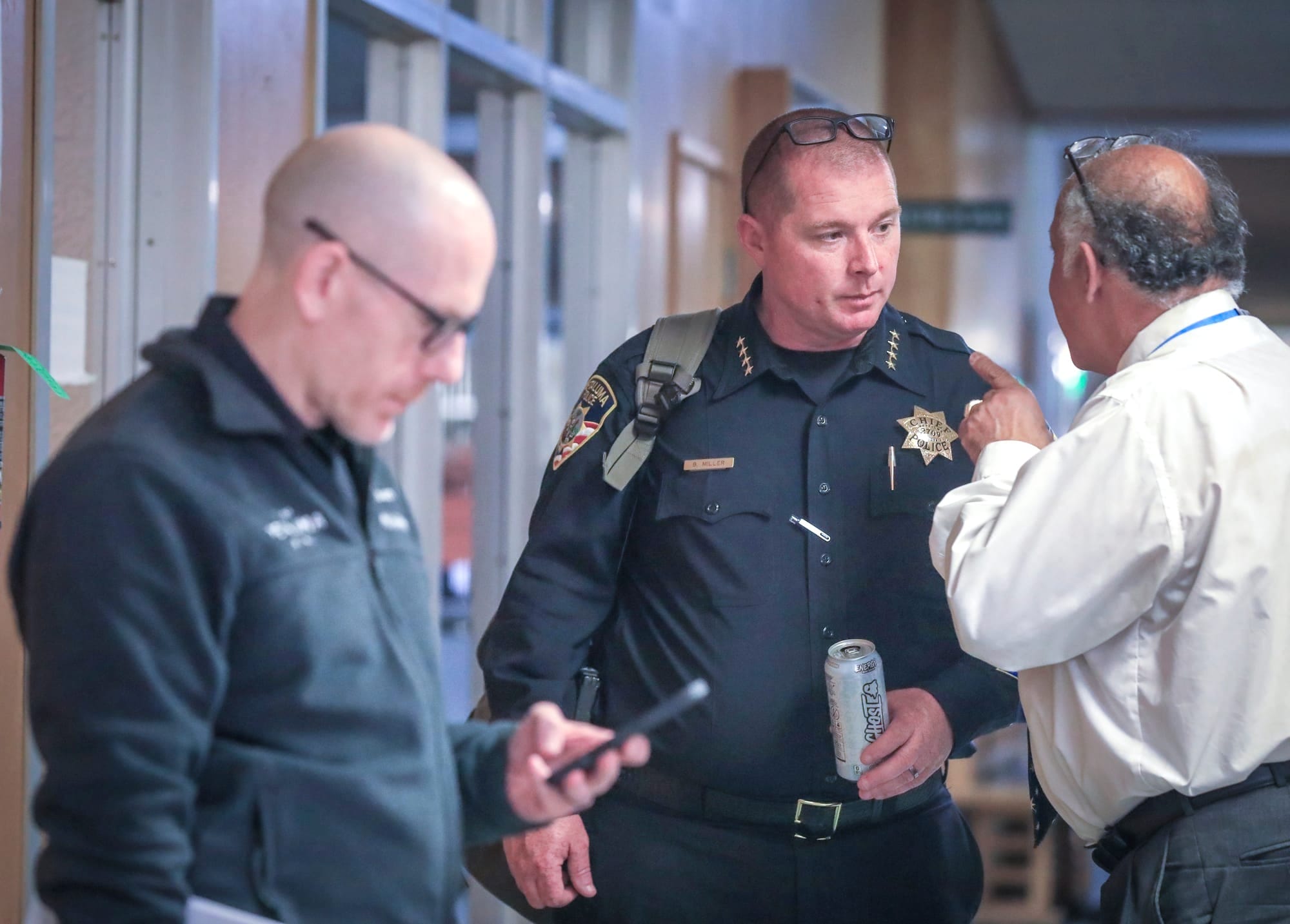
“I support Petaluma’s continued use of (automated license plate reader) technology because we have seen firsthand its value in finding missing and vulnerable people, recovering stolen vehicles, solving serious crimes, and helping officers apprehend dangerous individuals more safely and efficiently,” he wrote. “But public safety and privacy do not have to be opposing principles. Our responsibility is to ensure this technology is used only for legitimate public safety purposes, with strong limits on access, retention and sharing, meaningful transparency, independent oversight, and real accountability when the rules are violated.”
The city’s next Public Safety Advisory Committee meeting is scheduled for 6 p.m. on Wednesday, Sept. 23, at 11 English St. The committee typically convenes on the fourth Wednesday of the month.
For more information on the city’s automated license plate reader program, visit cityofpetaluma.org/automated-license-plate-reader-alrp-information.
Petaluma Public Safety Committee members:
- Michael Miller, bigpoppavfx@gmail.com
- Ellen Obstler, obwho@aol.com
- Julia Macias, juliaf4816@gmail.com
- Marcus Holton, malaholton@comcast.net
- Danielle Nelson, danielle.nelson@simon.com
- Lorena Ramírez, lorena06Ramirez@gmail.com
- Karen Nau (council liaison), knau@cityofpetaluma.org
Jennifer Sawhney is a reporter and co-founder of Petaluma Voice. She can be reached at jsawhney@petalumavoice.org.
Do you like our work? Support us with a tip.