'Major Change in Policy': New Ordinance Protects Trees on Private Land
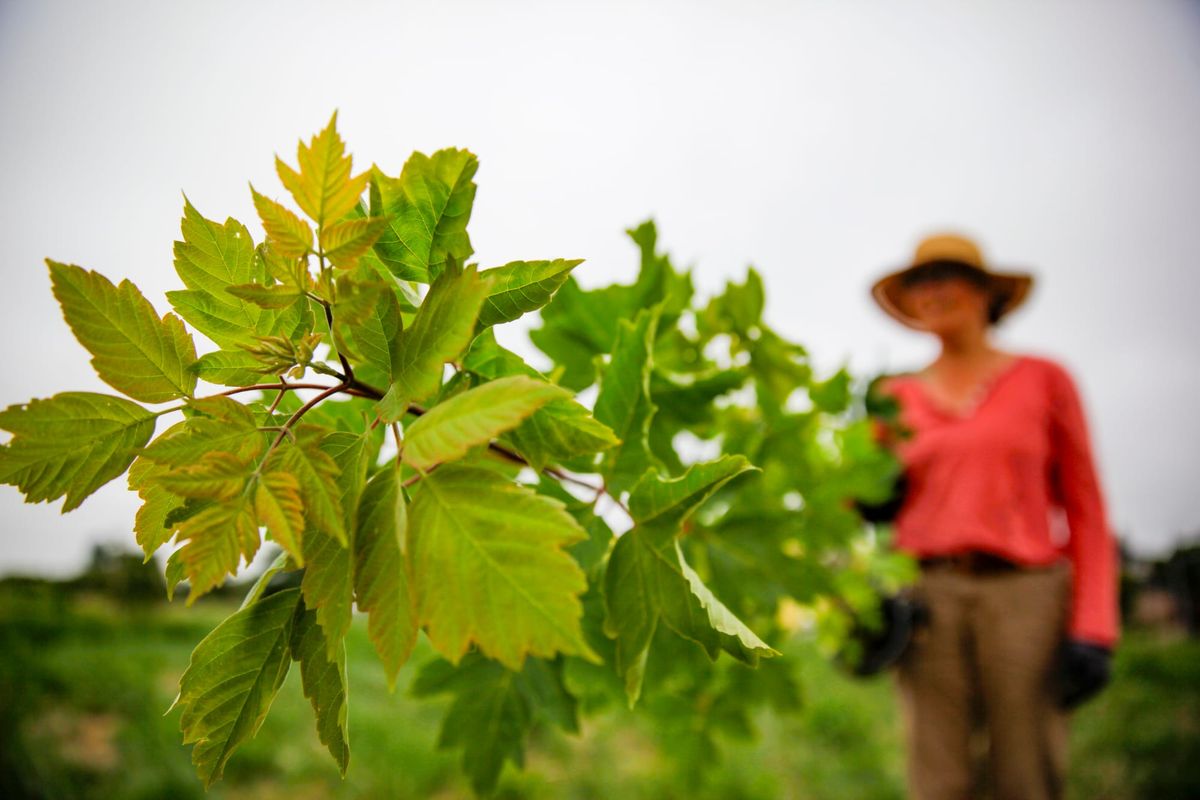
For the first time in Petaluma, mature trees on private property are protected by law. With the city council’s approval in April of a new tree preservation ordinance, most trees in city limits with a trunk diameter of at least six inches (measured 4.5 feet from the ground) cannot be damaged or removed without prior approval, at risk of fine – and a potential misdemeanor.
The new rules are the result of ten years of work and collaboration by Petaluma’s Tree Advisory Committee, city council, and local nonprofit ReLeaf Petaluma, said Councilmember John Shribbs. They’re intended to enshrine protections for Petaluma’s valuable mature trees in city code and increase tree cover citywide.
“The new tree ordinance is a major change in policy and direction,” said Shribbs, who as a previous member of the Tree Advisory Committee was one of the plan’s progenitors a decade ago. “We must protect this community resource, because everybody benefits from it.”
The ordinance safeguards all trees with a diameter of six inches or more, on both public and private property – with a few exceptions. Trees that interfere with utility lines and cannot be merely pruned, and those located too close to a building’s foundation or another, larger tree, are exempt from the new law.
Also exempt are a handful of non-native, potentially invasive or otherwise less desirable “nuisance trees.” The list may be revised in the future, but for now includes acacia, Italian cypress, plum, privet, Lombardy poplar, and tree of heaven.
The city recommends that any property owner removing an exempt tree thoroughly document conditions beforehand so they have evidence to settle any subsequent code enforcement inquiry.
An Old Idea Takes Root
Petaluma passed its first tree preservation ordinance more than three decades ago, in 1991, to protect the city's oldest "heritage" trees. The ordinance was subsequently updated to cover mature native oaks, redwoods, bay laurels, and buckeyes, as well as certain other trees – but only on public property or in projects sponsored or funded by the city.
Protecting trees on private property is new here, but it’s far from novel in the Bay Area or elsewhere in the state.
San Jose and Palo Alto were local models when crafting Petaluma’s new ordinance, Shribbs said, but the concept can be traced to the southern end of the state and five decades in the past, when the city of Thousand Oaks began formally protecting its namesake trees on public and private property alike.
Earlier this spring, another city named for trees, Oakland, made headlines after fining a landowner $915,000 for removing 38 mature live oaks, broad-leaf maples, buckeyes, and other native species from a vacant lot, in violation of the city’s tree protection ordinance.
Petaluma’s new rules say that anyone seeking to remove a protected tree – whether private homeowner or hired contractor – must obtain approval and a permit at a rate of $200 for one tree, $381 for two or three trees, or whatever it costs the city for four or more trees. The applicant or owner must also plant native replacement trees, and if the site cannot accommodate additional trees, may instead pay in-lieu fees.
Penalties are steep for cutting, damaging, or removing a protected tree without permission. Violators must pay $500 or the full appraised value of each tree, whichever is greater – and as the Oakland case illustrates, the worth of a mature native tree can be high indeed.
Growth in the Urban Forest
“The ordinance is pretty strong,” said Shribbs. He hopes it will help the city reach its long-term goal, established in fall 2021, of planting 10,000 new trees in the city. That number represents 10% of the approximately 100,000 trees the city was estimated to have at the time.
With just over 3,000 of these trees already planted, Petaluma’s tree canopy is expanding, said Darren Racusen, outgoing chair of the Tree Advisory Committee – but has lots of room to grow.
“Right now Petaluma is at about 13% or 14% canopy coverage, which is pretty low,” he said. Some cities in the region have less, he said, but most have more. Local numbers range from 12% in East Palo Alto and North Fair Oaks, and 14% in San Francisco, to 25% in Menlo Park and 47% in Atherton.
“The region tends to fall below the national urban average and well below American Forests' recommended targets, partly due to the Bay Area's Mediterranean climate and dense development patterns,” Racusen said.
“The San Francisco Bay Area experienced a general net loss of tree canopy from 2018 to 2022” – while other parts of the state, including the Sacramento area, San Diego and Imperial counties, and large parts of Los Angeles and Inland Empire, saw a net gain, according to the United States Forest Service.
Local Nonprofit Leaves a Legacy of Trees
Taking the lead in planting those 3,000 trees and the 7,000 more to come is ReLeaf Petaluma, founded in November 2020 with this goal squarely in mind.
“Our work is to expand the canopy of Petaluma,” said Programs Manager Carolyn LaCerra. “We are very happy that the tree preservation ordinance passed because it makes our work easier. The less trees that are chopped down, the less we have to plant.”
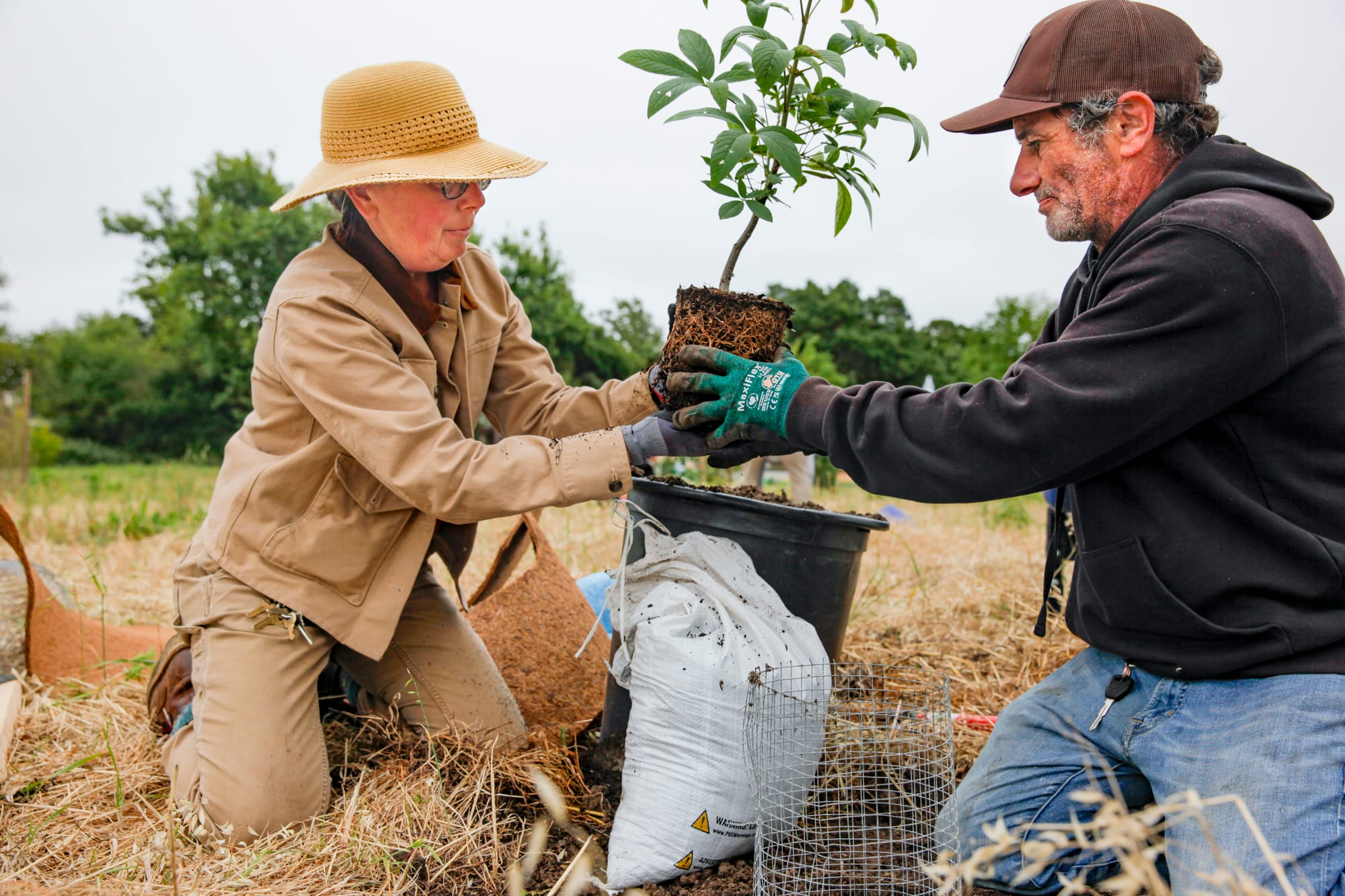
The organization is currently spending down the last of a $1 million grant received in 2024 from the Forest Service to add thousands of native trees to Petaluma streets, yards, parks, and open spaces. “Trees do so many things for us,” Lacerra said. “They cool the air. They’re producing oxygen for us. Studies have shown that they make us feel better and improve our health.”
Native tree species also provide critical habitat for birds, butterflies, and more, boosting local biodiversity, she said.
In addition, the city notes, trees can filter air pollutants, improve property values, reduce stormwater runoff, absorb carbon dioxide, and encourage walkability.
”Also, if you choose the right tree for the right spot, there should not be any problems with sidewalks or root damage,” Lacerra said. “The benefits so outweigh whatever work the tree is, because it’s providing so much for us.”
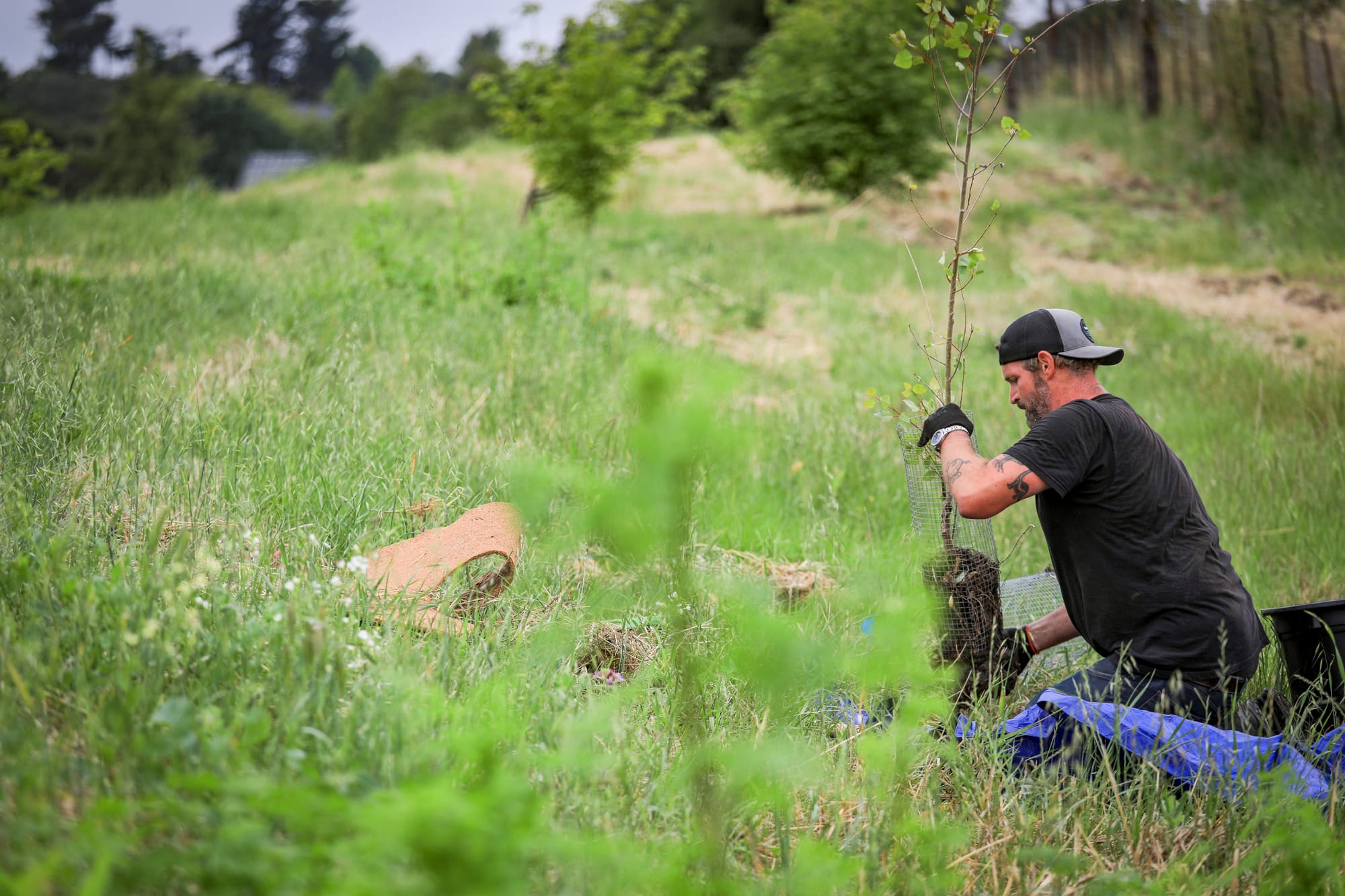
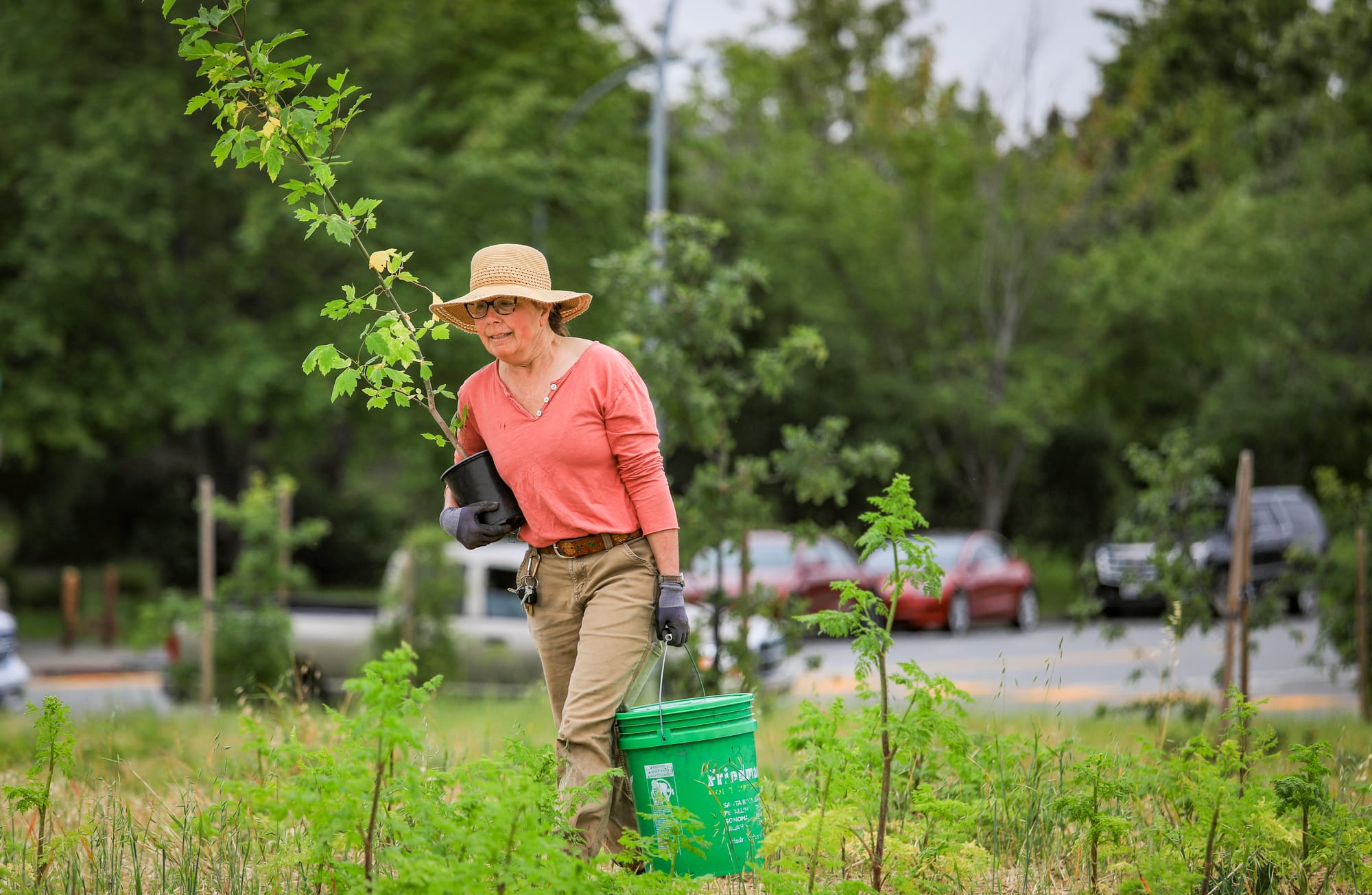
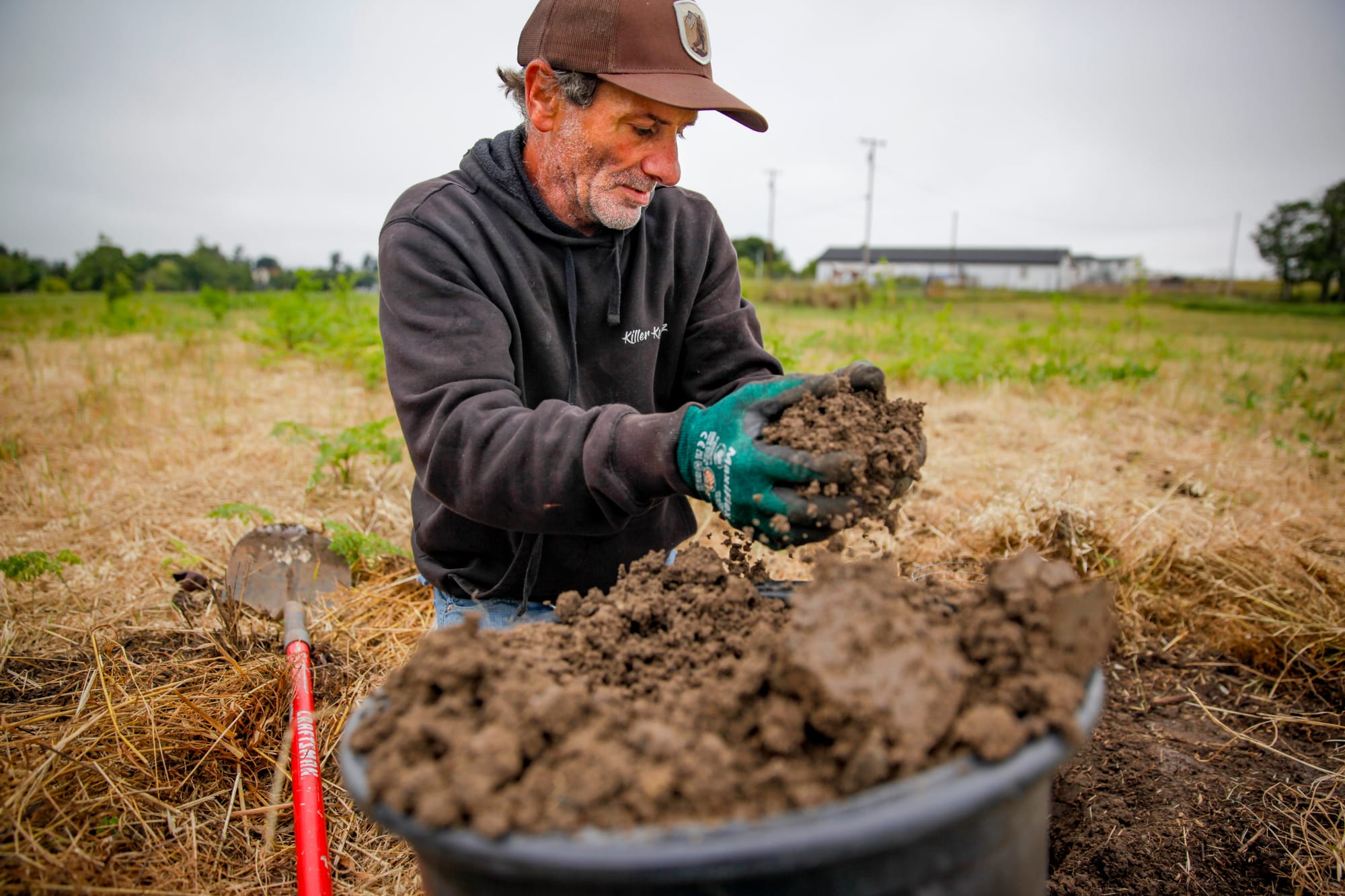
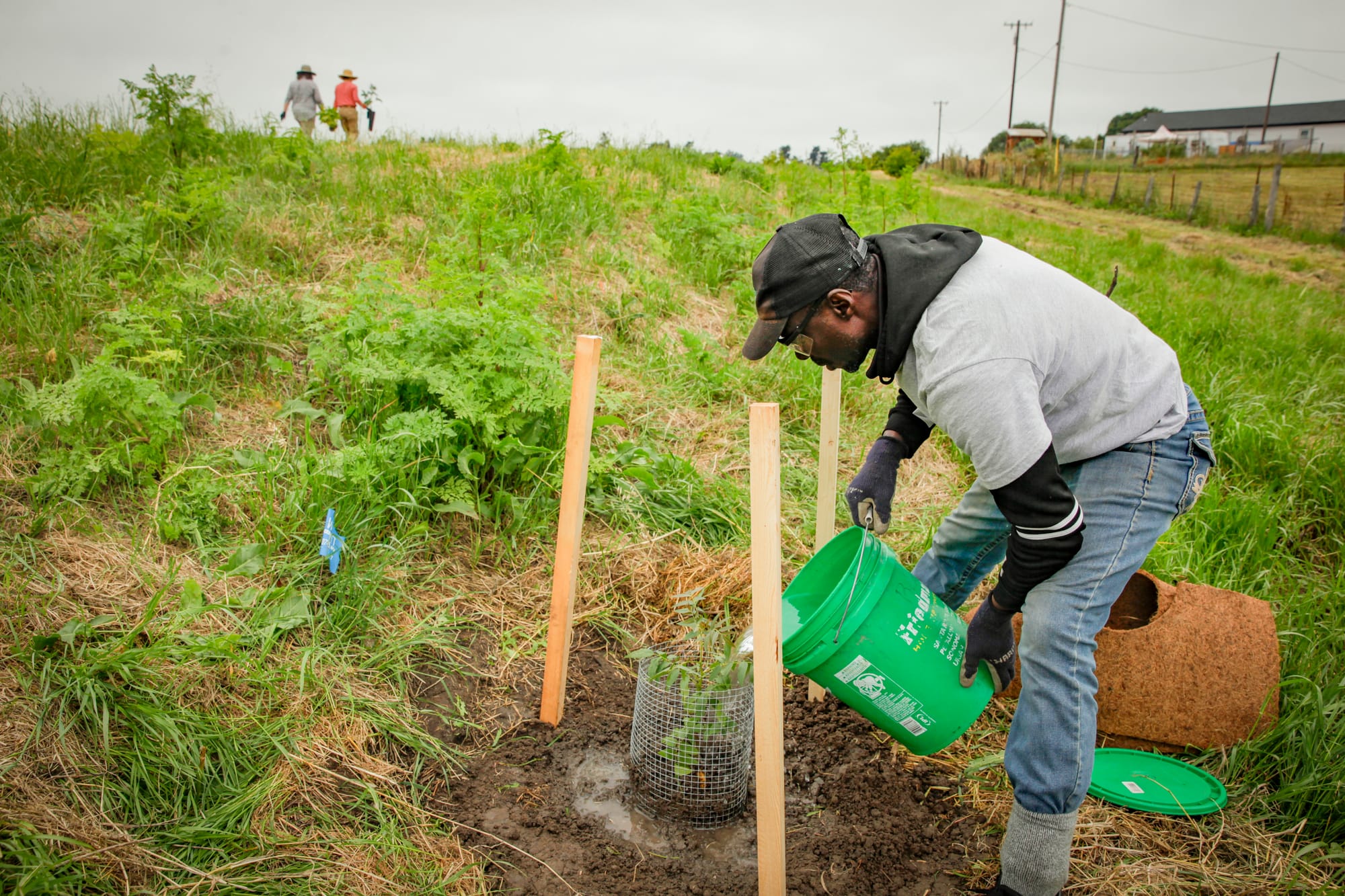
Correction 6/5/26 10:46 a.m.: We mistakenly identified some Rebuilding Together Petaluma employees as volunteers. Captions have been updated to correct this error.